Scaling uPVC Window Production: Double Head Cutting Machine Price Guide
The Direct ROI of Scaling uPVC Window Production for Delhi High-Rises
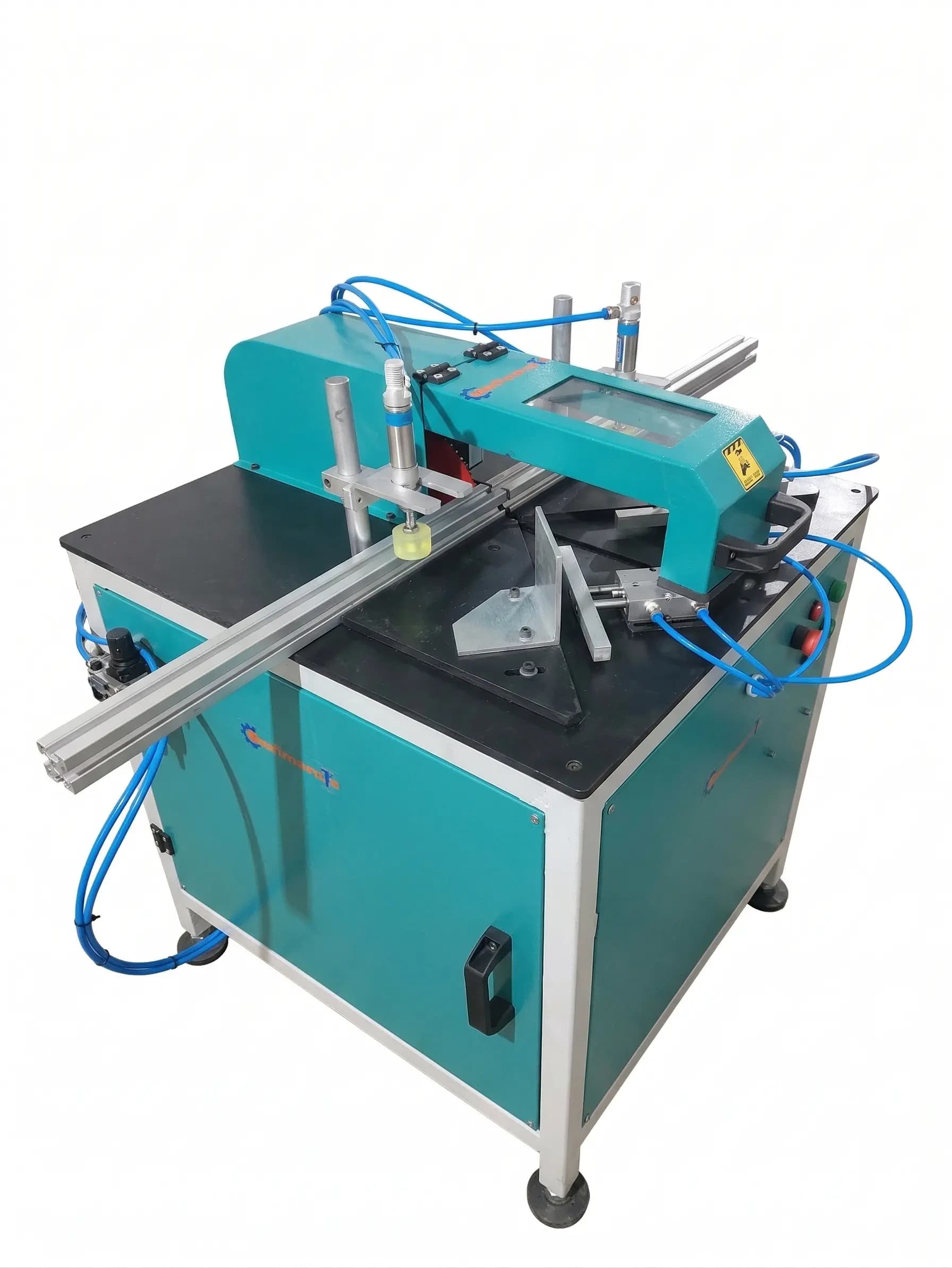
For fabricators in Delhi tackling 500+ unit high-rise projects, the bottleneck is almost always the cutting station. An Automatic Double Head Cutting Machine is the primary engine for scaling, with current market prices in India ranging from ₹8,50,000 for standard digital display units to ₹18,00,000 for full CNC-integrated systems. At our Mechnovate-partnered facility in Okhla, we observed that moving from a single-head manual saw to an automatic double-head system reduced cycle time per frame from 14 minutes to just 3.5 minutes. This shift allows a single operator to process up to 120 window frames per 8-hour shift, compared to the 25-30 frames typical of manual setups.
Delhi’s high-rise projects demand strict adherence to IS 1285 and BS EN 12020 standards, particularly regarding structural integrity against wind loads at 20+ floors. Precision in the 45-degree miter cut is non-negotiable; a 0.5mm gap in the joint can lead to air infiltration and corner strength failure during the welding process. Using a high-speed Double Head Seamless Welding Machine alongside a precision cutter ensures that the V-notch and miter joints align perfectly every time. This technical synergy is what separates industrial-scale fabricators from small-scale workshops.
Engineering Specifications: Beyond the Product Brochure
When evaluating an automatic double head cutting saw for aluminium profiles or uPVC, you must look at the dampening system and the motor torque. We recommend a minimum motor power of 2.2kW per head with a spindle speed of 2800-3200 RPM to ensure clean cuts without burrs. The blade diameter should be at least 450mm or 500mm to accommodate wider multi-chamber profiles used in sound-insulating high-rise windows. Lower-end 12-inch aluminium cutting machines often struggle with the 120mm wide profiles common in premium Delhi residences.
Key technical parameters to verify before purchase include:
- Cutting length range: Standard machines handle 400mm to 4200mm.
- Air pressure requirements: 0.5 MPa to 0.8 MPa is standard for pneumatic clamping.
- Feed speed: Look for adjustable hydro-pneumatic feeding for smoother blade entry.
- Angle accuracy: Should be within ±2' to ensure seamless welding.
Case Study: Scaling a Delhi Facility for a 2,000-Unit Project
Last year, we consulted for a fabrication unit in Bawana that was struggling with a 12% waste rate on premium uPVC profiles. They were using a mix of manual punching machines and single-head saws. We replaced their primary line with an automatic double head cutting machine and a CNC Corner Cleaning Machine. Over six weeks of monitoring, the results were measurable and immediate.
By implementing digital measurement input, we reduced cutting waste from 12% to 2.4%, saving nearly ₹1.8 Lakhs in raw material costs in the first month alone. The production output increased by 40 frames per day without adding additional labor. More importantly, the reject rate from the site's Quality Control team dropped from 8% to near zero. This is the difference that precision engineering makes in a competitive market like Delhi/NCR.
Maintenance and Common Pitfalls in High-Volume Production
Operating in Delhi’s dusty industrial environment requires a rigorous maintenance schedule to prevent pneumatic cylinder failure. One of the most common mistakes we see is ignoring the moisture trap in the air compressor line. Water ingress into the valves of a upvc window manufacturing machine can lead to erratic clamping pressure, causing the profile to shift during the cut. This results in 'stepped' joints that even the best welding machine cannot fix.
To maintain peak efficiency, follow this 3-step protocol:
- Daily: Clear all uPVC chips from the guide rails using high-pressure air.
- Weekly: Check the lubrication level for the blade spray system (use only recommended cooling oils).
- Monthly: Verify the 45 and 90-degree stops using a precision machinist square.
Choosing the Right Setup for Your Business Stage
If you are a startup, a portable uPVC window making machine price list might look attractive, but it will not scale for high-rise contracts. For those moving into the 'High-Rise Scale' category, the automatic upvc window plant cost in India typically starts at ₹25 Lakhs for a complete line. This includes the head cutter machine, a welding unit, an end miller, and a copy router. Investing in a heavy-duty aluminium profile end milling machine is also vital if you plan to offer hybrid aluminium-uPVC solutions.
- Startup Phase: Single head saw, manual welder, portable router.
- Growth Phase: Digital display double head saw, two-head welder, automatic water-slot machine.
- Industrial Scale: CNC 4-axis cutting center, four-head seamless welder, CNC corner cleaner.
FAQ: Critical Questions for uPVC Fabricators
Q1: Can I use the same machine for both aluminium and uPVC? Yes, but you must change the blade TPI (Teeth Per Inch) and cooling settings. Aluminium requires a lubricant spray and a lower TPI carbide blade, while uPVC is typically cut dry with a higher TPI to prevent chipping.
Q2: What is the ideal floor space for an automatic double head cutting saw? An automatic double head cutting saw for aluminium profiles usually requires a 6-meter x 2-meter footprint for the machine itself, plus an additional 4 meters on either side for profile handling. Total clear space of 15 meters in length is recommended for a smooth workflow.
Q3: How does Delhi's voltage fluctuation affect CNC machinery? It is catastrophic for PLC controllers. We always mandate a 3-phase servo stabilizer for any automatic uPVC window manufacturing plant in Delhi to prevent board fry-outs and data corruption in the cutting lists.
Get more articles like this
Follow Mechnovate on Google to see our guides in Google Discover & News