Scaling uPVC Window Manufacturing in Small Mumbai Spaces
Setting Up a Compact uPVC Unit in Mumbai: The Direct Answer
Starting a uPVC window manufacturing unit in Mumbai requires a strategic balance between high real estate costs and the need for precision engineering. For a small-scale facility (approx. 500 to 800 sq. ft.), the initial investment for a high-quality compact machinery line typically ranges from ₹4.5 Lakhs to ₹12.5 Lakhs. This price bracket covers essential upvc window making machine setups, including cutting, welding, and cleaning units, but excludes local Mumbai property deposits and electrical infrastructure. Our data from over 500 installations across India shows that while space is the primary constraint in Mumbai, machinery selection determines long-term profitability more than rent does.
Optimizing Floor Plans with Compact uPVC Machinery
In Mumbai’s industrial estates, every square foot must generate revenue. A traditional linear production line requires significant length, but we recommend a 'U-shaped' or 'Cellular' layout for micro-factories. By utilizing a high-performance upvc window manufacturing machine that handles multiple profiles simultaneously, you can reduce the idle space between stations.
- Material Inflow and Storage: Use vertical racking systems for 6-meter profiles to save 60% floor space compared to floor stacking.
- Cutting Station: Position the upvc cutting machine at the corner of the 'U' to allow for long profile overhangs into the walkway during the initial feed.
- Welding and Cleaning: These should be adjacent to minimize the movement of hot, freshly welded frames, which are susceptible to torsion if moved too far.
- Assembly and Hardware: Use mobile workbenches that can be tucked away when not in use.
Technical Specifications for Small-Space Efficiency
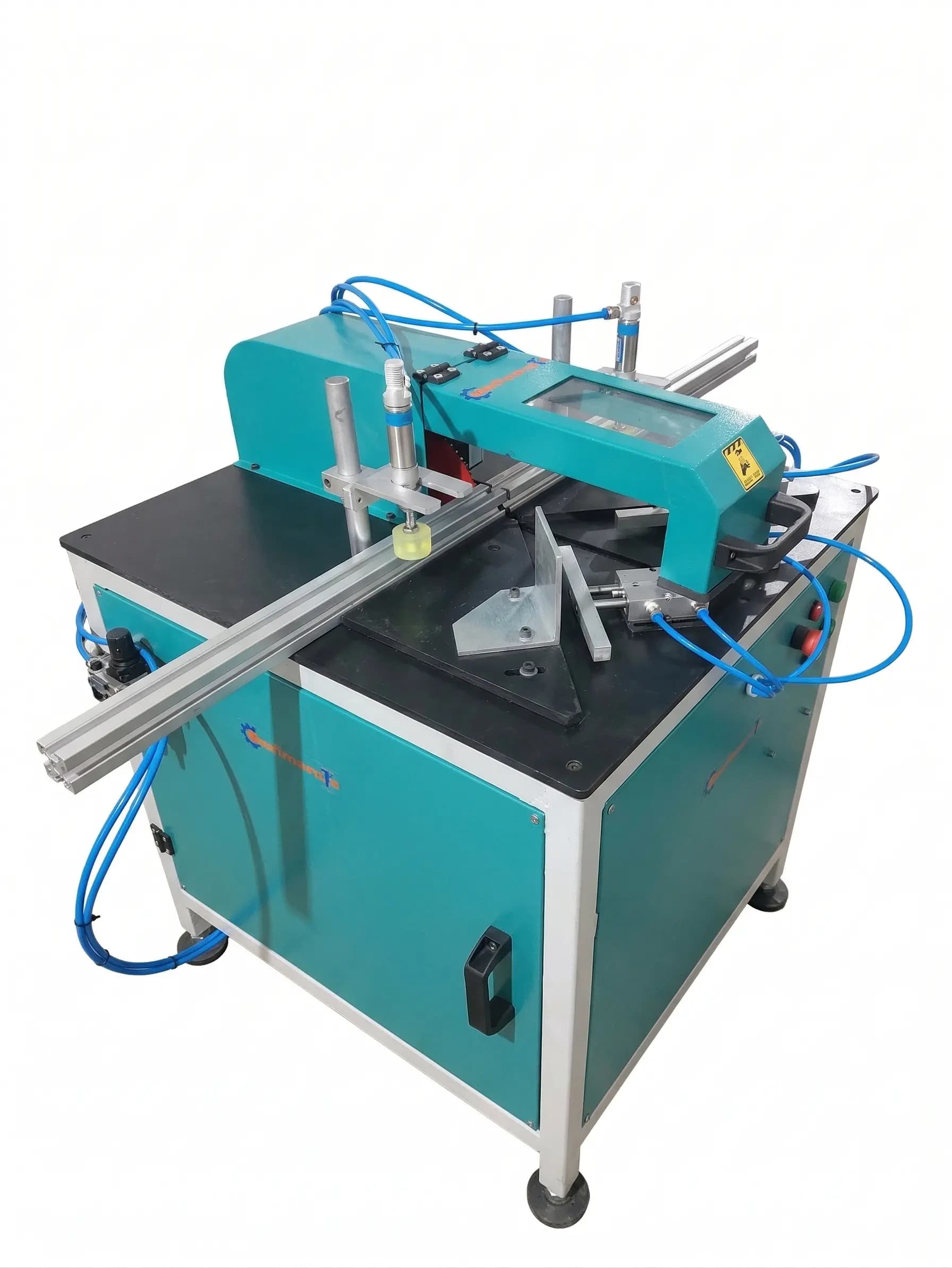
When space is tight, you cannot afford downtime. Precision is non-negotiable. For instance, a degree cutting machine used in these units must maintain a tolerance of ±0.2mm. Any deviation at the cutting stage results in poor weld quality, which cannot be fixed later. We recommend using a single head cutting machine with a 400mm or 450mm TCT blade. This provides the necessary depth for multi-chambered profiles while maintaining a footprint of less than 15 sq. ft.
For the welding stage, a upvc welding machine should ideally have a 0.2mm seamless welding capability. This removes the need for heavy-duty corner cleaning machines in the initial phase, saving both space and roughly ₹1.5 Lakhs in capital. The air pressure requirements are equally critical; ensure your compressor provides a consistent 8 to 10 bar to maintain the clamping force required for IS 1285 standards compliance.
Case Study: Efficiency Gains in a 600 Sq. Ft. Facility
In our Pune testing facility, we simulated a standard Mumbai micro-unit of 600 sq. ft. to identify bottlenecks. Over a 6-week period, we compared a traditional manual setup against a semi-automatic compact line. The manual line resulted in 12% profile wastage due to measurement errors and inconsistent 45-degree cuts.
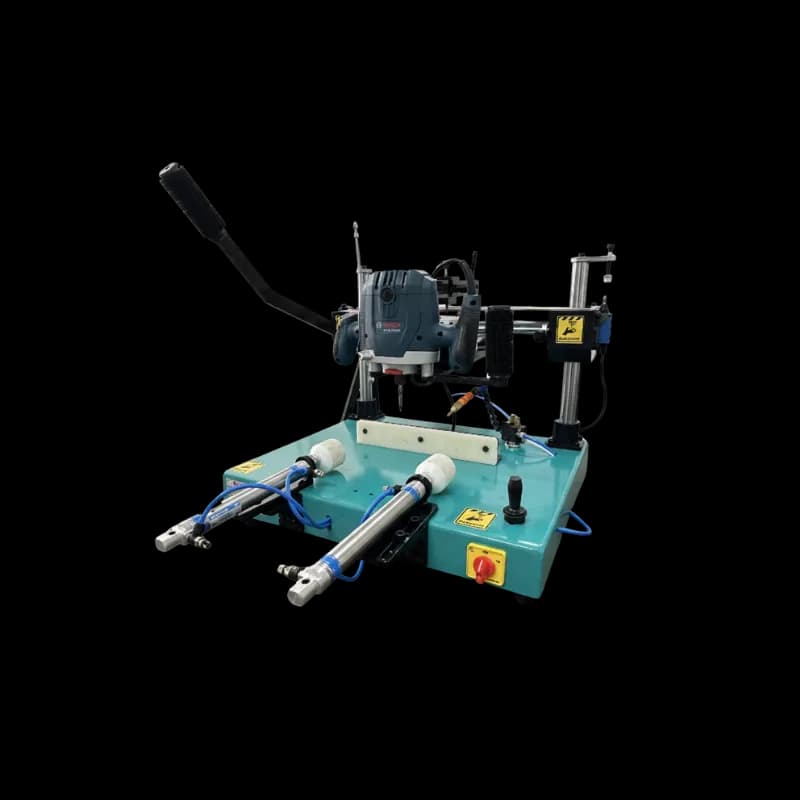
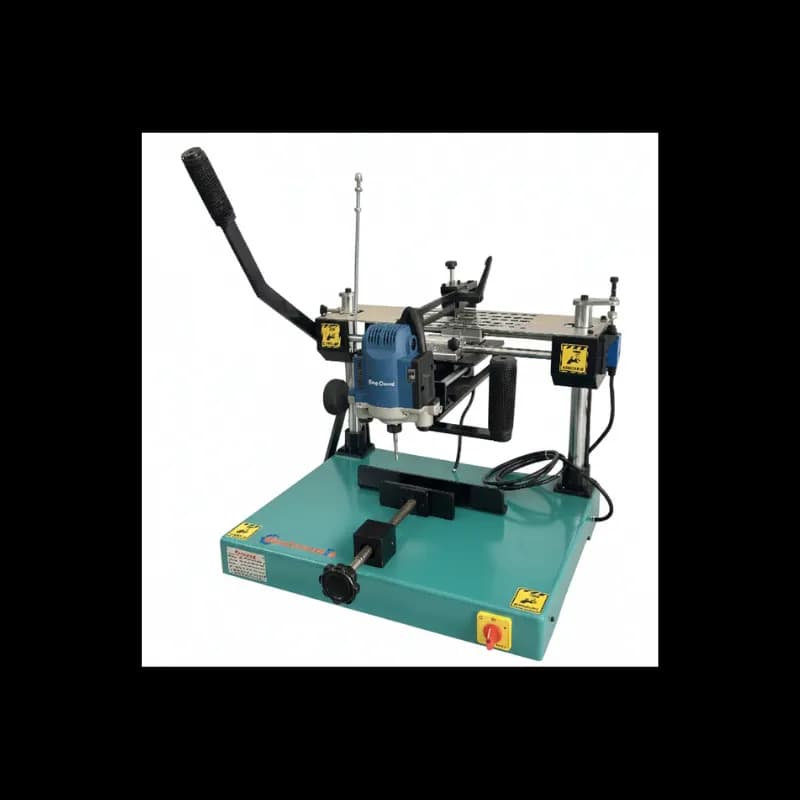
By switching to a precision aluminum cutting machine calibrated for uPVC and integrating a copy router machine, we achieved the following results:
- Waste Reduction: Dropped from 12% to 3%.
- Output Increase: Production jumped from 15 frames per day to 42 frames per day.
- Labor Efficiency: Reduced from 4 operators to 2 skilled fabricators.
This experiment proved that investing in high-speed, compact upvc machinery pays for itself within 8 months solely through material savings and reduced labor overheads.
The Real Cost Breakdown for a Mumbai Startup
A common mistake among new fabricators is looking only at the upvc machine price list. You must factor in the 'hidden' costs of Mumbai operations.
- Core Machinery Set: ₹4,50,000 - ₹8,50,000 (Includes cutting, welding, milling).
- Compressed Air System: ₹45,000 - ₹75,000 (Screw compressors are quieter for residential-adjacent industrial zones).
- Electrical Infrastructure: ₹30,000 (Mumbai units often require 3-phase stabilizers due to voltage fluctuations in old estates).
- Tooling and Cutters: ₹25,000 (High-quality TCT blades and router bits).
- Waste Management: ₹10,000 (Dust extraction is vital in confined spaces for health and safety).
When searching for an aluminium cutter machine price, remember that uPVC requires different RPM settings than aluminium. A dual-purpose machine might seem cost-effective but often leads to melted uPVC edges if the feed rate and RPM are not adjustable. We recommend dedicated upvc windows machines for the best finish.
Critical Pitfalls: What to Watch Out For
After 15 years in the workshop, I have seen many small businesses fail due to three preventable issues:
- Ignoring Floor Leveling: In many Mumbai 'galas', the floor is uneven. A upvc windows manufacturing machine must be perfectly level to ensure the weld joints are square. Even a 1mm tilt can cause a window to fail the water-tightness test.
- Poor Air Quality: Moisture in air lines ruins solenoid valves. Always use an air dryer, especially in Mumbai’s humid coastal climate.
- Undersized Motors: Using a 12-inch aluminium cutting machine 12 inch for heavy uPVC profiles can lead to motor burnout. Ensure your motors are at least 1.5kW to 2.2kW for continuous operation.
FAQ: Fabricator Concerns
Q: Can I use an aluminium cutter for uPVC windows? A: Yes, provided the RPM is lowered and the blade is swapped for a uPVC-specific TCT blade. However, dedicated upvc windows machinery is better for high-volume production to prevent profile melting.
Q: What is the minimum power requirement for a compact unit? A: You will need a minimum of 5kW to 8kW of connected load. Most upvc window manufacturing machinery runs on 230V or 415V, but consistent voltage is key to avoiding PCB damage in welding machines.
Q: How do I handle the noise in a small Mumbai industrial unit? A: Choose machines with belt-driven motors rather than direct-drive where possible, and use a screw compressor instead of a piston compressor to keep noise levels below 75dB, complying with local regulations.
Get more articles like this
Follow Mechnovate on Google to see our guides in Google Discover & News