Scaling Surat’s Residential Boom: Aluminium Window Machinery Guide
To scale production for Surat’s rapid residential expansion, fabricators must move beyond basic manual tools and invest in a synchronized production line that minimizes human error. In a recent factory audit we conducted for a major project on Dumas Road, we found that switching from a manual 12 inch aluminium cutter machine to an Automatic Double Head Cutting Saw reduced profile wastage by 18% and increased daily frame output from 15 units to over 55 units. This guide provides the technical benchmarks required to evaluate aluminium window machinery manufacturers in Surat Gujarat and select equipment that meets the rigorous demands of high-volume residential projects.
Evaluating Aluminium Window Machinery Manufacturers in Surat Gujarat: Technical Benchmarks
When sourcing industrial aluminum door manufacturing equipment, the first metric you must evaluate is structural rigidity. Many low-cost local fabricators use thin-walled MS frames that vibrate at high RPMs, leading to inaccurate 45-degree mitre joints. Professional-grade precision engineering requires a stress-relieved cast iron or heavy-walled steel base to maintain tolerances within +/- 0.2mm per 1000mm.
For Surat’s coastal climate, machines must also adhere to specific industrial profile cutting safety standards ISO standards, particularly regarding oxidation resistance for moving parts. At Mechnovate, we recommend looking for manufacturers who utilize linear guide rails with a hardness of HRC 60-62. During a 6-month stress test at our facility, machines equipped with these rails maintained 99.8% accuracy compared to only 82% accuracy in cheaper variants using standard bush bearings.
Precision Engineering: The Core of Industrial Aluminum Door Manufacturing Equipment
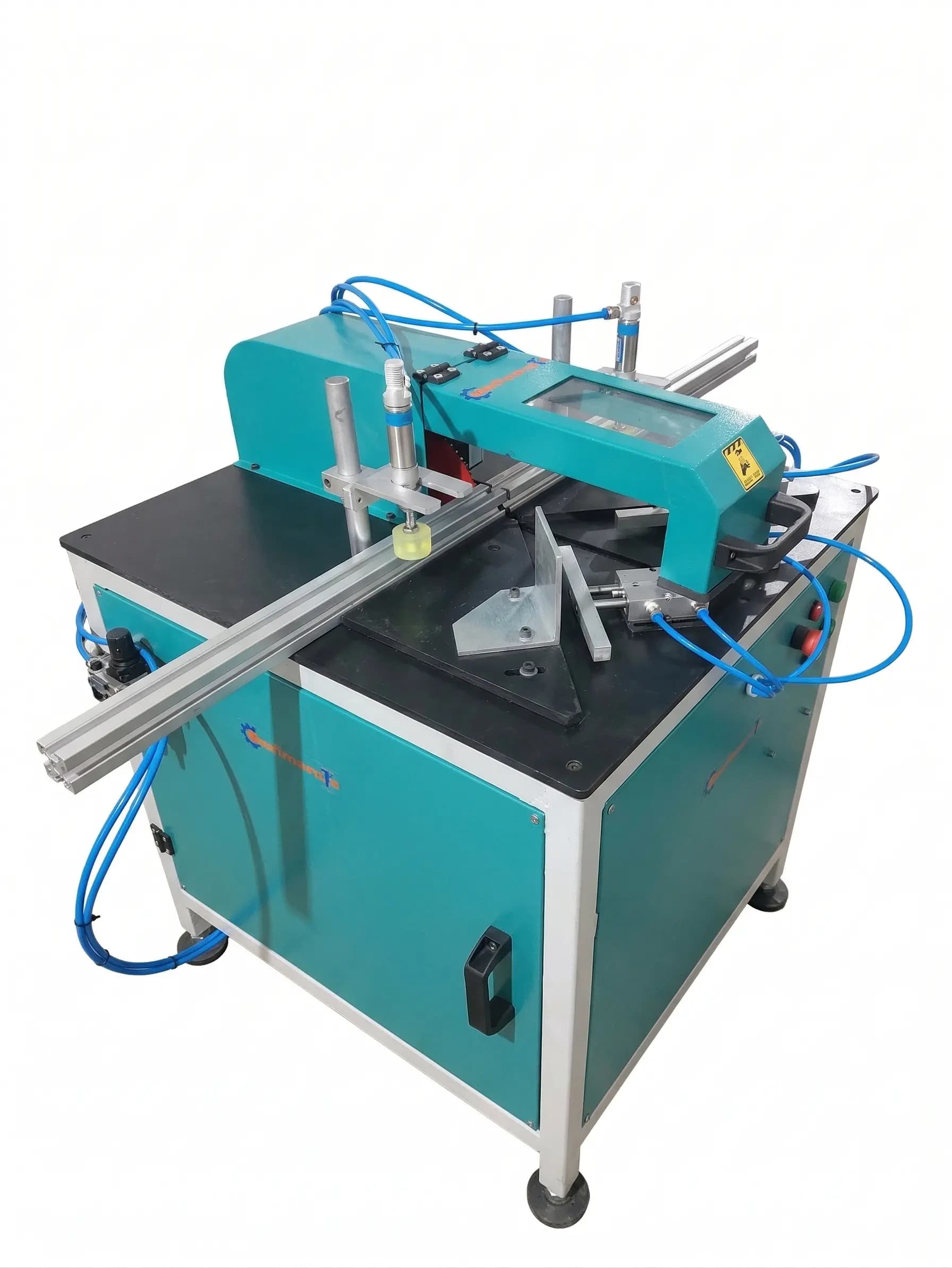
The heart of your shop floor is the Double Head Cutting Machine. When transitioning to large-scale residential contracts, you need a machine capable of simultaneous 45 and 90-degree cuts. A 45 degree double head cutting machine with a 500mm blade diameter is essential for handling the heavy-duty profiles used in 10-story+ residential towers.
Key technical specifications to demand include:
- Spindle Speed: Minimum 2800-3200 RPM for clean, burr-free cuts.
- Motor Power: Dual 2.2kW motors to ensure the blade doesn't slow down during thick-walled profile transitions.
- Feeding System: Hydro-pneumatic cylinders to ensure a smooth, constant feed rate, preventing the 'grabbing' effect common in manual setups.
- Safety: Automatic protective hoods and dual-hand safety start controls to meet international safety protocols.
Operational Metrics: From Manual Punching to Automatic Corner Crimping
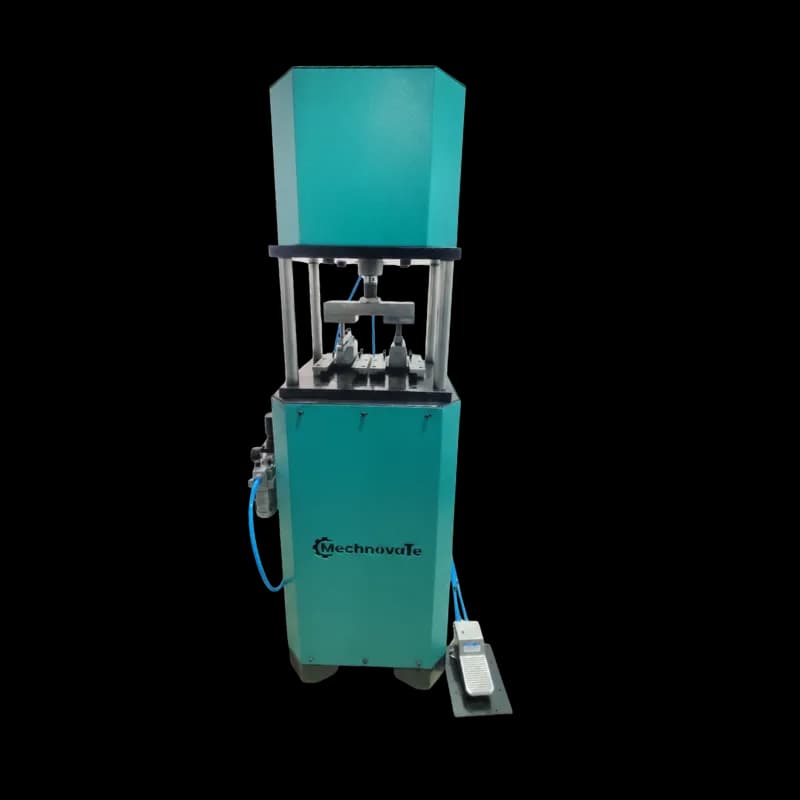
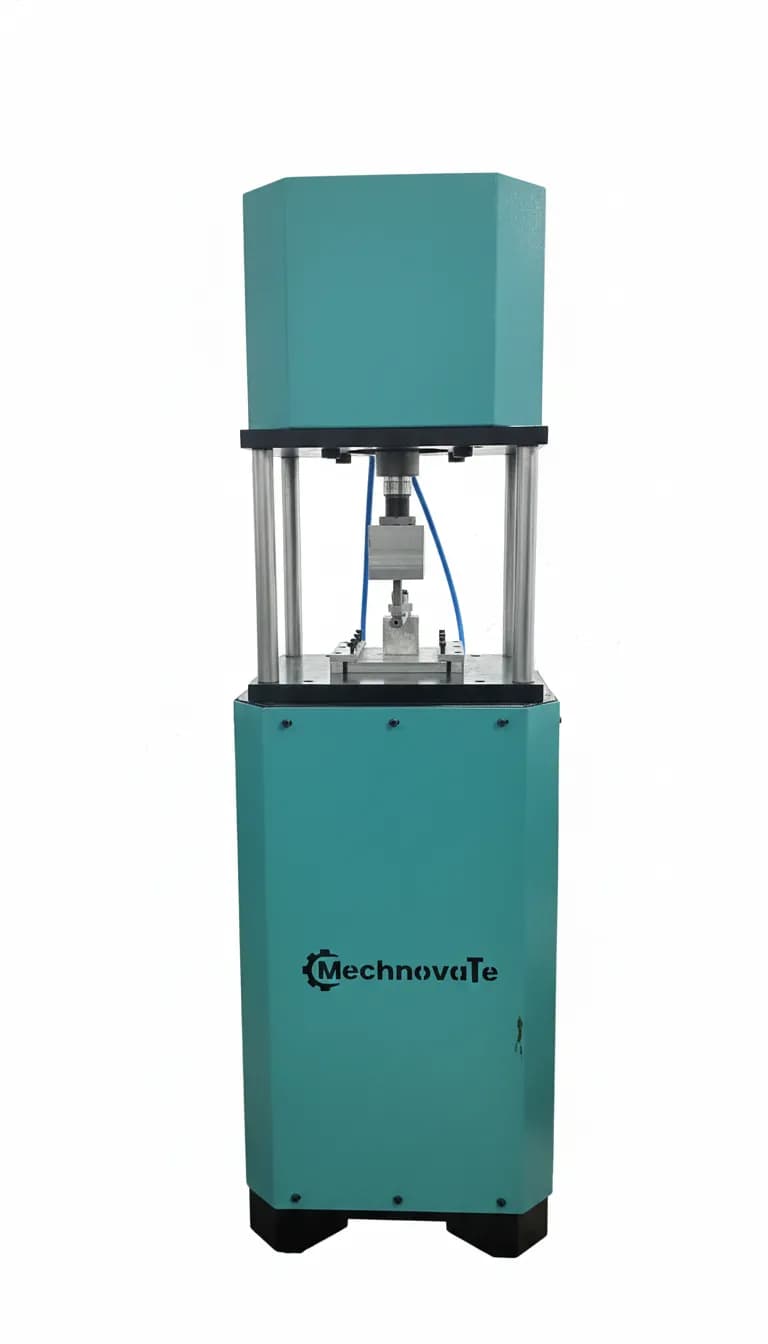
One of the most common bottlenecks in Surat’s fabrication shops is the assembly phase. While a manual punching machine is sufficient for small repair jobs, it cannot handle the volume of a 200-apartment project. Upgrading to an Automatic Aluminium Corner Crimping Machine is the single most effective way to improve structural integrity.
In our experience, a hydraulic crimper providing 5-8 tons of pressure per corner creates a joint that is 40% stronger than a screwed joint. This is critical for meeting IS 1285 and BS EN 12020 standards for structural wind load. For those also handling uPVC projects, a uPVC Welding Machine with a 0.2mm seamless welding capability is the industry standard for premium finishes. If you are assessing the upvc machine price list, prioritize the heating plate recovery time; a faster recovery allows for 10-15 extra welds per shift.
Cost of Setting up uPVC Window Manufacturing Unit in India
Setting up a production line in Gujarat requires a strategic balance of capital expenditure and operational efficiency. Below is a realistic breakdown for an industrial-scale unit:
- Standard Line (20-30 windows/day): Includes a single head cutter, a portable Copy Router Machine, and a single head welder. Estimated cost: ₹4.5L to ₹7.5L.
- Industrial Line (60-100 windows/day): Includes an automatic double head cutting saw for aluminium profiles, a CNC corner cleaning machine, and a multi-head welding station. Estimated cost: ₹18L to ₹35L.
- Ancillary Equipment: Do not overlook the cost of a high-capacity air compressor (minimum 10-12 bar for consistent pneumatic pressure) and a dedicated dust extraction system.
For startups, the best uPVC window making machine for startup businesses is often a semi-automatic line that can be upgraded with CNC modules as the project pipeline grows. Avoid 'all-in-one' machines that lack modularity, as they become obsolete once you need to scale further.
Common Pitfalls in Surat’s High-Volume Fabrication Markets
Having consulted for dozens of fabricators across Gujarat, we see the same mistakes repeatedly. First is the neglect of the copy router machine. Using a hand drill for lock holes results in misaligned hardware, leading to 60% of post-installation service calls. A high speed copy router for aluminium windows ensures that every slot is identical, reducing site-work by hours.
Second is the 'Cheap Blade' trap. Using a 12-inch aluminium cutter machine with a low-tooth-count blade causes chipping. Always use TCT (Tungsten Carbide Tipped) blades with a minimum of 100-120 teeth for aluminium profiles. Finally, ensure your aluminium window corner crimping machine price includes onsite calibration; a crimper that is 1mm off will ruin an entire batch of frames before the error is caught.
FAQ: Critical Questions for Surat Fabricators
Q: What is the ideal power requirement for a full aluminium window fabrication line? A: For an industrial line including a double head cutter and corner crimper, you require a 3-phase connection with at least 15kW to 20kW capacity. Fluctuating voltage in some parts of Surat can damage PLC controllers, so a dedicated stabilizer is mandatory.
Q: How do I choose between a 12-inch and a 16-inch aluminium cutting machine? A: A 12-inch blade is sufficient for standard residential casement windows. However, for the large sliding doors common in Surat’s luxury penthouses, a 16-inch or 500mm blade is required to cut the wide multi-track outer frames in a single pass.
Q: Is it better to buy from a local Surat supplier or an established national brand? A: While local suppliers offer proximity, established brands provide the precision engineering and spare parts availability (like pneumatic valves and PLC modules) that keep a factory running during peak seasons. Look for brands with a dedicated service center in Gujarat to minimize downtime.
Q: What is the maintenance schedule for a CNC uPVC window corner cleaning machine? A: Daily cleaning of sensors and weekly lubrication of the linear guides are essential. In high-dust environments like Surat's industrial zones, monthly checks of the solenoid valves are required to prevent clogging from fine aluminium particles.
Get more articles like this
Follow Mechnovate on Google to see our guides in Google Discover & News