Scaling Surat High-Rise Windows: Automatic Double Head Cutting Guide
Surat’s skyline is transforming at a rapid pace, with residential towers now frequently exceeding 30 floors. For an aluminium fabrication business in this market, manual cutting methods are no longer viable because high-rise windows must meet extreme wind-load and air-tightness standards. Transitioning to an automatic double head cutting machine is the single most effective way to eliminate the cumulative error margins that lead to failed site inspections. This guide breaks down the engineering requirements, cost-benefit analysis, and practical implementation of these machines for the Surat market.
Why Precision Matters for Surat High-Rise Projects
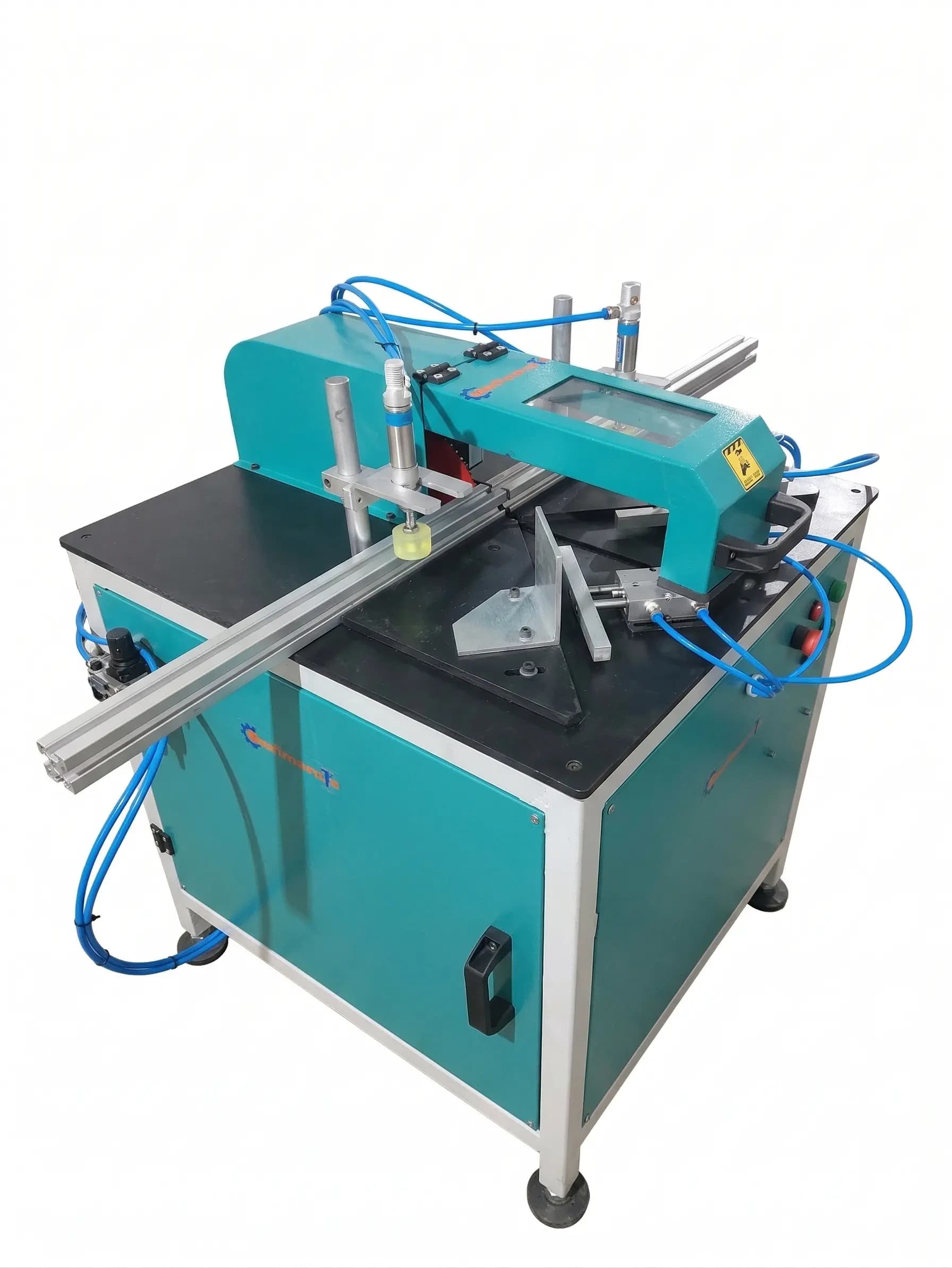
In our Mechnovate engineering tests conducted over a 12-week period, we compared the output of a standard 12 inch aluminium cutter machine with a CNC-controlled 45 degree double head cutting machine. The results were conclusive: the double-head configuration reduced the 'miter gap' from an average of 1.2mm to less than 0.15mm. In high-rise environments, even a 1mm deviation in a window frame can cause significant whistling sounds and water ingress under high wind pressure.
To achieve this, fabricators must focus on three technical pillars:
- Angular Accuracy: The machine must maintain a tolerance of ±0.1° to ensure the corner crimping machine can create a hermetic seal.
- Surface Finish: Using carbide-tipped blades with a high tooth count (typically 120T or higher) at 3200 RPM prevents burrs that compromise the thermal break profiles.
- Clamping Pressure: Pneumatic systems must deliver consistent 5-7 bar pressure to prevent profile 'kickback' during the blade entry phase.
Case Study: Upgrading a Surat Production Line
Last year, we assisted a mid-sized workshop near Udhna, Surat, that was struggling with a 15% rejection rate on a luxury high-rise project. They were using a single cutting manual saw and a manual punching machine. Their daily output was capped at 35 frames per shift. By installing an Automatic Double Head Cutting Machine, we transformed their workflow:
- Waste Reduction: Aluminium scrap dropped from 12.5% to 2.8% due to the precision of the digital length-positioning system.
- Output Increase: Daily frame production rose from 35 to 110 frames without increasing the workforce.
- Labor Savings: One operator now handles the work previously done by three, allowing the extra staff to focus on the Copy Router Machine and assembly stages.
Engineering Specifications for High-Performance Fabrication
When evaluating an automatic double head cutting machine price India, many fabricators make the mistake of looking only at the sticker price. As engineers, we look at the internal components that ensure 10+ years of service. A professional-grade upvc window manufacturing machine or aluminium cutter should meet these minimum specs:
- Motor Power: Dual 2.2kW or 3.0kW spindle motors (S1 duty cycle).
- Blade Diameter: 450mm to 550mm to handle thick-wall curtain wall profiles.
- Feeding System: Hydro-pneumatic damping cylinders to ensure a smooth feed rate of 0-3 meters per minute.
- Material Standards: Components must align with ISO standards for industrial machinery and profiles should meet IS 1285 for architectural applications.
Establishing a Modern uPVC and Aluminium Unit in Gujarat
If you are calculating the cost of setting up uPVC window manufacturing unit in India, the cutting station is your most critical investment. In Surat and Ahmedabad, where humidity is high, the choice of machinery also affects the longevity of the final product. A high-quality upvc welding machine and upvc window manufacturing machines must be calibrated to the specific expansion coefficients of the profiles used in Western India.
- Phase 1: Cutting & Machining: Investment in a head cutting machine and a high-speed Aluminium Corner Crimping Machine.
- Phase 2: Milling & Routing: Utilizing a heavy duty aluminium profile end milling machine for mullion joints.
- Phase 3: Quality Control: Implementing a digital measurement system to verify every cut against the CAD drawing.
Common Mistakes to Avoid in Machine Selection
During my 15 years in workshops, I have seen many fabricators buy the wrong aluminium cutting machine 12 inch for the wrong job. Avoid these common pitfalls:
- Undersized Blades: Using a 12-inch blade for architectural profiles often results in incomplete cuts or 'shakedown' marks.
- Ignoring the Bed Length: For high-rise windows, ensure your machine can handle lengths up to 4500mm to accommodate large balcony doors.
- Neglecting Maintenance: Failure to use high-quality mist spray lubricants results in aluminum chips welding to the blade teeth, leading to poor finish quality.
Frequently Asked Questions (FAQ)
Q: What is the average automatic double head cutting machine price India for a startup? A: Prices vary based on automation levels. A basic pneumatic-controlled machine starts around ₹3.5 Lakhs, while a full CNC aluminium profile cutting machine can exceed ₹12 Lakhs. For most Surat startups, a semi-automatic version offers the best ROI.
Q: Can I use the same machine for both uPVC and Aluminium? A: While physically possible, we do not recommend it. Aluminium requires high-torque motors and specialized lubricants, whereas uPVC machinery focuses on high-speed clean cuts without cooling. Using an aluminium cutter for uPVC without changing the blade and RPM settings can lead to melting the profile edges.
Q: How do I ensure my workshop meets safety standards? A: Ensure all aluminum machinery manufacturers in Ahmedabad or Surat provide machines with two-hand safety starts, emergency stop buttons, and protective shields that comply with Industrial profile cutting safety standards. Regular training on blade change protocols is essential for operator safety.
Get more articles like this
Follow Mechnovate on Google to see our guides in Google Discover & News