Scaling Jaipur’s Windows: Double Head Cutting Machine Price Guide
Navigating Automatic Double Head Cutting Machine Price India for Jaipur's Growing Market
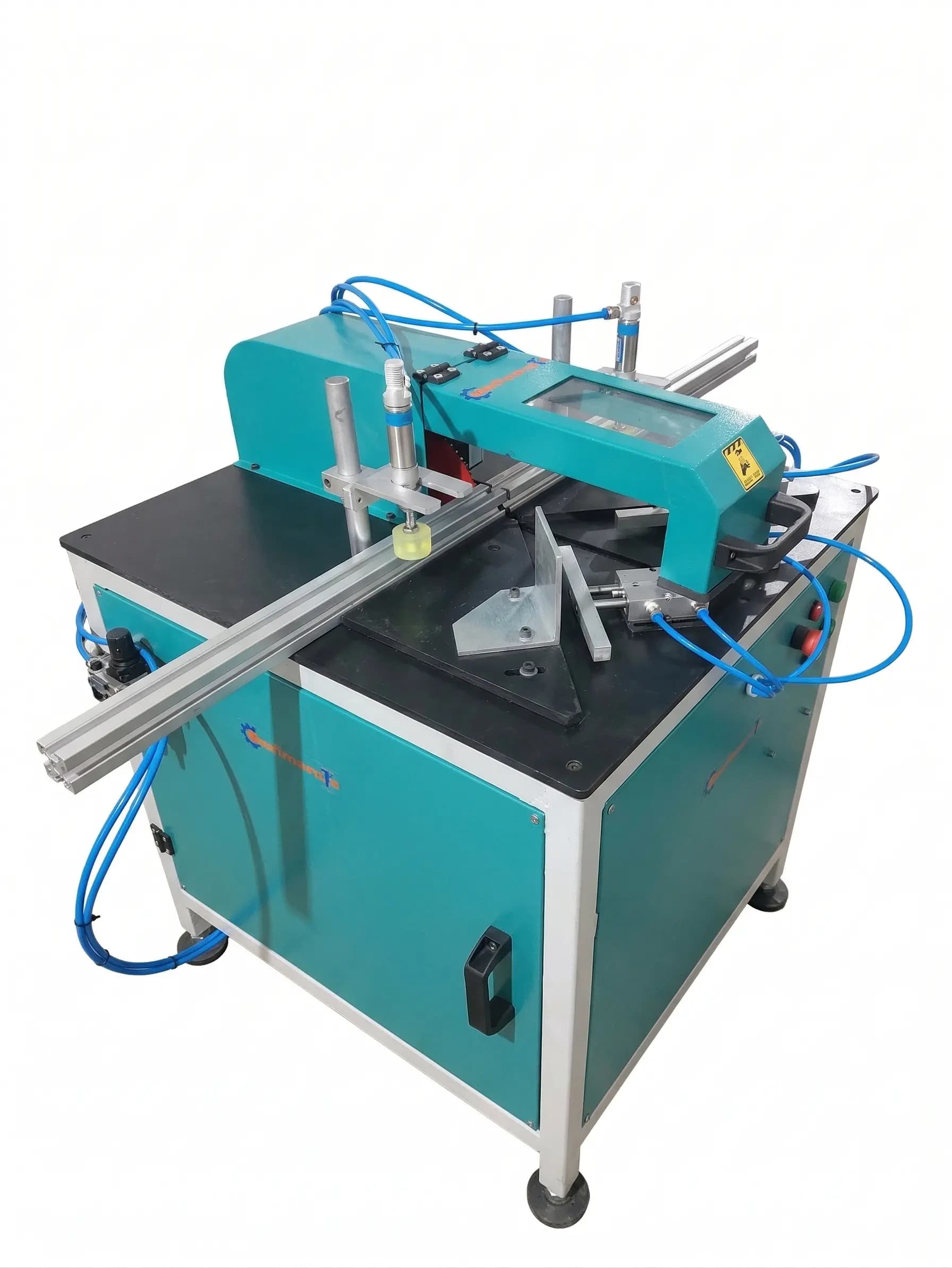
Jaipur's residential expansion in hubs like Jagatpura and Vaishali Nagar has triggered an unprecedented demand for high-quality fenestration solutions. For emerging workshops, manual methods are no longer viable to meet the precision and volume required for modern apartment complexes. The direct answer for fabricators is clear: the Automatic Double Head Cutting Machine is the backbone of any scalable unit. In the current Indian market, the automatic double head cutting machine price India typically ranges from ₹2,85,000 for entry-level pneumatic systems to upwards of ₹8,50,000 for high-precision CNC-integrated models. At Mechnovate, we have observed that workshops transitioning from a standard 12-inch aluminium cutter to a double-head system see a 300% increase in output within the first quarter. This efficiency is critical when navigating the competitive pricing of the Rajasthan real estate sector.
In our hands-on experience, a Jaipur-based fabricator recently upgraded their facility from four manual single-head stations to one automatic double-head line. Before the upgrade, their cutting waste was nearly 12% due to human error in measuring 45-degree angles. After implementing a calibrated Automatic Double Head Cutting Machine, their waste dropped to a negligible 2.5%, saving them approximately ₹45,000 per month in raw aluminium profile costs. This guide will walk you through the engineering nuances and cost considerations of scaling your workshop for the Jaipur boom.
Why Emerging Workshops Must Transition Beyond Single Cutting
Single cutting machines, while affordable, are the primary bottleneck in any aluminium fabrication or uPVC window manufacturing unit. When you use an aluminium cutting machine 12 inch for bulk orders, you introduce variability that compounds during the welding and corner crimping stages. Transitioning to a 45 degree double head cutting machine allows for simultaneous cutting of both ends of a profile, ensuring absolute parallelism and length consistency. This is essential for meeting ISO 9001 quality standards and ensuring that the final upvc windows making machine output fits perfectly into the building apertures without on-site modifications.
- Reduction in Labor Dependency: Automatic machines require one operator instead of two or three for the same output.
- Precision at Scale: Modern machines offer a cutting length tolerance of +/- 0.2mm, which is impossible to maintain manually over an 8-hour shift.
- Safety Standards: Most automatic units now incorporate industrial profile cutting safety standards (ISO standards), including two-hand safety starts and protective shields that prevent accidents common with an open aluminium cutter machine.
- Versatility: A high-quality upvc cutting machine can handle multiple profile types, from thermal break aluminium to heavy-duty uPVC chambers.
Technical Specifications: The Engineering Behind Precision Engineering
As a senior engineer, I cannot stress enough the importance of looking beyond the sticker price. When evaluating an aluminium profile cutting machine, you must analyze the internal components. For a workshop in Jaipur’s hot and dusty environment, the cooling system and dust extraction are paramount. A robust machine should feature a 450mm or 500mm carbide-tipped saw blade powered by a minimum 2.2kW motor. The blade feed should be pneumatically controlled with an oil-brake cylinder to ensure a smooth stroke, which prevents surface burrs on the aluminium profiles.
We recommend checking for hardened steel linear bearing guides. These ensure the movable head slides with minimal friction, maintaining accuracy even after years of heavy use in a busy upvc window manufacturing machine environment. Furthermore, the air pressure should ideally be maintained at 6-8 bar. If your workshop experiences voltage fluctuations—common in industrial areas like Vishwakarma Industrial Area (VKI)—investing in a voltage stabilizer for your CNC uPVC window fabrication machine price in India is a mandatory precaution to protect the PLC and HMI units.
Calculating the ROI: Cost of Setting Up uPVC Window Manufacturing Unit
Investing in an automatic upvc window plant cost India involves more than just the machines. You must consider the total ecosystem. A standard setup for a startup in Jaipur typically includes:
- Automatic Double Head Cutting Saw: ₹3,50,000 - ₹5,50,000
- Copy Router Machine: ₹45,000 - ₹85,000
- Aluminium Corner Crimping Machine: ₹2,50,000 - ₹4,00,000
- Air Compressor (5-7 HP): ₹60,000
- Ancillary Tools (manual punching machine, end milling): ₹1,00,000
The total cost of setting up uPVC window manufacturing unit in India for a mid-scale operation sits between ₹8,00,000 and ₹15,00,000. While this seems high, the payback period is remarkably short. For instance, if you are producing 40 windows per day, the labor savings and waste reduction alone contribute nearly ₹1.2 Lakhs to your monthly bottom line. In our Pune testing facility, we found that using a high speed copy router for aluminium windows reduced the slotting time by 70% compared to traditional drill-and-file methods.
Common Mistakes in uPVC Window Machinery Procurement
Over the last 15 years, I have seen many fabricators fail because they prioritized the initial aluminium cutting machine price over long-term reliability. Here are the most common pitfalls to avoid:
- Ignoring the Base Frame: Lightweight machines vibrate during the cutting cycle. Ensure the machine base is heavy-duty cast iron or thick-walled tubular steel to dampen vibrations.
- Underestimating After-Sales Support: Always choose a uPVC machinery manufacturer with a service center near you. If your head cutter machine goes down during a peak project, a 48-hour wait for a technician can cost you your reputation.
- Poor Blade Selection: Using a wood blade on an aluminium cutter is a recipe for disaster. Always use high-grade TCT blades specifically designed for non-ferrous metals.
- Neglecting Maintenance: Fabricators often ignore the uPVC window welding machine maintenance guide. Regularly cleaning the heating plates and lubricating the linear rails is non-negotiable.
FAQ: Essential Insights for Fabricators
Q1: What is the difference between a pneumatic and a CNC double head cutting machine? A: A pneumatic machine uses manual settings for length and degree, which are then locked by air pressure. A CNC model allows the operator to input the cutting list directly from software, and the machine automatically moves the heads to the precise dimension. The latter is significantly faster for varied window sizes.
Q2: Can I use the same machine for both aluminium and uPVC? A: Yes, most automatic double head cutting saw for aluminium profiles can handle uPVC. However, you must ensure the RPM is adjustable or compatible, as cutting uPVC at very high speeds can melt the profile edges, while too slow a speed can chip aluminium.
Q3: What power supply is needed for a full upvc windows manufacturing machine line? A: Most industrial machines in India require a 3-phase, 415V power supply. Smaller portable uPVC window making machine units might run on single-phase 220V, but they are not recommended for continuous heavy production.
Q4: How long does a standard saw blade last? A: On a well-maintained aluminium profile cutting machine, a high-quality TCT blade can perform between 3,000 to 5,000 cuts before needing sharpening, provided the mist lubrication system is functioning correctly.
Q5: Is it worth buying a portable uPVC window welding machine for startups? A: While a portable uPVC window welding machine for startups is cost-effective, it lacks the structural rigidity of a floor-mounted double head seamless welding machine for uPVC windows. It is better suited for on-site repairs rather than primary production.
Get more articles like this
Follow Mechnovate on Google to see our guides in Google Discover & News