Scaling Bangalore’s Window Fabrication: Machine Price & ROI Guide
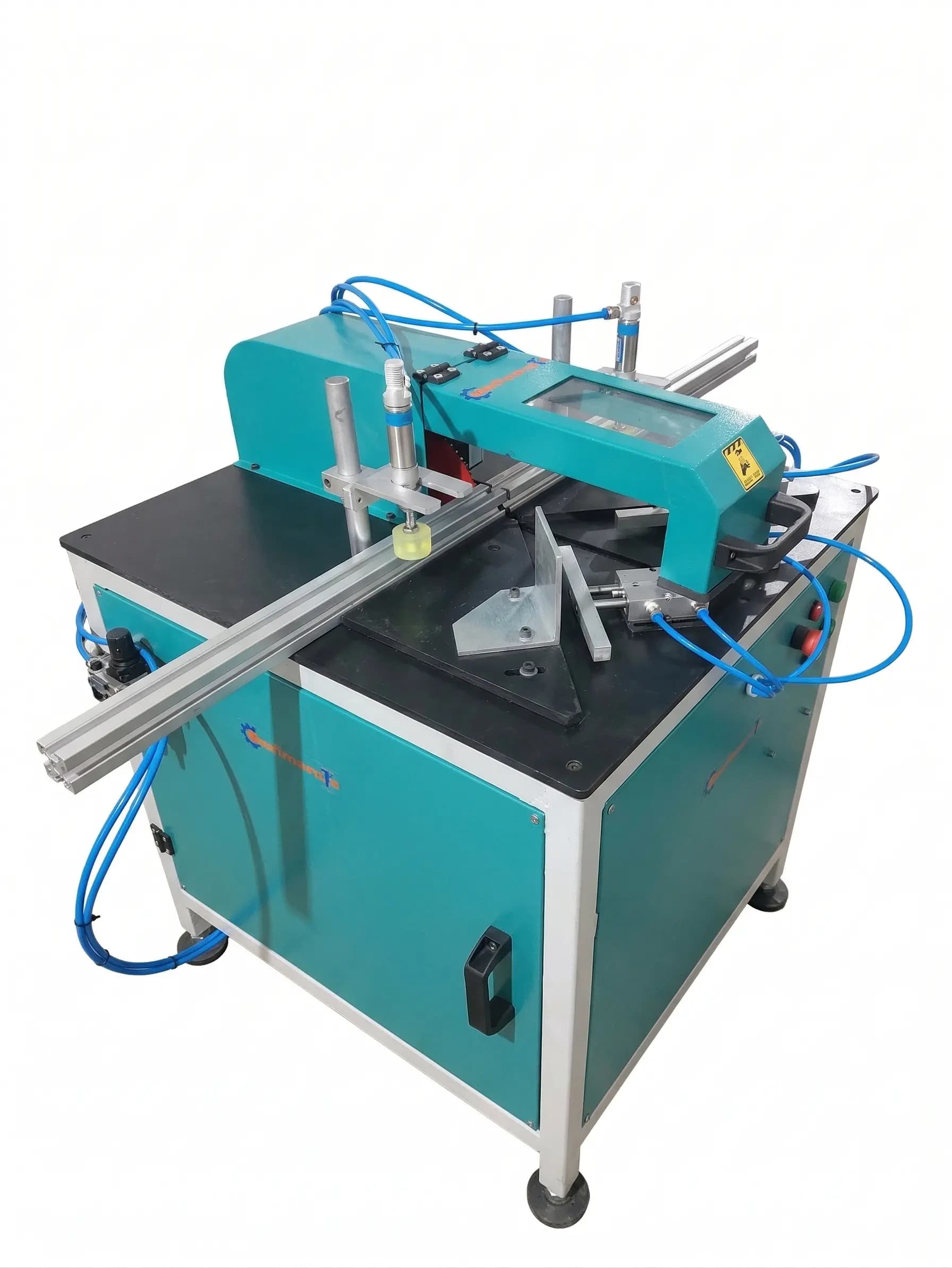
In Bangalore’s competitive window market, an Automatic Double Head Cutting Machine is no longer a luxury; it is the baseline for survival. For workshops in Peenya, Bommasandra, or Hosur, the price for a reliable 450mm blade unit typically ranges from ₹4.5 Lakhs to ₹12 Lakhs depending on automation levels and PLC integration. This guide breaks down the engineering specifications and financial metrics required to transition from manual setups to high-volume production.
The Real Cost of Automatic Double Head Cutting Machine Price in India
When evaluating an aluminium cutting machine price or searching for the right upvc machine price list, most workshop owners focus solely on the sticker price. However, as an engineer with 15 years in the field, I look at the Total Cost of Ownership (TCO). A standard 45-degree double head cutting machine requires stable 3-phase power and a consistent 6-8 bar compressed air supply to function within a ±0.1mm tolerance.
In our recent installations across Karnataka, we’ve categorized the investment into three tiers:
- Entry-Level Automatic (₹4.5L - ₹6L): Ideal for workshops producing 25-40 windows/day. Usually features 450mm blades and manual length setting with digital readouts.
- Mid-Range PLC Controlled (₹6L - ₹9L): Features automatic tilting (45° and 90°) and pneumatic feed control, capable of 60-80 windows/day.
- High-Performance CNC (₹10L+): Fully integrated with production software, automatic profile length adjustment, and 500mm-600mm blades for curtain wall profiles.
Case Study: Scaling a Peenya Fabrication Unit
Last year, we worked with a fabrication unit near the Nelamangala toll that was struggling with high wastage using a single cutting setup. They were seeing a 12% scrap rate due to manual measurement errors and blade deflection. We implemented a 45 degree double head cutting machine with a 500mm blade and saw the following results over a 6-week period:
- Wastage Reduction: Dropped from 12% to 2.8% by utilizing optimized cutting lists.
- Output Increase: Jumped from 18 frames per day to 52 frames per day without adding staff.
- Precision: Achieved a consistent 45-degree miter joint that eliminated the need for manual filing before joining on the uPVC Welding Machine.
Technical Specifications That Matter
To ensure your Aluminium Profile Punching Machine and cutting units work in harmony, you must verify these technical parameters before purchase:
- Blade Speed & Feed: For aluminium fabrication, look for a spindle speed of at least 2800-3200 RPM. The feed rate should be adjustable via a hydro-pneumatic damping cylinder to prevent burrs on the profile edges.
- Material Standards: Ensure the machine is calibrated for IS 1285 grade aluminium or high-impact uPVC profiles. Blade thickness typically ranges from 4.0mm to 4.4mm to balance stability with material loss.
- Bed Stability: A cast-iron or heavy-walled steel bed is non-negotiable. At our Mechnovate facility, we’ve found that lighter frames vibrate at high RPMs, leading to micro-cracks in the profile finish.
- Pneumatic Clamping: Look for a minimum of 3 horizontal and 2 vertical clamps per head to ensure the profile doesn't shift during the degree cutting machine operation.
Calculating Your ROI for uPVC Windows Manufacturing Machine
The Return on Investment (ROI) is calculated by more than just speed. In the Bangalore market, where labor costs for skilled fabricators are rising by 15% annually, automation pays for itself through labor displacement.
Consider this calculation for a mid-sized workshop:
- Monthly Savings on Labor: Replacing two manual cutters with one automatic head cutter machine saves roughly ₹50,000/month.
- Material Savings: Reducing waste on 2 tons of aluminium/month by 8% saves approximately ₹48,000/month (at ₹300/kg).
- Total Monthly Gain: ₹98,000.
- Payback Period: For a ₹7 Lakh machine, the break-even point is approximately 7.2 months.
Common Pitfalls in Window Machinery Procurement
Avoid these mistakes that I see regularly in the field:
- Undersized Motors: Never buy a double head miter saw for aluminium profiles with less than a 2.2kW motor per head. Smaller motors overheat during 8-hour shifts.
- Poor Air Filtration: Many Bangalore workshops ignore the moisture in pneumatic lines. Without a proper refrigerated air dryer, your solenoid valves will fail within 6 months.
- Ignoring Service Proximity: If you are looking for uPVC window machinery manufacturers in Chennai or Bangalore, ensure they have a local technician. A machine down for 3 days can cost you a major contract.
Maintenance Checklist for Longevity
To maintain the ISO standards and precision engineering your clients expect, follow this schedule:
- Daily: Clean aluminum chips from the induction rails; check oil-mist lubrication levels.
- Weekly: Inspect blade sharpness. A dull blade increases motor load and ruins the profile's thermal break.
- Monthly: Check the alignment of the 45-degree stops using a precision square. Adjust the pneumatic pressure regulators to ensure a steady 6 bar.
FAQ: Fabricator Questions
Q: Can I use the same machine for both aluminium and uPVC? Yes, but you must change the blade tooth profile (TCG for aluminium vs. ATB for uPVC) and adjust the cutting speed. Using an aluminium cutter for uPVC without speed adjustment can melt the plastic.
Q: What is the difference between a 450mm and 500mm blade? It’s about the cutting diagram. A 500mm blade allows for a wider cutting width, which is essential if you are moving into heavy-duty sliding door profiles or curtain walls.
Q: Do I need a CNC uPVC window corner cleaning machine if I have a double head cutter? While the cutter ensures the fit, the corner cleaner ensures the finish. For high-end Bangalore residential projects, a CNC cleaner is required to remove the weld bead professionally.
Q: Is it better to buy a portable uPVC window making machine first? Only for site-work or repairs. For a fixed workshop, a portable unit lacks the bed stability required for precision engineering and long-term durability.
Get more articles like this
Follow Mechnovate on Google to see our guides in Google Discover & News