Scaling Aluminium Fabrication in Indore: Manual vs Auto Price
Scaling Aluminium Fabrication in Indore: Manual vs. Automatic Performance
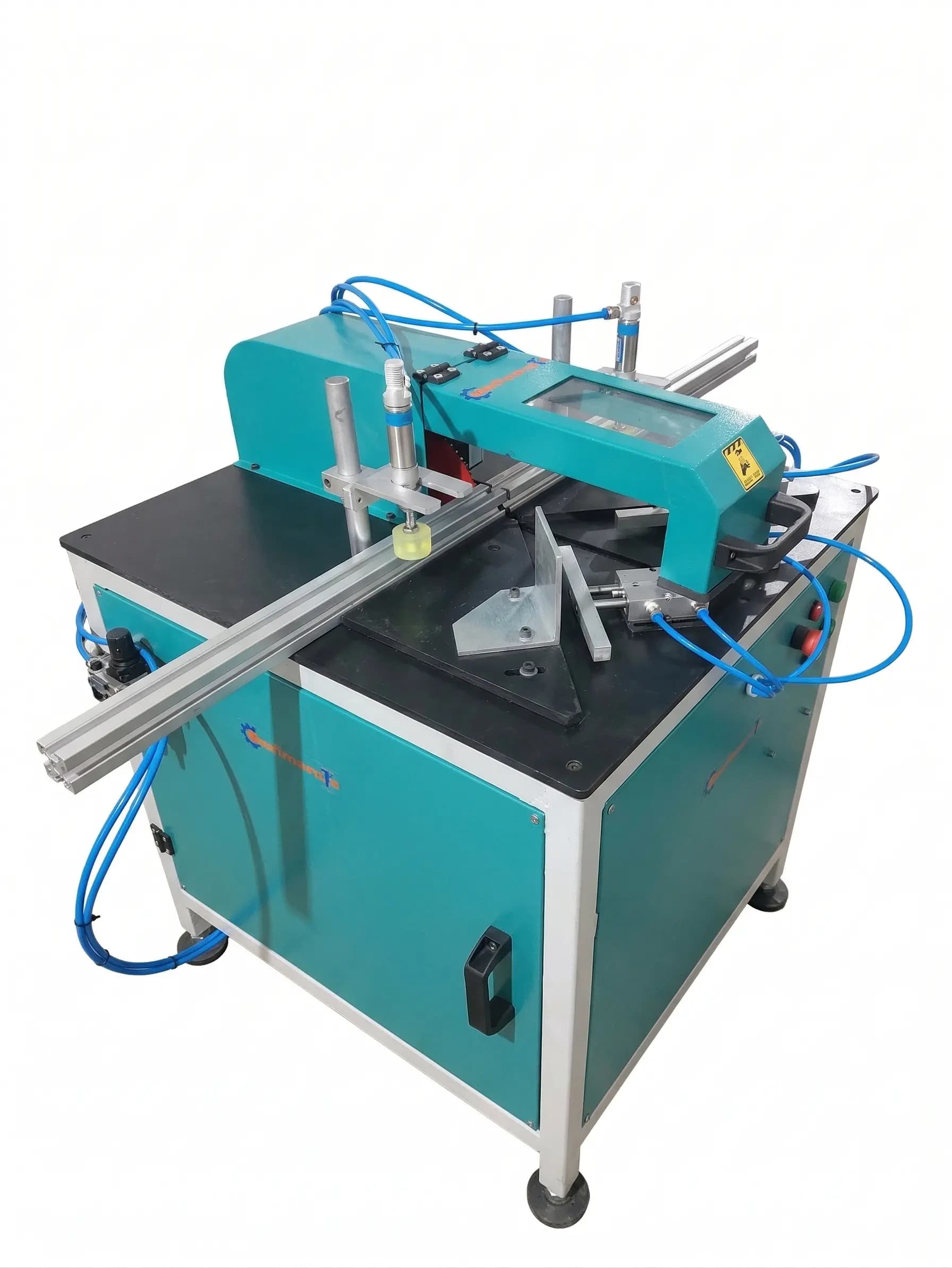
For fabricators in Indore’s industrial hubs like Sanwer Road and Pithampur, the decision to upgrade from a manual aluminium cutting machine 12 inch to an automatic double head cutting machine is the primary bottleneck to scaling. In our experience setting up units across Madhya Pradesh, the performance gap is not just about speed; it is about dimensional repeatability and waste reduction. A manual 12-inch cutter typically yields a tolerance of +/- 1.0mm, whereas an automatic double head cutting saw for aluminium profiles brings this down to +/- 0.1mm. This precision is critical for high-end projects involving thermal break profiles or heavy-duty industrial aluminum door manufacturing equipment.
While the initial aluminium cutting machine price for manual setups is attractive for startups, the hidden costs of labor and material wastage often exceed the EMI of an automated line within 14 months. If your workshop processes more than 15 window frames per day, the manual approach becomes a liability. Automated systems allow for simultaneous 45-degree and 90-degree cuts on both ends, effectively tripling your output per man-hour while ensuring air-tight corner joins that meet ISO standards.
Technical Benchmarks: Manual vs. Automatic Machine Specifications
To understand the engineering behind these tools, we must look at the feed rates and blade stability. A standard aluminium cutter machine 12 inch (manual) relies on the operator's physical force, which leads to blade deflection and burr formation. In contrast, an automatic upvc window manufacturing plant cost India or an aluminium equivalent includes hydro-pneumatic cylinders that ensure a constant feed speed, typically between 5 to 15 mm/s depending on the profile thickness.
- Blade Speed & Stability: Most automatic saws utilize 400mm to 500mm blades running at 2800-3200 RPM with carbide tips (TCT). This reduces the heat-affected zone on the profile edge.
- Angular Precision: A degree cutting machine with digital readouts eliminates the parallax error common in manual indexing. This is vital for complex curtain wall systems.
- Clamping Systems: High-performance machines use vertical and horizontal pneumatic clamps (6-8 bar pressure) to prevent profile rotation during the cut, ensuring perfectly square faces.
- Waste Management: Automated systems often feature chip extraction ports and optimized cutting paths that can reduce scrap by up to 5% per 6-meter bar.
The Pithampur Case Study: Scaling from 15 to 60 Frames Daily
In 2022, we consulted for a fabrication unit in Pithampur that was struggling with a 12% reject rate on their upvc windows making machine and manual aluminium setup. Their manual aluminium cutter was producing inconsistent miters, forcing the assembly team to use excessive sealant and fillers. We replaced their setup with a Automatic Double Head Cutting Machine and a Aluminium Punching Machine.
Over a six-week trial, the results were measurable. The output increased from 15 frames per shift to 62 frames. More importantly, the 'scrap bin weight' dropped from 42kg per week to 9kg. By eliminating the manual layout phase—where workers measure each bar with a tape—and using the automatic machine’s digital scale, they saved 4 minutes per frame. This shift allowed them to take on a 500-unit residential project in Indore that they previously would have declined due to strict delivery timelines.
Calculating the True Aluminium Cutting Machine Price and ROI
When comparing the aluminium cutting machine price in the Indian market, do not look only at the sticker price. A manual punching machine or a basic cutter might cost ₹35,000 to ₹60,000, while a CNC aluminium profile cutting machine can exceed ₹8,00,000. However, the labor cost in Indore is rising, and the scarcity of skilled 'mistry' level workers makes automation a necessity rather than a luxury.
Consider the following ROI calculation for a medium-scale workshop:
- Labor Savings: One automatic machine replaces three manual cutting stations. At ₹15,000 per operator, that is a saving of ₹4,50,000 annually.
- Material Savings: Saving 20mm of waste per profile on 100 profiles a day equates to nearly 600 meters of profile per year. At current aluminium rates, this is a direct profit injection.
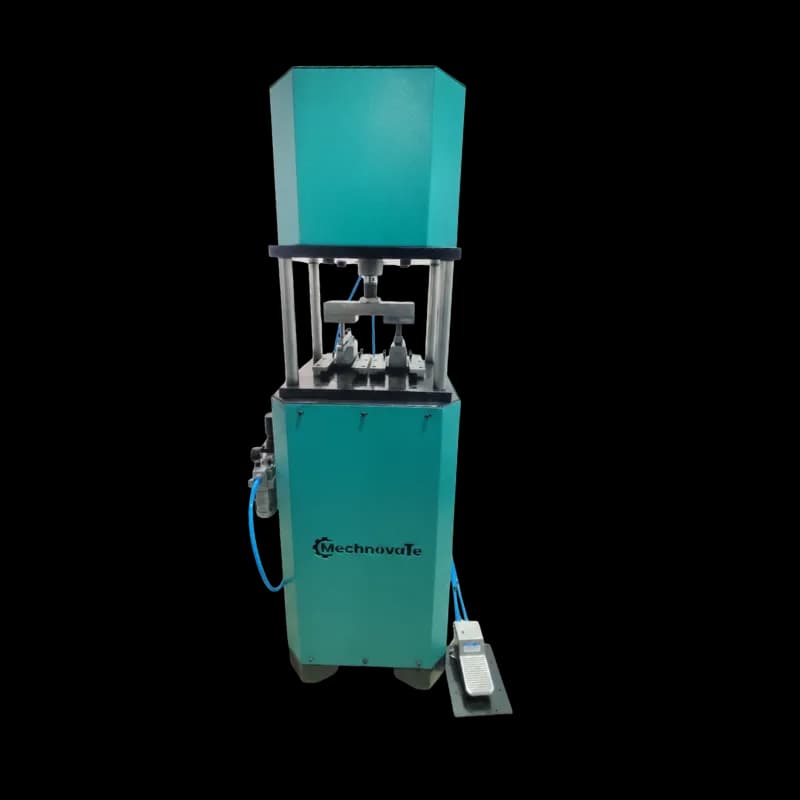
- Assembly Speed: Precision cuts mean a Aluminium Window Corner Crimping Machine works flawlessly, reducing assembly time by 30%.
Essential Support: Punching, Milling, and Routing
Scaling isn't just about the cut; it's about the processing. A high-speed copy router machine is essential for hardware slots, while a heavy duty aluminium profile end milling machine is required for mullion joints. For uPVC lines, the upvc welding machine and upvc window corner cleaning machine price must be factored into the total plant cost.
- Slotting: A Copy Router Machine ensures that lock holes and handle slots are identical across all units, preventing site-installation failures.
- Corner Strength: Using an automatic aluminium corner crimping machine provides a structural bond that manual screw-fixing can never replicate.
- End Milling: Precise milling of the 'transom' or 'mullion' allows for a seamless fit into the main frame, which is critical for water-tightness (as per IS 1285 standards).
Common Mistakes and Maintenance on the Shop Floor
One of the biggest mistakes we see in Indore workshops is neglecting the pneumatic system. An aluminium profile cutting machine is only as good as its air supply. Moisture in the lines will ruin the solenoid valves and cylinders of your automatic double head cutting saw. Always install a refrigerated air dryer and an FRL (Filter, Regulator, Lubricator) unit.
Another frequent error is using the wrong blade for different alloys. If you are cutting 6063-T6 architectural profiles, using a blade designed for thin-walled sections will cause vibrations and 'chatter' marks. Ensure your head cutting machine is calibrated weekly using a precision square to maintain the 45-degree accuracy. Ignoring blade sharpening is the fastest way to burn out your motor and ruin expensive aluminium profiles.
FAQ: Fabricator Questions on Machinery
Q: Can I use a uPVC cutting machine for aluminium profiles? A: No. While a upvc cutting machine looks similar, aluminium requires higher torque motors and a cooling mist system (oil-air mix) to prevent the aluminium from welding itself to the blade teeth.
Q: What is the power requirement for an automatic double head saw? A: Most industrial upvc window manufacturing machines and aluminium saws require a 3-phase 440V connection. A typical double head saw uses two 2.2kW motors.
Q: Is a CNC uPVC window fabrication machine worth it for a small business? A: For a startup, we recommend a best uPVC window making machine for small business which is usually a single-head semi-automatic setup. Only move to CNC once your volume exceeds 30-40 windows per day to justify the automatic upvc window plant cost India.
Get more articles like this
Follow Mechnovate on Google to see our guides in Google Discover & News