Scaling Ahmedabad’s High-Rise Boom: Aluminium Window Machinery Guide
Engineering the Future of Ahmedabad’s Skyline: Scaling Beyond Manual Fabrication
Ahmedabad’s vertical expansion is no longer a localized phenomenon; the skyline from SG Highway to New C G Road is transforming with high-rise residential and commercial towers reaching 22 to 30 floors. For a local fabricator, this boom presents a high-stakes choice: scale production with industrial-grade automation or lose contracts to out-of-state competitors. High-rise structures demand window systems capable of withstanding extreme wind pressures at elevation, often exceeding 2.0 kPa. This translates to the use of heavy-duty, thick-walled profiles that a standard aluminium cutter machine 12 inch simply cannot handle with the required structural precision. As a senior engineer at Mechnovate with over 15 years on the shop floor, I have seen that the transition to becoming a top-tier aluminum window fabrication machinery operator depends entirely on understanding the technical nuances of precision engineering.
To compete for Tier-1 developer projects in Gujarat, your workshop must move beyond the basic aluminium cutter. You need a synchronized production line that minimizes human error and maximizes material yield. This guide breaks down the essential investments for fabricators looking to partner with the best aluminium window machinery manufacturers in Ahmedabad Gujarat.
The Critical Role of Precision Cutting in High-Rise Projects
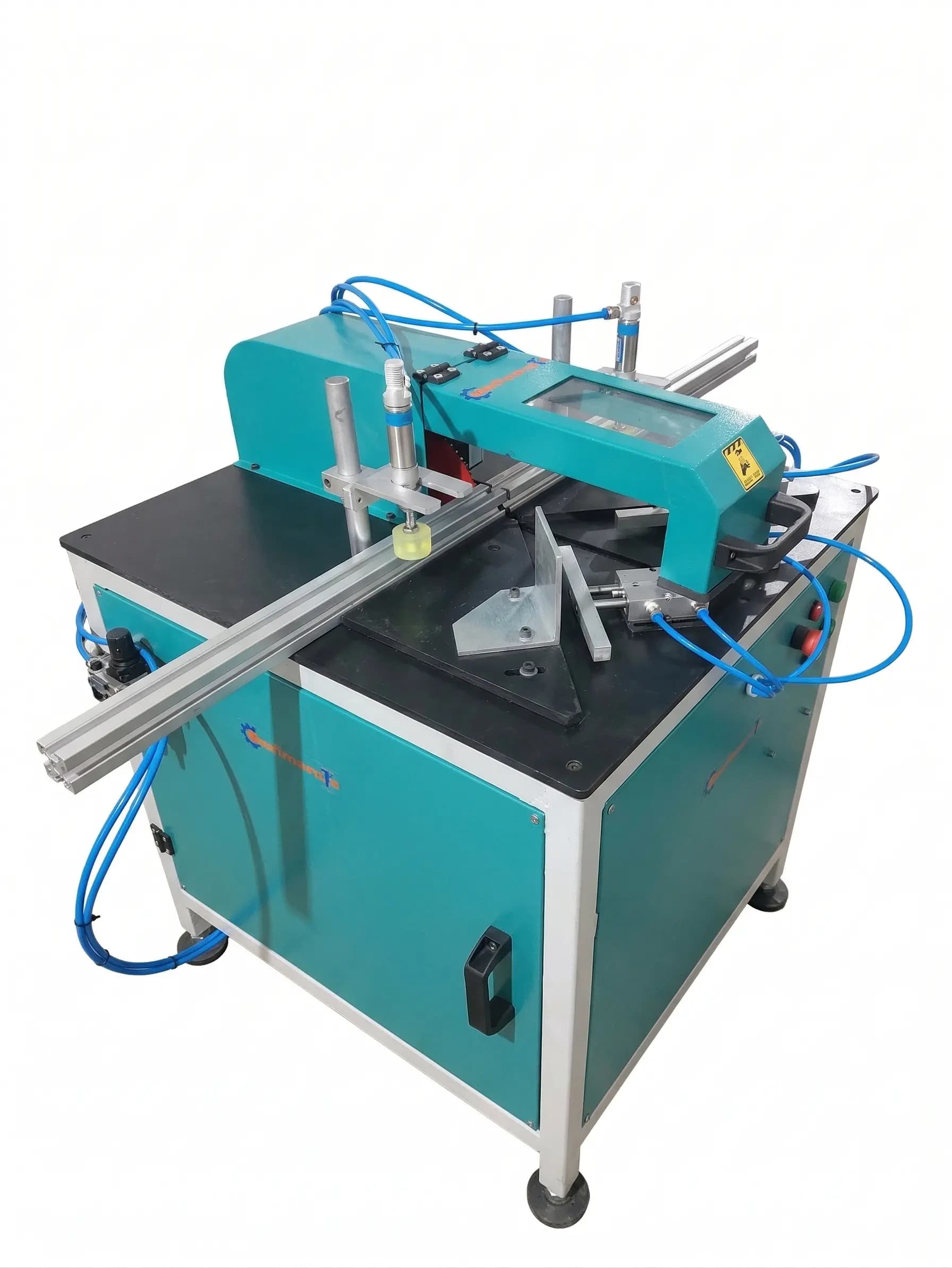
The cornerstone of any high-output workshop is the cutting station. In high-rise windows, a gap of even 0.5mm in a miter joint is a failure point for both water penetration and structural rigidity. When scaling, the Double Head Cutting Machine is the non-negotiable first step. Unlike single cutting manual saws where measurement errors are compounded, a 45 degree double head cutting machine ensures that both ends of a profile are processed in a single stroke, maintaining absolute parallelism.
From an engineering perspective, look for machines with a hydro-pneumatic feed system. When cutting 2.5mm architectural profiles, a standard pneumatic feed can cause blade 'chatter,' leading to micro-fractures in the finish. A hydro-pneumatic system provides a smooth, constant feed rate, which is essential for achieving the clean edges required by Industrial profile cutting safety standards ISO standards. Furthermore, for the large sliding sections common in Ahmedabad's luxury apartments, you must move toward a 500mm blade diameter. An automatic double head cutting saw for aluminium profiles with CNC integration allows you to upload cutting lists directly from optimization software, reducing scrap from the industry average of 10% down to less than 3%.
Structural Strength: Why Corner Crimping Beats Mechanical Fastening
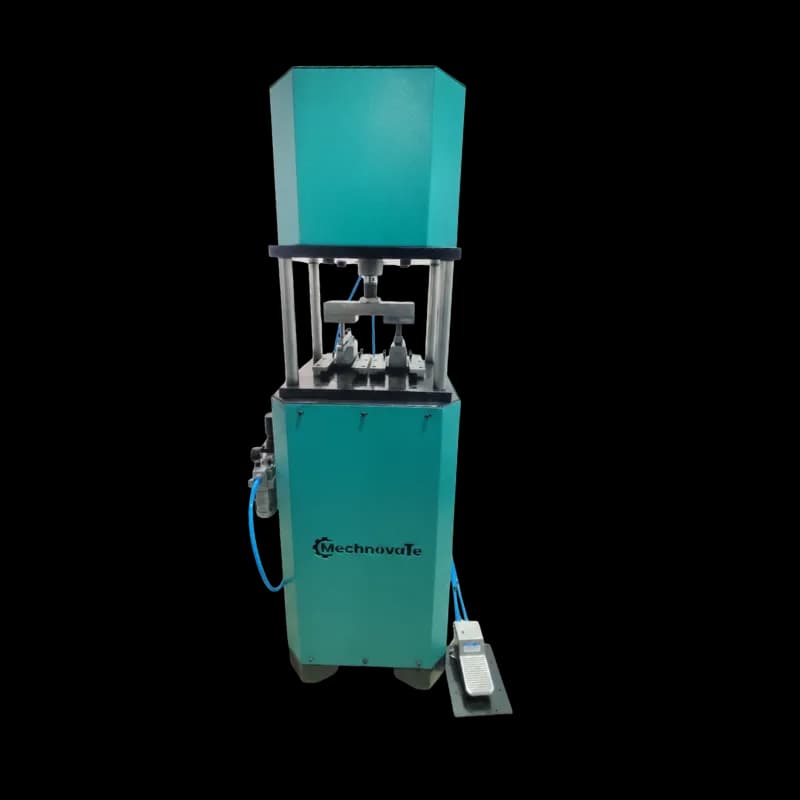
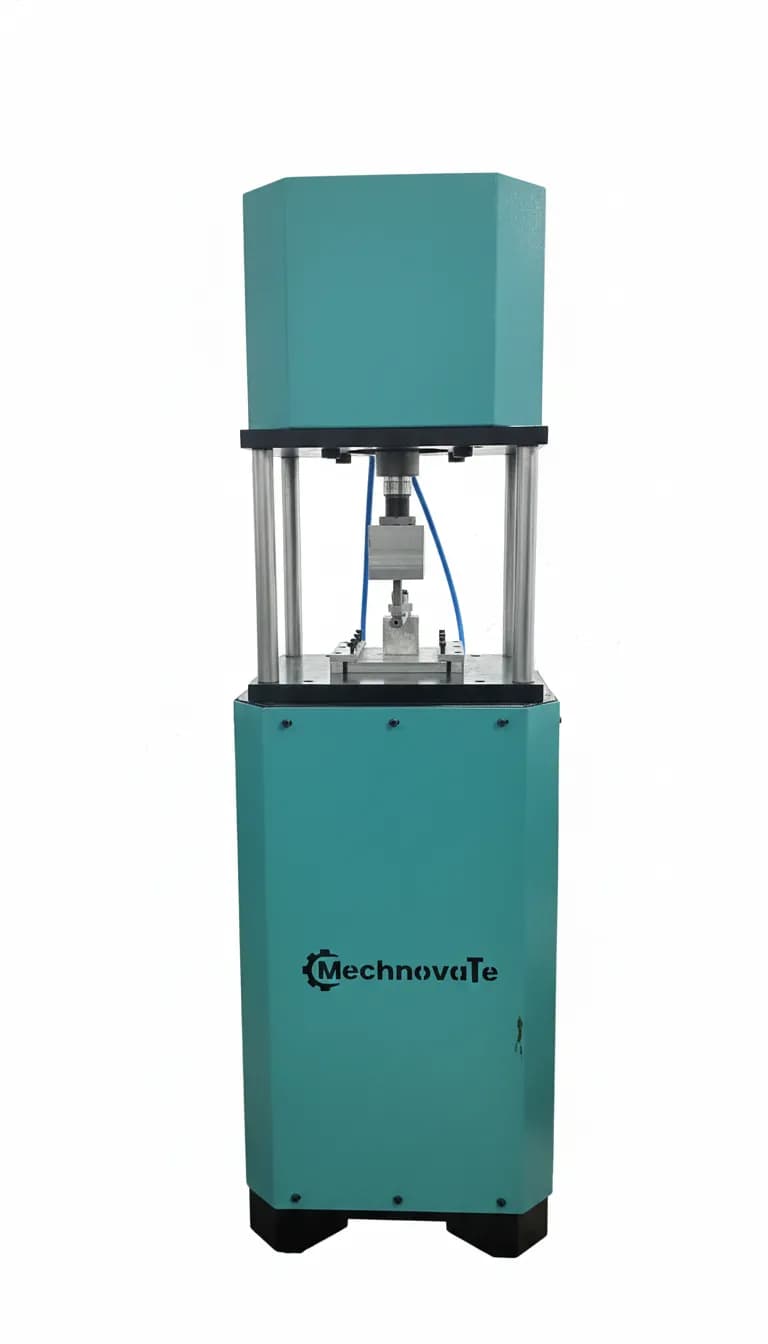
In the past, many Ahmedabad workshops relied on screw-joined corners. However, for a 15th-floor balcony door, mechanical fasteners eventually loosen due to wind-induced vibration. This is why the best aluminum machinery manufacturers in Ahmedabad now emphasize the Aluminium Corner Crimping Machine. This machine uses massive hydraulic pressure to cold-weld the profile and the internal corner cleat together.
- Hydraulic Power: A professional-grade crimper should provide between 30kN and 50kN of force.
- Tooling Precision: The crimping knives must be adjustable in multiple axes to accommodate various profile heights.
- Repeatability: In our proprietary testing at Mechnovate, we found that hydraulic crimping increases corner torque resistance by 400% compared to traditional manual punching machine joints.
If you are evaluating automatic aluminium window production line price packages, the crimper is where you should not cut corners. A weak joint leads to sagging sashes, which results in expensive on-site rework that can erase your project margins.
Advanced Processing: Copy Routers and End Millers
Beyond cutting and joining, the processing of lock holes, drainage slots, and handle holes determines the speed of your assembly line. A high speed copy router for aluminium windows is essential for maintaining a 12,000 RPM spindle speed. This high RPM is critical; lower speeds cause the aluminium to 'gum up' the bit, leading to jagged holes that require manual filing.
Similarly, an heavy duty aluminium profile end milling machine is required for mullion joints. For fabricators doing alu door fabrication machinery work, the end miller must have a large enough cutter diameter to handle the wide faces of door profiles in a single pass. During my time setting up facilities in Gota and Sanand, I observed that workshops using multi-pass milling on small machines lost 20 minutes per frame in setup time alone. Scaling requires equipment that handles the profile in one hit.
Case Study: Optimizing a Sanand-Based Fabrication Unit
Last year, we worked with a mid-sized fabricator in Sanand who was struggling to fulfill a 400-unit window order for a commercial high-rise. Their existing setup relied on a basic aluminium cutting machine price-focused entry model and manual drilling.
The Intervention:
- Workflow Audit: We identified that 40% of their time was spent on manual layout and measurement.
- Equipment Upgrade: We installed a CNC-interfaced Double Head Cutting Machine and a four-spindle aluminium punching machine.
- Process Refinement: We synchronized their cutting lists with an ERP system to optimize the 6-meter profile lengths.
The Results:
- Throughput: Increased from 12 frames per shift to 55 frames per shift.
- Accuracy: Measurement-related rejects dropped from 7% to 0.2%.
- Labor Efficiency: The same four-man team was able to process 4x the volume without overtime.
This case study proves that the best uPVC window making machine for startup businesses or aluminium scaling is one that prioritizes the reduction of manual measurement steps.
Common Mistakes When Purchasing Machinery in Gujarat
When searching for upvc window manufacturing machinery or aluminium gear, many buyers fall into the 'lowest price' trap. Here is what to watch out for from an engineering standpoint:
- Undersized Motors: A 1.5kW motor might cut thin uPVC, but for architectural aluminium, you need a minimum of 2.2kW to 3.0kW to maintain torque under load.
- Lack of Cast Iron Bases: Cheap machines use welded sheet metal frames. These vibrate. Vibration kills precision. High-quality upvc windows manufacturing machine systems use cast iron or heavy-gauge boxed steel to dampen vibration.
- Ignoring Service Proximity: While looking for uPVC window machinery manufacturers in Chennai or Lucknow is fine for research, for your primary line in Ahmedabad, you need a manufacturer with local technicians who can arrive within 4 hours if a sensor fails.
Technical Maintenance for Longevity
Maintaining your aluminum window fabrication machinery is as important as the initial purchase. In the dusty environment of Ahmedabad’s industrial zones, pneumatic cylinders are the first to fail.
- Air Filtration: Always install a 5-micron air filter and an industrial-grade dryer. Moisture in the air lines will corrode the internal valves of your head cutter machine.
- Lubrication: Use a high-quality vegetable-based cutting oil for your mist sprayers. It is better for the environment and doesn't leave a sticky residue that attracts dust to your aluminium profile cutting machine.
- Blade Sharpening: Never wait for the blade to start smoking. A dull blade puts 50% more stress on the motor and leads to poor joint fitment.
Frequently Asked Questions
Q: What is the average cost of setting up uPVC window manufacturing unit in India compared to aluminium? A: A basic uPVC machine price list for a startup might begin around 8-12 Lakhs. However, a high-rise capable aluminium line with a CNC double head saw and corner crimper typically starts at 25-35 Lakhs due to the higher torque and hydraulic requirements of the material.
Q: Can I use the same machine for uPVC and Aluminium? A: Only for certain processes like copy routing. However, cutting and welding/joining are entirely different. You cannot use a upvc welding machine on aluminium, and the RPMs required for an aluminium cutter are generally higher than those for uPVC to ensure a clean finish.
Q: How do I choose between a 12-inch and 20-inch blade? A: It depends on the profile width. For modern high-rise systems with 100mm+ frame widths, a 12 inch aluminium cutting machine cannot complete the cut at a 45-degree angle. You need a 450mm or 500mm blade (approx. 18-20 inch) to ensure full section coverage in a single pass.
Q: Where can I find a reliable uPVC window machine service center in Tamil Nadu or Gujarat? A: Mechnovate maintains a nationwide service network. When choosing upvc window machinery manufacturers in Chennai or Ahmedabad, always ask for a list of local spare parts stockists. Your production should never stop for more than 24 hours for a simple pneumatic fitting.
Get more articles like this
Follow Mechnovate on Google to see our guides in Google Discover & News