Scale Your uPVC Unit: uPVC Window Machinery in Chennai Guide
To scale a uPVC fabrication unit in Chennai’s competitive market, you need more than just equipment; you need a synchronized production line backed by immediate local technical support. Scaling from 10 to 50 windows per day requires transitioning from manual processes to semi-automatic or CNC-driven workflows to maintain precision and minimize scrap rates. As a senior engineer at Mechnovate with 15 years in the field, I have seen that the difference between a profitable unit and a struggling one lies in the choice of uPVC window machinery manufacturers in Chennai who provide on-site calibration and spare parts availability.
Technical Foundations: Choosing the Right uPVC Window Manufacturing Machine
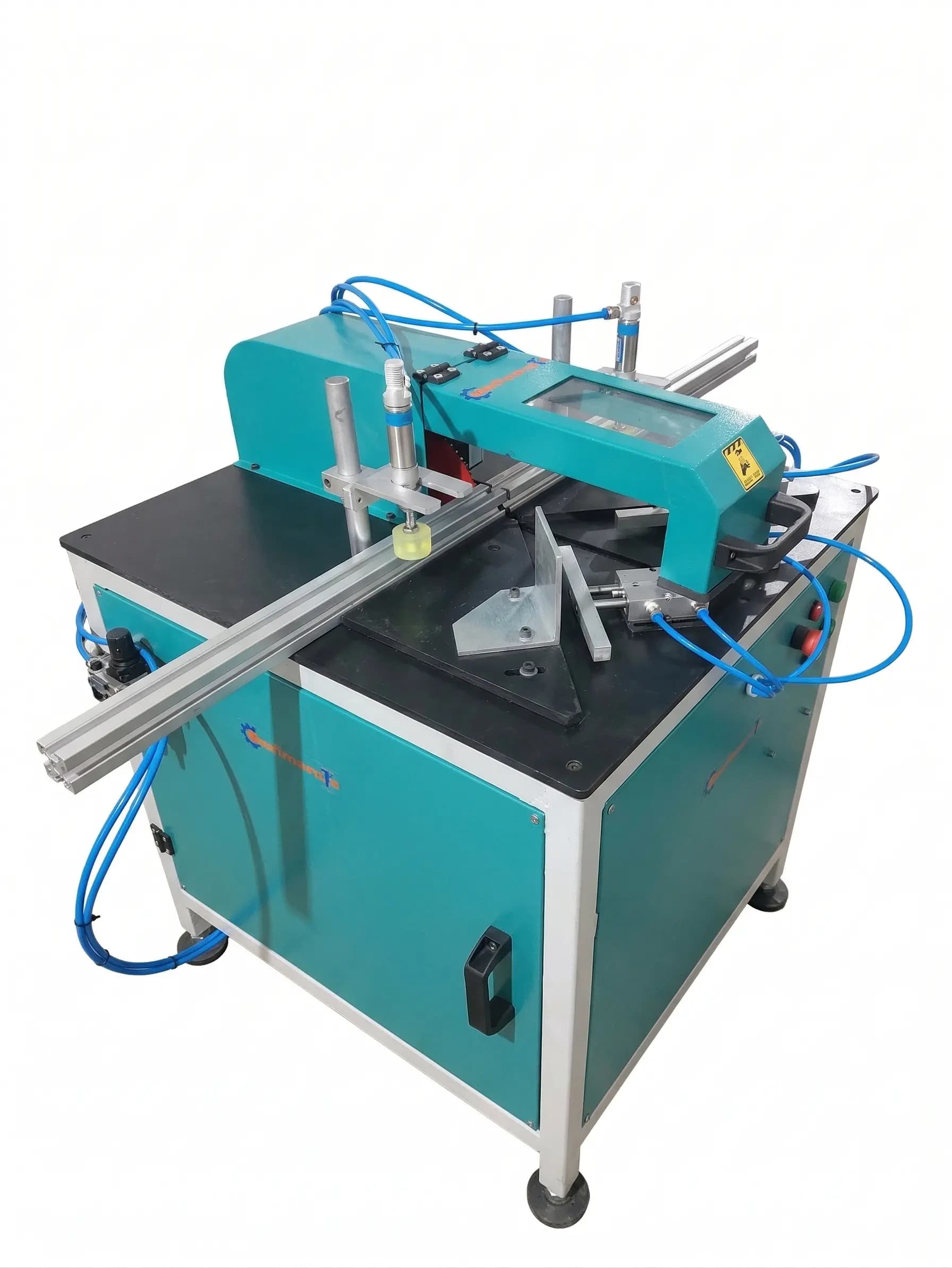
When evaluating a uPVC double head cutting machine, the internal engineering determines your long-term ROI. For a high-output Chennai facility, I recommend machines with a 450mm or 500mm saw blade diameter to handle multi-chamber profiles with reinforced steel inserts. A common mistake I see is using undersized blades that vibrate at high RPM, leading to poor miter joints that fail during the welding process.
Key technical specifications to demand from your supplier include:
- Spindle Speed: Minimum 2800 RPM for clean burr-free cuts on uPVC profiles.
- Cutting Length: 400mm to 4200mm range to accommodate both small bathroom vents and large balcony doors.
- Air Pressure Requirements: A steady 6 to 8 bar is essential; fluctuations here are the #1 cause of pneumatic clamp slippage.
- Profile Thickness Tolerance: The machine must maintain a precision of ±0.2mm to ensure the uPVC welding machine creates a seamless joint.
Case Study: Optimizing a Fabrication Unit in Ambattur, Chennai
Last year, we assisted a mid-sized fabricator in the Ambattur Industrial Estate who was struggling with a 15% wastage rate on profile off-cuts. They were using a single-head manual cutter and an entry-level welder. We implemented a 6-week optimization plan that replaced their setup with an automatic double head cutting machine and a CNC uPVC window corner cleaning machine.
The Results:
- Output Increase: Production jumped from 12 frames per 8-hour shift to 42 frames.
- Wastage Reduction: Cutting waste dropped from 15% to 2.8% due to optimized digital length positioning.
- Labor Efficiency: Two operators now handle what previously required five, allowing the owner to reallocate staff to the installation teams.
The lesson learned was clear: investing in an automatic double head cutting saw for aluminium profiles and uPVC is not just about speed; it is about the repeatability of the 45-degree and 90-degree cuts.
Essential Machinery for a Scaling Chennai Unit
To move beyond a startup phase, your workshop layout must accommodate a linear flow. Here is the hardware stack I recommend for a professional-grade uPVC window manufacturing unit:
- High-Precision Cutting: An automatic double head cutting machine price India varies, but focusing on servo-motor driven positioning will save thousands in profile costs over a year.
- Advanced Welding: For those targeting premium villas in areas like ECR or OMR, a double head seamless welding machine for uPVC windows is non-negotiable for that aesthetic finish.
- Processing Holes: A high speed copy router for aluminium windows and uPVC is required for lock holes and water drainage slots. We often suggest the Copy Router Machine for its 12,000 RPM high-speed motor.
- Reinforcement Integration: Ensure your aluminium punching machine or manual punching machine is calibrated for the specific thickness of the galvanized steel reinforcement used inside the uPVC profiles.
Why Local Service Support in Tamil Nadu is Critical
Chennai’s coastal environment presents unique challenges for precision engineering. The high humidity can lead to faster oxidation of pneumatic components and sensors. This is why choosing uPVC window machinery manufacturers in Chennai with a local service center in Tamil Nadu is vital.
At Mechnovate, we maintain a local inventory of solenoid valves, cylinders, and PLC modules. If a machine goes down on a Tuesday, waiting for a technician from North India or an overseas manufacturer can cost you a week of production. Always ask your supplier for their 'Mean Time to Repair' (MTTR) statistics and whether they offer annual maintenance contracts (AMC) that include deep cleaning of the guide rails and lubrication of the ball screws.
Common Pitfalls in uPVC Machine Maintenance
In my 15 years of workshop experience, I’ve identified three recurring mistakes that kill machine longevity:
- Poor Air Quality: Not using a refrigerated air dryer. Moisture in the pneumatic lines will ruin the seals of your uPVC window welding machine within six months.
- Ignoring Blade Sharpening: Running a dull 12-inch aluminium cutter machine blade puts unnecessary load on the motor and creates friction heat that melts the uPVC during the cut.
- Incorrect Voltage Stabilization: Chennai’s industrial grids can have voltage spikes. Always install a dedicated 3-phase stabilizer for your CNC uPVC window corner cleaning machine price India to protect the expensive electronic boards.
Frequently Asked Questions (FAQ)
Q1: What is the minimum space required for a full uPVC window manufacturing plant? A: For a professional setup using an automatic double head cutting machine and a four-head welder, you need a minimum of 2,500 to 3,000 square feet to allow for material storage, fabrication tables, and glass assembly.
Q2: How does the cost of setting up a uPVC window manufacturing unit in India compare between manual and automatic? A: A basic manual setup can start around 5-8 Lakhs, but a scalable, semi-automatic line with CNC cleaning and double-head welding typically ranges from 18 to 35 Lakhs. The ROI on the latter is usually faster due to lower labor costs and higher output quality.
Q3: Can uPVC machinery be used for aluminium fabrication? A: Most cutting machines like the 45 degree double head cutting machine can handle both, provided you change the blade tooth count and use a cooling system for aluminium. However, welding is exclusive to uPVC; aluminium requires a corner crimping machine.
Get more articles like this
Follow Mechnovate on Google to see our guides in Google Discover & News