Scale Your Ahmedabad Workshop: Aluminum Window Machine Guide
To scale an Ahmedabad-based workshop for high-rise residential and commercial projects, your selection of aluminum window machine manufacturers in Ahmedabad must move beyond price-based shopping to technical performance metrics. Scaling requires machinery that can handle 2.5mm to 3.0mm wall thicknesses and maintain structural integrity under high wind-load specifications. For high-rise projects in regions like Bopal or SG Highway, your automatic aluminium window production line price investment is defined by spindle precision (±0.1mm) and the ability to process heavy-duty thermal break profiles without vibration-induced fatigue.
Critical Factors for High-Rise Aluminum Fabrication
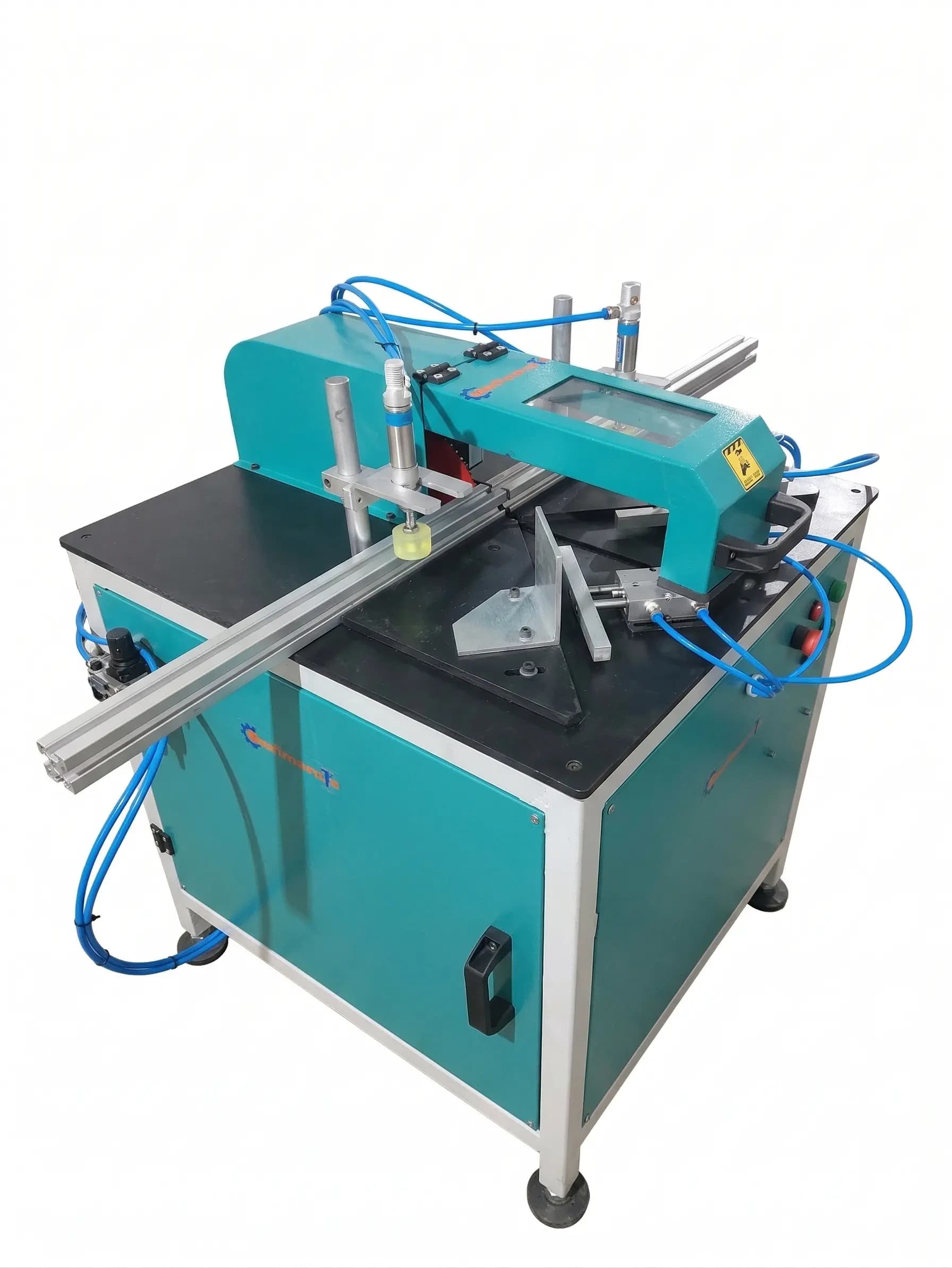
High-rise projects demand rigorous adherence to safety and structural standards. At Mechnovate, we recently audited a facility in Sanand where the fabricator was struggling with a 12% waste margin on premium 65mm series profiles. By integrating an automatic double head cutting saw for aluminium profiles with 500mm TCT blades, we reduced cutting waste to 2.4% and increased the daily output from 45 to 110 frames. The engineering reason is simple: higher blade stability at 2800-3200 RPM prevents micro-fractures in the aluminum alloy (IS 1285 grade), which are critical when the window must withstand 2.5 kPa wind pressure at the 20th floor.
When evaluating aluminum window fabrication machinery, look for these three technical non-negotiables:
- Spindle Run-out: Must be less than 0.02mm to ensure clean mitre joints.
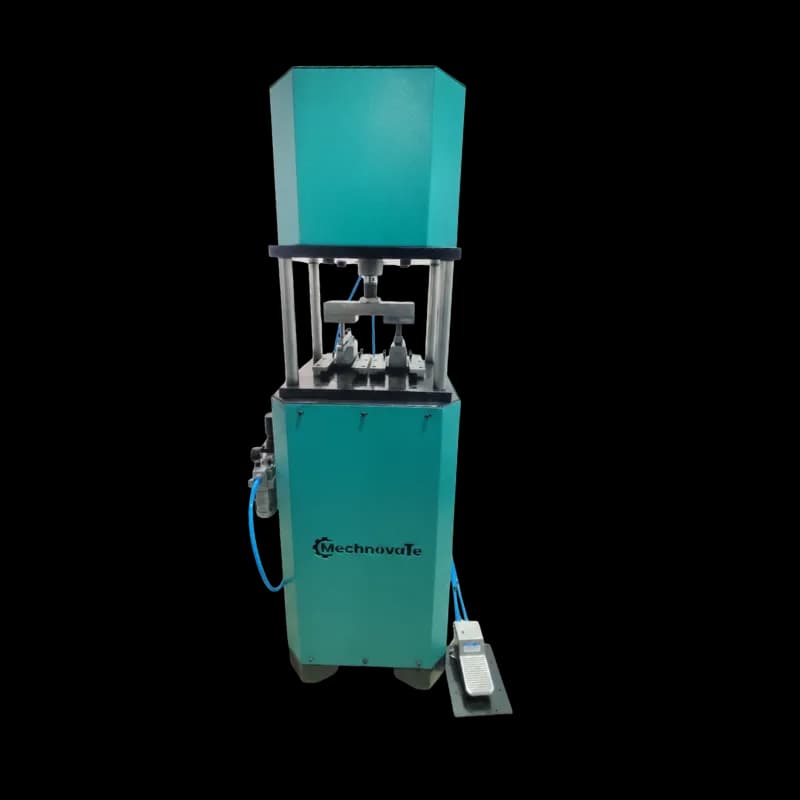
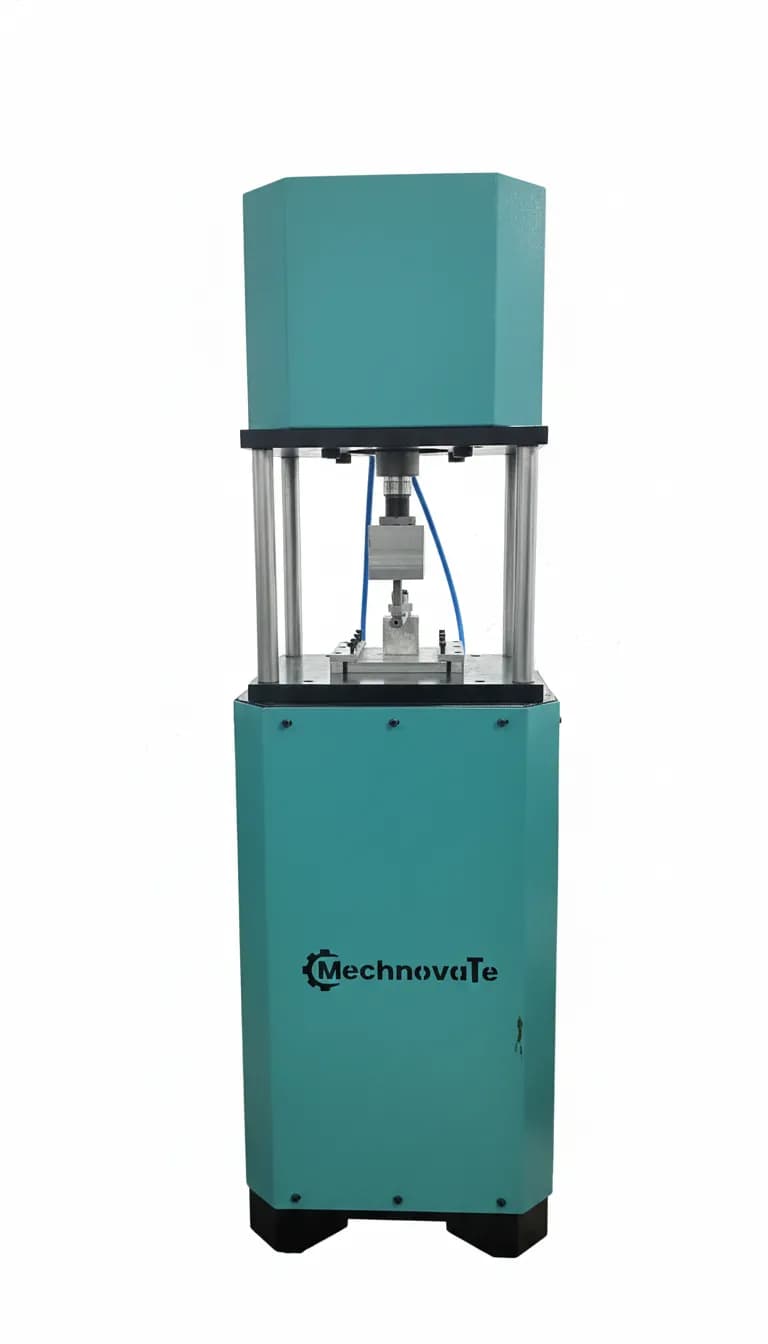
- Pneumatic Pressure: A minimum of 6-8 bar is required for the aluminium window corner crimping machine price to provide the 20kN of force needed for deep-profile structural joins.
- Feed Rates: Variable hydro-pneumatic feeding to prevent overheating of the tool bit during heavy-wall processing.
Technical Benchmarks for Ahmedabad Workshops
Ahmedabad's competitive market requires more than just a basic aluminium cutter machine. You need precision engineering that aligns with ISO 9001 standards. If you are comparing an aluminium cutting machine 12 inch vs. a 20-inch version, the 12-inch model is often insufficient for the wide, multi-track sliding profiles common in modern Ahmedabad architecture. A 500mm (20 inch) blade allows for a 45-degree miter cut on profiles up to 150mm wide, which is the standard for high-end balcony doors.
For those looking at uPVC machinery, the technical requirements shift. A uPVC window manufacturing machine needs precise temperature control (typically 240°C to 260°C) and a seamless welding feature. While an aluminium cutting machine price may vary based on motor kW (look for 2.2kW or higher for high-rise work), a uPVC welding machine must offer PLC-controlled heating cycles to prevent 'cold welds' that fail under structural stress.
The Mechnovate Approach: From Manual to Automatic Production
Many fabricators start with a manual punching machine or a basic aluminium cutter, but high-rise contracts require repeatable accuracy that manual processes cannot provide. In a case study involving a 400-unit project in GIFT City, the fabricator switched from manual methods to a CNC-integrated workflow. The results were measurable:
- Old Method: 12 minutes per frame; 8% rejection rate.
- New Method: 4.5 minutes per frame; 0.2% rejection rate.
This transition relies heavily on the high speed copy router for aluminium windows. A 1.5kW motor running at 12,000 RPM is essential for clean drainage holes and lock-case routing. Lower RPM machines often cause burring, which leads to drainage failure and eventual corrosion of the hardware—a common mistake that leads to expensive post-installation repairs in high-rise buildings.
Evaluating Local Manufacturers: What They Don't Tell You
When scouting aluminum machinery manufacturers in ahmedabad, the 'hidden' value is in the table flatness and the guide rail material. Many low-cost head cutting machine options use soft steel rails that warp after 12 months of heavy use. Insist on induction-hardened linear guides. Furthermore, check the pneumatic logic; a degree cutting machine should have independent clamping cylinders to prevent profile movement during the 45-degree descent.
Common pitfalls to avoid in your workshop:
- Using under-powered motors: A 1.1kW motor on a 45 degree double head cutting machine will struggle with heavy-duty profiles, causing the blade to deflect.
- Ignoring blade cooling: Without a micro-mist lubrication system, aluminum chips weld to the blade teeth, ruining the surface finish of your cut.
- Poor air filtration: Ahmedabad's dust levels can clog pneumatic valves. Always install a moisture separator and lubricator (FRL unit) before your upvc window manufacturing machines.
Installation and Calibration Checklist
To ensure your alu door fabrication machinery performs at peak capacity, follow this engineer-verified calibration routine every 500 cuts:
- Leveling: Use a digital level to ensure the machine bed is within 0.05mm across its entire length.
- Angle Verification: Perform a 'box test' by cutting four 45-degree pieces and checking for a perfect square with a digital protractor.
- Clamping Pressure: Calibrate the horizontal and vertical clamps to 4 bar to prevent profile deformation while ensuring zero movement.
- Blade Parallelism: Ensure the blade path is perfectly perpendicular to the back fence to avoid 'gap-toothed' joints.
Whether you are looking for an aluminium punching machine for residential shutters or a heavy duty aluminium profile end milling machine for curtain walls, the goal is always the same: zero-tolerance precision. For startups, the best uPVC window making machine for small business is often a portable unit, but for those scaling to 50+ frames per day, a fixed-bed industrial profile cutting safety standards ISO compliant line is the only way to sustain growth.
FAQ: Questions Ahmedabad Fabricators Frequently Ask
Q1: What is the difference between a 45-degree and a 90-degree cutting machine for aluminum? A: A degree cutting machine designed for windows must handle 45-degree miter cuts for frames. A 90-degree cutter is typically for industrial partitions. For high-rise windows, a 45 degree double head cutting machine is standard to ensure the perimeter seal is continuous.
Q2: How much space is needed for a full uPVC window manufacturing unit? A: A basic setup with a cutting machine, welding machine, and corner cleaner requires approximately 1,500 to 2,000 sq. ft. for efficient material flow and assembly stations.
Q3: Why are my corner joints opening after installation? A: This is usually due to insufficient pressure from the aluminium corner crimping machine or using profiles with incompatible wall thicknesses. Ensure your crimping blades are aligned precisely to the profile's inner chamber and that you are using a high-quality two-part epoxy glue in the joint before crimping.
Get more articles like this
Follow Mechnovate on Google to see our guides in Google Discover & News