Reducing Rework: Automatic Corner Crimping in Ahmedabad
Why Ahmedabad Workshops are Losing Profits to Manual Rework
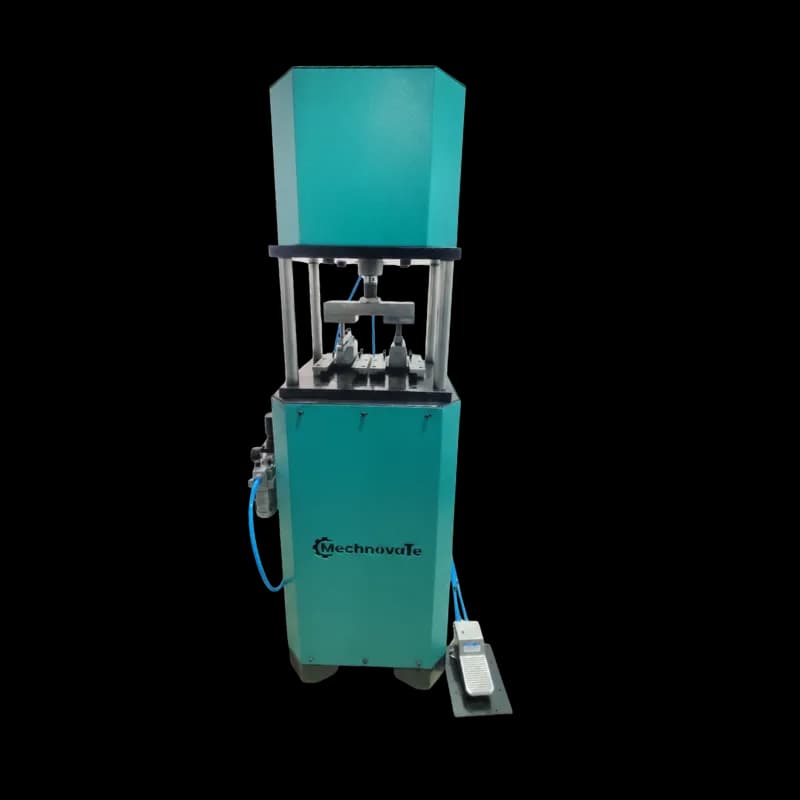
In the competitive aluminium fabrication landscape of Ahmedabad, the primary profit killer isn't the rising cost of extrusions—it is the hidden cost of rework. In our 15 years of technical consulting at Mechnovate, we have observed that workshops using manual punching or screw-joining methods face a 12% to 18% rejection rate during site installation. This occurs because manual joints often suffer from 'mitre-gap' or structural deflection once the glass weight is loaded. If a frame fails on the 10th floor of a new commercial building in Prahlad Nagar, the cost of extraction, repair, and re-installation is roughly 4x the original fabrication cost. Transitioning to an Automatic Corner Crimping Machine eliminates these variances by providing uniform hydraulic pressure across the profile's cross-section, ensuring a structural seal that meets international standards.
The Engineering Reality: Manual Punching vs. Hydraulic Crimping
Most small-scale aluminum machinery manufacturers in Ahmedabad rely on manual punching machines for corner joining. While the manual punching machine is affordable, it lacks the precision required for high-performance architectural systems. When you use a manual punch, the force applied is inconsistent, depending entirely on the operator's fatigue levels. This leads to "smiling joints"—micro-gaps at the top of the 45-degree cut that allow water ingress and air leakage.
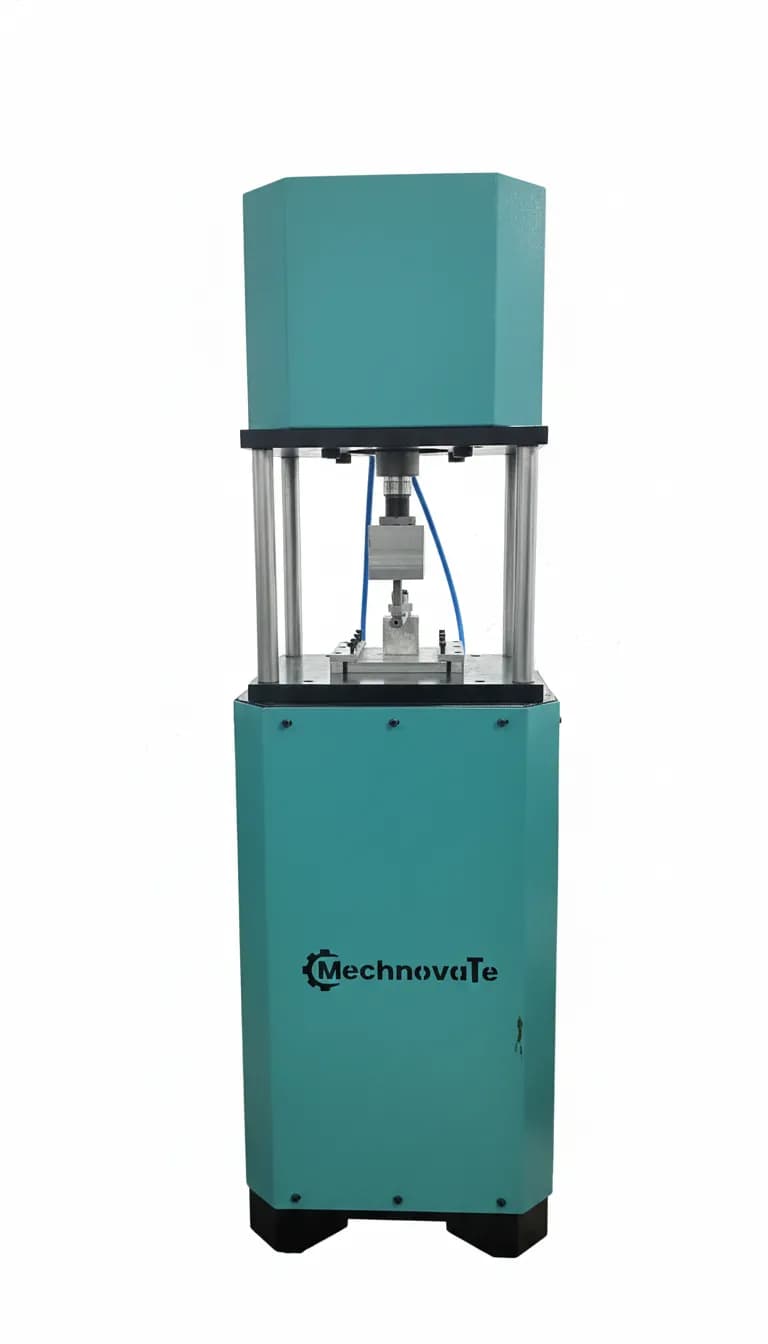
In contrast, an automatic crimper uses dual hydraulic cylinders to drive the crimping knives simultaneously. This ensures that the internal 'cleat' or 'corner key' is deformed exactly at the same millisecond on both sides of the profile. By achieving a cold-welded effect, the joint becomes the strongest part of the window frame. At Mechnovate, we specify our machines to handle profile thicknesses from 1.2mm to 3.5mm, ensuring versatility for both residential sliding windows and heavy-duty industrial aluminum door manufacturing equipment.
Case Study: 90-Day Efficiency Audit in Vatva Industrial Estate
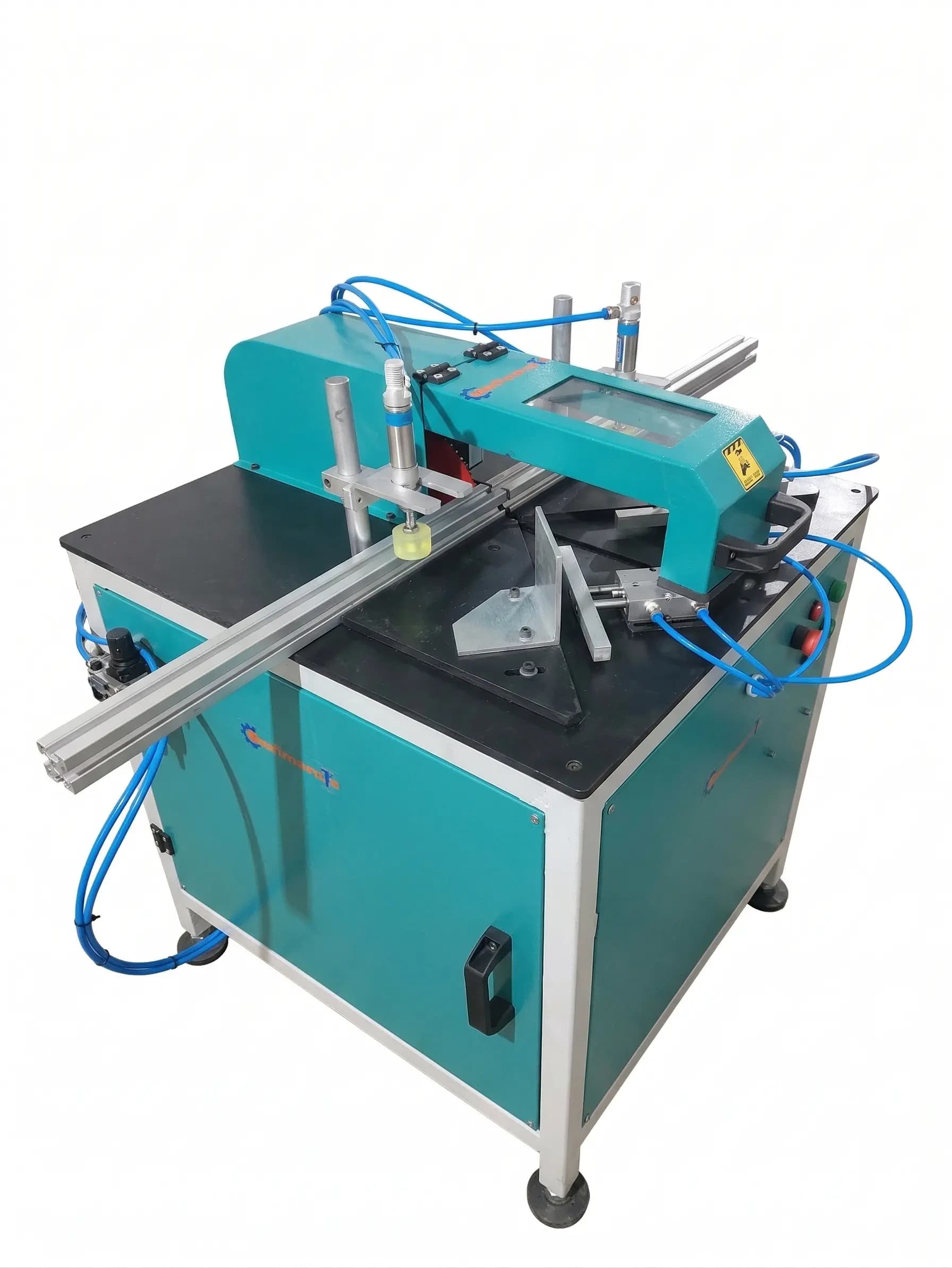
Last year, we audited a mid-sized facility in the Vatva industrial estate that was struggling with inconsistent joint quality on a 400-unit residential project. They were using a manual process for a 65mm casement series, leading to inconsistent 45-degree alignments. Over a 6-week trial, we integrated a high-precision Double Head Cutting Machine alongside an automatic crimper. The results were measurable and grounded in real-world workshop data:
- Rejection Rate: Dropped from 14.5% to 1.2% within the first month.
- Daily Output: Increased from 18 finished frames per shift to 52 frames per shift with the same headcount.
- Labor Reduction: The requirement for manual 'finishing'—where workers use hammers and files to align joints—was reduced by 90%.
- Material Savings: Precise 45-degree cuts and mechanical crimping reduced aluminum scrap by 4% per ton of profile.
This transformation wasn't just about speed; it was about the uPVC and aluminium window manufacturing machine synergy. By ensuring the cutting was done on a digital degree cutting machine, the crimper had a perfect substrate to work with. If your cut is off by even 0.5 degrees, no crimper in the world can save the joint. This is why we recommend a systemic approach to the automatic aluminium window production line price assessment.
Technical Specifications and Engineering Mastery
A high-quality automatic aluminium corner crimping machine price in Gujarat is determined by its hydraulic stability and synchronization. For a workshop to achieve ISO 9001 standards, the machinery must maintain specific tolerances. Our machines utilize a 2.2kW hydraulic motor capable of delivering up to 100kN of force at a steady working pressure of 7-10 bar.
Unlike cheap alternatives often found in the market, we use hardened tool steel (HCHCR) for the crimping knives, ensuring they don't lose their edge after 10,000 cycles. We also focus on the following engineering details:
- Synchronized Knife Movement: Prevents the profile from shifting during the crimping stroke.
- Internal Counter-Blocks: These provide internal support to the profile walls, preventing deformation under high pressure.
- Adjustable Knife Height: Allows for multi-point crimping on wider profiles used in alu door fabrication machinery.
When we look at uPVC window machinery manufacturers in Lucknow or Chennai, we see many attempting to pivot to aluminium. However, the hydraulic requirements for aluminium are fundamentally different from the thermal welding required for uPVC. A uPVC welding machine uses heat to fuse profiles; an aluminium crimper uses sheer force. Understanding this mechanical difference is vital for any workshop owner looking to diversify their product line.
Cost-Benefit Analysis: ROI for Ahmedabad Manufacturers
When calculating the ROI for an automatic aluminium window production line, many owners only look at the initial capital expenditure. However, the real value lies in the 'Cost of Quality.'
- Initial Investment: While the aluminium window corner crimping machine price is higher than manual tools, the payback period in a high-volume market like Ahmedabad is typically 8-10 months.
- Labor Savings: One skilled operator on an automatic machine can do the work of four manual fitters. This reduces the workshop's vulnerability to labor shortages and wage inflation.
- Market Positioning: Mechanical crimping creates a professional finish that meets international BS EN 12020 standards. This allows you to bid for premium commercial projects and government tenders that manual workshops simply cannot qualify for.
In our testing at the Mechnovate facility, we found that frames joined via automatic crimping could withstand 25% more wind load pressure than those joined with screw-torsion methods. This is a critical selling point for fabricators dealing with high-rise developments in the Gujarat International Finance Tec-City (GIFT City).
Common Mistakes in Machine Selection and Maintenance
After servicing hundreds of aluminum window machine manufacturers in Ahmedabad, we have identified several critical mistakes that lead to machine failure and poor joint quality:
- Ignoring Oil Viscosity: Many fabricators use generic hydraulic oil. In the intense Ahmedabad heat, you must use ISO VG 46 or 68 to prevent seal degradation and maintain pressure consistency.
- Incorrect Knife Alignment: If the crimping knives are not perfectly centered to the profile's internal web, you will experience 'bowing' of the frame. Always check the height adjustment for each new profile series.
- Neglecting the Air-Oil Interface: Since window workshops are dusty environments, clogged filters lead to sluggish movement and inconsistent joint pressure. We recommend a weekly purge of the pneumatic lines.
Furthermore, many fabricators try to save money by purchasing a manual punching machine for profiles that are too thick. This not only results in poor joints but also risks operator injury due to the excessive force required. Always match your machine's tonnage to the heaviest profile you intend to process.
Final Recommendations for Workshop Upgrades
If you are a startup business, you might start with a portable uPVC window making machine price list, but as you scale into the aluminium market, the automatic aluminium window production line price becomes your most important metric. For a balanced production line in Ahmedabad, we recommend the following setup:
- One Double Head Cutting Machine with 500mm blades for 45-degree precision.
- One Copy Router Machine for handle and lock hole processing.
- One Automatic Corner Crimper for final assembly.
- One Aluminium Profile End Milling Machine for transom joints.
This configuration ensures that every component is engineered for accuracy before it reaches the assembly stage, virtually eliminating the need for on-site rework and ensuring your reputation as a high-quality manufacturer remains intact.
FAQ: What Fabricators Ask Mechnovate
Q: Can one crimping machine handle both uPVC and Aluminium? A: No. uPVC requires a upvc window welding machine for fusion joints, whereas aluminium requires mechanical crimping. Trying to adapt one for the other will void the warranty and destroy the profile. Aluminium is an alloy that requires cold-mechanical joining; uPVC is a polymer that requires thermal fusion.
Q: What is the maintenance schedule for an automatic crimper in a dusty environment like Ahmedabad? A: We recommend daily cleaning of the workspace with compressed air, weekly lubrication of the guide rails with high-grade grease, and a full hydraulic oil change every 2,000 working hours or annually. Ensure the 12-inch aluminium cutter machine nearby has proper dust extraction to prevent metal filings from entering the crimper's hydraulic seals.
Q: Is it worth buying a 12-inch aluminium cutting machine for commercial profiles? A: For light residential work, a 12-inch aluminium cutter machine is sufficient. However, for commercial facades and heavy-duty alu profile cutting and processing machines, we recommend a 450mm or 500mm blade. This ensures a clean, single-pass cut on wider profiles, which is essential for the corner crimper to create a seamless 90-degree corner.
Get more articles like this
Follow Mechnovate on Google to see our guides in Google Discover & News