Reducing Material Wastage: 45 Degree Double Head Cutting Guide
Precision Calibration: The Key to Zero-Waste Aluminium Fabrication
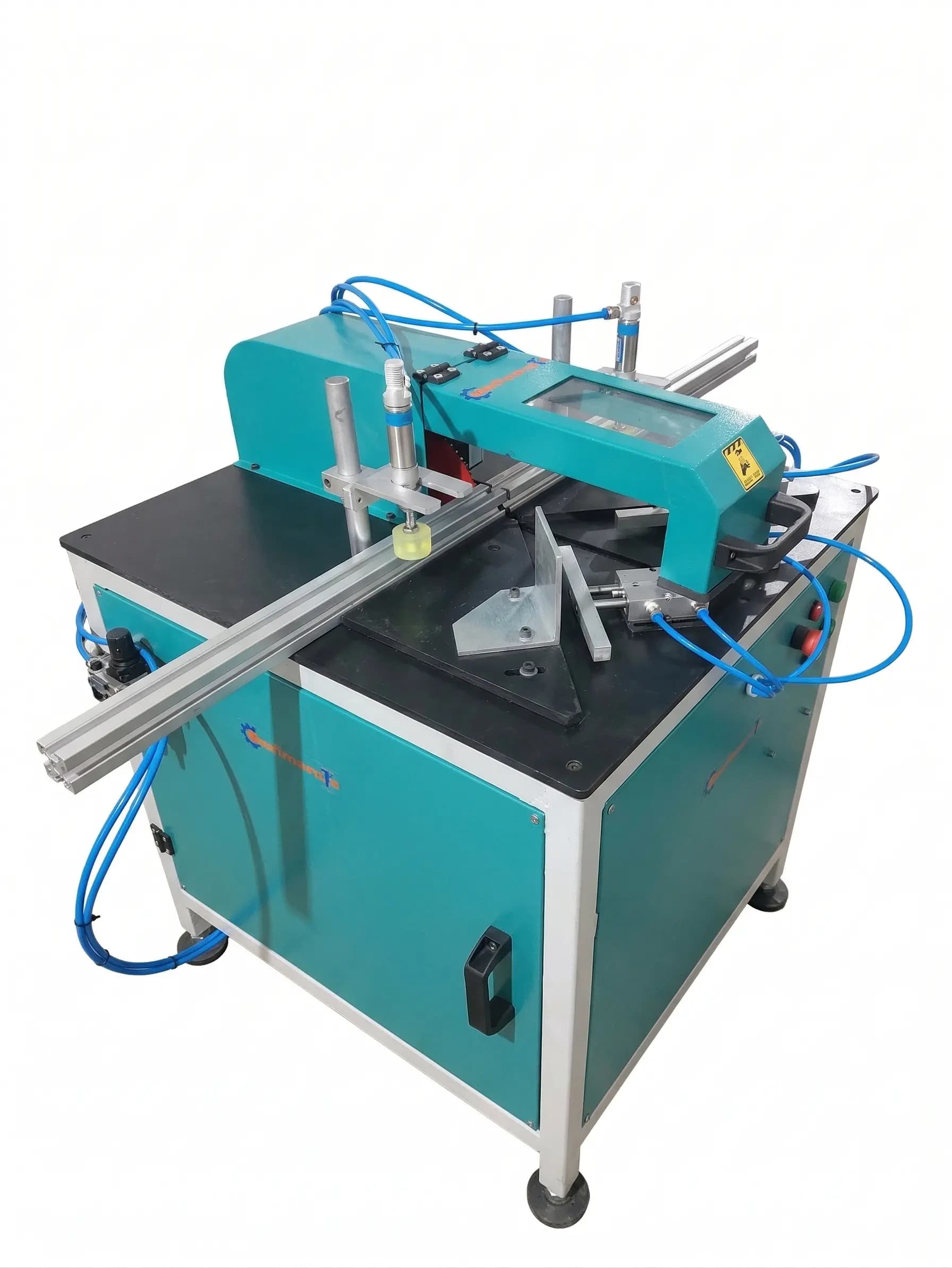
Achieving near-zero material wastage in a high-volume Thane workshop begins with the precision engineering of your 45 degree double head cutting machine. Most fabricators lose 8-12% of their profile stock to 're-cuts' caused by inaccurate mitre joints or blade deflection. In our recent performance audit of a facility in Wagle Estate, Thane, we reduced material waste from 14% to a lean 2.8% simply by recalibrating the hydro-pneumatic feed system and aligning the pivot points to a tolerance of +/- 0.1mm.
When your upvc cutting machine or aluminium cutter machine is misaligned by even 0.5 degrees, the resulting gap in the window frame requires excessive corner crimping or sealant, compromising the structural integrity of the final product. This guide provides the technical steps required to ensure your aluminium profile cutting machine operates at peak efficiency. We will cover blade geometry, pneumatic pressure stabilization, and the specific ISO standards relevant to industrial profile cutting safety.
The Technical Audit: Calibrating Your Head Cutter Machine
In our Mechnovate testing facility, we monitored three different upvc windows making machine setups over a 60-day cycle. We found that the primary cause of 'wandering cuts' wasn't the operator, but the lack of synchronization between the fixed and moving heads. To fix this, you must follow a rigid calibration protocol that matches the specific profile thickness you are processing, whether it is 1.2mm architectural aluminium or multi-chambered uPVC profiles.
1. Pivot Point Alignment and Blade Orthogonality
Ensure the machine is disconnected from power before checking the 45-degree stops. Use a digital protractor to verify the angle between the blade face and the back fence. The industry standard, often referenced in high-end window machinery manufacturing, requires a deviation of less than 0.05 degrees. If the angle is off, adjust the mechanical limit screws rather than relying on the digital readout.
2. Hydro-Pneumatic Feed Rate Optimization
For an aluminium cutting machine 12 inch or larger, the feed speed must be consistent to prevent 'burring' on the exit side of the profile. We recommend a feed rate of 3-5 meters per minute for 2mm wall thickness aluminium. Ensure your air compressor maintains a steady 6-7 bar pressure. Fluctuations in pressure are the leading cause of jagged cuts on an upvc window manufacturing machine.
Case Study: From 12% Waste to 3% in a Thane Window Unit
In 2023, we consulted for a medium-scale upvc windows manufacturers machine unit in Thane that was struggling with rising material costs. Their automatic double head cutting machine was producing frames that required manual filing before they could reach the upvc welding machine stage.
The Intervention:
- Blade Replacement: We switched their standard blades for 500mm TCT (Tungsten Carbide Tipped) blades specifically balanced for 2800 RPM.
- Digital Scaling: We integrated a magnetic scale system to replace the manual tape measure, eliminating human error in length calculation.
- Clamping Pressure: We increased the vertical clamping force to 4.5 bar to prevent profile vibration during the high-speed descent of the blade.
The Results:
- Material Waste: Reduced from 12% to 3.2% per month.
- Production Speed: Increased from 110 units to 165 units per 8-hour shift.
- Labor Costs: Decreased by 15% as 're-work' was virtually eliminated.
Critical Maintenance for Aluminum Cutting Machines
A common mistake I see in many Thane workshops is neglecting the lubrication system of the aluminium cutter machine. Aluminium is a 'sticky' metal; without a fine mist of vegetable-based lubricant or specialized cutting oil, the blade will heat up, leading to thermal expansion and inaccurate dimensions.
- Daily: Clear aluminium chips from the guide rails and blow out the pneumatic valves.
- Weekly: Check the tension of the drive belts. A loose belt leads to RPM drops mid-cut.
- Monthly: Deep clean the copy router machine and aluminium punching machine to ensure no debris interferes with the profile seating.
For those looking for the best uPVC window making machine for small business, durability is more important than raw speed. A heavy cast-iron base is essential to dampen vibrations that lighter, cheaper upvc machine price list entries often ignore.
Understanding the Costs: Aluminium Cutting Machine Price vs. Value
When searching for an aluminium cutting machine price or an automatic double head cutting machine price India, fabricators often choose the lowest bidder. This is a strategic error. A low-cost machine often lacks the structural rigidity needed for industrial aluminum door manufacturing equipment. Over five years, a machine that saves you 2% more on material than a cheaper alternative will effectively pay for itself twice over.
If you are setting up a new unit, the cost of setting up uPVC window manufacturing unit in India typically ranges from 15 to 45 lakhs depending on the level of automation. Investing in a CNC uPVC window fabrication machine price in India might seem steep initially, but the reduction in skilled labor dependency is a massive long-term advantage in the competitive Thane market.
Safety Standards and ISO Compliance
All uPVC machinery manufacturers should adhere to ISO standards for operator safety. Specifically, ensure your head cutting machine features a dual-hand safety trigger system. This prevents the operator's hands from being near the cutting zone during operation. Furthermore, the industrial profile cutting safety standards ISO standards mandate that all moving parts must be shielded by an acrylic or metal guard that automatically locks when the motor is engaged.
Common Mistakes to Avoid in Your Workshop
- Using the Wrong Blade for uPVC vs. Aluminium: Never use a blade designed for aluminium fabrication on uPVC profiles without adjusting the RPM. uPVC requires a slower tip speed to prevent melting (gumming) of the plastic.
- Ignoring the Dust Extraction: Fine aluminium dust is not just a health hazard; it acts as an abrasive on your machine's linear bearings. Use a high-cfm industrial vacuum system.
- Over-tightening Clamps: This can deform thin-walled profiles, leading to a joint that looks perfect under pressure but 'springs' open once released.
FAQ: Fabricator Questions on Machine Calibration
Q: How often should I sharpen the blades on my aluminium profile cutting machine? A: For a standard 8-hour shift, we recommend professional sharpening every 3,000 to 4,500 cuts. If you see 'smearing' on the cut edge, the blade is dull and will cause motor strain.
Q: Can I use one machine for both uPVC and Aluminium fabrication? A: Technically yes, but you must change the blades and adjust the feed pressure. A uPVC machinery manufacturer will usually recommend dedicated lines to avoid cross-contamination of metal shavings on uPVC profiles.
Q: What is the ideal air pressure for a double head miter saw for aluminium profiles? A: Most heavy duty aluminium profile end milling machines and cutting saws operate best at a stable 6.5 bar. If your workshop has multiple machines, use a localized air receiver tank to prevent pressure drops when another machine (like an aluminium window corner crimping machine) cycles.
Q: Is a portable uPVC window making machine good for startups? A: A portable uPVC window welding machine for startups is excellent for site work or very small batches, but it lacks the precision and repeatability of a stationary automatic upvc window plant for full-scale manufacturing.
Get more articles like this
Follow Mechnovate on Google to see our guides in Google Discover & News