Reduce Profile Wastage in Pune: Double Head vs Manual Saws
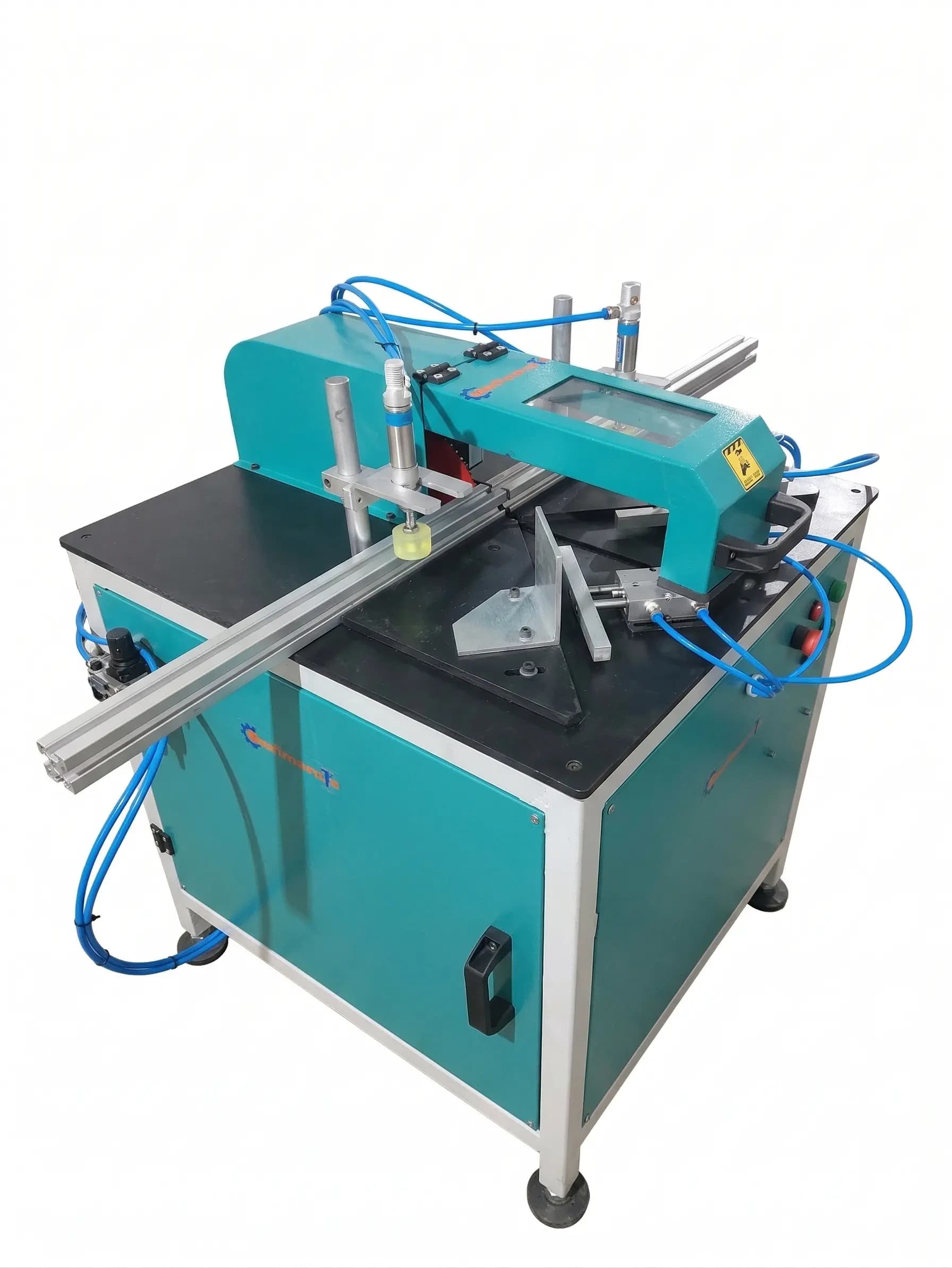
Manual miter saws are the primary cause of material hemorrhage in Pune’s window fabrication workshops. For high-rise projects in Hinjewadi and Baner, where precision is non-negotiable for wind-load stability, manual cutting errors lead to an average profile wastage of 12% to 15%. By upgrading to a 45 Degree Double Head Cutting Machine, fabricators eliminate the 'double-handling' error inherent in single-head setups, bringing wastage down to below 3%. This shift is not just about speed; it is about ensuring the structural integrity of frames that must withstand the high-velocity winds characteristic of Pune’s taller residential towers.
Why Pune Fabricators Are Switching to 45 Degree Double Head Cutting Machines
In the competitive landscape of Maharashtra's industrial hubs, the aluminium profile cutting machine price is often viewed as an upfront hurdle, but the ROI is typically realized within 8 months of high-volume production. When using a manual 12-inch aluminium cutter, a fabricator must measure, mark, cut one side, flip the profile, and cut the second side. Each step introduces a margin of error of ±1.5mm. In contrast, an automatic double head cutting saw for aluminium profiles performs both 45-degree miter cuts simultaneously with a precision tolerance of ±0.2mm.
Our engineering team at Mechnovate recently audited a 20,000 sq. ft. workshop in Chakan. We found that the manual cutting of 6063 T6 aluminium profiles resulted in 45mm of 'scrap-end' per frame due to clamping limitations. By implementing a head cutting machine with pneumatic synchronization, that scrap was reduced to 12mm. For a project involving 500 window units, this equates to a saving of approximately 165 meters of high-grade aluminium profile.
Case Study: Reducing Profile Wastage from 12% to 2.8% in a Pune High-Rise
Over a 6-week testing period at a Pune-based facility, we compared the output of a standard manual 12-inch aluminium cutter machine against our heavy-duty 45 Degree Double Head Cutting Machine. The project involved fabricating 1,200 uPVC and aluminium sliding windows for a 22-story project.
- Configuration 1 (Manual): Using a single-head manual miter saw. Resulted in 11.8% wastage. The primary cause was 'human fatigue error' after the 4th hour of the shift, leading to slight miter gaps that required expensive corner-cleat adjustments.
- Configuration 2 (Semi-Auto): Single-head pneumatic saw. Resulted in 7.4% wastage. Precision improved, but the 'flip-and-cut' process still wasted 35 seconds per profile.
- Configuration 3 (Double Head): Mechnovate's high-speed 45-degree double head cutting machine. Resulted in 2.8% wastage. The machine utilized an optimized cutting logic where the trailing end of one profile became the leading end of the next, minimized by the dual-head spacing.
The results were clear: the double head setup increased daily output from 45 frames to 115 frames while simultaneously slashing material costs by nearly 9%. This is why uPVC window manufacturing machines are now the standard for Tier-1 contractors in the region.
Technical Mastery: Specifications and Engineering Standards
To achieve professional-grade results in aluminium fabrication, the machinery must adhere to strict technical specifications. We design our units to meet ISO 9001 quality benchmarks and reference IS 1285 for extruded aluminium tolerances.
- Blade Specifications: 450mm to 500mm TCT (Tungsten Carbide Tipped) blades with 120+ teeth are essential for burr-free cuts in 2.5mm thick profiles.
- Rotational Speed: A consistent 2800 to 3200 RPM ensures that the blade slices through the material without causing thermal deformation.
- Pneumatic Feed: We utilize a hydro-pneumatic dampening system. This prevents the 'jump' at the start of the cut, which is a common failure point in cheap aluminium cutting machine 12 inch models.
- Pressure Requirements: A stable 6-8 bar air pressure is required to keep the pneumatic clamps engaged. Loss of pressure during a cut is the #1 cause of profile ruin.
When choosing between a upvc window manufacturing machine and a dedicated aluminium cutter, consider the feed rate. Aluminium requires a slower, more pressurized feed compared to the high-speed flick required for uPVC. Multi-material workshops should opt for machines with adjustable oil-mist lubrication systems to extend blade life when switching between the two.
Common Mistakes in Operating an Automatic Double Head Cutting Saw
Even the best aluminum cutting machine will fail if operational basics are ignored. Based on 15 years in the field, these are the most frequent errors we see in Pune workshops:
- Incorrect Profile Bedding: If the profile is not seated perfectly flat against the back fence, the 45-degree angle will actually be 44.5 degrees. This creates a gap in the outer corner of the window frame that invites water seepage.
- Ignoring Blade Run-out: A blade that 'wobbles' by even 0.1mm will create a rough surface finish. We recommend checking the arbor nut tightness every 48 hours of operation.
- Bypassing the Copy Router Machine Integration: Fabricators often try to cut lock-holes before cutting the profile to length. This is backward. Always cut to length on the double-head saw first, then move to the Copy Router Machine for milling.
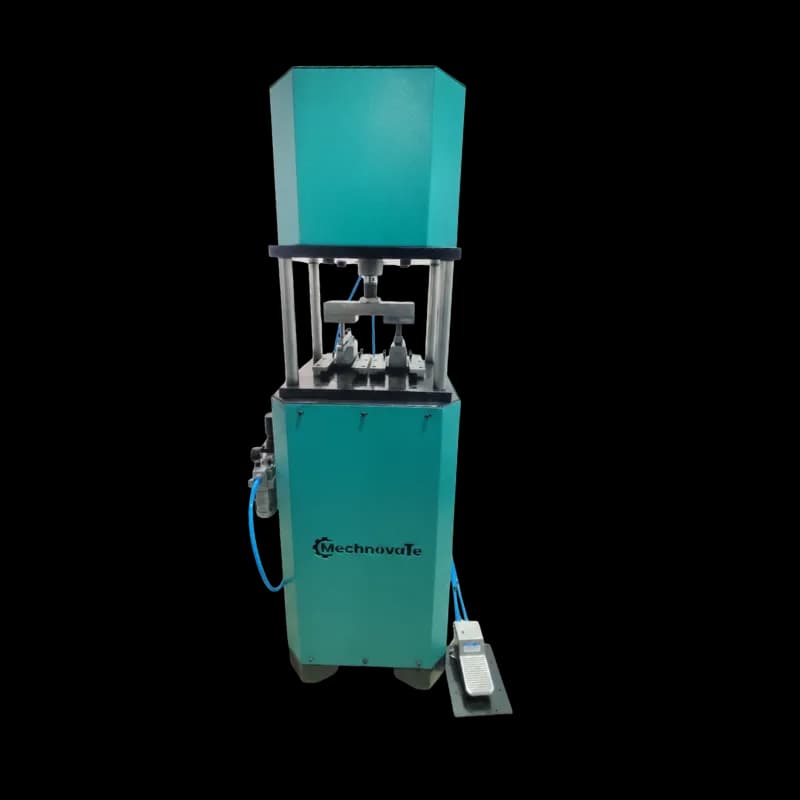
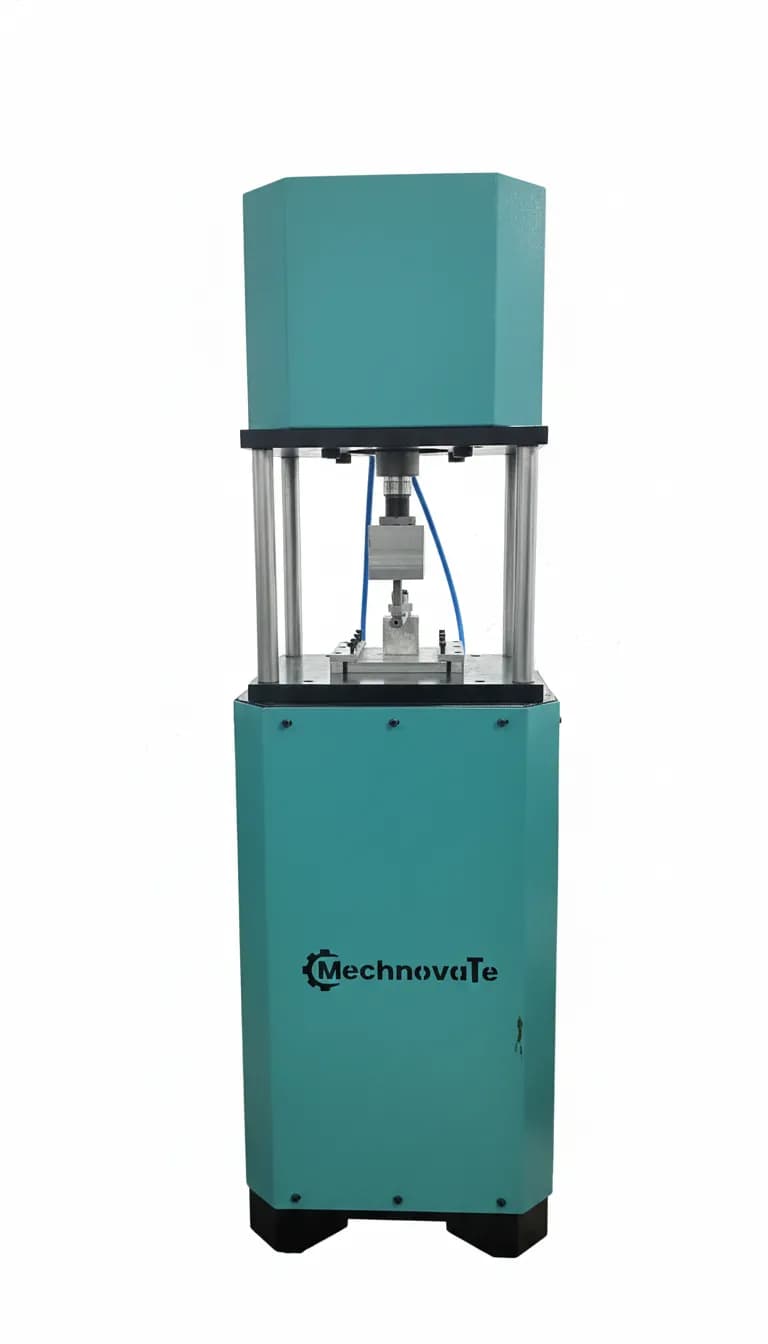
- Neglecting the Aluminium Punching Machine Alignment: When the cut is perfect but the Aluminium Punching Machine is misaligned, the corner joint will still fail. Precision must be end-to-end.
Cost-Benefit Analysis: ROI for High-Volume Fabrication
In the current market, the automatic double head cutting machine price in India varies significantly. However, a 'cheap' machine often lacks the cast-iron base required to dampen vibrations. A vibrating machine leads to 'chatter marks' on the profile, which requires manual sanding—adding labor costs that negate the savings of the machine.
For a Pune startup, we recommend starting with a high-precision single-head aluminium cutter machine if the volume is under 20 windows a day. However, for any workshop bidding on high-rise contracts (50+ windows daily), the double head miter saw for aluminium profiles price is easily justified by the reduction in rework and the ability to meet the strict 15-day lead times typical of the Pune construction industry.
Frequently Asked Questions (FAQ)
Q1: Can I use the same double head machine for both uPVC and Aluminium profiles? Yes, but with caveats. You must change the blade type (TCT for aluminium vs. high-speed steel for uPVC) and adjust the lubrication system. Aluminium requires a cooling mist, while uPVC is typically cut dry to prevent chip sticking.
Q2: What is the maintenance schedule for a 45 degree double head cutting machine? Daily: Clean the bed of chips and check oil levels. Weekly: Inspect pneumatic hoses for leaks. Monthly: Calibrate the angle accuracy using a precision square and check the belt tension of the 2.2kW motors.
Q3: How much space is required for a full uPVC windows making machine setup? A standard 450mm double-head saw requires a clear linear path of at least 6 to 8 meters to accommodate the machine width plus the length of the 6-meter profiles being fed into it.
Q4: Is the aluminium profile punching machine necessary if I have a double head saw? Yes. The saw only handles the 45-degree or 90-degree cuts. The Aluminium Punching Machine is required for the handle holes, drainage slots, and corner cleat joints. They are complementary tools in a professional production line.
Get more articles like this
Follow Mechnovate on Google to see our guides in Google Discover & News