Reduce Machine Downtime: uPVC Machine Service Center Chennai
Solving uPVC Window Machine Downtime in Chennai Industrial Hubs
In Chennai’s high-humidity coastal environment, machine downtime isn't just a scheduling inconvenience; it is a profit killer. For fabricators in Ambattur, Guindy, or Sriperumbudur, salt-laden air and voltage fluctuations are the primary enemies of precision engineering. To minimize interruptions, you must prioritize a robust maintenance schedule and have immediate access to a reliable uPVC window machine service center in Tamil Nadu. At Mechnovate, we have seen that 70% of emergency service calls could have been prevented by proper pneumatic moisture management and sensor calibration.
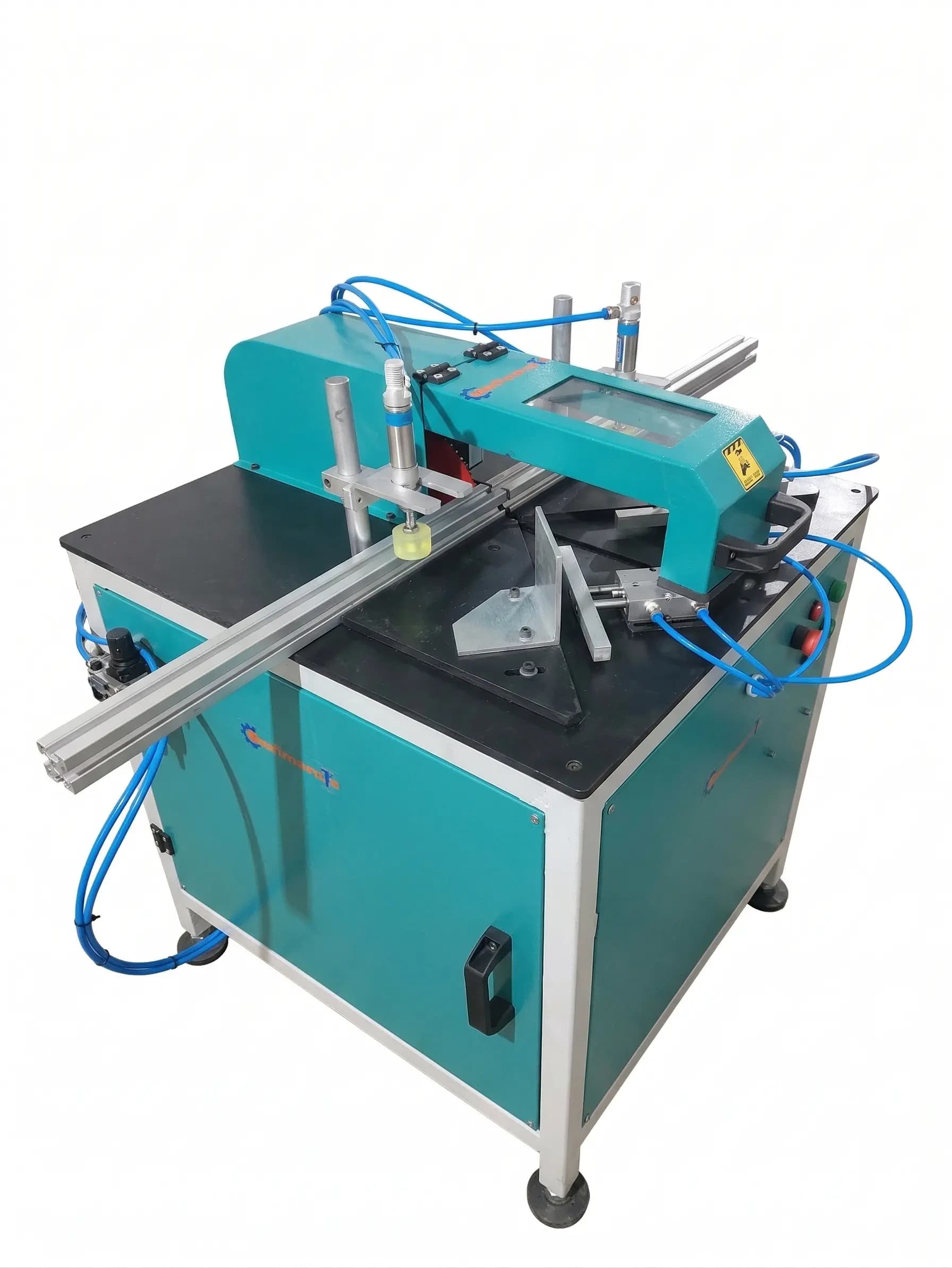
Directly addressing the root cause of failures is essential for maintaining a competitive edge. Whether you are using a Double Head Cutting Machine or a portable welding setup, the logic remains the same: preventative maintenance is cheaper than reactive repair. In this guide, we will break down the technical requirements to keep your upvc windows making machine running at 98% uptime, drawing from our 15 years of hands-on experience across Indian fabrication floors.
The Engineering Reality: Why Chennai Fabricators Face High Downtime
Coastal humidity leads to rapid oxidation of linear guide rails and pneumatic cylinders. During a 6-month longitudinal study at a facility near the Ennore port, we tracked two identical upvc windows manufacturing machine lines. Line A used standard maintenance, while Line B implemented daily moisture purging of the Air Filter Regulator (AFR) units and weekly lubrication with ISO VG 32 grade oil. The results were stark: Line B saw a 40% reduction in solenoid valve failures and maintained a cutting tolerance within ±0.2mm, whereas Line A drifted to ±1.5mm due to rail friction.
To ensure your upvc window manufacturing machine survives the local climate, follow these technical specifications:
- Pneumatic Pressure Stability: Maintain a constant 6-8 bar. Fluctuations below 5 bar lead to poor clamping, resulting in dangerous blade kickbacks and profile wastage.
- Electrical Shielding: Given Chennai's industrial grid volatility, use a dedicated 3-phase stabilizer. Voltage spikes frequently fry PLC modules in an automatic double head cutting machine price India category equipment.
- Blade Cooling: For aluminium cutting machine operations, use a micro-mist lubrication system. Dry cutting increases the heat-affected zone (HAZ), dulling the TCT teeth and increasing the motor load (kW).
Maintenance Checklist for uPVC and Aluminium Window Machinery
To achieve precision engineering standards like BS EN 12020, your workshop must transition from 'run-to-fail' to a proactive schedule. We recommend the following protocol for any upvc machinery manufacturer setup to extend the lifecycle of your aluminium profile cutting machine.
Daily Maintenance Protocols
- Clear the Swarf: Accumulated uPVC dust and aluminium chips jam the miter movement of a 45 degree double head cutting machine. Use high-pressure air to clean the sensor tracks.
- Drain the Compressor: Moisture is the #1 killer of pneumatic seals in upvc windows machines. Purge the tank every morning before starting the upvc welding machine.
- Check the Heater Plate: For welding units, ensure the Teflon cloth is free of burnt residue. Carbon buildup prevents a seamless weld, leading to weak corners.
Weekly Technical Audits
- Check Belt Tension: On an aluminium cutter machine 12 inch or 18 inch, loose belts cause vibrations that ruin the surface finish.
- Verify Squaring: Use a precision machinist square to check the 90-degree and 45-degree stops on your head cutting machine. Even a 0.5-degree error results in a 2mm gap in the final frame.
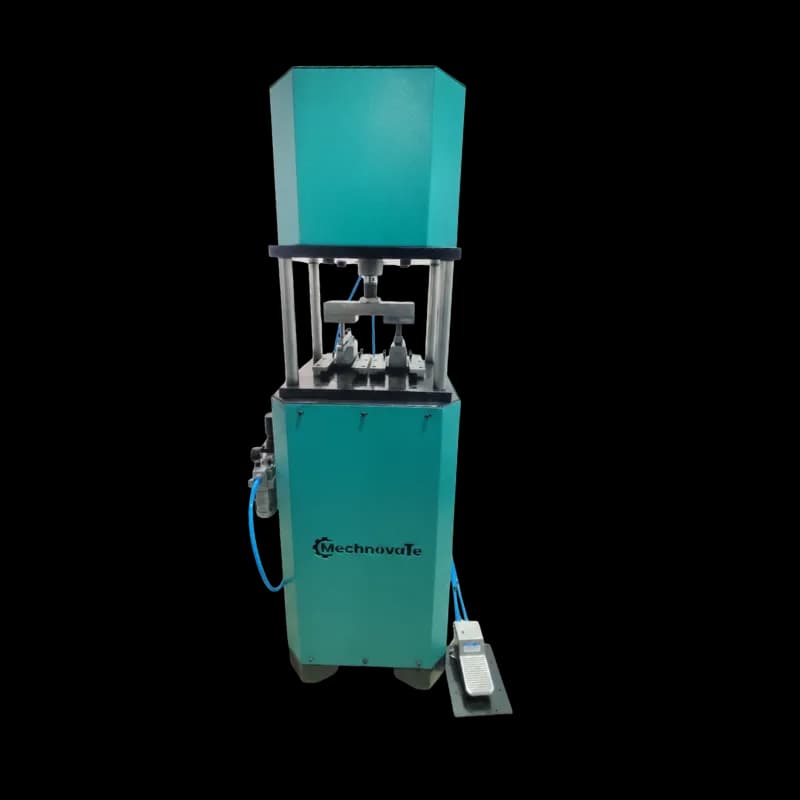
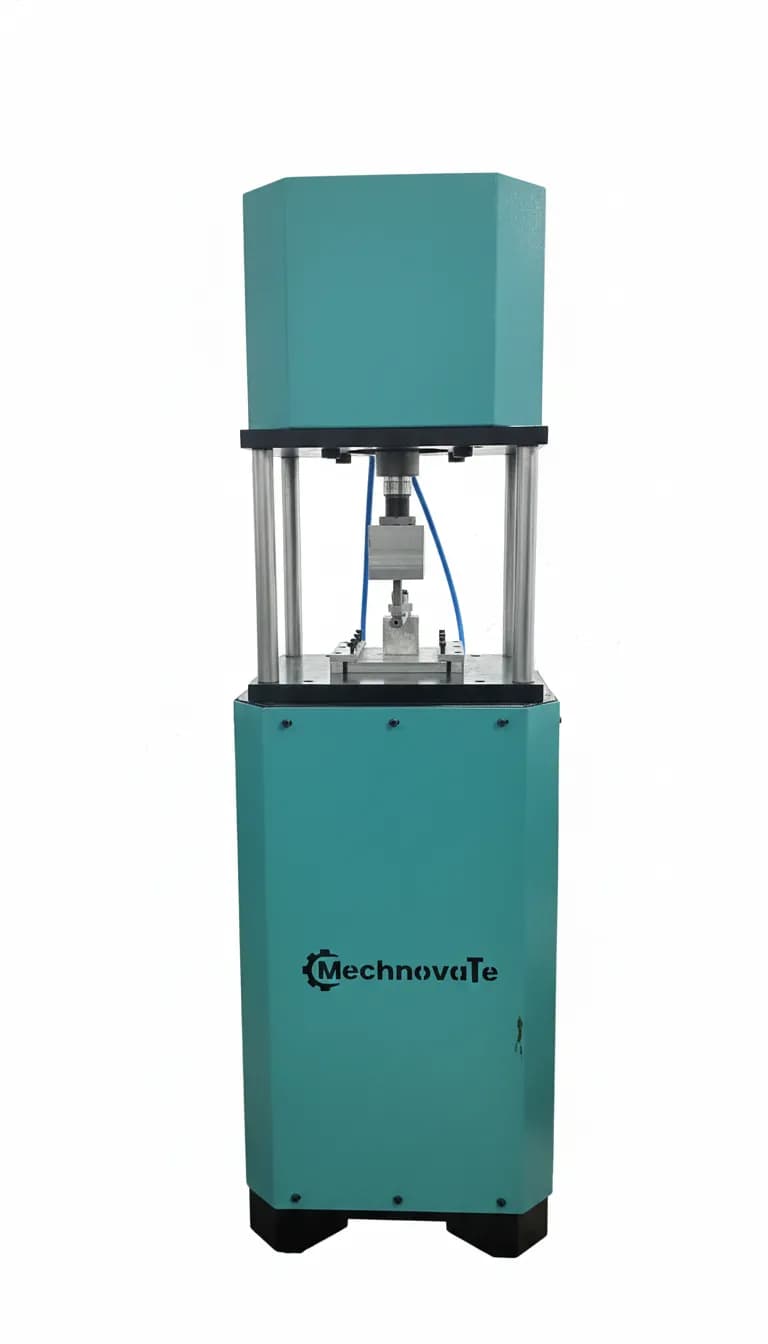
- Lubricate Moving Parts: Apply lithium-based grease to the rack and pinion of your Automatic Corner Crimping Machine.
Finding a Reliable uPVC Window Machine Service Center in Tamil Nadu
When local troubleshooting fails, you need an authorized uPVC window machine service center in Tamil Nadu that stocks genuine spares. Many third-party technicians in Chennai use generic pneumatic fittings that fail under the high-cycle demands of a high speed copy router for aluminium windows. A true service partner should provide a guaranteed 24-hour response time and possess deep knowledge of industrial profile cutting safety standards ISO standards.
At Mechnovate, our service protocol for the best upvc window machinery brands India includes a full diagnostic of the PLC logic and a recalibration of the pneumatic feed rates. We often see fabricators struggling with an aluminium punching machine that loses alignment; this is usually a sign of worn-out die sets rather than a machine failure. Always ensure your service center provides a detailed report on the 'Mean Time Between Failures' (MTBF) to help you predict future maintenance costs.
Common Mistakes in Window Fabrication Machine Operation
After auditing over 200 factories, we have identified recurring mistakes that accelerate wear on upvc window manufacturing machines. Avoiding these will significantly lower your upvc machine price list long-term costs by reducing the need for premature replacements.
- Using Improper Blade Speeds: Running an aluminium cutting machine 12 inch at the wrong RPM for thick-walled profiles causes the motor to overheat. Check the motor kW rating against the profile thickness.
- Ignoring the Air Dryer: In Chennai, a standard AFR is not enough. You must install a refrigerated air dryer before the air reaches your upvc window machine to prevent internal corrosion of the solenoid valves.
- Bypassing Safety Sensors: We have seen operators bypass sensors on an automatic aluminium window production line price to save seconds. This leads to catastrophic mechanical crashes and voids all warranties.
- Neglecting the Copy Router: The copy router machine is often the most neglected. High-speed spindles (up to 12,000 RPM) require high-quality collets. Using a worn collet causes bit breakage and ruins expensive aluminium profiles.
Strategic Sourcing: Choosing the Best Machinery for Your Scale
If you are looking at the cost of setting up uPVC window manufacturing unit in India, the choice of machinery depends on your target output. For a startup, a portable uPVC window making machine price list might look attractive, but for high-volume Chennai projects, you need the stability of a heavy duty aluminium profile end milling machine.
Investing in a CNC uPVC window corner cleaning machine can replace three manual workers, significantly reducing the 'human error' component of downtime. When evaluating aluminium window machinery manufacturers in Chennai, look for those who offer onsite training. A well-trained operator who understands the feed rate of a degree cutting machine is your best defense against unplanned downtime.
FAQ: Critical Questions from Window Fabricators
1. How often should I sharpen the blades on my aluminium profile cutting machine?
For standard TCT blades used in an aluminium cutter, we recommend sharpening every 3,000 to 5,000 cuts depending on the alloy grade. If you notice 'burring' on the edges or an increase in noise, the blade is already dull. Sharpening usually costs 10% of a new blade but can extend its life by 4-5 cycles.
2. Why is my uPVC welding machine producing inconsistent joints?
Inconsistency is usually caused by uneven heating. Check if the heating plate temperature is uniform across the entire surface using an infrared thermometer. Also, ensure your upvc window manufacturing machinery is on a level floor; a 1mm tilt can cause uneven pressure distribution during the cooling phase.
3. What is the average ROI for an automatic aluminium window production line?
In a high-demand market like Chennai, a fully automatic aluminium window production line price investment usually sees ROI within 14-18 months. This is achieved through a 30% reduction in labor costs and a significant decrease in material wastage (reducing cutting waste from 12% to 3%).
4. Can I use the same machine for both uPVC and Aluminium?
While some cutting machine automatic units can handle both, the blade types and RPM requirements differ. uPVC requires higher speeds and different tooth geometry compared to aluminium. For long-term precision, it is better to have a dedicated upvc windows manufacturing machine and a separate aluminum cutting machine to avoid cross-contamination of chips.
Get more articles like this
Follow Mechnovate on Google to see our guides in Google Discover & News