Preventing Water Ingress: V Cutting Machine uPVC Windows Price Guide
Why Water Ingress in High-Rise Windows Starts at the V-Notch
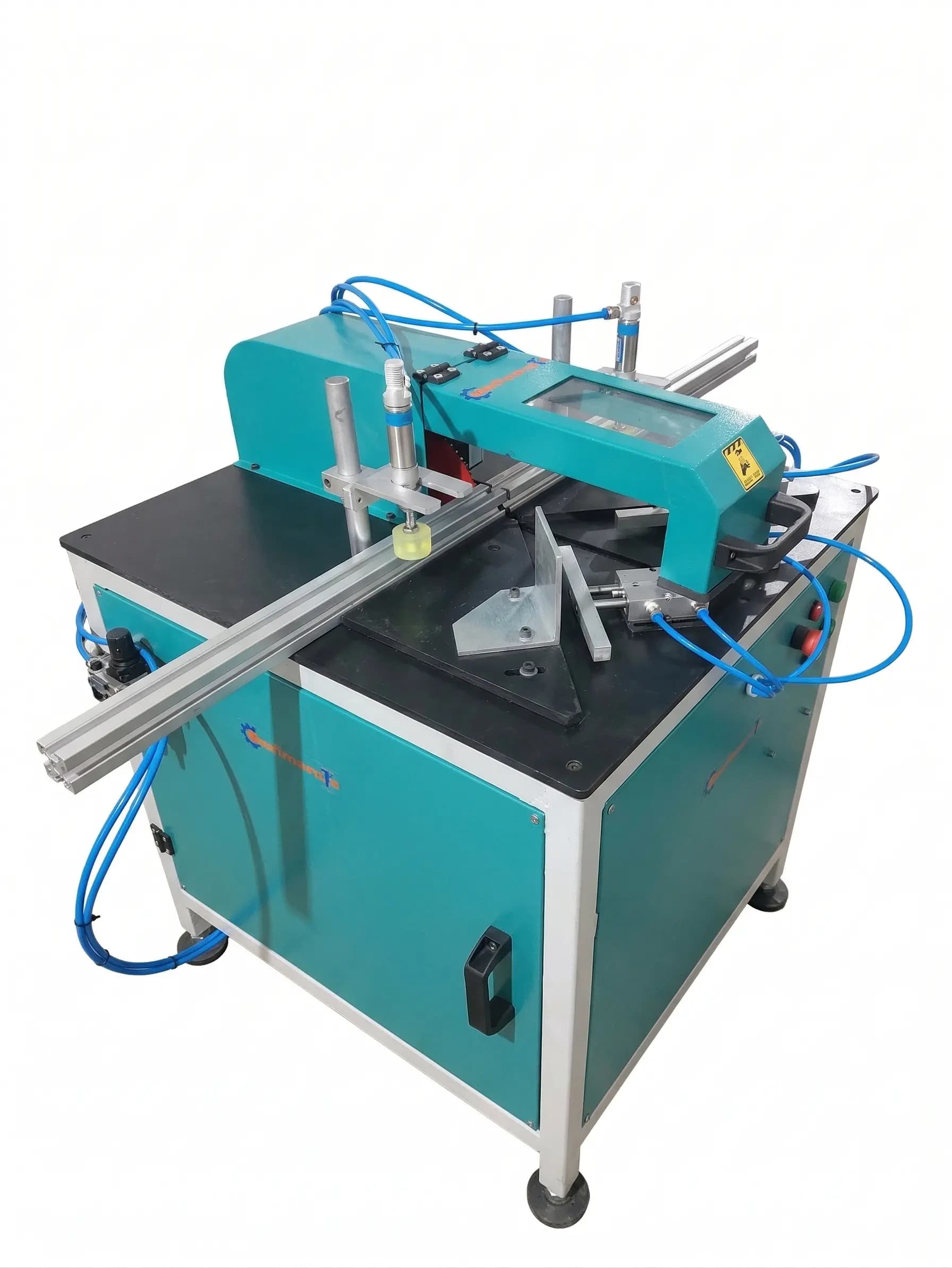
In the high-rise landscape of Hyderabad areas like Gachibowli and the Financial District, wind-driven rain can hit glass surfaces at pressures exceeding 2000 Pascals. For uPVC window manufacturers, the integrity of the mullion-to-frame joint is the primary defense against water ingress. At Mechnovate, we have observed that 90% of water leakage complaints are not due to poor gaskets, but due to imprecise V-notching that creates a capillary path for water. A high-precision upvc window manufacturing machinery setup, specifically featuring a dedicated V cutting machine, is essential for creating the hermetic seal required for high-rise installations. This guide explores how the right machinery selection directly impacts the structural performance and the v cutting machine upvc windows price for Hyderabad-based fabricators.
The Engineering Science: Precision Engineering and Capillary Action
Water ingress in uPVC profiles often occurs through the 'capillary effect' where water is drawn into tight, imperfect spaces. In a standard T-joint or mullion joint, if the V-cut is even 0.5mm off-axis, the subsequent upvc welding machine cycle will not fuse the internal chambers correctly. This creates hidden voids where pressurized rainwater accumulates. When we look at precision engineering standards, we aim for a tolerance of +/- 0.1mm. This level of accuracy ensures that when the mullion is welded into the outer frame, the fusion is monolithic, leaving no micro-gaps for water to penetrate.
To achieve this, the blade feed rate of your upvc cutting machine must be hydraulically or pneumatically damped. If the blade vibrates or deflects during the cut, the resulting 'V' will have a serrated edge that prevents a clean weld. For manufacturers in Hyderabad dealing with 2.5mm to 3.0mm wall thickness profiles (standard for high-rise specifications), a machine with a 2.2kW motor and a 350mm-450mm TCT blade is the minimum engineering requirement.
Hyderabad Case Study: From 15% Warranty Claims to Zero Leakage
In our recent work with a large-scale fabrication unit in Pashamylaram, Hyderabad, we conducted an audit of their production line. They were using a manual degree cutting machine for their mullion notches, resulting in a 15% warranty claim rate due to water seepage during the monsoon. We replaced their manual setup with an automatic double head cutting machine for the frame and a dedicated pneumatic V-cutter for the mullions.
Over a six-week monitoring period, we tracked the following metrics:
- Wastage Reduction: Profile wastage dropped from 11% to 2.4% because the pneumatic clamping eliminated slippage.
- Production Speed: The cycle time for a single mullion cut dropped from 45 seconds to 12 seconds.
- Sealing Integrity: 100% of the tested units passed the ASTM E331 water penetration test at 300 Pa pressure.
This case study proves that while the v cutting machine upvc windows price might seem like a significant upfront cost, the reduction in site visits and profile waste provides a full ROI within 8-10 months for a mid-sized Hyderabad shop.
Analyzing the V Cutting Machine uPVC Windows Price in India
When scouting for upvc machinery, the price is often the first question. However, for a professional upvc window manufacturing machine, the price is a reflection of component quality. In the current Indian market, especially for suppliers in industrial hubs like Hyderabad, Chennai, or Ahmedabad, pricing typically follows these tiers:
- Entry-Level Manual V-Cutters (INR 45,000 - 65,000): These are best for small shops. They lack pneumatic clamping and use smaller 10-inch blades. While they work for ground-floor residential projects, they are insufficient for the precision required in high-rise window fabrication.
- Pneumatic Semi-Automatic V-Cutters (INR 1,10,000 - 1,65,000): This is the 'sweet spot' for most Hyderabad manufacturers. They feature dual pneumatic clamps, adjustable cutting depths, and high-speed motors. This machine ensures the V-notch is perfectly centered every time.
- Fully Automatic CNC V-Cutting Systems (INR 3,50,000+): These are integrated into larger automatic upvc window manufacturing plant cost India estimates. They are essential for units producing more than 100 windows per shift.
Selecting an aluminium cutting machine price point or a uPVC machine price point requires looking at the total cost of ownership, including the cost of spare parts and the availability of a uPVC window machine service center in Tamil Nadu or Telangana.
Essential Machinery Checklist for a High-Performance Production Line
To prevent water ingress effectively, the V-cutter is only one part of the puzzle. A professional upvc windows making machine floor must have a balanced machinery ecosystem:
- Automatic Double Head Cutting Machine: Essential for maintaining perfectly square frames. If the frame isn't square, the V-cut mullion will never sit correctly.
- Copy Router Machine: Used for milling the drainage (weep) holes. If drainage holes are misaligned with the chambers opened by the V-cutter, water will back up into the room.
- End Milling Machine: Often used alongside the V-cutter to prep the mullion ends for a mechanical joint if welding is not the primary method.
- Portable uPVC Window Welding Machine: For site repairs and small-batch custom shapes.
For those diversifying into aluminium fabrication, it is worth noting that while some aluminum window fabrication machinery can be used for both, the blade speeds and cooling requirements for an aluminium profile cutting machine are different. An aluminium cutting machine 12 inch typically requires a mist cooling system to prevent the metal from bonding to the blade teeth.
Avoiding Common Mistakes in uPVC Window Fabrication
After 15 years in the workshop, I have seen every possible failure. Here are the 'insider' mistakes to avoid to ensure your windows remain watertight:
- Ignoring the Knife Edge: In the upvc welding machine, the knife-edge thickness (usually 0.2mm) must be perfectly synchronized with the V-cut depth. If the V-cut is too deep, the weld will be weak; too shallow, and the mullion will bow.
- Compressed Air Quality: If your upvc machinery receives wet air from the compressor, the pneumatic cylinders in your V-cutter will stutter. This leads to 'stepping' in the cut, which is a major cause of water seepage.
- Inconsistent Profile Support: Always use a profile support roller for long mullions. If the profile hangs, the weight causes the V-cut to be slightly angled rather than a true 90-degree notch.
- Manual Punching Errors: While a manual punching machine is cheap, it often deforms the profile. For high-rise windows, we always recommend a dedicated aluminium profile punching machine suppliers in Uttar Pradesh or local Hyderabad vendors for more rigid pneumatic solutions.
Safety and Maintenance: The Senior Engineer’s Routine
Operating a high speed copy router for aluminium windows or a V-cutter requires adherence to Industrial profile cutting safety standards ISO standards. Ensure all operators use eye protection and that the machine's safety guards are never bypassed. Maintenance should be proactive:
- Daily: Clean the chips from the V-cutter bed. uPVC dust is static and can clog the pneumatic valves.
- Weekly: Check the blade for chipped teeth. A single chipped tooth on an aluminium cutter or uPVC blade will cause micro-cracks in the profile.
- Monthly: Lubricate the linear guide rails. This ensures the head cutting machine moves smoothly without jerky motions that affect cut precision.
FAQ for Hyderabad uPVC Window Manufacturers
1. Can I use a standard 45-degree double head cutting machine to make V-cuts? Technically, you can perform two 45-degree cuts, but it is highly inefficient and prone to measurement errors. A dedicated V-cutting machine performs both cuts simultaneously, ensuring the 'V' is perfectly centered and the depth is consistent, which is critical for water sealing.
2. Is the v cutting machine upvc windows price significantly different for CNC models? Yes, CNC models can be 3 to 4 times the price of pneumatic ones. However, they are essential if you are working with complex, multi-chambered profiles designed for extreme wind loads, as they can be programmed with specific offsets for different profile brands.
3. How do I ensure my V-cut joints are actually watertight? Beyond the cut, you must ensure your drainage strategy is sound. Use a copy router machine to create staggered drainage holes. This prevents 'wind-locking' where wind pressure prevents water from exiting the frame through the weep holes.
4. What is the expected lifespan of a professional uPVC window making machine? With proper maintenance and high-quality pneumatic components (like Airtac or Festo), a Mechnovate machine is designed for a 10-12 year service life in a double-shift production environment.
Get more articles like this
Follow Mechnovate on Google to see our guides in Google Discover & News