Preventing Salt-Air Corrosion: uPVC Welding Machine Guide
Stopping Salt-Air Corrosion in Chennai uPVC Fabrication Shops
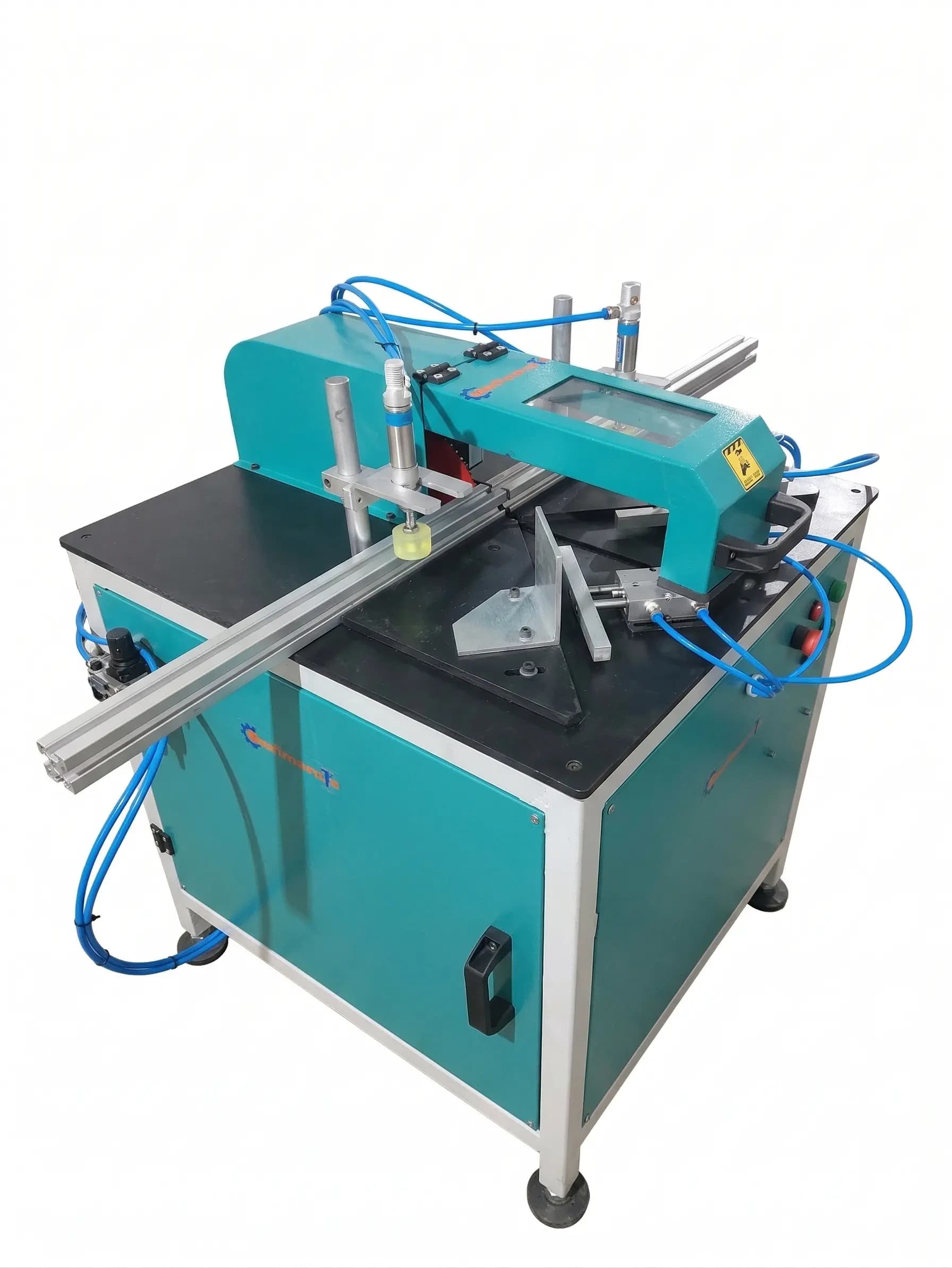
For fabricators operating in Chennai, from the industrial hubs of Ambattur to the coastal workshops near ECR, salt-air corrosion is the single greatest threat to your uPVC window manufacturing machine lifespan. The combination of high relative humidity (often exceeding 75%) and airborne sodium chloride particles creates an electrolyte that accelerates the oxidation of ferrous components and degrades electronic circuits. If your upvc welding machine starts showing 'pitting' on the linear guide rails or if your solenoid valves are sticking, you are already losing money to coastal atmospheric degradation.
At Mechnovate, we have spent 15 years engineering machinery specifically for the Indian subcontinent. We have seen firsthand how a standard upvc windows making machine can fail within 18 months in a coastal environment if not properly protected. This guide provides a technical roadmap to hardening your production line against the Coromandel Coast's aggressive climate.
The Engineering Reality: Why Salt Air Destroys uPVC Machinery
Corrosion in a coastal city like Chennai isn't just about 'rust' on the surface. It is a complex electrochemical process. Salt is hygroscopic, meaning it attracts moisture from the air. When salt settles on the precision-ground surfaces of your upvc window manufacturing machinery, it creates a conductive film. This leads to galvanic corrosion, especially where different metals meet, such as the contact point between a steel bolt and an aluminum frame component.
Case Study: 24-Month Durability Test in Ennore, Chennai
In 2021, we monitored two fabricators using our Single Head Seamless Welding Machine. Fabricator A followed standard industrial cleaning. Fabricator B implemented our 'Coastal Shield' protocol, which includes daily pressurized air cleaning and the use of marine-grade Lanocote on all non-contact moving parts.
The Results:
- Component Failure: Fabricator A replaced 4 solenoid valves and 2 sets of linear bearings within 14 months. Fabricator B had zero component failures in 24 months.
- Accuracy Drift: Fabricator A saw a 1.2mm deviation in corner squareness due to rail pitting. Fabricator B maintained a tolerance of <0.2mm.
- Heating Plate Lifespan: By switching to high-grade 250-micron PTFE (Teflon) cloth and daily edge-cleaning, Fabricator B extended heating element life by 40%.
Step-by-Step Maintenance Protocol for Coastal Fabricators
To ensure your uPVC window machinery manufacturers in Chennai investment lasts a decade rather than a few years, follow this rigorous engineering schedule.
1. The FRL Unit: Your First Line of Defense
The Filter-Regulator-Lubricator (FRL) unit is critical. In Chennai, the air compressed into your upvc windows machinery is saturated with moisture.
- Daily: Drain the water trap in your compressor and the FRL unit. Moisture in the pneumatic lines causes internal corrosion in the cylinders.
- Weekly: Check the lubricant levels. Use an ISO VG 32 grade oil. This oil coats the internal seals and cylinder walls, preventing salt-laden air from corroding the internal bores.
- Monthly: Replace the 5-micron filter element. In coastal areas, these clog 30% faster due to salt crystallization.
2. Linear Guide and Shaft Protection
Your Double Head Seamless Welding Machine relies on precision linear movement for seamless joins.
- Clean Before Lubricating: Never apply fresh grease over old grease in a salt environment. The old grease traps salt particles, creating an abrasive grinding paste.
- The Wipe-Down: Use a lint-free cloth soaked in WD-40 or a specialized degreaser to clean the rails daily.
- Lubrication: Apply a lithium-based grease with E.P. (Extreme Pressure) additives. For Chennai, we recommend a grease with a higher 'drop point' to handle the ambient heat.
3. Electrical Cabinet Sealing
Salt air is a conductor. If it enters your PLC cabinet, it will cause 'ghost' triggers or total board failure.
- IP65 Integrity: Ensure all cable glands are tightened.
- Silica Gel Packs: Place large 500g industrial silica gel canisters inside the main control panel. Replace or recharge them every 45 days.
- VFD Heat Sinks: Use a soft brush to remove salt-dust buildup from the Variable Frequency Drive (VFD) heat sinks to prevent overheating.
Strategic Upgrades for Marine Environments
If you are looking for the best uPVC window making machine for small business setups in coastal Tamil Nadu, look for these specific engineering upgrades:
- Stainless Steel Fasteners: Replace all external M6 and M8 bolts with 304 or 316-grade stainless steel to prevent 'frozen' bolts that snap during maintenance.
- Hard Chrome Plating: Ensure the piston rods of your pneumatic cylinders have a minimum of 20 microns of hard chrome plating.
- Encapsulated Heating Elements: Ensure the heating plates in your upvc welding machine are fully encapsulated to prevent the salt air from oxidizing the internal resistance wires.
Common Mistakes to Avoid
- Using Cooling Fans Directly on Machines: While the shop is hot, pointing a pedestal fan directly at the welding machine's moving parts just accelerates the delivery of salt-laden air into the bearings.
- Ignoring the Corner Cleaner: Your uPVC Corner Cleaning Machine generates static electricity during the milling process, which attracts salt dust. It requires twice the cleaning frequency of the welder.
- Washing the Floor with Saline Ground Water: Many shops in Chennai use borewell water for floor cleaning. As this evaporates, it increases the chloride concentration in the air around your upvc window manufacturing machine.
FAQ: Maintenance for Chennai Fabricators
Q: How often should I change the Teflon cloth in a coastal area? A: In high-humidity zones like Chennai, the adhesive backing of Teflon tape degrades faster. Inspect for edge-lifting every 48 hours of operation. Replace immediately if salt crusting is visible beneath the cloth to prevent heat transfer inconsistencies.
Q: Does salt air affect the welding temperature? A: Indirectly, yes. Salt buildup on the thermocouples can cause inaccurate PID readings. If your automatic upvc window plant cost India was a significant investment, protect it by cleaning the sensor contact points every quarter with an electronic contact cleaner.
Q: Is a seamless welder more prone to corrosion than a standard welder? A: No, but the tolerances are tighter. A Double Head Seamless Welding Machine requires precise knife movements. Even 0.1mm of corrosion on the blade guide will ruin the 'seamless' effect, making maintenance even more critical than on a traditional V-welder.
Get more articles like this
Follow Mechnovate on Google to see our guides in Google Discover & News