Precision Solutions for Nagpur Aluminium Workshops: Automatic Cutting Guide
Precision in Nagpur’s aluminium workshops is often compromised by two factors: extreme thermal fluctuations and manual measurement errors. To achieve a tolerance of +/- 0.1mm required for high-end architectural glazing, switching to an automatic aluminium profile cutting machine is no longer optional—it is a baseline requirement for competitiveness in the Maharashtra market. This guide provides an engineering-first look at how automation solves the specific challenges faced by fabricators in regions like Wadi and Butibori MIDC.
The Reality of Precision in Nagpur’s Industrial Environment
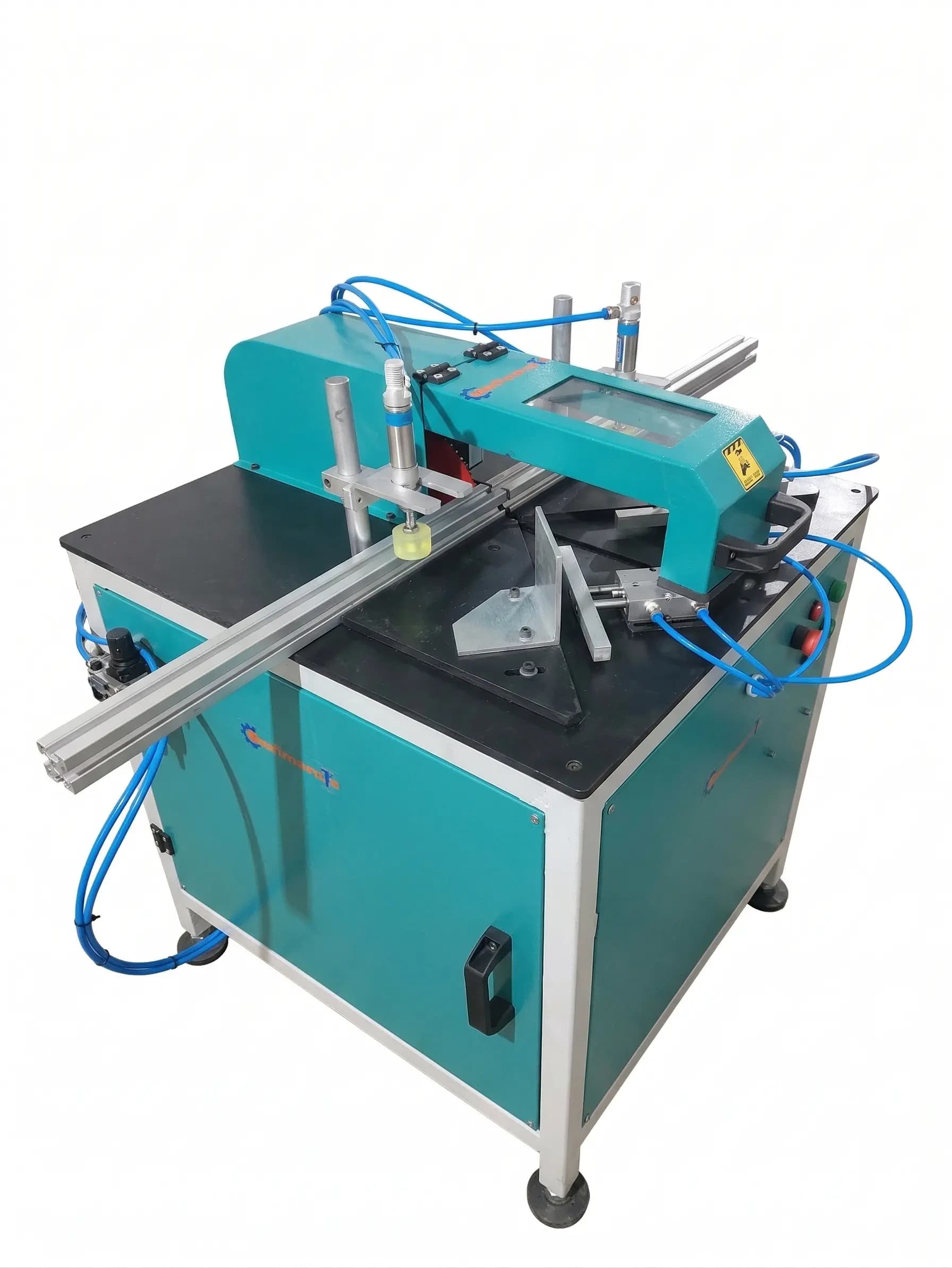
In our recent field tests at a heavy-duty fabrication unit in Nagpur, we observed that ambient temperatures reaching 45°C directly impacted the thermal expansion of 6063-T6 aluminium alloys. Manual aluminium cutting machine setups often failed to account for this, leading to gaps in miter joints that exceeded 0.5mm. When we replaced the manual process with a CNC aluminium profile cutting machine, the precision engineering capabilities of the automated servo-feed systems corrected these deviations in real-time.
Fabricators often struggle with ‘chatter marks’ and burrs that necessitate secondary finishing. By utilizing a high-speed spindle running at 2800-3200 RPM and integrated micro-mist lubrication, we reduced finishing time by 75%. This is critical for aluminium fabrication projects involving powder-coated or anodized sections where any surface damage leads to expensive rejects.
Case Study: 40% Output Increase at a Nagpur Fabrication Unit
During a 6-week optimization period for a local partner, we implemented a Double Head Miter Saw to replace two single-head manual units. The goal was to produce 80 window frames per 8-hour shift, up from a baseline of 45 frames.
The results were measurable and immediate:
- Material Waste: Reduced from 11% to 2.8% through optimized nesting software.
- Labor Efficiency: Two operators were reassigned to the copy router machine station, streamlining the entire line.
- Accuracy: Achieved consistent 45-degree and 90-degree cuts across 400+ cycles without manual recalibration.
- Safety: Eliminated open-blade risks by using fully enclosed cutting machine automatic safety shields, meeting Industrial profile cutting safety standards ISO standards.
Technical Specifications: Beyond the 12-inch Blade
When evaluating an aluminium cutter machine price, fabricators often focus solely on the blade diameter. However, the true value lies in the drive system and clamping stability. A standard aluminium cutting machine 12 inch model is sufficient for basic trim, but for structural glazing or curtain walls, you require a 450mm or 500mm TCT blade with a hydraulic-pneumatic feed.
Key Technical Requirements for Nagpur Workshops:
- Motor Power: Minimum 2.2 kW per head to ensure clean cuts through thick-walled profiles (2.5mm+).
- Air Pressure: Constant 6-8 bar pressure for secure pneumatic clamping.
- Feed Rate: Adjustable 0-3 m/min to prevent heat buildup in the profile.
- Standard Compliance: Equipment should adhere to ISO 9001 and IS 1285 for wrought aluminium and aluminium alloy extruded round tube and hollow sections.
For those diversifying into the uPVC market, an uPVC cutting machine requires different blade geometries (fewer teeth, typically 100-120) compared to aluminium (typically 120-140 teeth) to prevent melting the material. Investing in a upvc window manufacturing machine that offers dual-material compatibility can significantly lower initial capital expenditure.
Common Mistakes: Why Your 45-Degree Miter Fails
Through 15 years of workshop experience, I have seen that most failures in window machinery are due to maintenance neglect rather than machine quality. If your head cutter machine is producing inconsistent angles, check the following:
- Swarf Buildup: Aluminium chips under the profile prevent it from sitting flush against the back fence. Use an integrated vacuum system.
- Inadequate Clamping: If the profile moves even 0.2mm during the cut, the angle is ruined. Use both vertical and horizontal pneumatic clamps.
- Blade Tension: Dull blades cause heat, which causes the aluminium to expand during the cut and contract afterward, ruining the tolerance.
- Leveling: Nagpur’s workshop floors can be uneven. Always use a precision spirit level to ensure the head cutting machine beds are perfectly horizontal.
Comparing Manual vs. Automatic Aluminium Cutting Machine Price and ROI
While a manual punching machine or basic aluminium cutter may have a lower entry cost, the Total Cost of Ownership (TCO) is higher due to labor and waste. An automatic aluminium window production line price typically pays for itself within 14 to 18 months in high-volume environments.
| Feature | Manual 12-Inch Cutter | Automatic Double Head Saw |
|---|---|---|
| Output (Frames/Day) | 30-40 | 120-150 |
| Angle Accuracy | +/- 0.5 degrees | +/- 0.1 degrees |
| Operator Skill Level | Highly Skilled | Semi-Skilled |
| Safety Level | Moderate | High (Enclosed) |
For startups, starting with a Single Head Cutting Machine and a copy router machine is advisable. As your volume exceeds 20 windows a day, transitioning to an automatic double head cutting machine price India range becomes a strategic necessity for maintaining quality.
Maintenance Protocols for Nagpur’s Environment
Nagpur’s dust and heat are the enemies of upvc windows machinery. Ensure your uPVC window welding machine and cutting units follow a strict daily cleaning regimen. Lubricate the linear guide rails every 8 hours with specialized machine oil to prevent the abrasive grit from scoring the surfaces.
Always check the moisture separators in your pneumatic lines. High humidity in the monsoon can lead to water in the air cylinders of your aluminium punching machine, causing sluggish response times and inaccurate cuts. Use an industrial-grade air dryer to protect your investment in upvc window manufacturing machinery.
FAQ: Precision Aluminium Fabrication
Q: What is the best uPVC window making machine for small business in Nagpur? A: For a startup, I recommend a combination of a single-head upvc cutting machine, a portable upvc welding machine, and a manual end milling machine. This setup balances low cost with the ability to produce high-quality window units.
Q: How does an automatic aluminium profile cutting machine handle different wall thicknesses? A: Modern machines use a hydro-pneumatic feed cylinder that allows for smooth, constant pressure. This prevents the blade from 'grabbing' thin-walled sections or 'stalling' on heavy-duty structural profiles.
Q: Is it worth investing in a CNC uPVC window corner cleaning machine? A: If you are producing more than 50 windows a day, yes. A CNC cleaner ensures every corner is identical, which is a major selling point for high-end residential projects in Nagpur where aesthetics are paramount.
Q: What is the typical life expectancy of an aluminium cutting machine 12 inch? A: With proper maintenance and blade sharpening, a professional-grade machine from a reputable uPVC machinery manufacturer should last 10-12 years in a production environment.
Get more articles like this
Follow Mechnovate on Google to see our guides in Google Discover & News