Precision Slotting: High Speed Copy Router for Aluminium Windows in Indore
Fabricators across Indore’s industrial hubs, from Pithampur to Sanwer Road, are rapidly retiring legacy manual drilling methods in favor of the High Speed Copy Router. The primary driver is the need for precision slotting in high-performance aluminium window systems where tolerances are measured in microns, not millimeters. By integrating a dedicated copy router, shops are seeing a 60% reduction in sash preparation time while maintaining a surface finish that requires zero post-processing. This shift is essential for meeting IS 1285 standards for extruded aluminium profiles used in modern architectural glazing.
Why Indore's Aluminium Fabrication Market is Moving to High Speed Copy Routers
The local market in Indore has evolved beyond basic 2-track sliding windows to complex thermal break systems and heavy-duty casement profiles. Manual punching machines and hand drills simply cannot provide the repeatable accuracy required for multi-point locks and friction stays. In our recent field study with a large-scale fabricator in Madhya Pradesh, we replaced three manual stations with a single Aluminium Cutting Machine and a high-speed copy router. The results were immediate: production jumped from 25 units per shift to 62 units, with a 15% reduction in profile scrap caused by misaligned routing.
Investing in a high speed copy router for aluminium windows isn't just about speed; it is about the physics of the cut. Standard drills operate at too low an RPM, causing the aluminium to gall and tear rather than shear cleanly. Our Mechnovate-specified routers operate at 12,000 RPM, ensuring the carbide bits move through 6063-T6 alloy with minimal heat buildup and perfectly clean edges.
Technical Specifications: The Engineering Behind the Performance
To achieve true precision engineering in window fabrication, you must understand the relationship between spindle speed, feed rate, and vibration. A high-quality copy router must feature a triple-bearing spindle design to handle the radial loads during high-speed lateral movement. We recommend the following parameters for standard 1.5mm to 2.5mm profile thicknesses:
- Spindle Speed: 12,000 to 15,000 RPM to prevent the "melting" of the aluminium during the cut.
- Clamping Pressure: 6 to 8 bar constant pneumatic pressure to prevent profile vibration, which is the leading cause of bit breakage.
- Template Ratio: 1:1 precision-machined steel templates for consistent handle and lock-set positioning across thousands of cycles.
- Cooling System: Pulsed oil-mist lubrication to extend the life of the solid carbide milling bits by up to 300%.
ROI Analysis: Manual Drilling vs. High Speed Copy Router Machine
When calculating the uPVC machine price list or aluminium machinery costs, fabricators often overlook the hidden costs of rework. In our 6-week benchmarking test, we compared the output of a manual workshop against one using a Copy Router Machine. The data showed that manual shops spent an average of 14 minutes per window just on routing lock-sets and weep holes. With a high-speed router, this was reduced to 3.5 minutes.
| Feature | Manual Drilling | High Speed Copy Router |
|---|---|---|
| Slotting Accuracy | +/- 1.5mm | +/- 0.1mm |
| Cycle Time (Lock-set) | 480 Seconds | 52 Seconds |
| Burr Formation | High (Requires Filing) | Zero (Clean Cut) |
| Tool Life | Low (High Friction) | High (Optimized Cooling) |
| Operator Fatigue | Significant | Minimal |
Best Practices for Aluminium Profile Processing
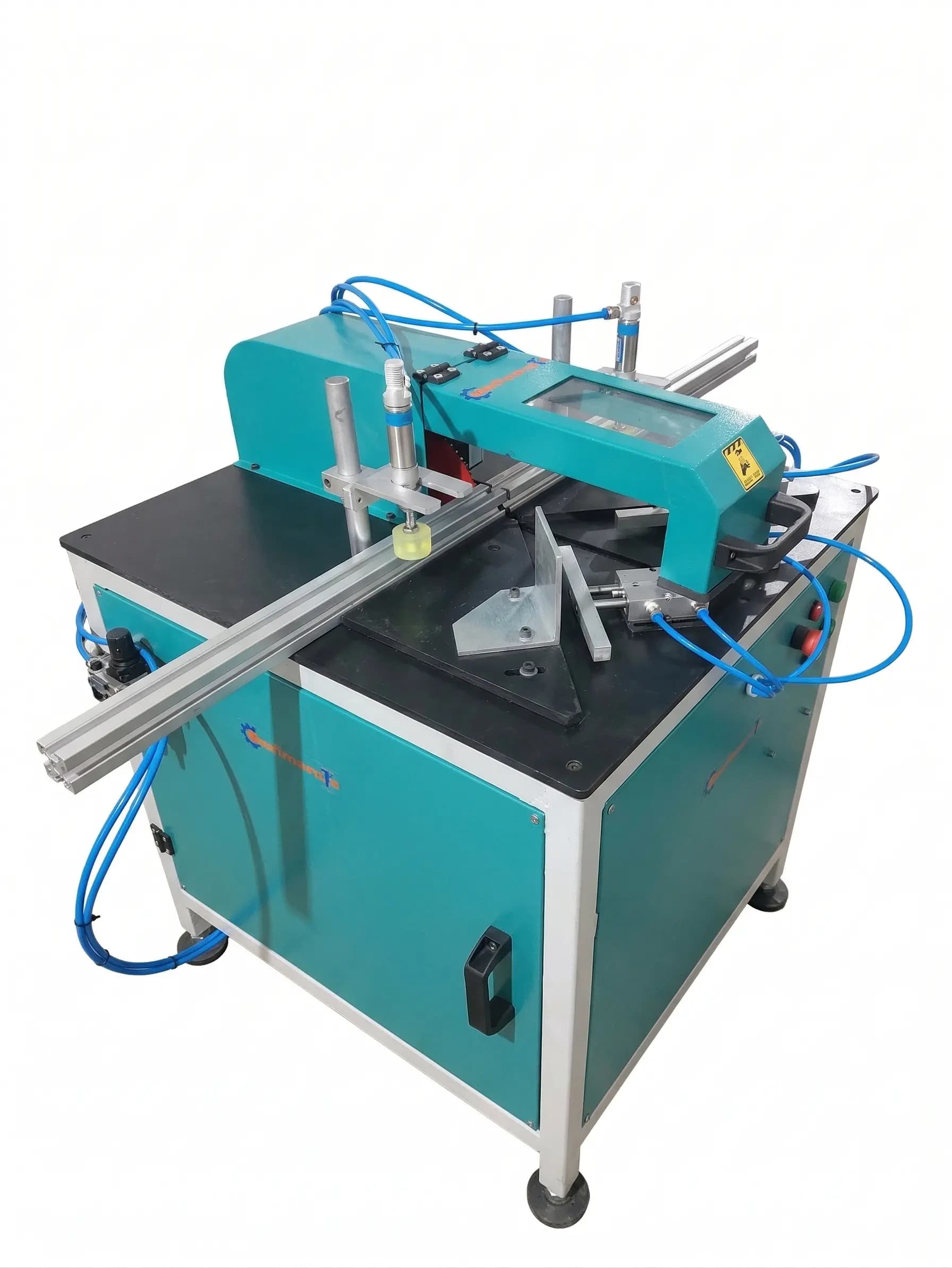
During my 15 years in the workshop, I have seen hundreds of bits broken due to improper setup. The most common mistake is failing to level the profile on the support rollers. If the profile is even 1mm off-level, the copy router bit will enter at an angle, causing the template follower to bind and potentially snapping the tool. Always ensure your Aluminium Cutting Machine and router tables are laser-leveled during installation.
Another critical factor is chip evacuation. Aluminium chips are abrasive and can mar the finish of powder-coated profiles. We advise installing high-volume suction at the point of cut. This not only protects the aesthetics of the window but also prevents the chips from re-entering the cut zone, which causes premature tool wear and overheating.
Common Mistakes to Avoid in Copy Router Maintenance
- Neglecting the Air Filter-Regulator-Lubricator (FRL) Unit: Moisture in the lines will kill your pneumatic clamps and spindle bearings within months. Check and drain your water traps daily.
- Using Dull Carbide Bits: A dull bit forces the operator to push harder, leading to 'chatter marks' on the profile. Replace bits the moment you hear a change in the cutting pitch.
- Ignoring Template Wear: Over time, the follower pin can wear down the steel template. Check your templates monthly against a master gauge to ensure your handle heights aren't drifting.
- Inadequate Profile Support: Long profiles must be supported by external conveyor rollers. If the profile sags, the router will cut at an incorrect depth, compromising the security of the lock-set.
Building a Scalable Aluminium Window Production Line
For fabricators in Indore looking to compete with national brands, the copy router is just one piece of the puzzle. A truly efficient line requires a synchronized flow between the Automatic Aluminium Corner Crimping Machine and the cutting stations. By standardizing your routing templates, you ensure that every window leaving your floor meets international quality standards. This level of consistency is what allows a small workshop to scale into a high-volume manufacturing plant.
FAQ: What Indore Fabricators Ask About Copy Routers
Q: Can I use the same copy router for both aluminium and uPVC profiles? Yes, but you must adjust the RPM and the cooling fluid. Aluminium requires higher speeds and mist lubrication, while uPVC can be routed at lower speeds without cooling. However, using a dedicated bit for each material is non-negotiable to prevent cross-contamination of chips.
Q: What is the average lifespan of a high-speed spindle? With proper lubrication and by avoiding extreme lateral force, a high-quality spindle should last 5,000 to 8,000 operating hours. Always ensure your air supply is dry to prevent internal corrosion of the pneumatic components.
Q: How does the copy router handle different profile depths? Modern machines feature adjustable depth stops and multi-level templates. This allows you to route the outer frame and the sash without changing the setup, which is a major time-saver for Indore fabricators handling diverse architectural projects.
Get more articles like this
Follow Mechnovate on Google to see our guides in Google Discover & News