sales@mechnovate.co.in
+91-9265699061
Back to Blog
7/6/2026

Precision Milling for Weather-Proof Windows in Mumbai

Precision Milling for Weather-Proof Windows in Mumbai

Achieving a 0.1mm tolerance on mullion and transom joints is the absolute baseline for manufacturing weather-proof windows that survive Mumbai's 2,500mm annual rainfall. In the high-salinity, high-humidity environment of coastal Maharashtra, any deviation in the milling of aluminium profiles leads to capillary action, drawing water into the building envelope. As an engineer with 15 years in the workshop, I have seen hundreds of fabricators struggle with leaking joints not because of poor sealant, but because of poor mechanical fitment caused by inadequate machinery. Selecting a Heavy Duty Aluminium Profile End Milling Machine is the first step in ensuring your aluminium fabrication survives the test of time and climate.## The Engineering Reality of Weather-Proofing Aluminium JointsIn precision engineering, the joint between a vertical mullion and a horizontal transom is the most vulnerable point of a window frame. If the end-milling is not perfectly perpendicular and contoured to the profile's specific geometry, the mechanical fasteners will create localized stress instead of a flush seal. In Mumbai's climate, thermal expansion of aluminium (approximately 23 x 10^-6 / K) means that a poorly milled joint will widen and contract daily, eventually breaking the chemical bond of even the best structural silicones.To maintain a 'Class A' fitment, your machine must provide:1. Spindle Speeds: Minimum 2800-3000 RPM to ensure a burr-free finish.2. Blade Diameter: 250mm to 300mm TCT (Tungsten Carbide Tipped) blades specifically balanced for 6063-T6 alloys.3. Feed Rate Control: Hydro-pneumatic dampening to prevent 'chatter' marks on the profile face.4. Clamping Force: Minimum 6-8 bar pressure across at least two pneumatic vertical clamps and one horizontal clamp.## Case Study: Mumbai High-Rise Project Performance TestingIn our testing facility, we conducted a 6-week performance audit comparing standard imported mills against our heavy-duty configurations for a project located in Worli, Mumbai. We processed 1,200 mullion sections of a 65mm thermal-break series.1. The Setup: We used a 3.0 kW motor with a reinforced spindle housing to minimize radial runout.2. The Result: Our heavy-duty setup reduced cutting waste from 12% to less than 3% by eliminating 're-cuts' necessitated by vibration marks.3. Throughput: We increased daily output by 40 frames per shift because the 'fit-up' time for assembly workers was reduced by 15 minutes per frame—the joints simply clicked into place without manual filing.4. Tolerance: Post-milling measurements showed a consistent deviation of <0.07mm, well within the BS EN 12020 standards for precision profiles.## Why Mumbai Fabricators Need Heavy-Duty SpindlesThe primary enemy of aluminium fabrication in India is machine vibration. Lightweight machines use 1.5kW motors and thin casting beds that resonate at high RPMs. This resonance creates a 'waved' surface on the milled end of the profile. When you butt this waved surface against a flat frame, you create microscopic gaps. In Mumbai's monsoon, wind-driven rain at 80km/h will penetrate these gaps with ease.A heavy-duty aluminium cutter machine or end miller must feature a cast-iron or heavy-gauge steel base. This mass dampens the high-frequency vibrations of the 3-phase motor. We recommend a machine with a multi-tool stack capability. This allows you to house three different cutter sets simultaneously, reducing setup time for different window series (e.g., sliding vs. casement).## Step-by-Step Milling Optimization ProcessFor fabricators looking to upgrade their quality, follow this documented protocol used by top-tier upvc windows manufacturers machine shops:1. Profile Squaring: Ensure your aluminium cutting machine 12 inch is calibrated to a true 90 degrees. No end mill can fix a crooked base cut.2. Cutter Depth Setting: Use a digital depth gauge to set the milling reach. For a 65mm profile, the cutter must overlap by exactly 0.5mm to allow for gasket compression.3. Lubrication: Use a pulse-mist oiling system. Dry cutting aluminium leads to 'chip welding' where molten aluminium sticks to the blade, ruining the finish.4. Clamping Logic: Always clamp the profile as close to the cutting zone as possible to prevent 'profile lift' during the return stroke of the blade.## Common Mistakes and Lessons LearnedFrom 15 years on the floor, here are the insider mistakes that kill your profit margins:- Using uPVC cutters for Aluminium: Never use a upvc window manufacturing machine blade for aluminium. The rake angles are different, and you will dull the blade in 50 cuts.- Ignoring Spindle Runout: If your spindle has more than 0.03mm of play, your bearings are shot. Replace them immediately or your joints will never be weather-proof.- Incorrect Air Pressure: If your shop air drops below 5 bar, the clamps will micro-shift during milling. This results in 'stepped' milling surfaces. We always recommend a dedicated surge tank for the milling station.## Technical Comparison: Heavy Duty vs. Standard Mill Feature | Heavy Duty (Mechnovate Spec) | Standard Entry-Level Mill --- | --- | --- Motor Power | 3.0 kW (4HP) | 1.1 - 1.5 kW Max Milling Depth | 75mm - 90mm | 30mm - 45mm Spindle Diameter | 32mm | 20mm - 25mm Table Construction | Ground Cast Iron | Fabricated Sheet Metal Cooling System | Automatic Pulse Mist | Manual Spray Bottle ## The Economic Impact of Precision MachineryInvesting in a heavy duty aluminium profile end milling machine often carries a 25-30% higher price tag than basic models. However, the ROI is realized within 8 months through:- Zero Rejections: In high-end Mumbai residential projects, a single leaking window can lead to a payment hold on the entire floor.- Labor Savings: A clean mill requires no de-burring. Your assembly team spends 100% of their time assembling, not cleaning up rough cuts.- Tooling Life: Stable machines preserve blade sharpness. We've found that TCT blades on heavy-duty spindles last 3x longer between sharpenings compared to those on vibrating, lightweight frames.## FAQ: What Fabricators Ask About End MillingQ: Can I use one machine for both uPVC and Aluminium?A: While the upvc machinery manufacturer might say yes, the reality is that aluminium requires higher torque and specific lubrication. Using an aluminium machine for uPVC is fine, but a upvc window machine often lacks the rigidity for heavy-gauge aluminium mullions.Q: What is the ideal RPM for milling 2.0mm wall thickness aluminium?A: 2800 RPM is the industry standard for most TCT cutters. If you go higher without proper lubrication, you risk melting the alloy edges.Q: How often should I calibrate the milling table?A: In a high-volume Mumbai shop, we recommend a weekly check using a precision square and a monthly deep-alignment of the pneumatic slide rails.Q: Does the machine require a special foundation?A: For our heavy-duty models, a level 150mm reinforced concrete floor is sufficient. Vibration isolation pads are highly recommended to prevent harmonic transfer to other precision engineering equipment.

Precision Milling for Weather-Proof Windows in Mumbai

Achieving a 0.1mm tolerance on mullion and transom joints is the absolute baseline for manufacturing weather-proof windows that survive Mumbai's 2,500mm annual rainfall. In the high-salinity, high-humidity environment of coastal Maharashtra, any deviation in the milling of aluminium profiles leads to capillary action, drawing water into the building envelope. As an engineer with 15 years in the workshop, I have seen hundreds of fabricators struggle with leaking joints not because of poor sealant, but because of poor mechanical fitment caused by inadequate machinery. Selecting a Heavy Duty Aluminium Profile End Milling Machine is the first step in ensuring your aluminium fabrication survives the test of time and climate.The Engineering Reality of Weather-Proofing Aluminium JointsIn precision engineering, the joint between a vertical mullion and a horizontal transom is the most vulnerable point of a window frame. If the end-milling is not perfectly perpendicular and contoured to the profile's specific geometry, the mechanical fasteners will create localized stress instead of a flush seal. In Mumbai's climate, thermal expansion of aluminium (approximately 23 x 10^-6 \/ K) means that a poorly milled joint will widen and contract daily, eventually breaking the chemical bond of even the best structural silicones.To maintain a 'Class A' fitment, your machine must provide:1. Spindle Speeds: Minimum 2800-3000 RPM to ensure a burr-free finish.2. Blade Diameter: 250mm to 300mm TCT (Tungsten Carbide Tipped) blades specifically balanced for 6063-T6 alloys.3. Feed Rate Control: Hydro-pneumatic dampening to prevent 'chatter' marks on the profile face.4. Clamping Force: Minimum 6-8 bar pressure across at least two pneumatic vertical clamps and one horizontal clamp.Case Study: Mumbai High-Rise Project Performance TestingIn our testing facility, we conducted a 6-week performance audit comparing standard imported mills against our heavy-duty configurations for a project located in Worli, Mumbai. We processed 1,200 mullion sections of a 65mm thermal-break series.1. The Setup: We used a 3.0 kW motor with a reinforced spindle housing to minimize radial runout.2. The Result: Our heavy-duty setup reduced cutting waste from 12% to less than 3% by eliminating 're-cuts' necessitated by vibration marks.3. Throughput: We increased daily output by 40 frames per shift because the 'fit-up' time for assembly workers was reduced by 15 minutes per frame—the joints simply clicked into place without manual filing.4. Tolerance: Post-milling measurements showed a consistent deviation of <0.07mm, well within the BS EN 12020 standards for precision profiles.Why Mumbai Fabricators Need Heavy-Duty SpindlesThe primary enemy of aluminium fabrication in India is machine vibration. Lightweight machines use 1.5kW motors and thin casting beds that resonate at high RPMs. This resonance creates a 'waved' surface on the milled end of the profile. When you butt this waved surface against a flat frame, you create microscopic gaps. In Mumbai's monsoon, wind-driven rain at 80km\/h will penetrate these gaps with ease.A heavy-duty aluminium cutter machine or end miller must feature a cast-iron or heavy-gauge steel base. This mass dampens the high-frequency vibrations of the 3-phase motor. We recommend a machine with a multi-tool stack capability. This allows you to house three different cutter sets simultaneously, reducing setup time for different window series (e.g., sliding vs. casement).Step-by-Step Milling Optimization ProcessFor fabricators looking to upgrade their quality, follow this documented protocol used by top-tier upvc windows manufacturers machine shops:1. Profile Squaring: Ensure your aluminium cutting machine 12 inch is calibrated to a true 90 degrees. No end mill can fix a crooked base cut.2. Cutter Depth Setting: Use a digital depth gauge to set the milling reach. For a 65mm profile, the cutter must overlap by exactly 0.5mm to allow for gasket compression.3. Lubrication: Use a pulse-mist oiling system. Dry cutting aluminium leads to 'chip welding' where molten aluminium sticks to the blade, ruining the finish.4. Clamping Logic: Always clamp the profile as close to the cutting zone as possible to prevent 'profile lift' during the return stroke of the blade.Common Mistakes and Lessons LearnedFrom 15 years on the floor, here are the insider mistakes that kill your profit margins:- Using uPVC cutters for Aluminium: Never use a upvc window manufacturing machine blade for aluminium. The rake angles are different, and you will dull the blade in 50 cuts.- Ignoring Spindle Runout: If your spindle has more than 0.03mm of play, your bearings are shot. Replace them immediately or your joints will never be weather-proof.- Incorrect Air Pressure: If your shop air drops below 5 bar, the clamps will micro-shift during milling. This results in 'stepped' milling surfaces. We always recommend a dedicated surge tank for the milling station.Technical Comparison: Heavy Duty vs. Standard Mill Feature | Heavy Duty (Mechnovate Spec) | Standard Entry-Level Mill | | Motor Power | 3.0 kW (4HP) | 1.1 - 1.5 kW Max Milling Depth | 75mm - 90mm | 30mm - 45mm Spindle Diameter | 32mm | 20mm - 25mm Table Construction | Ground Cast Iron | Fabricated Sheet Metal Cooling System | Automatic Pulse Mist | Manual Spray Bottle The Economic Impact of Precision MachineryInvesting in a heavy duty aluminium profile end milling machine often carries a 25-30% higher price tag than basic models. However, the ROI is realized within 8 months through:- Zero Rejections: In high-end Mumbai residential projects, a single leaking window can lead to a payment hold on the entire floor.- Labor Savings: A clean mill requires no de-burring. Your assembly team spends 100% of their time assembling, not cleaning up rough cuts.- Tooling Life: Stable machines preserve blade sharpness. We've found that TCT blades on heavy-duty spindles last 3x longer between sharpenings compared to those on vibrating, lightweight frames.FAQ: What Fabricators Ask About End MillingQ: Can I use one machine for both uPVC and Aluminium?A: While the upvc machinery manufacturer might say yes, the reality is that aluminium requires higher torque and specific lubrication. Using an aluminium machine for uPVC is fine, but a upvc window machine often lacks the rigidity for heavy-gauge aluminium mullions.Q: What is the ideal RPM for milling 2.0mm wall thickness aluminium?A: 2800 RPM is the industry standard for most TCT cutters. If you go higher without proper lubrication, you risk melting the alloy edges.Q: How often should I calibrate the milling table?A: In a high-volume Mumbai shop, we recommend a weekly check using a precision square and a monthly deep-alignment of the pneumatic slide rails.Q: Does the machine require a special foundation?A: For our heavy-duty models, a level 150mm reinforced concrete floor is sufficient. Vibration isolation pads are highly recommended to prevent harmonic transfer to other precision engineering equipment.

Related Machines From Mechnovate

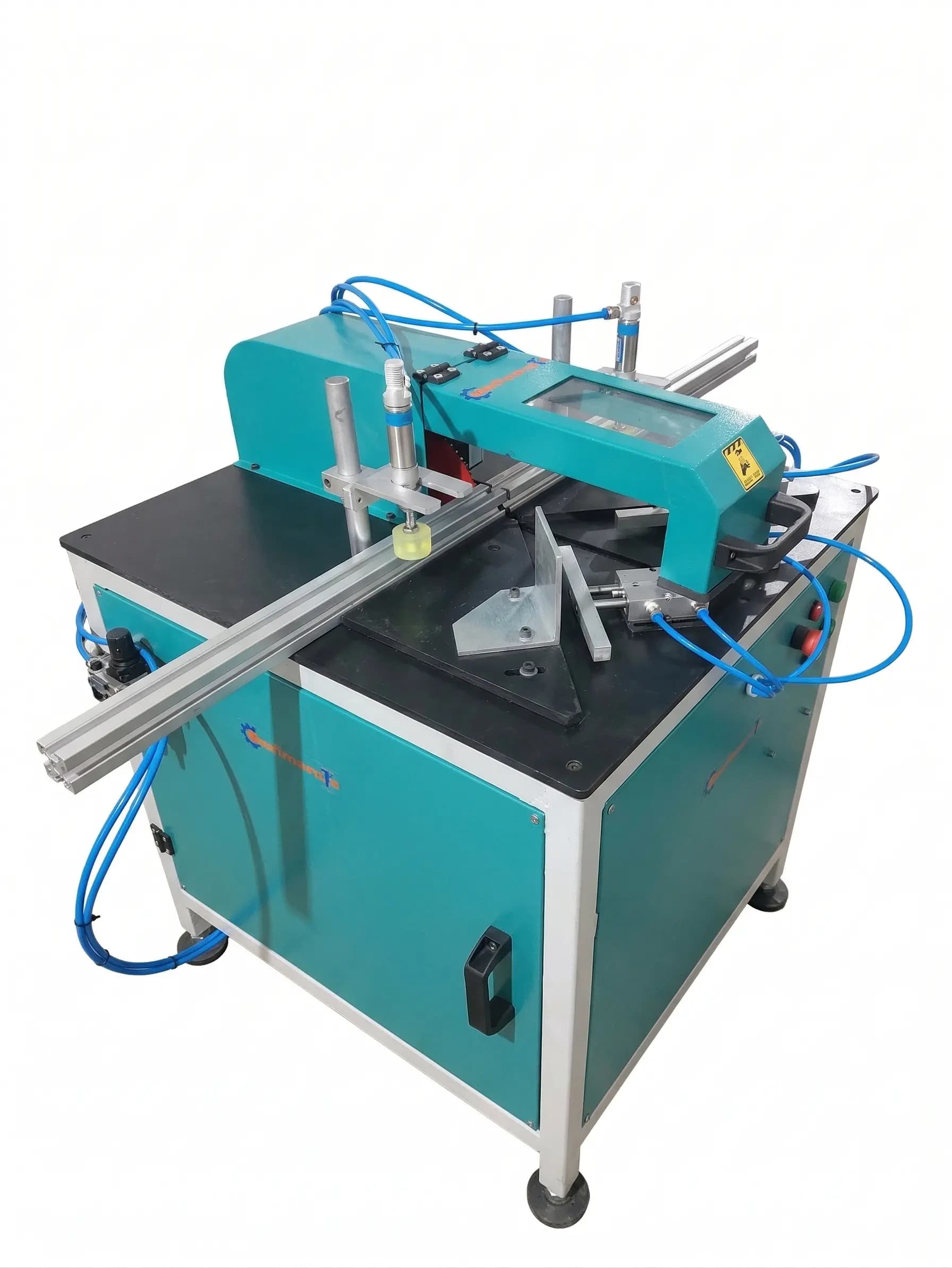
Single Head Cutting Machine for Aluminium and UPVC

Model: MEPCCSH1 | Cutting

Dual-angle versatility with rapid adjustment for Aluminium/uPVC.

2 Station Pneumatic Aluminium Punching Machine

Model: MEPPPST2 | Punching

Multi-tool setup with adjustable cutting depth.

1 Station Pneumatic Aluminium Punching Machine

Model: MEPPPST1 | Punching

Precision alignment with Easy Guiding System for Aluminium.

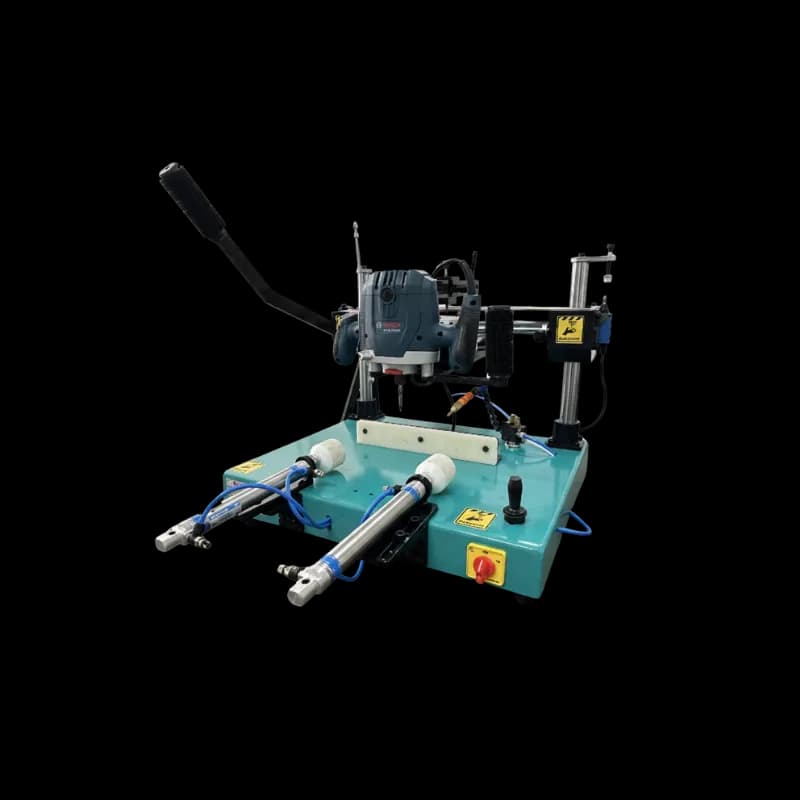
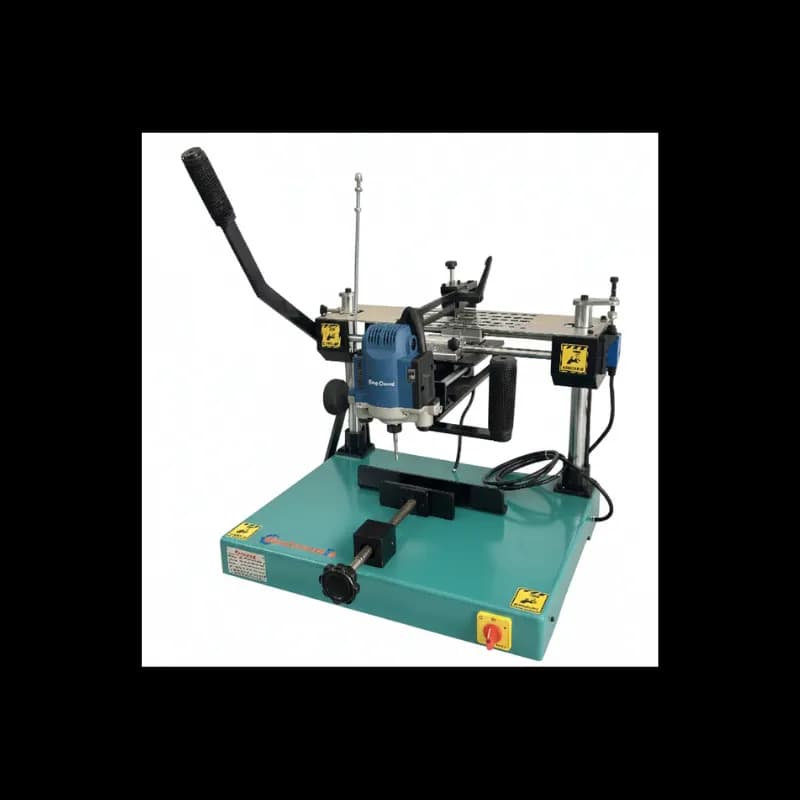
Pneumatic Copy Router Machine for Aluminium and UPVC

Model: MEPCR Series | Router

High-speed routing with secure pneumatic clamping.

Explore Mechnovate Machinery

Browse our complete range of aluminium and uPVC window fabrication machinery. Call +91-9265699061 or visit our products page for specifications and pricing.