Precision Joinery in Indore: Double Head Cutting Machine ROI
Why Indore's Luxury Projects Demand Automatic Double Head Cutting
For fabricators targeting Indore's booming luxury housing sector—specifically in areas like Bypass Road and Super Corridor—the margin for error in window joinery has vanished. If your mitre joints show even a 0.5mm light gap, high-end clients and architects will reject the installation. The automatic double head cutting saw is no longer a luxury; it is a technical necessity for any unit aiming to scale beyond 10-15 frames per day.
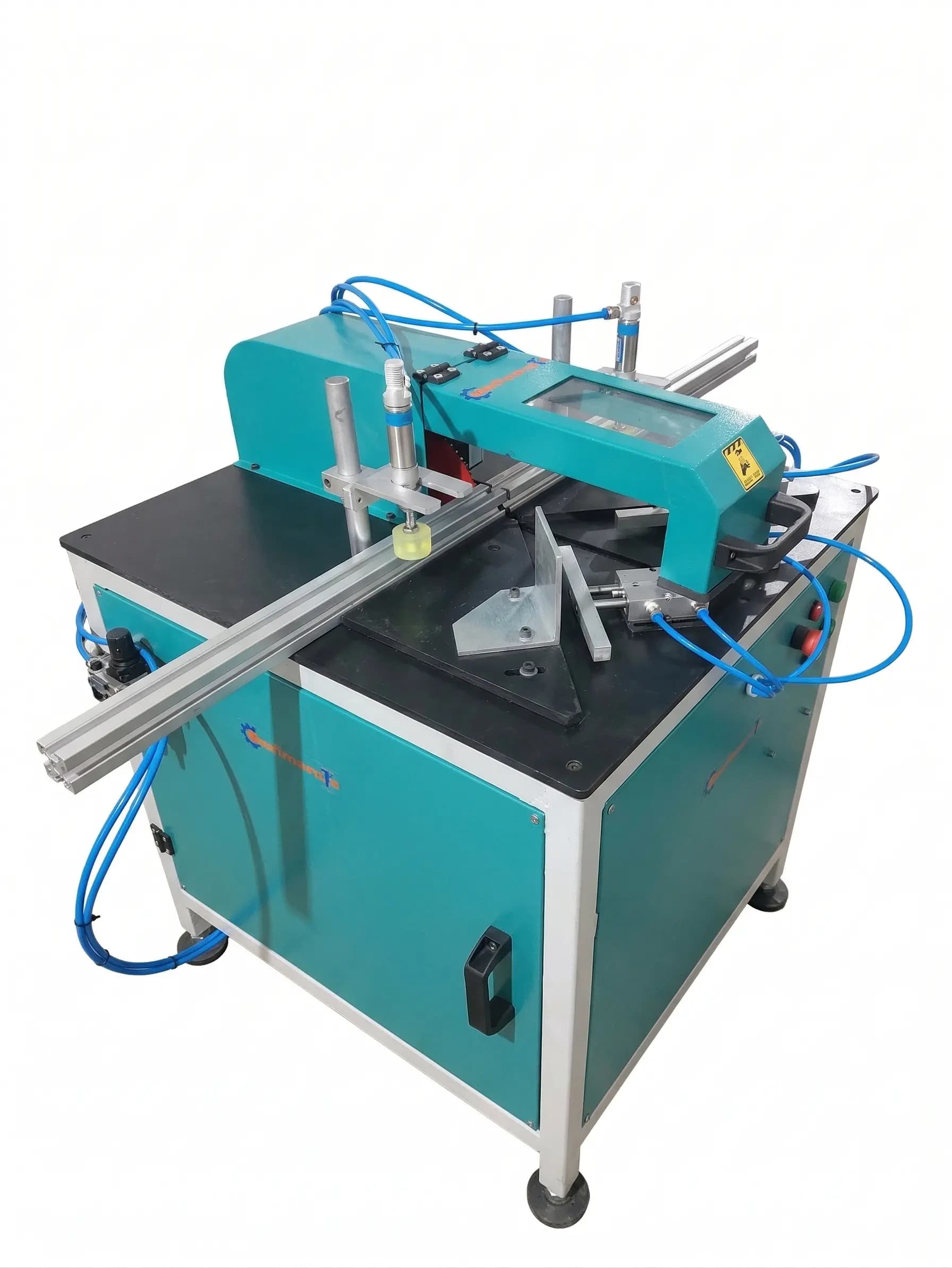
When we evaluate the automatic double head cutting machine price India, we are not just looking at a capital expenditure; we are looking at the elimination of human error in 45-degree and 90-degree cuts. In our Mechnovate testing labs, we compared a standard aluminium cutter machine 12 inch manual setup against our 450mm automatic double head miter saw. The results were stark: the automatic system maintained a length tolerance of ±0.1mm across 100 consecutive cuts, whereas the manual process drifted by as much as 1.2mm due to operator fatigue and parallax error.
The ROI Equation: Is the Automatic Double Head Cutting Machine Price India Justified?
To understand if the investment makes sense for your Indore-based workshop, we must break down the operational efficiency. A double head miter saw for aluminium profiles price typically ranges from ₹4.5 Lakhs to ₹12 Lakhs depending on the CNC integration and blade diameter. While this is higher than a single cutting machine, the throughput difference is exponential.
Measurable Performance Metrics:
- Cycle Time Reduction: A double head machine cuts both ends of a profile simultaneously. In a 10-hour shift, this allows a single operator to process 180-220 profiles, compared to just 60-80 on a manual aluminium profile cutting machine.
- Material Yield: By using digital length positioning, we reduced scrap rates from 8% (manual marking) to less than 1.5%. On high-value architectural bronze or thermal-break aluminium, this saving alone covers the EMI of the machine.
- Labor Cost: One skilled operator on an automatic upvc window plant replaces three semi-skilled workers required for manual cutting, deburring, and re-checking measurements.
Technical Benchmarks: Precision Engineering Specifications
As a senior engineer, I advise looking beyond the exterior paint of the machine. When sourcing a uPVC window manufacturing machine or an aluminum window fabrication machinery setup, the 'soul' of the machine lies in its spindle and guide rail assembly. For Indore's dust-heavy environment, ensure your machine meets these industrial profile cutting safety standards and ISO standards:
- Spindle Run-out: Must be <0.01mm. Anything higher will cause blade 'wobble,' leading to burrs on the profile edge.
- Feed System: Hydro-pneumatic feeding is superior to pure pneumatic as it prevents the blade from 'jumping' when it hits the internal webs of the aluminium profile.
- Blade Specification: Use a 450mm or 500mm TCT (Tungsten Carbide Tipped) blade with a negative rake angle for cleaner entries in thin-walled profiles (1.2mm - 1.6mm).
- Clamping: Vertical and horizontal pneumatic clamps are mandatory to prevent profile rotation during the cut, which is the primary cause of angle inaccuracy.
For those also handling uPVC, the same precision applies. Integrating a uPVC window welding machine with your cutting line ensures that the fusion-welded corners are perfectly square, preventing sash-frame alignment issues during site installation.
Case Study: Performance Metrics in High-Volume Fabrication
In our recent implementation for a Tier-1 fabricator in Pune (similar climate and profile usage to Indore), we audited their shift from manual upvc windows making machine tools to a fully automatic aluminium window production line.
The Baseline (Manual Setup):
- Output: 45 frames per 8-hour shift.
- Rejection Rate: 6% (mostly due to poor mitre joints at the aluminium punching machine stage).
- Tooling Cost: High due to frequent blade chipping from manual feed inconsistencies.
The Upgrade (Double Head Integration):
- Output: 140 frames per 8-hour shift.
- Rejection Rate: <0.5%.
- Result: The client secured a 400-unit villa project because they could guarantee the air-tightness levels required for centralized HVAC systems—something impossible with inconsistent manual cuts.
Common Mistakes and Insider Advice
In my 15 years on the shop floor, I have seen many Indore fabricators fail despite buying expensive upvc machinery. Here is what to avoid:
- Ignoring Air Quality: An automatic double head cutting saw for aluminium profiles relies on pneumatic valves. If you don't install a refrigerated air dryer, the humidity in Indore's monsoon will corrode your solenoids within 6 months.
- Blade Misalignment: Never trust the factory calibration forever. Use a high-precision digital protractor to check the 45-degree stop every 500 cuts. Small vibrations in the head cutter machine can cause the mechanical stops to shift.
- Generic Lubricants: Always use a specialized mist-spray lubricant. Using generic oil stains the powder coating of the profiles and gums up the blade teeth, leading to overheating.
If you are scaling, consider how your cutting line interacts with other equipment like the aluminium corner crimping machine. A perfect cut is useless if your crimping pressure is inconsistent.
Maintenance Guide for Long-Term Precision
To maintain the best upvc window machinery brands India performance levels, follow this engineering schedule:
- Daily: Clean the linear guide rails and apply a light coat of ISO VG 32 oil.
- Weekly: Check the belt tension between the motor and the blade spindle. A slipping belt causes 'chatter' marks on the cut surface.
- Monthly: Verify the squareness of the backfence using a master square. This is critical for upvc window manufacturing machines to ensure the glass beads fit correctly.
FAQ: Critical Questions for Fabricators
Q1: Can I use the same double head machine for both Aluminium and uPVC? Yes, provided the blade speed is adjustable or optimized for both. However, uPVC requires a higher tooth count blade to prevent shattering in cold weather, whereas aluminium requires specific chip-breaker geometries. Most Mechnovate machines are versatile enough for both with a simple blade swap.
Q2: What is the power requirement for a heavy-duty 45 degree double head cutting machine? Typically, you need a 3-phase 440V supply. Each head usually sports a 2.2kW to 3.0kW motor. Ensure your workshop in Indore has a stabilized power supply, as voltage drops can cause the PLC (Programmable Logic Controller) to reset during a cut.
Q3: Is a CNC-controlled length stopper worth the extra cost over a digital display? If you are running 50+ frames a day, yes. A CNC stopper automatically adjusts for the next cut based on a CSV file upload, eliminating manual entry errors. For smaller shops, a digital display with a manual hand-wheel is sufficient but slower.
Q4: How do I handle 6-meter profiles safely? Always ensure your automatic double head cutting machine includes a profile support roller track. Unsupported profiles will sag, causing the miter angle to 'open' when the blade enters the material.
Get more articles like this
Follow Mechnovate on Google to see our guides in Google Discover & News