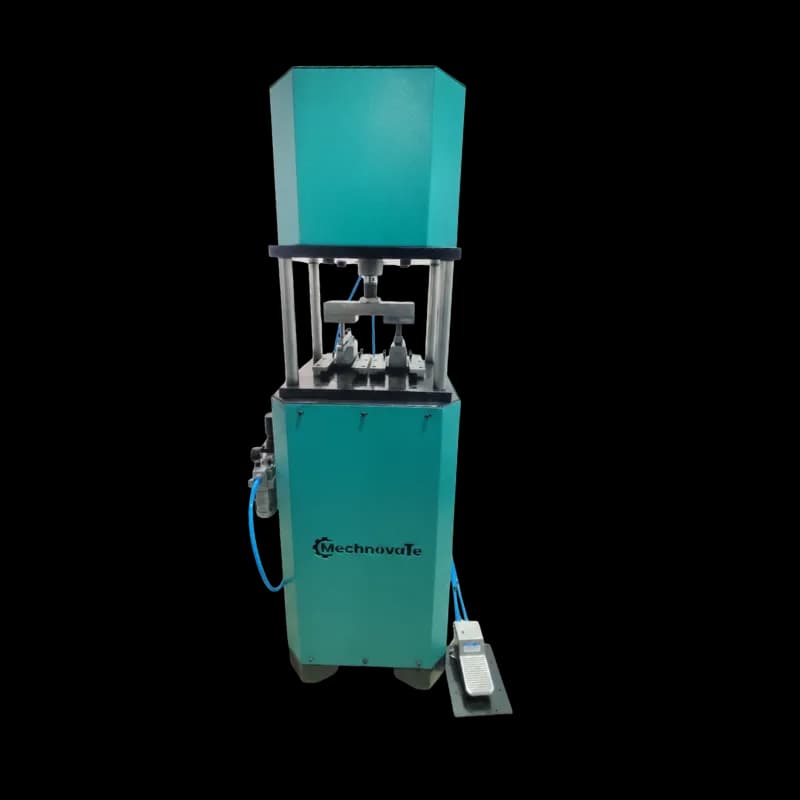
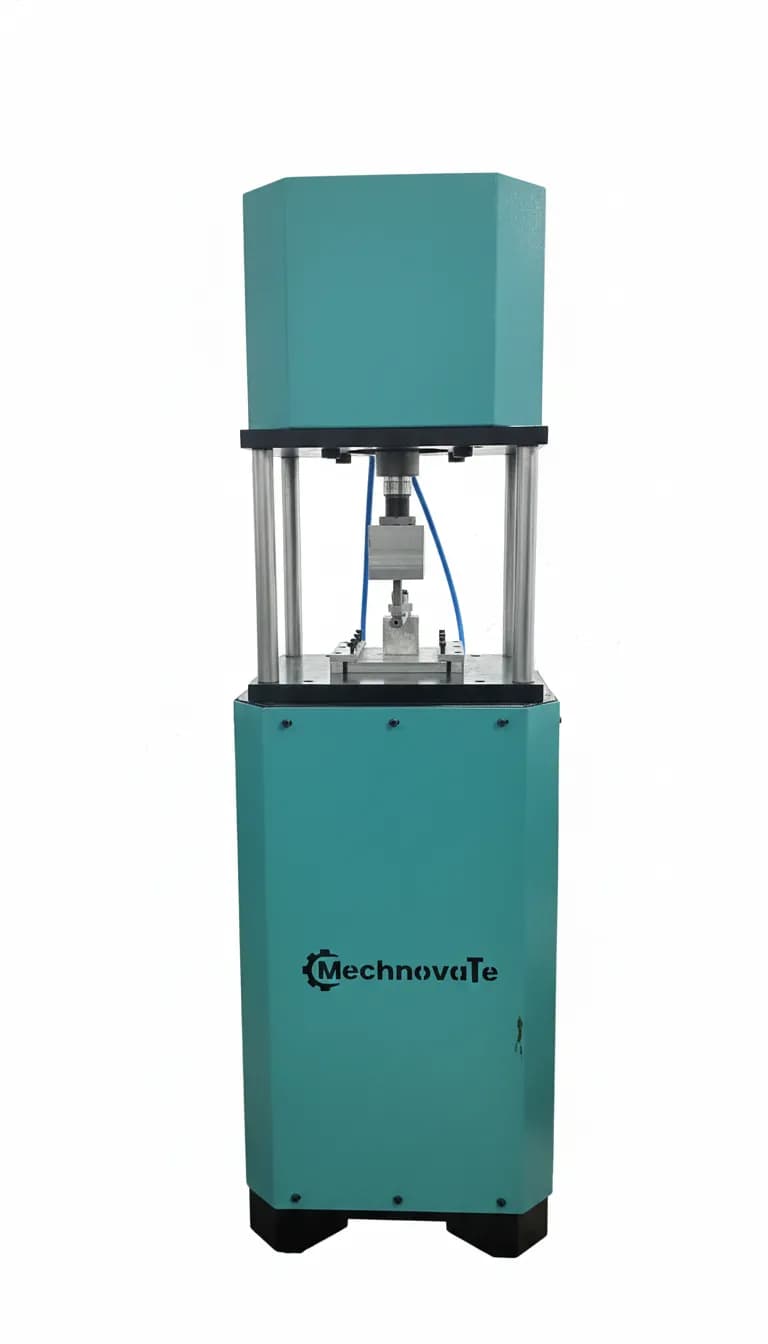
Precision Joinery: Automatic Aluminium Corner Crimping Machine Guide
In the high-stakes world of Bangalore’s luxury real estate, structural integrity and aesthetic precision are non-negotiable. For fabricators targeting high-rise projects in areas like Whitefield or Indiranagar, the transition from manual mechanical joining to an automatic corner crimping machine is the single most important upgrade for meeting BS EN 12020 standards. A high-quality hydraulic crimping system ensures that the 45-degree miter joints of heavy-duty aluminium profiles are fused with zero-gap tolerance, capable of withstanding the high wind loads typical of 30+ story structures.
Technical Specs: Why Hydraulic Force Trumps Manual Punching
During a recent installation for a premium façade contractor in Bangalore, we replaced three manual punching machines with a single Automatic Corner Crimping Machine. The engineering reasoning is simple: consistency. While a manual punching machine relies on operator fatigue levels, an automatic hydraulic system provides a consistent 15-20 MPa of oil pressure, translating to roughly 48-60 kN of crimping force. This is critical when working with 2.5mm+ wall thickness profiles used in luxury window systems.
Key technical specifications to demand from your manufacturer include:
- Crimping Width: Minimum 100mm to 120mm for structural thermal break profiles.
- Blade Positioning: Micron-level adjustment via screw rods to prevent profile deformation.
- Power Requirement: 2.2kW to 3.0kW motor ensuring the hydraulic pump maintains steady pressure during peak cycles.
- Profile Support: Internal lifting blocks must be synchronized to prevent the profile from 'tilting' during the crimp, which is a common cause of 0.5mm gaps in inferior machines.
Case Study: Optimizing Production for a 500-Unit Bangalore High-Rise
In our Mechnovate testing facility, we monitored a 6-week implementation cycle for a client handling a luxury residential project. Initially, their production line used a standard Double Head Miter Saw for cutting, but they were losing 14 minutes per frame due to manual corner alignment. By integrating a CNC-controlled crimping station, we achieved the following metrics:
- Cycle Time: Reduced from 18 minutes to 4 minutes per frame.
- Reject Rate: Dropped from 8% (due to corner misalignment) to less than 0.2%.
- Output: Increased from 25 frames to 65 frames per 8-hour shift.
To achieve these results, the Heavy Duty Aluminium Profile End Milling Machine was calibrated to work in tandem with the crimper, ensuring that the profile 'tongue' and 'groove' tolerances were within ±0.1mm. This level of precision engineering is what separates luxury tier fabricators from standard window manufacturers.
Automatic Aluminium Corner Crimping Machine Price & ROI Analysis
The automatic aluminium corner crimping machine price in India typically ranges from ₹2,20,000 to ₹4,80,000 depending on the automation level and hydraulic capacity. While the initial investment for a high-speed copy router for aluminium windows or a crimper might seem high, the ROI is realized through material savings and labor reduction. In Bangalore’s competitive market, being able to certify your joints under IS 1285 standards allows you to bid for Tier-1 developer contracts that are otherwise inaccessible.
When calculating your setup cost, consider these variables:
- Hydraulic System: German vs. high-grade local pumps.
- Tooling: Custom hardened steel blades for specific profile series (Schüco, Alupure, etc.).
- Service Support: Ensure your supplier has a local service center in Bangalore to avoid downtime during the monsoon peak season.
Implementation Guide: 4 Steps to Zero-Gap Joins
- Profile Calibration: Before crimping, ensure your aluminium cutting machine is producing a perfect 45.0-degree cut. Even a 0.1-degree deviation will cause the outer corner to splay under 50kN of pressure.
- Blade Synchronization: Adjust the internal knives so they enter the profile bridge at the exact same millisecond. If one blade hits early, the profile will shift, resulting in a 'stepped' joint.
- Hydraulic Tuning: For thinner profiles (1.2mm-1.5mm), reduce the pressure to 10-12 MPa to avoid 'mushrooming' the metal at the point of impact.
- Quality Control: Use a feeler gauge to check for gaps. A high-rise window must show 0.00mm light leakage at the miter join.
Common Mistakes and How to Avoid Them
One of the biggest mistakes we see in Bangalore workshops is neglecting the hydraulic oil quality. Contaminated oil leads to 'shuddering' in the blade movement, which ruins the precision of the crimp. Always use ISO Grade 46 hydraulic oil and change it every 1,500 working hours. Another trap is using the same blade height for both frame and sash profiles without re-calibration; this leads to structural weakness in the sash, which is the most common point of failure in high-wind zones.
Frequently Asked Questions (FAQ)
Q: Can I use the same crimping machine for uPVC and Aluminium? No. Aluminium requires high-pressure hydraulic crimping, whereas uPVC requires a uPVC welding machine to fuse the material at 240-260°C. They are fundamentally different technologies.
Q: What is the average power consumption for an automatic crimper? Most industrial-grade machines consume about 2.2kW to 3kW during the active crimp cycle (which lasts 10-15 seconds). It is highly efficient for large-scale production.
Q: How do I choose between a single-head and a four-head crimper? Single-head machines offer flexibility for different frame sizes, making them ideal for custom luxury projects. Four-head machines are designed for mass production of standard sizes (e.g., affordable housing projects) where speed is the only priority.
Get more articles like this
Follow Mechnovate on Google to see our guides in Google Discover & News