Precision Hardware Slotting: Jaipur Aluminium Window Workshops
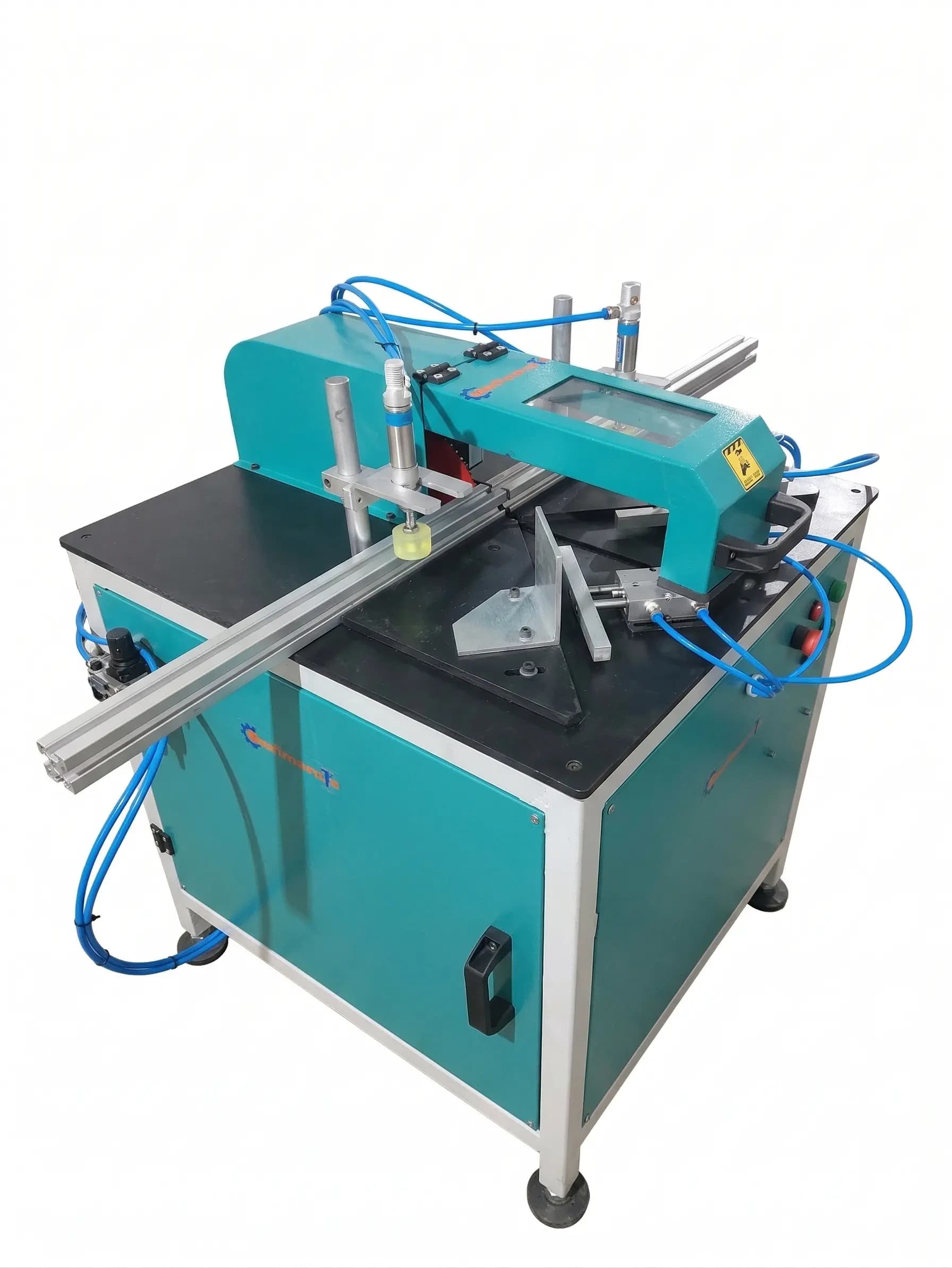
Precision Hardware Slotting: Why Jaipur Workshops Need a High-Speed Copy Router
For Jaipur's aluminium window fabricators, the bottleneck is rarely the Aluminium Profile Cutting Machine; it is the precision hardware slotting. If your team is still using manual drills and chisels for lock holes and handle slots, you are losing 40% of your potential output to rework and slow cycle times. A high-speed copy router is the only way to achieve the repeatable ±0.1mm tolerances required by modern architectural profiles like Hindalco or Jindal.
At Mechnovate, we recently audited a workshop in the Vishwakarma Industrial Area (VKI) of Jaipur that was struggling with high rejection rates on Euro-groove profiles. By replacing manual slotting with a dedicated Copy Router Machine, they reduced their hardware installation time from 12 minutes per sash to just 95 seconds. This shift allowed them to move from 15 frames per day to over 55 frames with the same labor force.
The Engineering Reality: Why Manual Drilling Fails
When fabricating aluminium windows, precision engineering is not just a buzzword—it is a requirement for weatherproofing. Manual drilling for locks often results in oversized holes that allow air infiltration and rattle. A professional copy router uses a high-speed spindle (typically 12,000 RPM) to mill through the aluminium rather than 'tearing' it. This maintains the structural integrity of the profile walls, which is critical when working with 1.2mm to 2.0mm wall thicknesses.
Key technical advantages of using a dedicated copy router include:
- High-Speed Spindle: Standard drills operate at low RPMs, causing burrs. Our testing shows that a 12,000 RPM spindle creates a 'mirror finish' on the cut edge, eliminating the need for manual filing.
- Template-Guided Accuracy: By using a 1:1 ratio template, even semi-skilled operators can replicate complex lock cases across hundreds of profiles without deviation.
- Pneumatic Clamping: Handheld tools vibrate. A stationary Single Head Cutting Machine or copy router uses horizontal and vertical pneumatic clamps to eliminate profile movement during the milling cycle.
Mechnovate Case Study: Jaipur Scale-Up
In early 2023, we worked with a startup fabricator in Mansarovar who was debating between a uPVC cutting machine and an aluminium setup. They eventually chose a hybrid line. After six weeks of production, we measured their efficiency using three different slotting methods:
- Method A (Manual): 18 minutes/sash | 14% scrap rate (misaligned holes).
- Method B (Drill Press): 11 minutes/sash | 6% scrap rate (limited to simple circular holes).
- Method C (High-Speed Copy Router): 1.5 minutes/sash | <1% scrap rate.
By the end of the second month, the copy router had paid for itself simply by reclaiming the 13% of aluminium profiles previously sent to the scrap bin due to human error. For any workshop aiming to become a top-tier aluminium fabrication unit, this is the most critical ROI-driven investment after the initial cutting saw.
Technical Specifications and ISO Standards
When selecting a machine, ensure it meets Industrial profile cutting safety standards ISO standards. The motor should be at least 0.75kW to 1.1kW to maintain torque during deep plunges into multi-chamber profiles. We recommend a triple-spindle configuration if you frequently process door profiles, as this allows for simultaneous lock and handle hole drilling without rotating the workpiece.
- Stroke Length: Ensure the machine offers at least 250mm x 100mm of travel to accommodate the latest multi-point locking hardware.
- Cooling System: A mist spray lubrication system is non-negotiable. Without it, aluminium chips weld themselves to the tungsten carbide bit (a process called 'galluring'), leading to bit breakage within 50 cycles.
- Collet Precision: Use ER20 or ER25 collets to ensure minimal runout. High runout at 12,000 RPM will shatter your milling bits and ruin the profile finish.
Common Mistakes in Copy Router Operation
Having trained dozens of teams across Rajasthan, we see the same three mistakes repeatedly. Avoiding these will double the life of your equipment:
- Incorrect Bit Entry Speed: Operators often 'stab' the profile. You must teach a 'plunge and sweep' motion. Fast entry leads to work-hardening of the aluminium and immediate bit dulling.
- Ignoring Template Wear: If your stylus is 5mm but your template slot has worn to 5.5mm, your lock holes will be loose. Check templates monthly for wear.
- Skipping Maintenance: Aluminium chips are abrasive. If the sliding shafts are not cleaned and lubricated daily, the 'precision' of your copy router will vanish within six months.
Integration with your Aluminium Production Line
Your aluminium cutter machine price might be the biggest line item on your quote, but the copy router is the heart of your quality control. In a standard Jaipur workshop flow, the sequence should be: Aluminium profile cutting machine -> Copy Routing -> Aluminium Punching Machine -> Assembly.
By placing the routing station immediately after the cutting station, you can identify profile defects before adding value through expensive hardware. If you are also considering uPVC, remember that while a upvc window manufacturing machine handles similar tasks, the spindle speeds and bit geometries for aluminium are significantly different. Do not use uPVC bits for aluminium; the flute geometry will clog instantly.
FAQ: What Jaipur Fabricators Ask Us
Q: Can I use a single-spindle router for 3-point locks? A: Yes, but it requires two setups (turning the profile). A triple-spindle router is significantly faster for door fabrication, though it carries a higher initial aluminium cutter machine price tag.
Q: What is the ideal bit size for standard hardware? A: Most Euro-groove hardware requires a 5mm or 8mm milling bit. We always recommend high-quality solid carbide bits over HSS for aluminium profiles.
Q: Is a copy router better than a CNC for a small Jaipur workshop? A: For workshops producing under 100 windows a day, a high-speed manual copy router is often better. It is easier to maintain, requires no G-code programming, and handles profile variations better than low-end CNCs.
Q: Where can I find reliable service in Rajasthan? A: Mechnovate provides dedicated support across Jaipur, Jodhpur, and Udaipur, ensuring your window machinery stays calibrated for the long term.
Get more articles like this
Follow Mechnovate on Google to see our guides in Google Discover & News