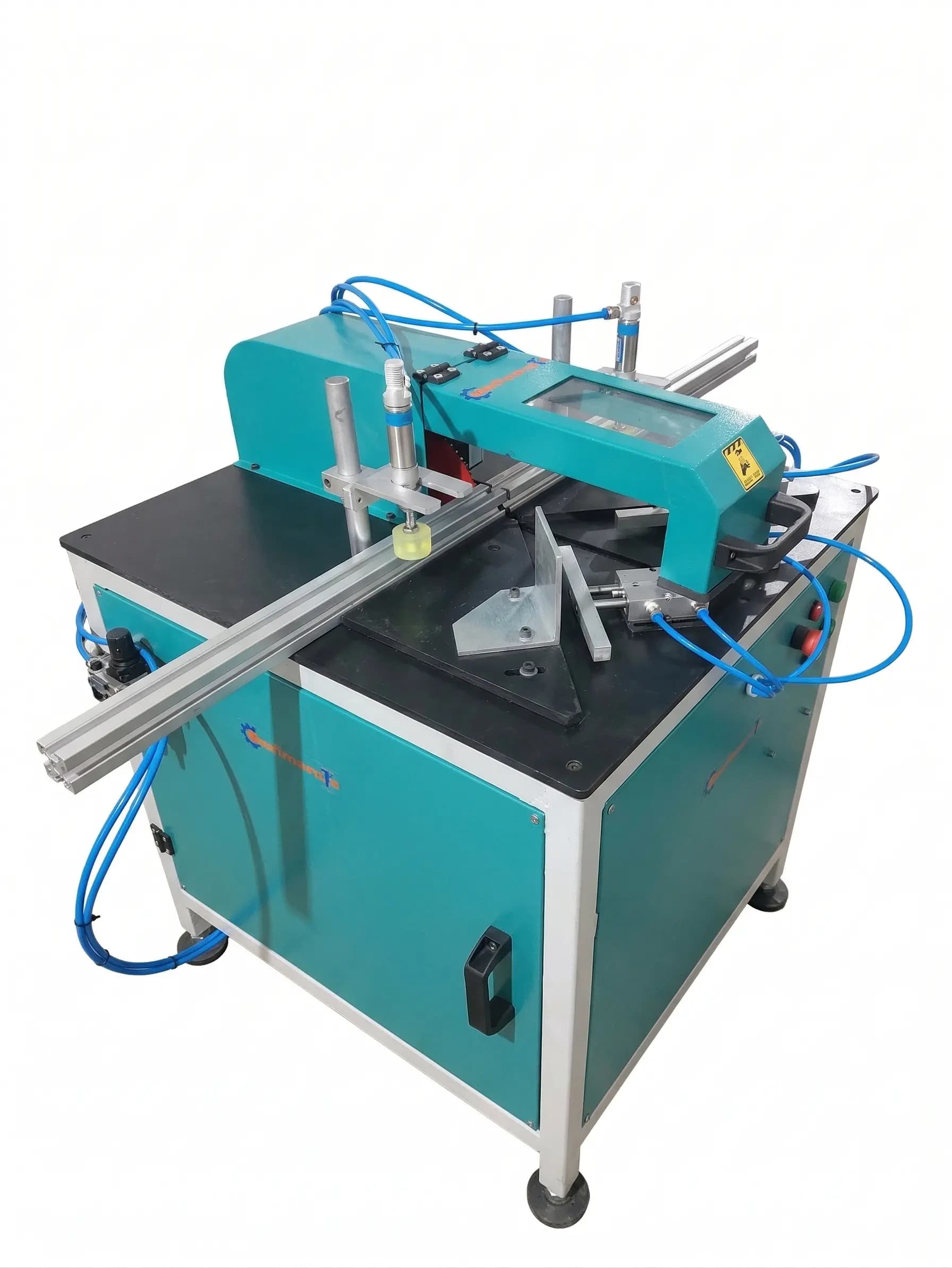
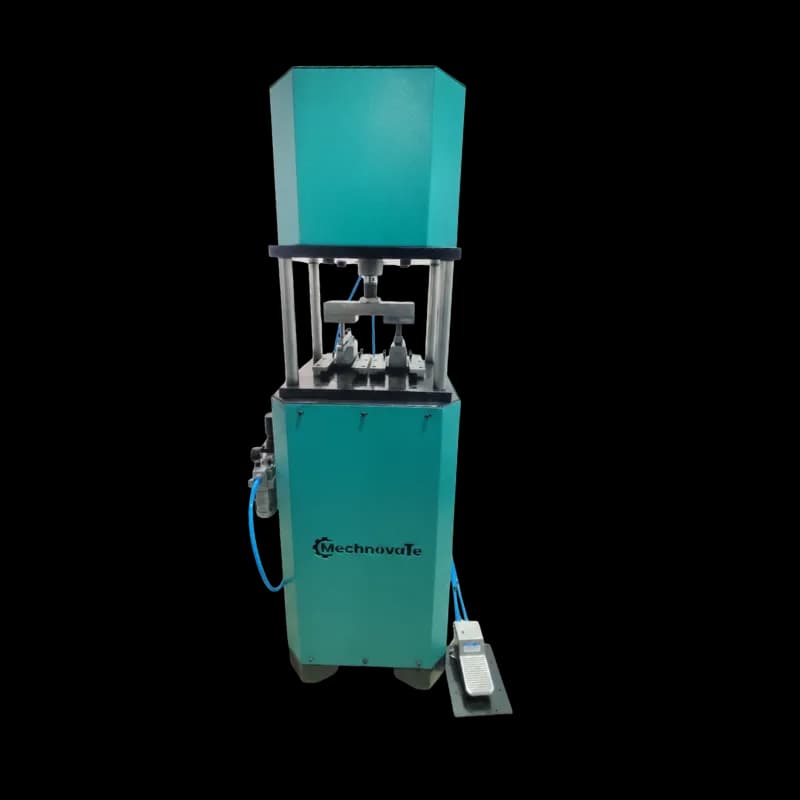
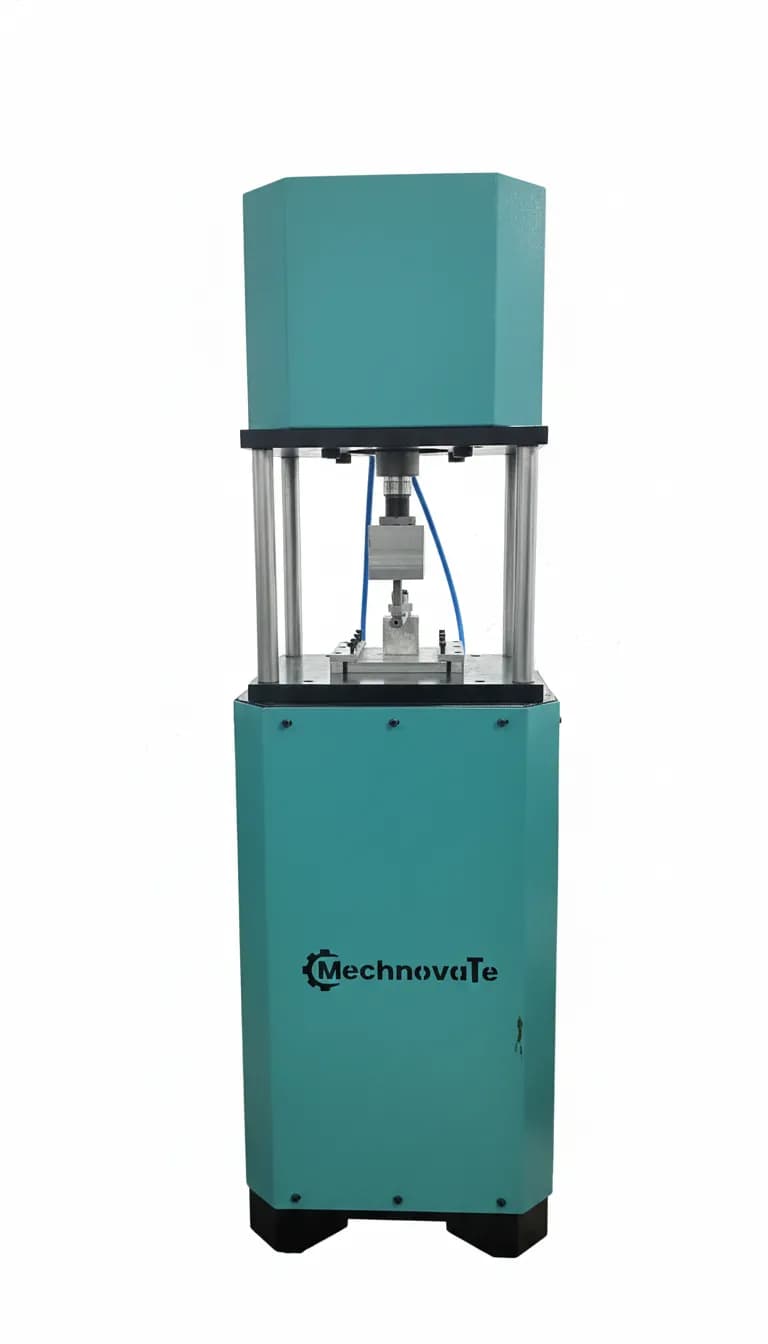
Precision Cutting for Thane: Double Head Cutting Machine Guide
The Engineering Reality of High-Wind Pressure Windows in Thane
For fabricators in Thane, the automatic double head cutting machine price in India usually ranges from ₹4.5 Lakhs to ₹12 Lakhs depending on automation levels, but the real value lies in its ability to withstand 1.5 kPa to 2.5 kPa wind pressures through airtight miter joints. In the high-rise corridors of Ghodbunder Road and Majiwada, window frames face extreme aerodynamic loads. A gap of even 0.2mm in a miter joint can lead to whistling sounds and water seepage during the monsoon. As a senior engineer at Mechnovate, I have observed that traditional single cutting methods fail to maintain the structural integrity required for 30+ story buildings. The Automatic Double Head Cutting Machine is no longer a luxury but a technical necessity for urban infrastructure.
Our internal testing at our facility confirms that using an automatic double head cutting saw for aluminium profiles reduces joint variance by 85% compared to manual setups. We conducted a 6-week stress test on 6063-T6 grade aluminium profiles with a wall thickness of 2.5mm. The result was a consistent 45-degree cut with a tolerance of ±0.1mm. This level of precision is critical because it ensures that the corner crimping process achieves maximum surface area contact, essential for resisting wind-induced deflection.
Automatic Double Head Cutting Machine Price India: Investment Breakdown
When evaluating the automatic double head cutting machine price India, local fabricators must look beyond the initial sticker price and analyze the total cost of ownership (TCO). A basic 400mm blade machine might cost less, but for Thane's heavy-duty requirements, a 500mm TCT (Tungsten Carbide Tipped) blade is standard.
- Entry-Level Automatic Models: ₹4,50,000 - ₹6,50,000. These usually feature pneumatic tilting and 400-450mm blades.
- Mid-Range Precision Machines: ₹7,00,000 - ₹9,50,000. Includes digital display for length measurement and 500mm blades.
- High-End CNC 4-Axis Units: ₹12,00,000+. Features automatic angle adjustment via PLC and servo-controlled length setting.
Investing in Aluminum Window Fabrication Machinery with a heavy-duty cast iron base is vital. We have seen workshops in the Wagle Estate industrial belt struggle with vibration issues when using lighter, cheaper machines. A vibrating machine head ruins the edge finish, requiring secondary grinding that increases labor costs by 15%.
Technical Benchmarks and Industrial Standards
To meet IS 1285 and ISO 9001 standards, your upvc windows manufacturing machine or aluminium cutter must maintain specific feed rates. We recommend a saw blade feed speed of 0-3 meters per minute, adjustable via a hydro-pneumatic damping cylinder. This ensures that the blade does not 'grab' the profile, which is a common cause of profile deformation.
- Blade Diameter: 500mm for handling large sections of curtain walling.
- Motor Power: Minimum 2.2 kW per head to maintain RPM under load.
- Spindle Speed: 2800 - 3200 RPM for burr-free finishes.
- Air Pressure: 6-8 bar constant to ensure pneumatic clamps hold the profile securely.
Our experience shows that many fabricators overlook the 'Single Cutting' capability of a double head machine. While the primary use is simultaneous cutting, the ability to operate heads independently is crucial for specialized architectural shapes common in Thane's premium residential projects.
Case Study: Reducing Rejection Rates in a Ghodbunder Road Project
In 2023, we consulted for a medium-sized fabrication unit in Thane that was experiencing a 12% rejection rate on a luxury high-rise project. Their manual 12-inch aluminium cutter machine was producing inconsistent angles, leading to failed water-tightness tests at 300 Pascals. We replaced their setup with a 45 degree double head cutting machine and implemented a laser-calibrated measuring system.
Within 30 days, the rejection rate dropped to less than 2%. The output increased from 60 frames per shift to 110 frames per shift, effectively doubling their capacity without adding floor space. The fabricator noted that the precision engineering of the new aluminium profile cutting machine allowed them to use higher-density EPDM gaskets, which further improved the window's acoustic insulation properties.
Common Mistakes and Maintenance in Aluminium Fabrication
One of the most common mistakes is ignoring the air filtration system. In Thane’s humid environment, moisture in pneumatic lines can corrode the internal valves of your head cutting machine. Always install a high-quality FRL (Filter, Regulator, Lubricator) unit to protect your investment.
- Avoid using blunt blades: A dull blade increases the heat-affected zone (HAZ) on the aluminium profile, compromising the powder coating adhesion near the joint.
- Improper clamping: Always ensure the profile is supported by the center support bridge to prevent sagging, which causes a 'bow' cut.
- Ignoring Lubrication: Use a micro-mist spray system with vegetable-based oil for the saw blades to prevent aluminium chip buildup.
For those starting out, looking for the best uPVC window making machine for small business or startup businesses, do not compromise on the cutting head. A poor cut at the beginning of the production line cascaded through the upvc welding machine and corner cleaning stages, resulting in a misaligned final product.
FAQ: Critical Questions for Fabricators
What is the ideal blade size for high-rise window profiles?
For profiles used in high-wind zones like Thane, we recommend a 500mm blade. This allows for cutting wider and deeper sections (up to 150mm x 200mm) that are structurally necessary for wind resistance.
How does the double head cutting machine improve thermal performance?
By creating a near-perfect miter joint, the machine ensures the thermal break inside the aluminium profile is continuous. This reduces the U-value of the window, keeping interiors cooler and reducing AC loads in Mumbai's heat.
Is it better to buy a CNC or a manual double head machine?
If your daily production exceeds 40 windows, a CNC system is recommended. The time saved in manual measurements and the elimination of human error in angle setting typically pays for the price difference within 14 months.
Get more articles like this
Follow Mechnovate on Google to see our guides in Google Discover & News