Precision Calibration for Lucknow uPVC Window Machinery
Achieving Zero-Defect Production in Lucknow uPVC Workshops
To reduce rejection rates in uPVC window fabrication, you must prioritize the geometric alignment of your upvc windows manufacturing machine and the thermal stability of your welding units. In Lucknow’s fluctuating humidity and voltage environments, we often see rejection rates climb to 12% due to 'out-of-square' frames or brittle corner joints. By implementing a standardized calibration protocol—focusing on the 45-degree cutting precision and heating plate parallelism—most facilities can reduce waste to under 2% within 30 days. This guide details the exact engineering tolerances and maintenance schedules required to achieve export-quality finishes using standard Indian profile sections.
Case Study: Optimizing a 20-Frame/Day Facility in Chinhat
Last year, Mechnovate audited a fabrication unit in the Chinhat Industrial Area that was struggling with a 14% rejection rate on their upvc windows machinery. The primary issues were dimensional variances of ±3mm and weld failures during site installation. Over a six-week intervention, we performed the following:
- Machine Reseating: We found the upvc welding machine was not leveled on the workshop floor, causing slight frame twisting. We used industrial spirit levels to achieve 0.05mm/m accuracy.
- Blade Realignment: The upvc cutting machine was vibrating due to a worn-out spindle bearing. Replacing the bearing and switching to a 120-tooth carbide-tipped blade reduced edge burrs by 90%.
- Pressure Calibration: We standardized the pneumatic supply at 7 bar, ensuring consistent clamping force across the double head cutting machine.
The Result: Within six weeks, the facility increased its output from 20 to 28 frames per day while reducing material waste from 12% to 1.8%. The cost of setting up uPVC window manufacturing unit in India often ignores these hidden operational losses, but precision calibration directly impacts the bottom line.
Precision Cutting: The Foundation of the 45-Degree Miter
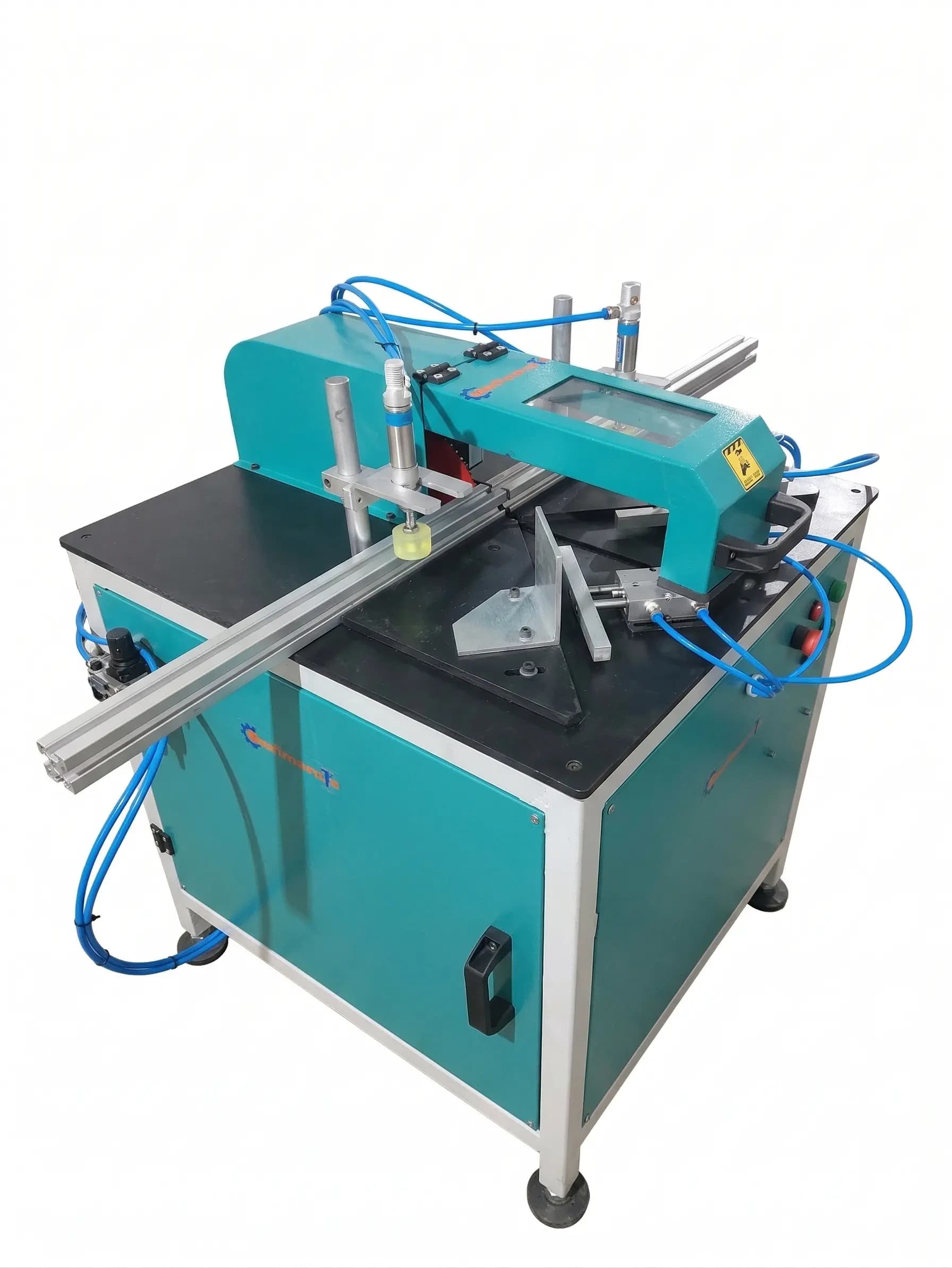
The most common cause of rejection is a 'gapping' corner joint, usually caused by an inaccurate upvc window manufacturing machine. If your aluminum cutting machine 12 inch or uPVC saw is off by even 0.5 degrees, the resulting 90-degree corner will have a structural weakness.
Technical Calibration Steps for Cutting Machinery:
- Angle Verification: Use a digital protractor to verify the 45-degree and 90-degree stops. Do not rely on the factory markings; verify the cut on a scrap profile first.
- Feed Rate Optimization: For uPVC, maintain a feed rate that prevents melting. For an aluminum profile cutting machine, ensure the mist coolant system is firing 0.5 seconds before the blade touches the metal.
- Blade Speed: Maintain a spindle speed of 2800-3200 RPM. Lower speeds cause chipping, while higher speeds lead to profile deformation.
- Clamp Pressure: Ensure the vertical and horizontal clamps exert at least 6 bar of pressure to prevent profile 'creep' during the cut.
When evaluating upvc machine price list options, always check the rigidity of the casting. A lightweight head cutter machine will lose calibration much faster than a heavy-duty Mechnovate unit designed for 24/7 operation.
Mastering the Thermal Dynamics of uPVC Welding
Welding is where most structural rejections occur. According to BS EN 12020 standards, a uPVC weld must withstand specific break-tests. If your upvc window welding machine maintenance guide isn't followed, you risk 'cold welds' or 'burnt profiles.'
The 'Golden Triangle' of Welding Calibration:
- Temperature: Set your heating plate between 245°C and 255°C. In Lucknow’s winter months, you may need to increase this by 5°C to compensate for the lower ambient temperature of the profiles.
- Heating Time: Typically 25 to 30 seconds. If using a portable uPVC window welding machine for startups, manually verify the melt bead thickness (should be 2mm-3mm).
- Joining Pressure: Ensure the fusion pressure is maintained for at least 30 seconds of cooling time. Rushing the cooling process is the #1 cause of corner cracks.
For those using a double head seamless welding machine for uPVC windows, the 'zero-gap' finish requires perfect knife alignment. We recommend a weekly check of the Teflon cloth; any carbon buildup will result in a weak, unsightly black line on the weld.
Essential Maintenance for Aluminium and uPVC Hybrid Shops
If you are running an aluminium fabrication line alongside uPVC, cross-contamination is a risk. Metal filings can damage uPVC welding plates. Lucknow workshops should implement these three protocols:
- Dedicated Air Lines: Use separate moisture traps for your aluminium punching machine and uPVC tools. Aluminium chips in a pneumatic valve can cause erratic clamping in a copy router machine.
- Spindle Maintenance: On your high speed copy router for aluminium windows, grease the bearings every 100 operating hours to maintain the 12,000 RPM required for clean slotting.
- End Milling Calibration: When using a heavy duty aluminium profile end milling machine, ensure the cutter stack is perfectly centered. An off-center miller creates 'step-gaps' in the mullion joints.
Common Mistakes to Avoid in Lucknow Workshops
- Using 10-inch blades for 12-inch jobs: Never over-extend a degree cutting machine. If you are cutting heavy-duty casement profiles, use an aluminium cutter machine 12 inch to ensure the blade doesn't deflect.
- Ignoring Voltage Fluctuations: Indian power grids can be unstable. Always use a 3-phase stabilizer for CNC uPVC window fabrication machine price in India investments, as logic boards are sensitive to surges.
- Skipping the Corner Cleaner: A manual chisel will never match the precision of a CNC uPVC window corner cleaning machine price India. Hand-cleaning often nicks the structural weld, leading to field failures.
FAQ: Fabricator Concerns in Uttar Pradesh
Q1: What is the best uPVC window making machine for small business owners in Lucknow? A: For startups, we recommend a single cutting saw and a single-head welder. This setup minimizes the cost of setting up uPVC window manufacturing unit in India while allowing for precision upgrades later.
Q2: How often should I calibrate my automatic double head cutting machine? A: In high-production environments, check the 45-degree angle daily and perform a full mechanical alignment every 500 hours of operation. This is critical for upvc windows manufacturers machine longevity.
Q3: Why are my aluminium corners not aligning even after using a corner crimper? A: This usually points to an issue with the automatic aluminium corner crimping machine price Gujarat settings. Ensure your aluminium profile punching machine suppliers in Uttar Pradesh have provided the correct knives for your specific profile geometry.
Q4: Can I use the same machine for aluminium and uPVC? A: While an aluminium cutting machine can cut uPVC, a dedicated upvc window manufacturing machinery setup is required for welding and corner cleaning. Aluminium requires mechanical joining (crimping), whereas uPVC requires thermal fusion.
Get more articles like this
Follow Mechnovate on Google to see our guides in Google Discover & News