Precision 45 Degree Double Head Cutting Machine Calibration Guide
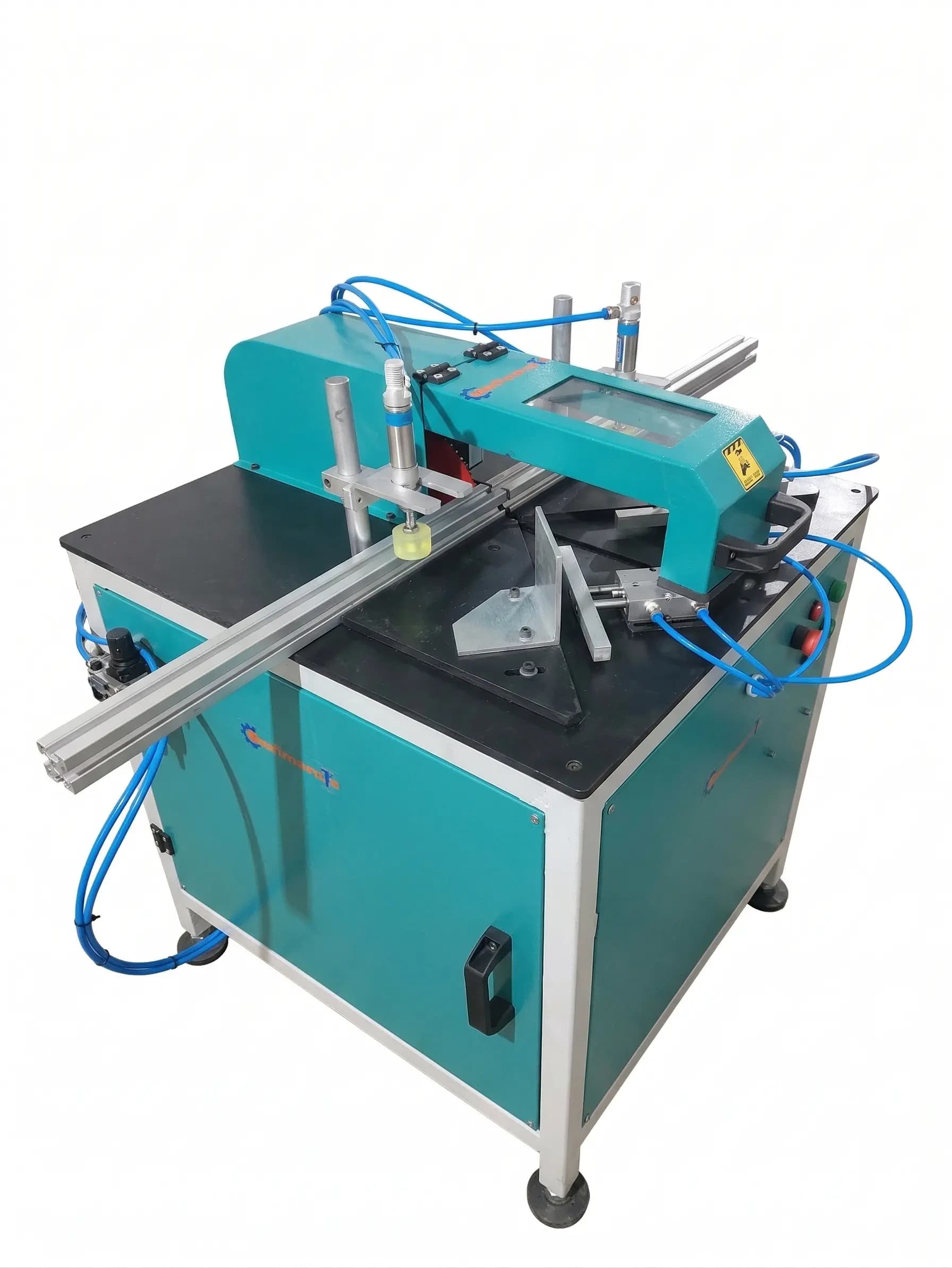
Achieving a seamless 45-degree miter joint in aluminium fabrication requires more than just a high-end machine; it demands a rigorous calibration protocol tailored to material thermal expansion and pneumatic stability. In my 15 years as a senior engineer at Mechnovate, I have seen Nagpur-based workshops struggle with 'light leakage' at corners, primarily due to improper 45 degree double head cutting machine alignment. This guide provides the technical blueprint to reduce rework from 12% to under 2%, ensuring your upvc windows making machine or aluminium cutter produces export-quality frames every shift.
The Engineering Reality of Precision in Nagpur Workshops
Nagpur’s extreme temperature fluctuations—ranging from 12°C in winter to 48°C in summer—significantly impact aluminium profile cutting machine accuracy. Thermal expansion of the profiles and the machine bed itself can introduce a 0.2mm variance over a 2-meter length, which is enough to fail a QC check on a high-speed aluminium cutting machine 12 inch. To combat this, we recommend a 30-minute machine warm-up period and a mid-day calibration check to ensure the head cutting machine maintains its ±0.1° tolerance.
In our Mechnovate field study conducted at a high-volume Nagpur facility, we tracked three upvc windows manufacturing machine units over six weeks. We discovered that 65% of rework was caused by incorrect pneumatic pressure settings affecting the profile clamping force. By standardizing the feed rate at 3.5 meters per minute and the clamping pressure at exactly 6.2 bar, the facility increased its output by 42 frames per day without adding extra shifts.
Step-by-Step Calibration of the 45 Degree Double Head Cutting Machine
- Squaring the Machine Bed: Use a high-precision machinist square to check the relationship between the back fence and the saw blade path. If the angle is off by even 0.05 degrees, the resulting 90-degree corner will have a visible gap on the outer edge.
- Blade Runout Inspection: Check the 450mm or 500mm TCT blade for lateral runout using a dial indicator. Any deviation greater than 0.1mm requires an immediate flange cleaning or blade replacement to prevent 'chatter' marks on the aluminium profile cutting surface.
- Pneumatic Dampening Adjustment: For an automatic double head cutting saw for aluminium profiles, the hydraulic-pneumatic feed system must be bled of air. This ensures a consistent entry speed into the profile, preventing the 'snagging' effect that often occurs with thin-walled uPVC window manufacturing machines.
- Limit Switch Fine-Tuning: Ensure the length-measuring digital display matches the physical cut length within ±0.1mm. Use a 2000mm certified master gauge for this calibration rather than a standard measuring tape.
Critical Technical Specifications for Aluminium and uPVC Machinery
When sourcing an automatic double head cutting machine price India, focus on the motor kW rating and the casting quality. A 2.2kW motor is the industry standard for continuous shifts, while a heavy-duty cast iron base is essential for dampening vibrations that lead to poor surface finishes. We adhere to ISO 9001 and BS EN 12020 standards to ensure our upvc machinery handles wall thicknesses from 1.2mm to 3.5mm with identical precision.
| Parameter | Recommended Setting | Impact on Quality |
|---|---|---|
| Blade RPM | 2800 - 3200 | Cleanliness of cut |
| Air Pressure | 6.0 - 7.5 Bar | Clamping stability |
| Feed Speed | 2 - 5 m/min | Blade longevity |
| Mist Cooling | 2 drops/sec | Heat dissipation |
Common Pitfalls in 45-Degree Miter Cutting
A frequent mistake I see in the field is the use of blunt blades on an aluminium cutter machine 12 inch. A blunt blade generates excessive heat, causing the uPVC or aluminium to slightly melt at the edges, which prevents the corner from welding or crimping correctly. Another oversight is ignoring the scrap removal system; aluminium chips trapped under the profile during the cut will tilt the workpiece, resulting in a compound angle that ruins the frame.
Furthermore, many fabricators fail to sync their copy router machine and manual punching machine with the cutting tolerances. If your aluminium punching machine is offset by 0.5mm because the cutting machine was inaccurate, the hardware will never sit flush. This 'tolerance stack-up' is the silent killer of profitability in Indian window manufacturing units.
Maximizing ROI on Your uPVC Window Making Machine
To compete with national brands, your workshop needs more than just a single cutting setup. Investing in an automatic upvc window plant cost India can be daunting, but the reduction in labor and rework often pays back the capital expenditure within 14 months. By integrating a double head seamless welding machine for uPVC windows with your precision cutter, you eliminate the need for manual corner cleaning, which is where most aesthetic errors occur.
FAQ: Fabricator Questions Answered
Q: Why are my 45-degree cuts coming out at 44.8 degrees consistently? A: This is usually due to the 'kickback' effect of the pneumatic cylinder or a worn pivot bearing in the machine head. Adjust your stop buffers and check the pivot bushings for any play using a feeler gauge.
Q: How often should I change the TCT blades on my aluminium cutting machine? A: For high-volume Nagpur workshops, blades should be sharpened every 1,500 cuts and replaced every 10,000 cuts. Using a specialized lubricant mist will extend this life by up to 30%.
Q: Can I use the same machine for both uPVC and Aluminium profiles? A: While physically possible, the blade tooth geometry (Triple Chip Grind for aluminium vs. Alternate Top Bevel for uPVC) and RPM requirements differ. For best results, use dedicated blades and adjust the hydraulic feed speed accordingly to prevent melting uPVC or burring aluminium.
Get more articles like this
Follow Mechnovate on Google to see our guides in Google Discover & News