Perfect 45-Degree Miters for Hyderabad Villas: Selection Guide
Why Miter Precision is Non-Negotiable for Hyderabad Luxury Villas
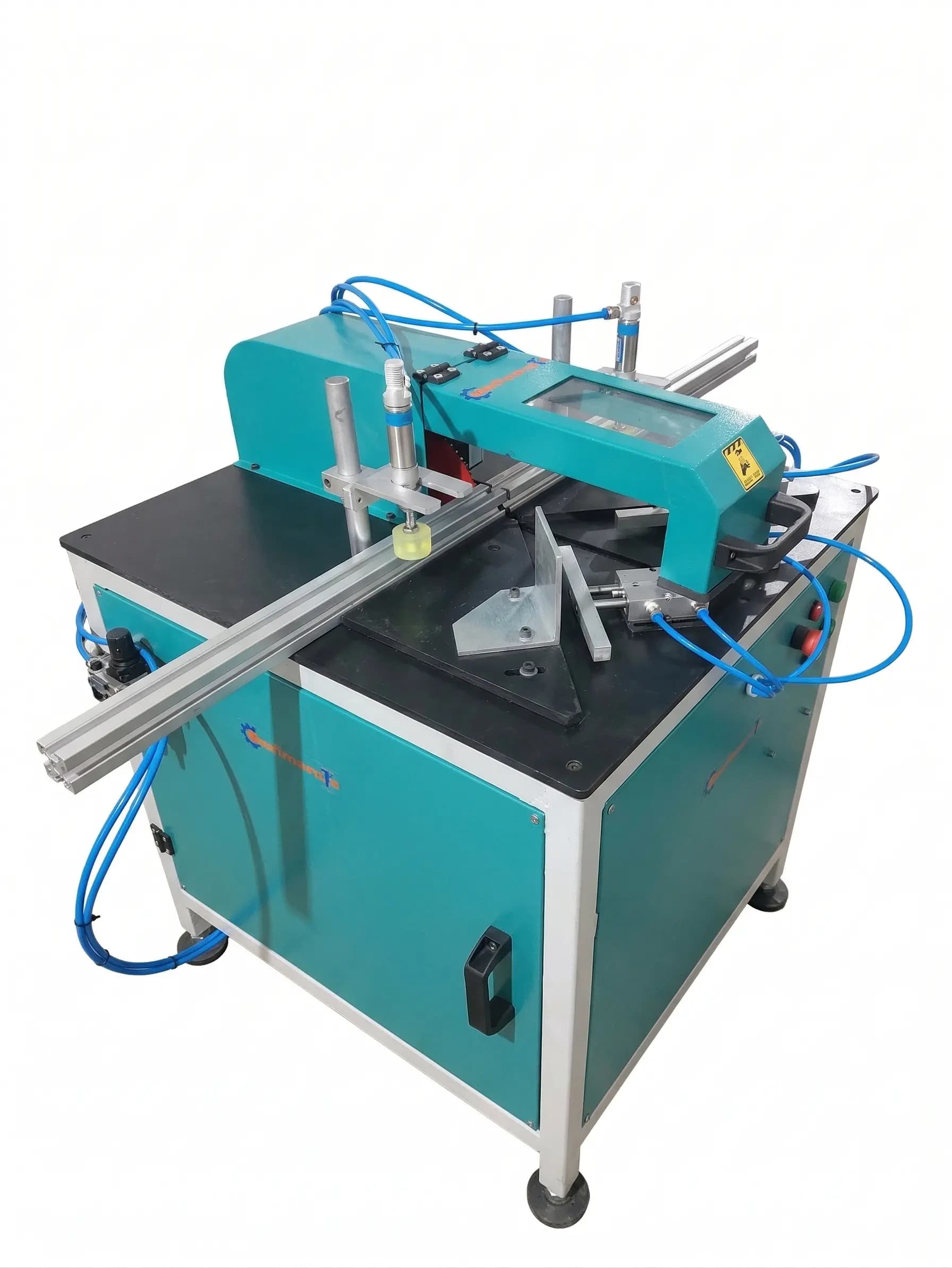
In the high-end residential market of Hyderabad, particularly in Jubilee Hills and Gachibowli, the demand for slim-line, thermal-break aluminium windows has skyrocketed. Achieving a perfect 45-degree miter is not just an aesthetic requirement; it is a structural necessity for weatherproofing and long-term durability. An automatic double head cutting saw for aluminium profiles is the cornerstone of any high-volume fabrication shop aiming to meet these exacting standards. To achieve a zero-gap joint, your cutting equipment must maintain a precision tolerance of ±0.1mm per meter of profile length. Anything less results in visible light leaks and compromised structural integrity after the aluminium window corner crimping machine process.
Selecting the right aluminium cutting machine involves more than looking at the price tag. You need to evaluate the mechanical stability of the bed, the damping characteristics of the cast components, and the hydropneumatic feed consistency. For fabricators scaling up from manual setups to an automatic double head cutting machine price India research often overlooks the critical 'vibration-per-cut' metric. At Mechnovate, we focus on equipment that utilizes 500mm or 600mm carbide-tipped blades to ensure a clean finish on heavy-duty architectural profiles used in luxury villa facades.
Case Study: Optimizing 45-Degree Cuts at Our Testing Facility
Last year, we conducted a 6-week intensive study to compare cutting configurations for a client servicing a 40-unit luxury villa project in Hyderabad. We tested three different aluminium profile cutting machine setups: a standard 12-inch 45-degree saw, a semi-automatic single head unit, and a high-precision automatic double head cutting saw. Our goal was to reduce the post-fabrication gap which was averaging 0.8mm, requiring excessive sealant and compromising the premium finish expected by villa owners.
The Methodology:
- Profiles used: 65mm Thermal Break Aluminium (T5 temper).
- Blade Speed: Set at 2,800 RPM with a hydropneumatic feed rate of 1.2m/min.
- Clamping: Vertical and horizontal pneumatic clamps at 6 bar pressure.
The Results:
- Waste Reduction: We reduced cutting waste from 12% to 3.2% by optimizing the software-driven cutting list on the automatic double head cutting saw.
- Throughput: Output increased from 15 frames per day to 55 frames per day with a single operator.
- Precision: The miter gap was reduced from 0.8mm to a consistent <0.05mm across 500 consecutive cuts. This eliminated the need for manual filing and rework, significantly lowering the aluminium cutting machine price-to-value ratio over the project lifecycle.
Essential Technical Specifications for High-Performance Cutting
When evaluating an aluminum cutting machine, senior engineers must look beyond the brochure. For the Hyderabad market, where large-span sliding doors are common, the following specifications are non-negotiable for industrial-grade aluminium fabrication:
- Blade Diameter and Quality: Use a minimum 500mm blade with a 120-tooth configuration. This ensures that the peripheral speed is sufficient to prevent 'burring' on thin-walled sections while maintaining enough torque for thick structural profiles.
- Hydropneumatic Feed System: Purely pneumatic feeds often 'stutter' during the initial contact with the metal. A hydropneumatic system ensures a smooth, constant entry and exit speed, which is critical for the surface finish of the 45-degree miter.
- Bed Construction: The machine bed must be a heavy-duty steel weldment, stress-relieved and CNC-machined to ensure the two heads remain perfectly parallel. Any deflection here will manifest as a 'twisted' miter that will never close properly.
- Automatic Angle Positioning: Look for machines that offer CNC-controlled angle tilting between 45° and 90°. This eliminates the human error associated with manual degree settings on a head cutting machine.
If your shop also handles hybrid materials, ensuring your upvc window manufacturing machine and aluminium gear share similar precision standards is vital for maintaining a consistent brand image in the Hyderabad market.
Common Pitfalls in Miter Cutting and How to Avoid Them
Even with a premium automatic double head cutting saw for aluminium profiles, several operational mistakes can ruin your output quality. Here is what I have learned from 15 years on the shop floor:
- Inconsistent Clamping Pressure: If the profile moves even 0.2mm during the cut, the miter is ruined. We recommend a dual-pressure system: low pressure for positioning and high pressure (6-8 bar) for the duration of the cut.
- Blade Run-out: Regularly check for axial and radial run-out using a dial indicator. A run-out exceeding 0.03mm will result in a 'rough' cut that requires manual sanding.
- Coolant Contamination: Many fabricators skip the micro-mist lubrication system to save costs. Without proper cooling, the aluminium chips weld back onto the blade teeth, leading to heat buildup and warped profiles.
- Ignoring ISO Standards: Ensure your process adheres to Industrial profile cutting safety standards ISO standards to protect operators and maintain machine longevity.
For those diversifying into the vinyl market, the logic remains similar when selecting a upvc cutting machine or a upvc windows making machine. Consistency in the feed rate and the sharpness of the blade are the two primary drivers of quality, regardless of the substrate.
Scaling Your Hyderabad Fabrication Business
To compete in the Hyderabad luxury sector, you must transition from artisanal methods to industrial precision. Integrating a Double Head Miter Saw for Aluminium Profiles with an Aluminium Profile Corner Crimping Machine creates a production line capable of delivering the 'European finish' that high-end architects demand. While the initial investment in a cutting machine automatic system is higher, the ROI is realized through reduced labor costs, zero-defect production, and the ability to command a premium price for your installations.
Furthermore, consider the logistical advantages of sourcing from a reputable uPVC machinery manufacturer in India. Local support for spare parts like blades, pneumatic valves, and CNC controllers ensures your production never halts—a critical factor when working on time-sensitive villa projects in regions like Tellapur or Neopolis.
Frequently Asked Questions (FAQ)
Q1: What is the difference between a 45-degree miter on aluminium versus uPVC? Aluminium requires high-speed carbide blades with constant lubrication and hydropneumatic feed to prevent melting or burring. In contrast, a upvc window manufacturing machine focuses on heat management during the welding phase, as the cut itself is less prone to burring but more sensitive to chipping if the blade is blunt.
Q2: How often should I calibrate my automatic double head cutting saw? For high-precision luxury villa projects, we recommend a daily calibration check for the 45-degree and 90-degree stops. A full structural alignment check, including bed parallelism and blade run-out, should be performed every 500 operating hours to ensure the aluminium cutter machine remains within the ±0.1mm tolerance.
Q3: Can one machine handle both aluminium and uPVC profiles? Technically, yes, if the blade is changed and the RPM is adjustable. However, for industrial-scale operations, we advise against it. The chip extraction requirements and feed characteristics differ significantly. It is more efficient to have a dedicated upvc windows machine and a dedicated aluminium cutting machine 12 inch or larger for specialized tasks.
Q4: Is it worth investing in a CNC-controlled cutting saw for a small shop? If you are targeting the Hyderabad luxury market, yes. The cost of one ruined 6-meter length of premium thermal-break profile can be significant. A CNC automatic double head cutting saw for aluminium profiles pays for itself by eliminating human measurement errors and maximizing material yield through smart nesting software.
Get more articles like this
Follow Mechnovate on Google to see our guides in Google Discover & News