Optimizing Joinery: Automatic Aluminium Corner Crimping Machine Price in Gujarat
The ROI of Automatic Corner Crimping in the Gujarat Market
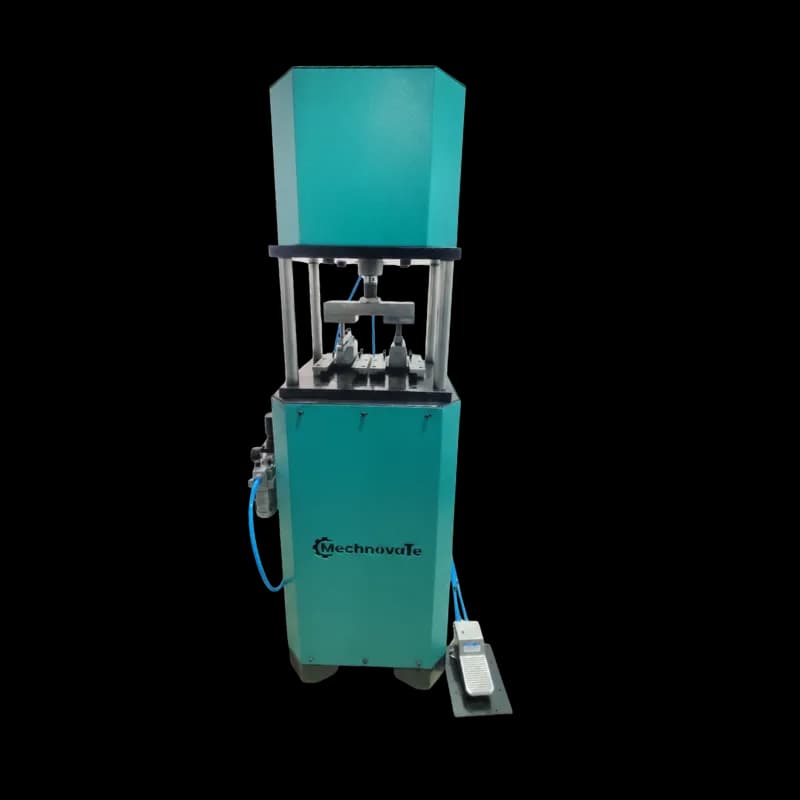
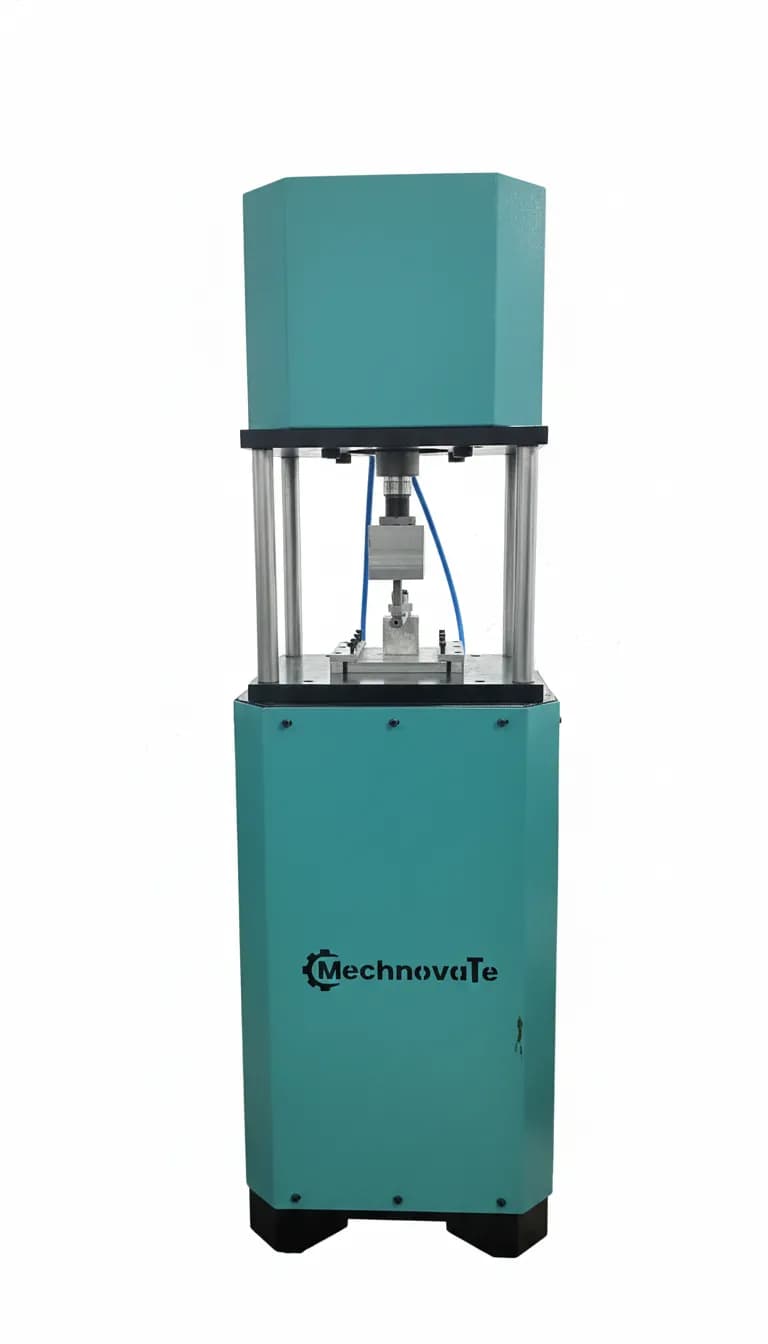
An automatic aluminium corner crimping machine price in Gujarat typically falls between ₹2,65,000 and ₹4,20,000, depending on the hydraulic capacity and automation features. For a medium-scale fabricator in Surat or Ahmedabad handling 50-100 commercial window frames per day, the return on investment (ROI) is achieved within 8 to 11 months. By transitioning from manual corner cleats or mechanical punching to a dedicated Aluminium Corner Crimping Machine, fabricators reduce labor costs by 60% while simultaneously improving the structural integrity of high-rise commercial facades. In the competitive Gujarat construction sector, where precision and speed determine contract wins, the technical superiority of a hydraulic crimper over traditional methods is undeniable.
Case Study: Efficiency Gains in a Surat Fabrication Unit
In early 2023, we consulted for a 5,000 sq. ft. workshop in the Sachin Industrial Area, Surat, which was struggling with seasonal labor shortages and inconsistent joint quality. They were using a Single Head Cutting Machine and manual punching for their joinery, a process that was slow and prone to human error. Our team performed a 45-day comparison study. Before the upgrade, the unit produced 22 frames per 8-hour shift with three dedicated joinery technicians. After installing an automatic crimper, production jumped to 58 frames per shift with only one operator.
Measurable results included:
- Rejection rates due to corner 'gapping' dropped from 8.4% to less than 0.3%.
- Labor cost per frame was reduced from ₹450 to ₹170.
- Assembly time per corner was slashed from 6 minutes to 35 seconds.
- Material waste from misaligned punches was eliminated entirely.
This transition allowed the owner to bid for larger commercial projects that required strict adherence to structural safety standards, proving that the initial capital expenditure is quickly offset by operational savings.
Technical Deep Dive: Why Precision Engineering Matters
The core of a high-performance automatic aluminium window production line price is the hydraulic synchronization. Most budget machines use a single-pump system that can cause uneven pressure between the left and right crimping knives. At Mechnovate, we recommend systems with a 3.0kW motor driving a high-pressure gear pump capable of 100 bar. This ensures that the knives bite into the profile at exactly the same micro-second, preventing 'twisting' of the extrusion. The engineering reasoning is simple: any lateral movement during the crimping stroke results in a weakened joint that will fail under the wind-load pressures typical of Surat's coastal environment.
Key technical specifications to look for include:
- Stroke adjustment range: 0mm to 50mm to accommodate various profile depths.
- Knife synchronization: Mechanical or PLC-controlled hydraulic balance.
- Profile support: Adjustable internal supports to prevent extrusion deformation.
- Motor Grade: ISO 9001 certified motors with IP55 protection for humid workshop environments.
Comparison: Automatic vs. Manual Punching Machine
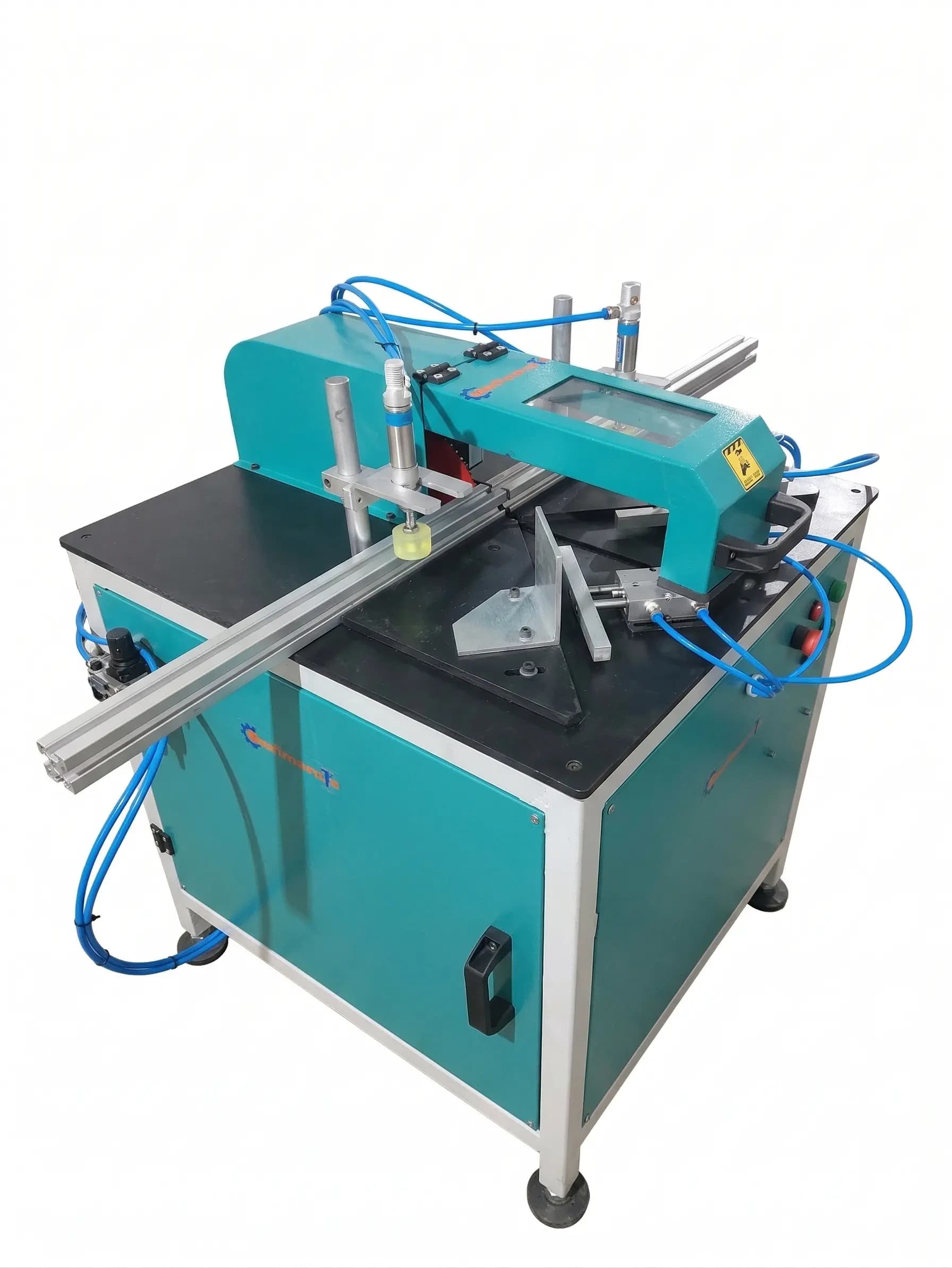
While a manual punching machine is a low-cost entry point (approx. ₹15,000 - ₹35,000), it cannot compete with the tensile strength of a crimped corner. A crimped joint provides a uniform mechanical bond that is essential for wind-load resistance. When evaluating the aluminium cutting machine price or the automatic double head cutting saw for aluminium profiles, one must consider the downstream effect of the joinery. Precise 45-degree cuts from a high-quality Single Head Cutting Machine are useless if the crimping machine cannot maintain a +/- 0.1mm tolerance during the stroke.
Automatic machines also feature a profile-centering mechanism that compensates for slight variations in extrusion wall thickness, a common issue in locally sourced Gujarat extrusions. This is particularly relevant when manufacturing high-end systems like thermal break windows or slim-line sliders where the tolerance for error is practically zero.
Maintenance and Common Mistakes in Aluminium Fabrication
One major mistake fabricators make is using the wrong grade of hydraulic oil. In the hot, humid climate of Surat, standard oils can thin out, leading to pressure loss. We recommend ISO VG 68 grade hydraulic oil for workshops in Gujarat to maintain viscosity at high temperatures. Another issue is knife wear; using knives intended for uPVC machinery manufacturer standards on high-grade aluminium will dull the edges quickly. Always verify that your aluminium window fabrication machine suppliers Pune or Gujarat provide hardened steel knives with a Rockwell hardness (HRC) of 55-60.
Follow this maintenance checklist to ensure machine longevity:
- Weekly lubrication of all sliding rails and guide pillars.
- Monthly inspection of hydraulic hoses for leaks or pressure degradation.
- Daily cleaning of the work table to prevent aluminium swarf from scratching profiles.
- Quarterly calibration of the knife height against standard test profiles.
- Annual replacement of the hydraulic oil filter to prevent pump cavitation.
Selecting the Right Equipment for Your Growth
If you are considering the cost of setting up uPVC window manufacturing unit alongside aluminium, understand that the machinery requirements differ significantly. While a End Milling Machine is useful for both, the corner processing is unique. Aluminium requires mechanical crimping, whereas uPVC relies on a double head seamless welding machine for uPVC windows. For businesses in Surat and Ahmedabad looking to diversify, we recommend a phased investment approach. Start with a high-precision Aluminium Corner Crimping Machine and a 45 degree double head cutting machine to capture the lucrative commercial glazing market before expanding into the residential uPVC sector.
FAQ: Expert Answers for Gujarat Fabricators
1. Can one crimping machine handle both thermal break and non-thermal profiles? Yes, provided the machine has adjustable knife heights and deep-profile support. High-speed copy router for aluminium windows often work in tandem with crimpers that can handle depths up to 120mm for high-performance thermal systems.
2. How long do the crimping knives last before needing sharpening? Under standard usage with 2.0mm wall thickness profiles, high-quality hardened steel knives last for 80,000 to 100,000 crimps. We suggest a monthly inspection of the knife tips for any chipping, which is a common cause of poor joint finishes.
3. What is the power requirement for a full automatic aluminium window production line in India? A typical setup with a double head cutting machine, crimper, and end milling machine requires a 15-20 HP connection. Ensure your workshop in Ahmedabad or Surat has stable 3-phase power with a voltage stabilizer to protect the sensitive PLC components found in modern CNC uPVC window fabrication machine price units.
Get more articles like this
Follow Mechnovate on Google to see our guides in Google Discover & News