Optimizing High-Rise Window Production: Ahmedabad Guide
Precision Engineering for High-Rise Window Fabrication in Ahmedabad
In the high-rise landscape of Ahmedabad and Surat, window fabrication is no longer just about aesthetics; it is about structural integrity and wind-load performance. When you are manufacturing for a 30-story residential tower, the tolerances for your aluminium profiles are non-negotiable. At Mechnovate, with over 15 years of hands-on experience on the factory floor, we have seen how a deviation of even 0.5mm in a miter cut can lead to water penetration or structural whistling at high altitudes.
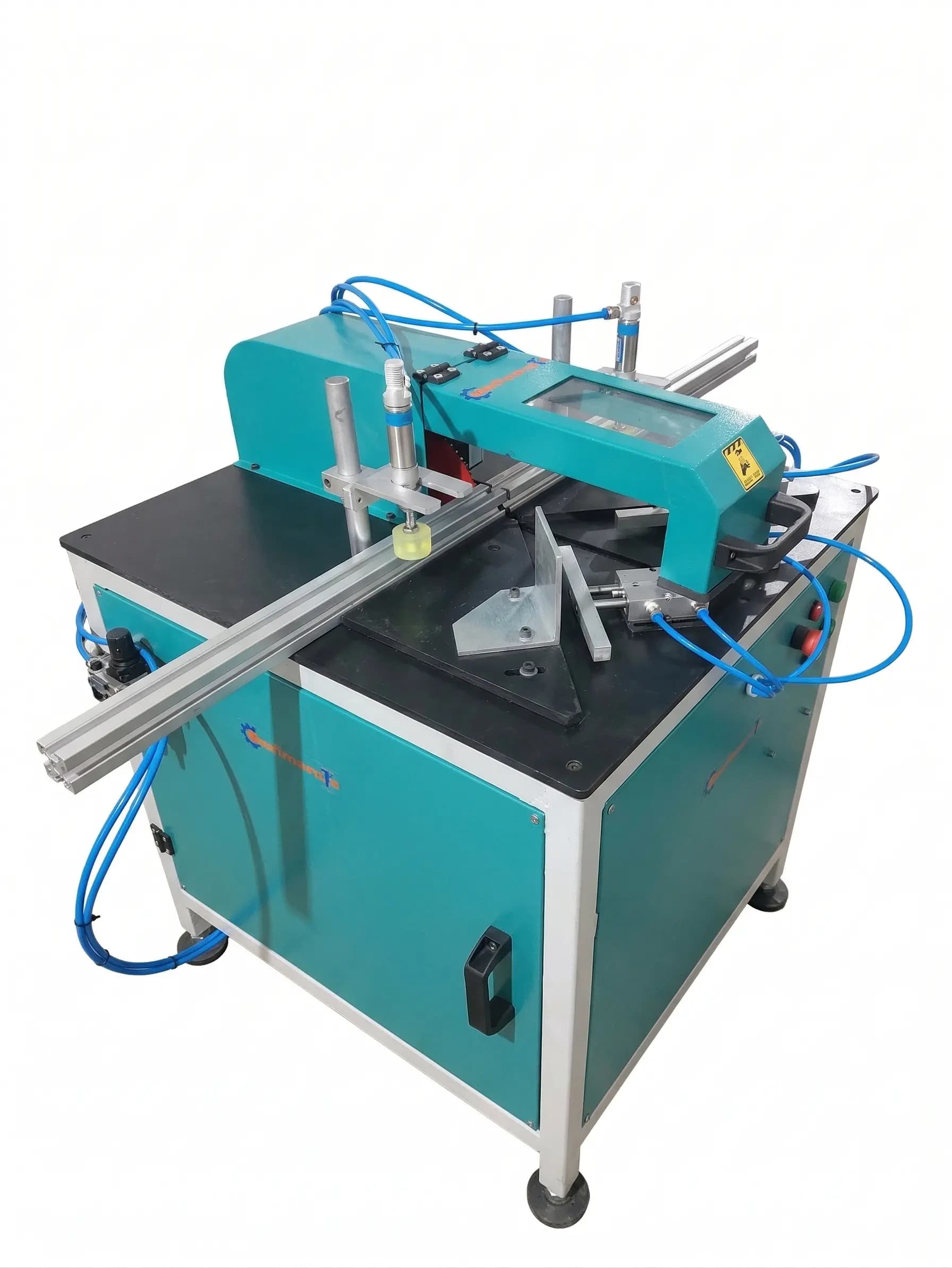
Selecting the right automatic double head cutting saw is the most critical decision for your production line. In high-rise applications, profiles often exceed 2.5mm in wall thickness and utilize high-tensile alloys conforming to IS 1285 or BS EN 12020 standards. A standard 12-inch aluminium cutting machine often lacks the torque and blade stability required for these heavy-duty sections. You need a machine that offers absolute rigidity to maintain a perfect 45 or 90-degree angle under continuous load.
Technical Specifications: Moving Beyond the 12-Inch Saw
To achieve the precision required for high-end aluminium fabrication, your machinery must meet specific engineering benchmarks. Based on our testing at various facilities across Gujarat, we recommend the following technical minimums for high-rise window production:
- Blade Diameter and RPM: For heavy profiles, a 500mm or 600mm carbide-tipped blade is essential. The motor should maintain a consistent 2800-3200 RPM. Lower RPMs on thick-walled profiles lead to 'burring,' which necessitates manual filing and wastes man-hours.
- Feed Mechanism: Pneumatic feeding is common, but for the highest precision, a hydro-pneumatic or servo-driven feed provides a smoother stroke. This prevents 'blade jump' when entering the profile, ensuring a mirror-finish cut.
- Clamping System: Vertical and horizontal pneumatic clamps must engage simultaneously. This prevents profile rotation during the cut, a common cause of miter gaps in large-scale window frames.
- Cooling Systems: High-speed cutting generates significant heat. An automatic pulse-spray mist cooling system using high-grade cutting oil is vital to extend blade life and prevent aluminium chips from welding to the blade teeth.
Case Study: Optimizing a Production Line in Vatva, Ahmedabad
Last year, our engineering team was called to a facility in the Vatva GIDC zone that was struggling with a 12% scrap rate on their high-rise casement series. They were using multiple manual 12-inch aluminium cutter machines. The manual indexing was inconsistent, and the workers were over-compensating by cutting profiles 2mm longer and then grinding them down to fit.
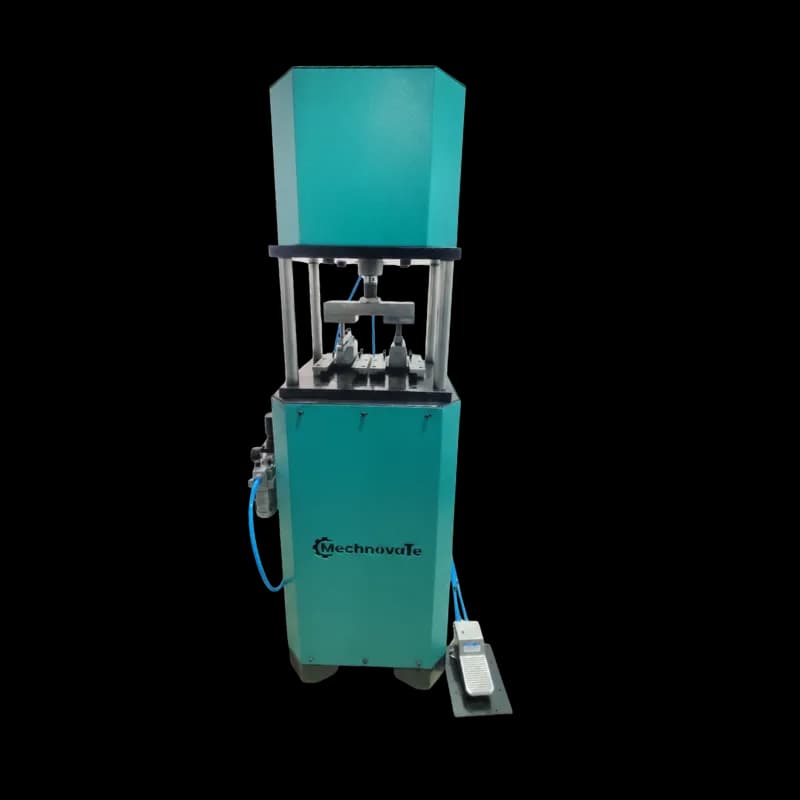
We implemented a 6-week optimization plan involving the installation of a CNC-controlled automatic aluminium corner crimping machine and a high-precision double-head miter saw. We calibrated the linear magnetic scale system to a tolerance of ±0.1mm.
The Results:
- Waste Reduction: Scrap rates dropped from 12% to 2.8% within the first month.
- Output Increase: The facility went from 35 frames per day to 82 frames per day with the same headcount.
- Quality Consistency: Air-leakage tests on the finished units passed 100% of the time, compared to a previous 75% success rate.
The Critical Role of Support Machinery: Punching and Routing
Cutting is only the first step. To maintain a high-speed production line, your heavy duty aluminium profile end milling machine and copy router must keep pace. In Ahmedabad’s competitive market, many fabricators ignore the importance of an aluminium punching machine for hardware slots. Manual drilling is slow and prone to error. An automatic aluminium profile punching machine ensures that every lock and handle hole is perfectly aligned, which is essential for the smooth operation of heavy high-rise sliding doors.
If you are also diversifying into uPVC, the requirements change slightly. A uPVC window manufacturing machine requires different heating parameters and cooling cycles. However, the logic remains the same: precision at the start of the line prevents failure at the end. For those looking for a uPVC machine price list or exploring the cost of setting up a uPVC window manufacturing unit in India, it is vital to factor in the long-term OEE (Overall Equipment Effectiveness) rather than just the initial capital expenditure.
Common Mistakes in Profile Processing
Over the last decade, we have identified several recurring mistakes made by fabricators in Gujarat. Avoiding these will save you lakhs in maintenance and wasted material:
- Incorrect Blade Choice: Using a blade with too few teeth (T) on thin-wall profiles causes 'chatter.' Conversely, too many teeth on thick profiles causes overheating. For standard 2mm-3mm aluminium profiles, a 120T or 140T blade is usually the sweet spot.
- Neglecting Swarf Management: Aluminium chips (swarf) can clog the internal mechanisms of a copy router machine. Ensure your machines are equipped with heavy-duty vacuum extraction systems.
- Power Fluctuations: In some industrial zones, voltage drops can damage the sensitive PLC controllers of a CNC uPVC window fabrication machine. Always install a dedicated industrial stabilizer for your CNC equipment.
- Ignoring Lubrication: Many shops skip the mist lubricant to save money, not realizing that it reduces blade life by 50% and degrades the cut quality, leading to poor corner joins.
Why Mechnovate is the Trusted Partner for Gujarat Fabricators
As leading aluminum machinery manufacturers in Ahmedabad, Mechnovate provides more than just hardware. We provide engineering solutions. We understand the specific environmental conditions of Gujarat, from the humidity in Surat to the industrial dust in Ahmedabad, and we build our machines to withstand these variables. Our equipment complies with ISO 9001 quality standards, ensuring that your production line meets international benchmarks.
Whether you are looking for an automatic double head cutting machine price in India or need a custom-built aluminium window corner crimping machine, our team offers on-site training and 24/7 service support. We have helped dozens of startups transition from small workshops to Tier-1 industrial fabricators by providing the right mix of manual and automatic machinery.
FAQ: Essential Questions for Fabricators
1. What is the difference between a 45-degree double head cutting machine and a single head saw? A double head machine cuts both ends of the profile simultaneously. This ensures that the length is perfectly consistent across all four pieces of a window frame, which is nearly impossible to achieve with a single head saw over a 500-unit production run. It effectively doubles your output while cutting your labor costs in half.
2. Is a CNC uPVC window corner cleaning machine worth the investment? For high-volume production, yes. Manual cleaning is slow and often leaves an uneven finish that looks unprofessional. A CNC cleaner provides a consistent, high-quality aesthetic that allows you to charge a premium for your windows.
3. How much does it cost to set up a uPVC window manufacturing unit in India? A basic setup starts at approximately 5-7 Lakhs for manual machinery, while a fully automatic uPVC window manufacturing plant cost can range from 25 Lakhs to 1 Crore depending on the level of automation and output capacity.
4. Why should I choose Mechnovate over imported machines? Local manufacturers like Mechnovate offer immediate spare parts availability and localized engineering support. If a PLC fails on an imported machine, you might face weeks of downtime. With our base in Ahmedabad, we can have a technician at your facility within 24 hours.
Get more articles like this
Follow Mechnovate on Google to see our guides in Google Discover & News