Optimizing Floor Space: Auto Aluminium Window Line vs Manual Setup
In Mumbai’s competitive fabrication market, where industrial floor space in areas like Bhiwandi or Goregaon can cost a premium, the decision between a manual setup and an automatic line isn't just about the initial investment. It’s about yield per square foot. For high-volume output, an automatic aluminium window production line price—typically ranging from ₹12 Lakh to ₹25 Lakh depending on CNC integration—is justified by a 40% reduction in floor space requirement compared to a manual line producing the same volume. While a manual setup with multiple standalone 12-inch aluminium cutter machines requires wider clearance for material handling, a synchronized automatic line streamlines workflow, allowing you to produce up to 60-80 frames per shift in as little as 1,200 sq. ft.
The Real-World Impact: A Mumbai Case Study
In our recent project for a fabricator in Vasai, we replaced a traditional six-station manual setup with a semi-automatic line. The manual setup used three separate Aluminium Cutting Machine 12 inch units and two manual punching machines, consuming nearly 2,000 sq. ft. of floor space due to inefficient material flow and excessive scrap storage.
We transitioned them to an Automatic Double Head Cutting Machine paired with a high-speed copy router. Over six weeks, the results were measurable:
- Scrap Reduction: Profile wastage dropped from 11% to 2.8% due to precision digital positioning.
- Output Increase: Daily frame production rose from 22 units to 48 units with the same headcount.
- Space Reclaimed: 600 sq. ft. of floor space was freed up, which the owner repurposed for a dedicated uPVC window manufacturing machine line to diversify his business.
Technical Benchmarks: Precision and Standards
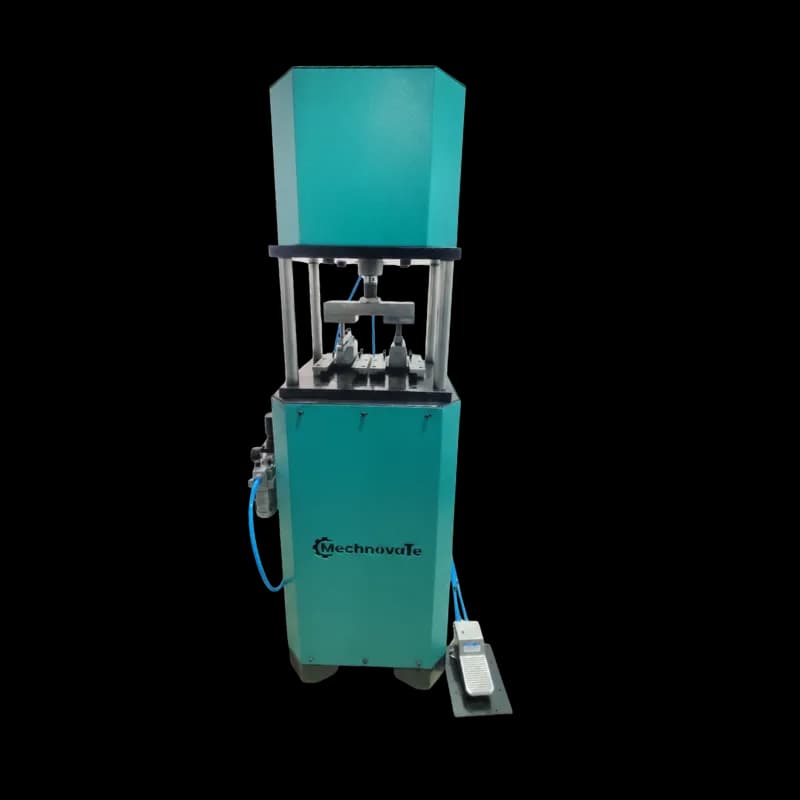
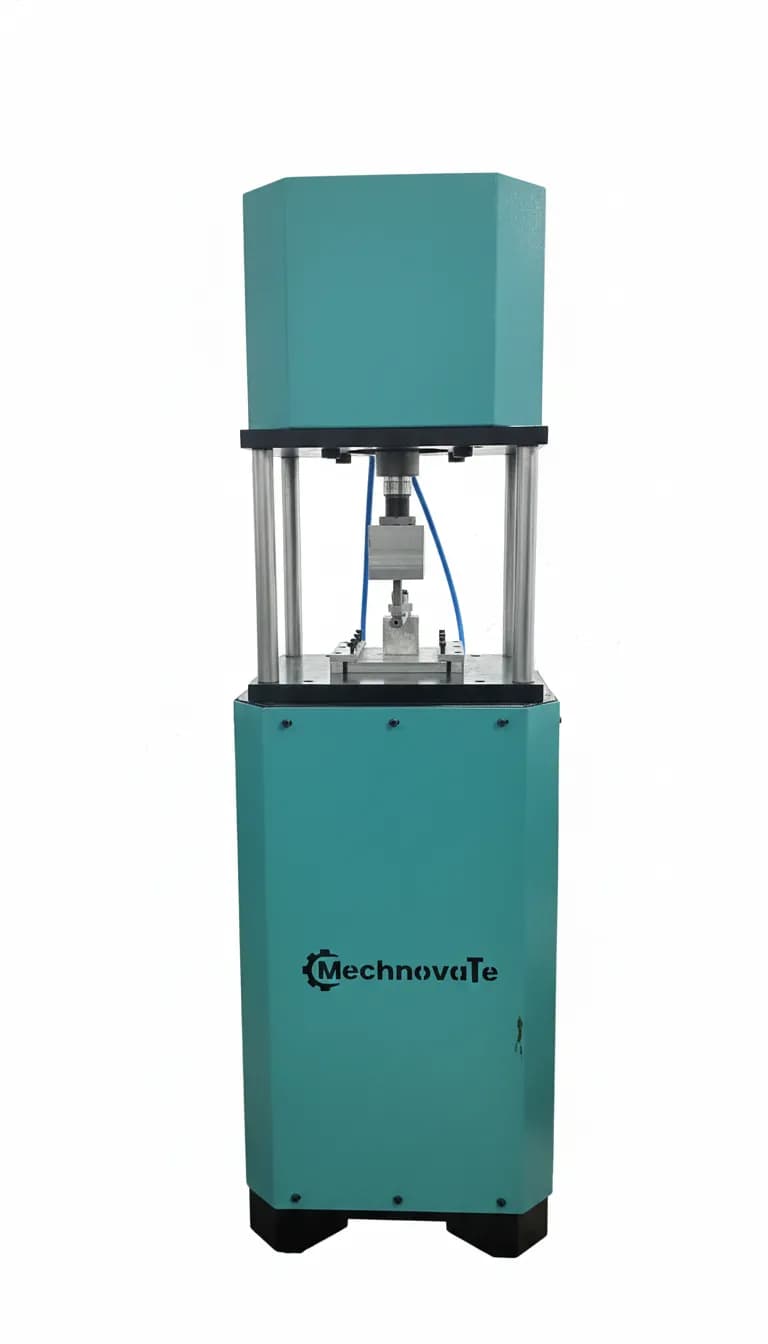
When evaluating an aluminium profile cutting machine, you must look beyond the motor power. High-volume output requires adherence to IS 1285 for material tolerances and ISO 9001 for process consistency. A professional-grade Automatic Aluminium Corner Crimping Machine should offer a hydraulic system capable of 40-60 bar pressure to ensure joints are airtight and structurally sound.
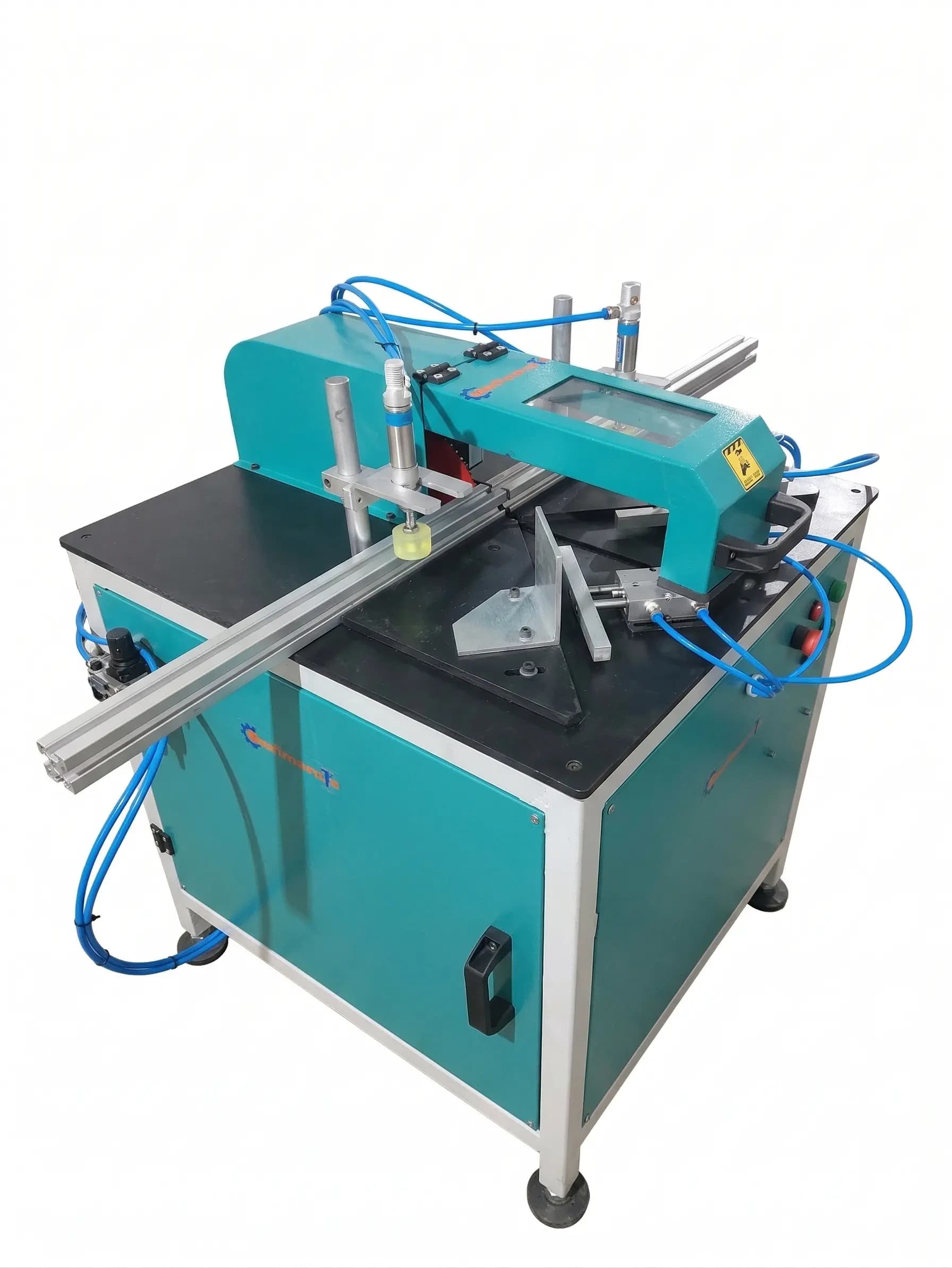
For Mumbai fabricators dealing with high-rise projects, the degree cutting machine must maintain a tolerance of ±0.1mm. At Mechnovate, our machines utilize 2800 RPM high-torque motors with carbide-tipped blades that ensure a burr-free finish, essential for high-end architectural glass fittings. If you are comparing an aluminium cutting machine price, ensure you are checking the casting quality of the base; a lightweight frame will vibrate, leading to inaccurate 45-degree miters and costly rework.
Comparing Production Line Costs and ROI
While the manual aluminium cutter machine price is low (often starting under ₹50,000 for basic 12-inch models), the hidden costs are high. In a manual setup, you pay for human error, slower cycle times, and the massive footprint required for manual layout and assembly.
| Equipment Type | Estimated Price Range (India) | Space Required | Daily Output (Frames) |
|---|---|---|---|
| Manual Setup (12" Cutters) | ₹2.5L - ₹5L | 2,000+ sq. ft. | 15-20 |
| Semi-Auto Line | ₹8L - ₹15L | 1,500 sq. ft. | 35-45 |
| Fully Auto CNC Line | ₹25L - ₹45L | 1,200 sq. ft. | 75+ |
For startups, the best uPVC window making machine for small business packages often provide a better entry point, but for aluminium, the automatic double head cutting saw for aluminium profiles is the cornerstone of any high-volume factory. The investment in a heavy duty aluminium profile end milling machine also removes the bottleneck of manual filing, which is a common site of injury and error in Mumbai workshops.
Common Mistakes in Shop Floor Layout
After 15 years in the field, I’ve seen many fabricators fail not because of their machines, but because of their layout. Here is what to watch out for:
- Linear Bottlenecks: Placing the aluminium punching machine too far from the cutting station. This causes unnecessary material movement.
- Inadequate Power Buffering: Mumbai's industrial zones can have voltage fluctuations. Always pair your CNC uPVC window fabrication machine or auto-aluminium line with a suitable stabilizer to protect the PLC.
- Ignoring Dust Extraction: Aluminium chips are abrasive. Without a proper extraction system on your head cutting machine, the guide rails will wear out 50% faster, leading to a loss of precision within 12 months.
Advanced Machinery for Modern Fabricators
To stay competitive against large-scale manufacturers, local Mumbai fabricators are increasingly adopting the Aluminium Profile Punching Machine. This eliminates the need for manual drilling for water slots and handle holes. Similarly, if you are also looking at the uPVC segment, the double head seamless welding machine for uPVC windows is now the industry standard for premium finishes.
At Mechnovate, we don't just sell an aluminium cutter; we provide a production strategy. Our experience across India, from being uPVC window machinery manufacturers in Chennai to supplying aluminium window machinery manufacturers in Surat Gujarat, has taught us that every millimeter of the workshop must earn its keep.
FAQ: Fabricator Concerns
Q1: Is the automatic aluminium window production line price worth it for a small 1,000 sq. ft. shop?
Yes, because it allows you to do more with less space. A single Double Head Miter Saw for Aluminium Profiles replaces two manual stations, effectively doubling your capacity without needing a larger gala.
Q2: What is the maintenance cycle for a high-speed copy router for aluminium windows?
In the humid Mumbai climate, daily cleaning of chips and weekly lubrication of the pneumatic valves and guide rails is mandatory. We recommend a deep service every 6 months to calibrate the sensors and check motor brushes.
Q3: Can I use the same line for both uPVC and Aluminium?
While some cutting machines like the 45 degree double head cutting machine can handle both, the welding and crimping processes are entirely different. uPVC requires a uPVC welding machine, while aluminium requires mechanical corner crimping. However, your floor layout should be designed to share the assembly and glass-loading stations to save space.
Get more articles like this
Follow Mechnovate on Google to see our guides in Google Discover & News