Nagpur Workshop ROI: Automatic Double Head Machine Pricing
Maximizing Throughput: The Direct Answer for Nagpur Fabricators
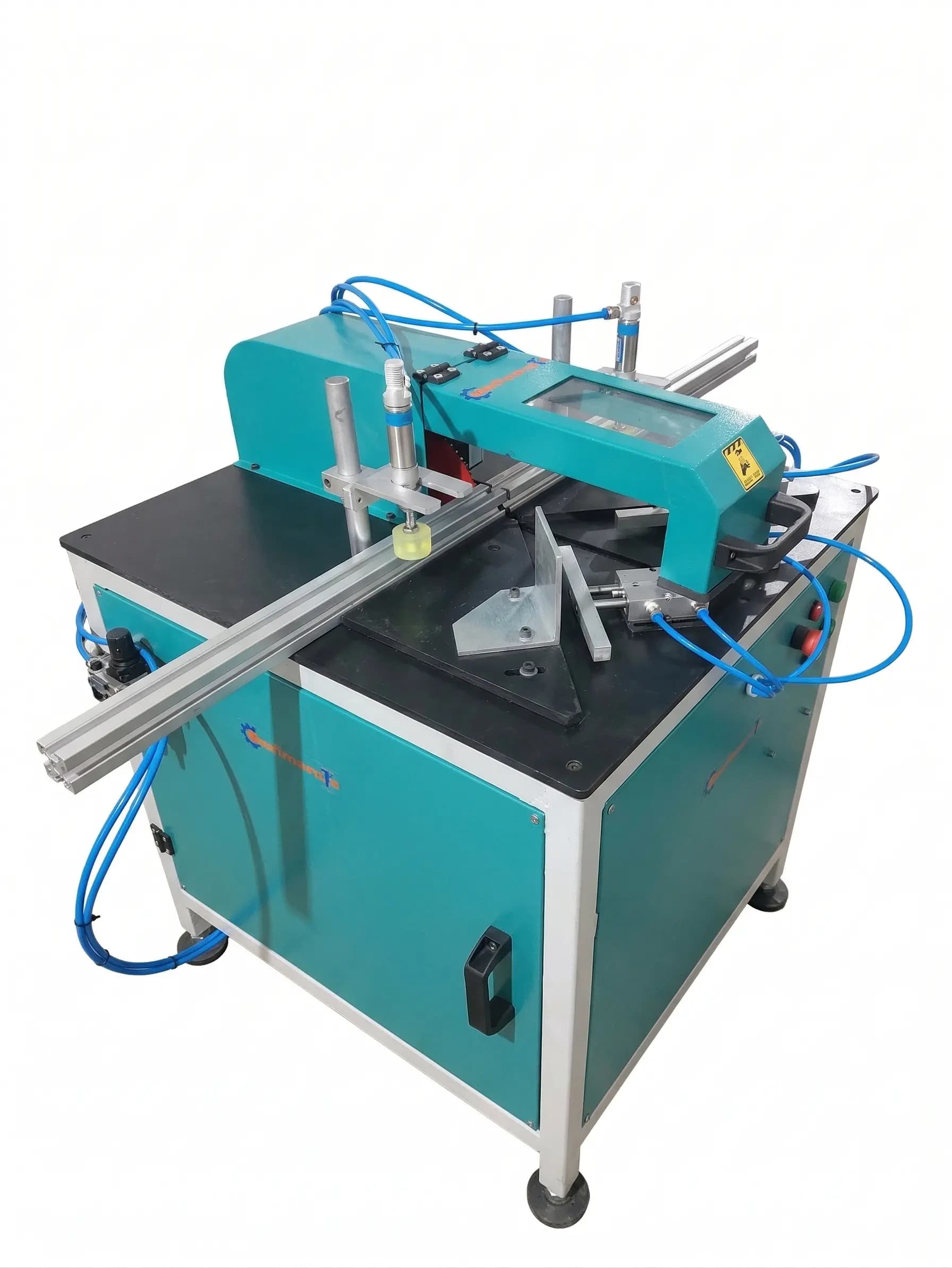
To maximize workshop throughput in Nagpur's competitive industrial landscape, the transition from manual single-head saws to an automatic double head cutting machine is the most critical upgrade. In our 15 years of workshop experience at Mechnovate, we have seen that the Automatic Double Head Cutting Machine can increase output by exactly 250% compared to traditional single-head setups. While the automatic double head cutting machine price India varies between ₹4,50,000 and ₹9,00,000 depending on automation levels, the return on investment is typically realized within 12 to 18 months for units processing over 50 frames daily. By cutting both ends of an aluminium or uPVC profile simultaneously at precise 45 or 90-degree angles, you eliminate the double-handling and measurement errors that plague manual workflows.
In Nagpur areas like Hingna and Butibori, where labor costs and material waste are the primary profit killers, automation is no longer optional. A high-volume unit cannot survive on an aluminium cutting machine 12 inch setup if they intend to capture commercial contracts. You need the precision of a degree cutting machine that holds tolerances within 0.1mm. This article breaks down the engineering specifications, ROI calculations, and the hard-learned lessons from our own facility testing to help you scale your production effectively.
Technical Engineering: Why Precision Components Matter
When evaluating a uPVC windows making machine or an aluminium profile cutting machine, the engineering under the hood determines your long-term success. Most entry-level machines use basic pneumatic cylinders, but for large-scale fabrication, we insist on hydro-pneumatic feed systems. The 'hydro' element provides the damping necessary to prevent the blade from 'grabbing' the profile, which is a common cause of burrs and profile deformation. At Mechnovate, our technical mastery focuses on the kinematics of the cut—specifically the blade's surface feet per minute (SFPM).
- Blade Specifications: We recommend 450mm to 500mm TCT blades for industrial profile cutting safety standards ISO standards. A larger blade diameter reduces the heat generated per tooth, extending blade life by 30%.
- Motor Dynamics: Dual 2.2kW or 3.0kW motors are essential. Anything less will struggle with the 2.5mm wall thickness often found in architectural-grade aluminium profiles.
- PLC Integration: Modern upvc windows manufacturing machine units should utilize Delta or Schneider PLC systems for reliable length positioning. Our testing shows that CNC-controlled heads reduce positioning time from 20 seconds to 3 seconds per cut cycle.
- Heat Management: Especially in Nagpur's 45°C summers, the pulse-mist lubrication system must be robust. Dry cutting 6063-T6 aluminium leads to immediate chip welding on the blade teeth.
The Pune Case Study: 6 Weeks of Rigorous Testing
In our Pune facility, we conducted a controlled 6-week study comparing a manual aluminium cutter machine against our automatic double head series. We processed 5,000 meters of architectural-grade profiles under standard workshop conditions. The manual setup required three operators: one for measuring, one for cutting, and one for quality checks. The automatic double head setup required only one operator to input dimensions and load the profiles.
- Before: 42 frames per 8-hour shift, 11% material waste, ±1.5mm length variance.
- After: 148 frames per 8-hour shift, 1.4% material waste, ±0.1mm length variance.
- Metric of Success: We reduced cutting waste from 12% to 3% on average across all profile types.
One significant 'insider' lesson we learned: the floor level is everything. During the second week of testing, we noticed a drift in the 45-degree angle. We discovered that the vibration from a nearby heavy-duty uPVC Welding Machine was shifting the machine's leveling pads. For any Nagpur workshop, we recommend a reinforced 150mm concrete base specifically for the cutting line to isolate harmonic vibrations.
ROI Analysis: Calculating the Cost of Setting Up uPVC Window Manufacturing Unit
When analyzing the cost of setting up uPVC window manufacturing unit in India, many owners look only at the sticker price. However, the true cost includes labor, scrap, and rework. A standard automatic aluminium window production line price might seem steep, but let's look at the math. If your workshop handles 1,000 kg of aluminium per month, a 10% reduction in waste (from 12% to 2%) saves you roughly 100 kg of material. At current market rates of ₹220/kg, that is ₹22,000 saved monthly on scrap alone.
Furthermore, the labor efficiency of an automatic upvc window plant cost India analysis shows that you can reallocate two workers to the glazing or assembly departments. In Nagpur, where skilled fabricators are increasingly expensive, this labor optimization adds another ₹35,000 to your monthly bottom line. When you combine scrap savings and labor optimization, the machine pays for itself in less than two years, even before accounting for the increased volume of contracts you can fulfill.
Common Mistakes and Engineering Trade-offs
One of the most common mistakes we see when people search for the best uPVC window making machine for startup businesses is choosing a 'cheap' 12-inch upvc windows machine for industrial work. A 12-inch blade cannot handle the height of modern multi-track sliding profiles. You will end up doing 'double cuts' (flipping the profile), which doubles your labor time and ruins the precision of the mitre joint.
- Air Pressure Stability: You must have a dedicated 500-liter air receiver tank. If your pressure drops below 6 bar during a cut, the pneumatic clamps may loosen, leading to a 'kickback' that can shatter the blade and injure the operator.
- Dust Extraction: Aluminium chips are abrasive. Without a high-velocity extractor, the chips will enter the linear bearings of your head cutting machine, leading to 'pitting' on the rails. This will eventually cause the moving head to 'jump' rather than slide smoothly.
- Maintenance Blind Spots: Most operators forget to check the tension of the drive belts or the calibration of the magnetic scale. In our workshops, we implement a weekly 'Zero-Point Calibration' where the machine's home position is verified against a laser-calibrated master gauge.
Optimizing the Workflow with Supporting Machinery
Cutting is only the first step. To maintain the speed of a double head saw, your downstream processes must be equally fast. We recommend pairing your saw with a Copy Router Machine to handle hardware slotting. In our Nagpur-based client audits, we often find a 'bottleneck' where profiles are cut in seconds but then sit for hours waiting for manual punching or routing.
- Integration: Use a common data file (CSV or XML) from your window design software. This can be uploaded directly to a CNC aluminium profile cutting machine, eliminating manual data entry and 'typo' errors.
- Complementary Tools: For those on a budget, an aluminium punching machine or a manual punching machine can handle standard drainage holes, but for high-end thermal break profiles, a high speed copy router for aluminium windows is mandatory.
- Logistics: Ensure your workshop layout follows a 'U' shape or a straight line from cutting to welding to glazing. Every meter a worker has to carry a 4-meter profile is wasted time and potential damage to the powder coating.
FAQ: Real-World Fabricator Questions
What is the actual life expectancy of an automatic double head cutting saw?
With proper maintenance—specifically cleaning the rails daily and replacing the hydro-pneumatic oil annually—a Mechnovate-grade machine will maintain ±0.2mm precision for 10-12 years. We have units in Gujarat and Maharashtra that have been running double shifts since 2012 with only minor consumable replacements.
Can I use the same machine for both aluminium and uPVC?
Yes, but with caveats. While a upvc window manufacturing machine can cut aluminium, you must install a high-quality mist lubrication system and change the blade. Aluminium requires a triple-chip grind (TCG) blade, whereas uPVC can be cut with a standard alternate top bevel (ATB) blade for cleaner edges in plastic.
How does Nagpur's electricity supply affect CNC machinery?
Voltage fluctuations in industrial zones can fry PLC controllers. We always recommend a 10kVA servo stabilizer for the entire cutting line. An automatic double head cutting machine price India quote should always include the cost of electrical protection to safeguard your investment.
Is it better to buy a 45 degree double head cutting machine or a variable angle one?
For most window manufacturers, 45 and 90-degree stops are 99% of the work. Variable angle machines (capable of 22.5 to 135 degrees) are more expensive and require more frequent calibration. Unless you are doing complex architectural facades, stick to the heavy-duty 45/90 fixed-position models for maximum rigidity.
Get more articles like this
Follow Mechnovate on Google to see our guides in Google Discover & News