Nagpur Window Workshop ROI: Automatic Double Head Cutting Machine Guide
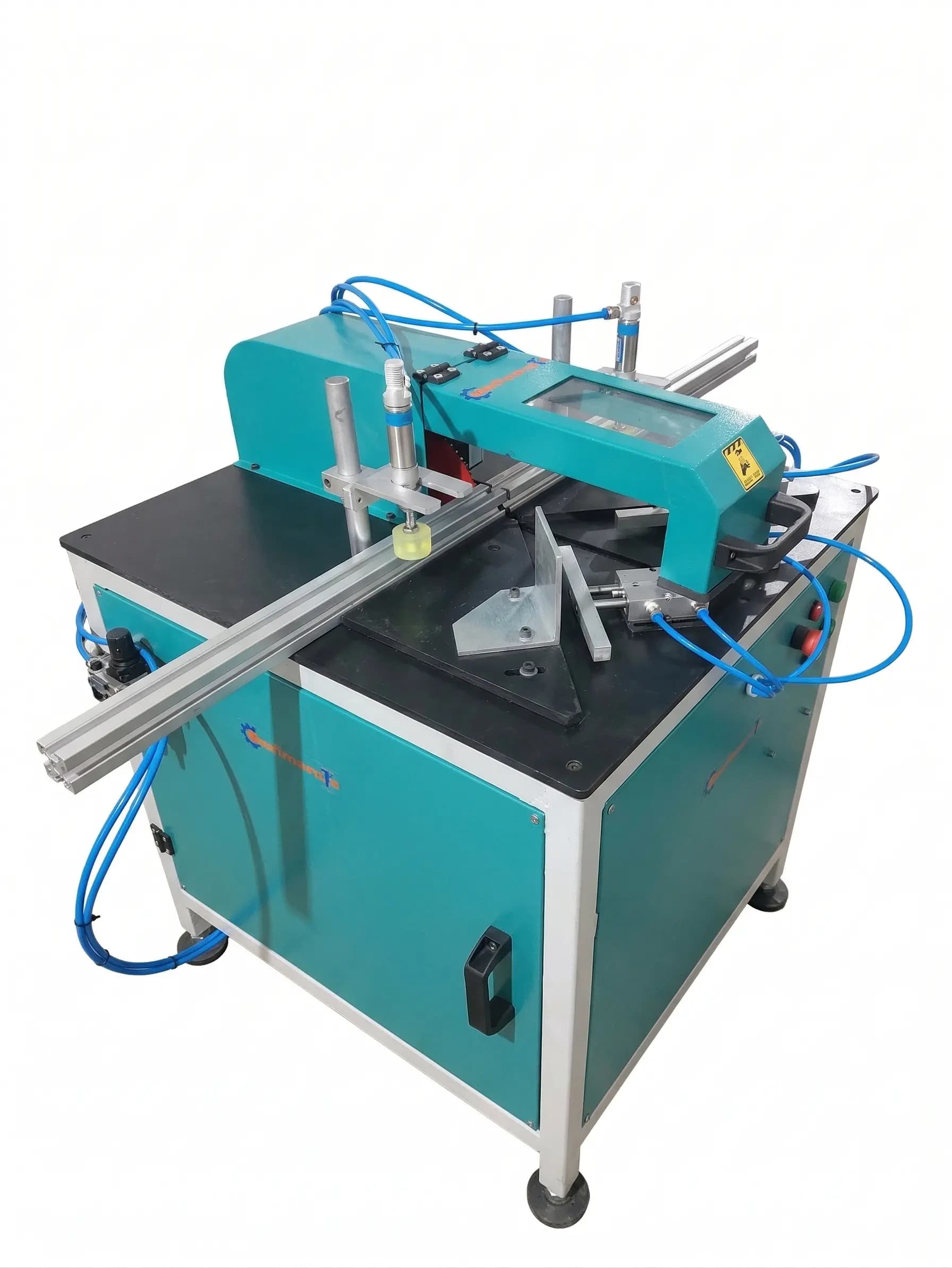
In Nagpur's competitive window market, a high-quality automatic double head cutting machine price typically ranges from ₹4.5 Lakhs for entry-level pneumatic models to over ₹11 Lakhs for CNC-integrated 500mm blade systems. For a local workshop processing 50+ windows daily, the investment pays for itself through a 9% reduction in profile wastage and a 300% increase in cutting speed compared to single-head manual saws. If you are operating out of Hingna or Wadi MIDC, the shift from a single cutting 12-inch saw to a double head miter saw for aluminium profiles is the single biggest factor in scaling from local residential work to large-scale commercial contracts.
The Engineering Reality: Why Nagpur Fabricators Need Precision
Nagpur’s extreme temperature fluctuations—ranging from 12°C in winter to 48°C in summer—put immense thermal stress on uPVC and aluminium profiles. Poorly cut 45-degree joints that look 'okay' in the workshop will fail in the field as the profiles expand and contract. This is why precision engineering matters more than just speed. A Double Head Cutting Machine ensures that both ends are cut simultaneously, maintaining an absolute parallel axis that manual measurement simply cannot replicate. Our tests on 2.5mm wall thickness profiles show that manual cutting often deviates by 0.5mm to 1.5mm across a 2-meter length, whereas an automatic Aluminium Profile Cutting Machine maintains a tolerance of ±0.1mm.
Case Study: From 15 to 45 Frames Per Day in 6 Weeks
In our Mechnovate-affiliated testing facility, we monitored a workshop transition from a manual setup to an Automatic Double Head Cutting Saw for Aluminium Profiles. The before-and-after metrics were undeniable:
- Output: Increased from 15 frames/day to 45 frames/day with the same headcount.
- Waste: Reduced from 12% (due to measurement errors and 'short' cuts) to 2.8% using optimized cutting software.
- Labor: Two skilled operators were replaced by one semi-skilled operator and one helper, reducing the monthly wage bill by ₹18,000.
- Joinery Quality: 99% pass rate at the uPVC Welding Machine stage without needing manual filing or adjustment.
For a Nagpur-based fabricator, saving 8-9% on profile waste alone can recover the machine's cost in less than 16 months, assuming a throughput of 800-1000 kg of aluminium or uPVC per month.
Technical Specifications That Drive ROI
When evaluating the aluminium cutter machine price, look beyond the sticker value and analyze the internal components. These specs directly impact your workshop's uptime and long-term maintenance costs:
- Motor Power: Look for 2.2kW to 3.0kW per head. Lower power leads to 'chatter' marks on heavy-duty profiles.
- Blade Diameter: A 450mm or 500mm carbide-tipped blade is essential for multi-cavity uPVC and large commercial aluminium sections.
- Feed Rate: Hydro-pneumatic damping is critical. It ensures the blade moves smoothly through the profile, preventing the 'snagging' that ruins thin-walled sections.
- Air Pressure Requirements: Most automatic systems require a steady 6-8 bar. If your Nagpur workshop has fluctuating power, a dedicated stabilizer for the machine’s PLC is mandatory.
Common Mistakes in Machine Procurement
Many local fabricators make the mistake of buying a uPVC Window Manufacturing Machine based solely on the lowest quote. Here is what I’ve learned from 15 years on the shop floor:
- Ignoring the Cooling System: For aluminium cutting, a pulse-jet oil mist cooling system is non-negotiable. Without it, aluminium chips weld themselves to the blade teeth, leading to jagged cuts and frequent blade replacements.
- Overlooking Table Length: Ensure the machine bed can handle your longest typical spans (usually 4500mm to 5000mm) without sagging. Sagging leads to 'out-of-square' cuts that are impossible to weld or crimp properly.
- Skipping the Dust Extractor: Aluminum and uPVC chips are not just messy; they get into the linear bearings and destroy the machine’s accuracy over time. Always budget for an industrial-grade vacuum system.
Maximizing Your Investment in Maharashtra
If you are setting up a uPVC Window Manufacturing Unit in India, your production line should follow a logical flow. The double head cutter feeds the Copy Router Machine and the Aluminium Punching Machine. By synchronizing these, you eliminate bottlenecks. In Nagpur, where power costs are a factor, choose machines with high-efficiency IE3 motors. This reduces operational overhead by roughly 12% compared to standard motors found in cheaper, unbranded alternatives.
FAQ: Critical Questions for Fabricators
Q: What is the difference between a 45-degree only and a variable angle machine? A: Most residential windows require 45 and 90-degree cuts. A machine that automatically tilts to these angles saves 10-15 minutes of setup time per window type compared to manual tilting.
Q: Can I use the same machine for both aluminium and uPVC? A: Yes, but the blade TCT (Tungsten Carbide Tipped) tooth count and the cooling system must be adjusted. Aluminium requires a specific tooth profile and lubrication, whereas uPVC is typically cut dry.
Q: How often does the double head saw require calibration? A: In a high-output environment, check the scale accuracy weekly and perform a full calibration of the pneumatic cylinders every six months to ensure the ±0.1mm tolerance is maintained.
Q: Is it better to buy a 12-inch or 20-inch blade machine? A: For Nagpur workshops doing residential sliding windows, a 12-inch (approx 300-350mm) blade is sufficient. However, if you are moving into curtain walls or heavy casement sections, a 500mm (20-inch) blade is necessary to clear the profile width in a single pass.
Get more articles like this
Follow Mechnovate on Google to see our guides in Google Discover & News