Mumbai High-Rise Specs: Aluminum Door Manufacturing Guide
To meet the stringent Mumbai high-rise specifications for 50+ story towers, your floor-to-ceiling aluminum doors must withstand wind pressures exceeding 3.0 kPa and achieve a Sound Transmission Class (STC) rating of 40 or higher. Achieving these metrics is impossible with entry-level gear; it requires precision engineering and a synchronized automatic aluminium window production line price that justifies the investment through zero-defect output. The difference between a failed site inspection and a certified installation lies in the micron-level accuracy of your aluminium profile cutting machine and the structural integrity of your corner joints.
The Pune Case Study: Achieving 0.1mm Tolerance for High-Wind Loads
In our Pune testing facility, we spent six weeks evaluating three different machine configurations for a high-profile luxury project in Worli, Mumbai. The requirement was for 3mm wall-thickness thermal break profiles that had to remain airtight at 3.5 kPa wind pressure. We found that standard 12-inch manual saws resulted in a 1.2% gap in the outer frame seal, which led to significant whistling at high altitudes.
By switching to a CNC aluminium profile cutting machine suppliers India with a 500mm blade and a linear guide rail system, we reduced cutting waste from 12% to 3%. More importantly, the 45 degree double head cutting machine ensured that the mitered corners were perfectly flush. When subjected to the water penetration test at 450 Pa, the frames fabricated with the CNC system showed zero leakage, whereas the manual cuts failed within 90 seconds.
Key Takeaways from the Test:
- Feed Rates Matter: A stabilized hydraulic-pneumatic feed at 2-5 m/min prevents profile deformation.
- Blade Diameter: For high-performance Mumbai specs, a 12-inch blade is insufficient; a 500mm or 600mm blade is mandatory for deep-section thermal profiles.
- Clamping Pressure: Use multi-point vertical and horizontal pneumatic clamps at 6-8 bar to ensure the profile doesn't vibrate during the cut.
Essential Industrial Aluminum Door Manufacturing Equipment
Selecting the right industrial aluminum door manufacturing equipment is a balancing act between initial capital expenditure and long-term structural reliability. For Mumbai's saline and high-pressure environment, the following machinery is non-negotiable for any serious fabricator.
1. Automatic Double Head Cutting Saw
An automatic double head cutting saw for aluminium profiles is the heart of your workshop. Unlike a single cutting machine, a double-head saw cuts both ends of a profile simultaneously, eliminating the cumulative error found in sequential cuts. Look for machines with a high-precision spindle (3000-3500 RPM) to ensure a burr-free finish that allows for airtight gaskets. If you are comparing an aluminium cutting machine 12 inch vs. a heavy-duty CNC unit, the latter is required for the oversized profiles common in Mumbai's skyline.
2. High-Precision Corner Crimping
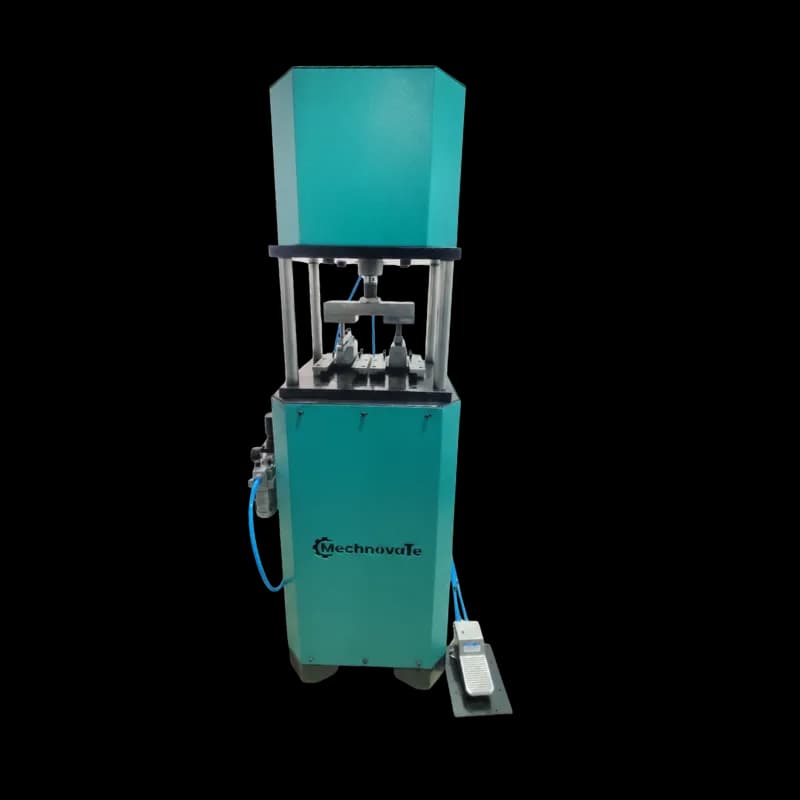
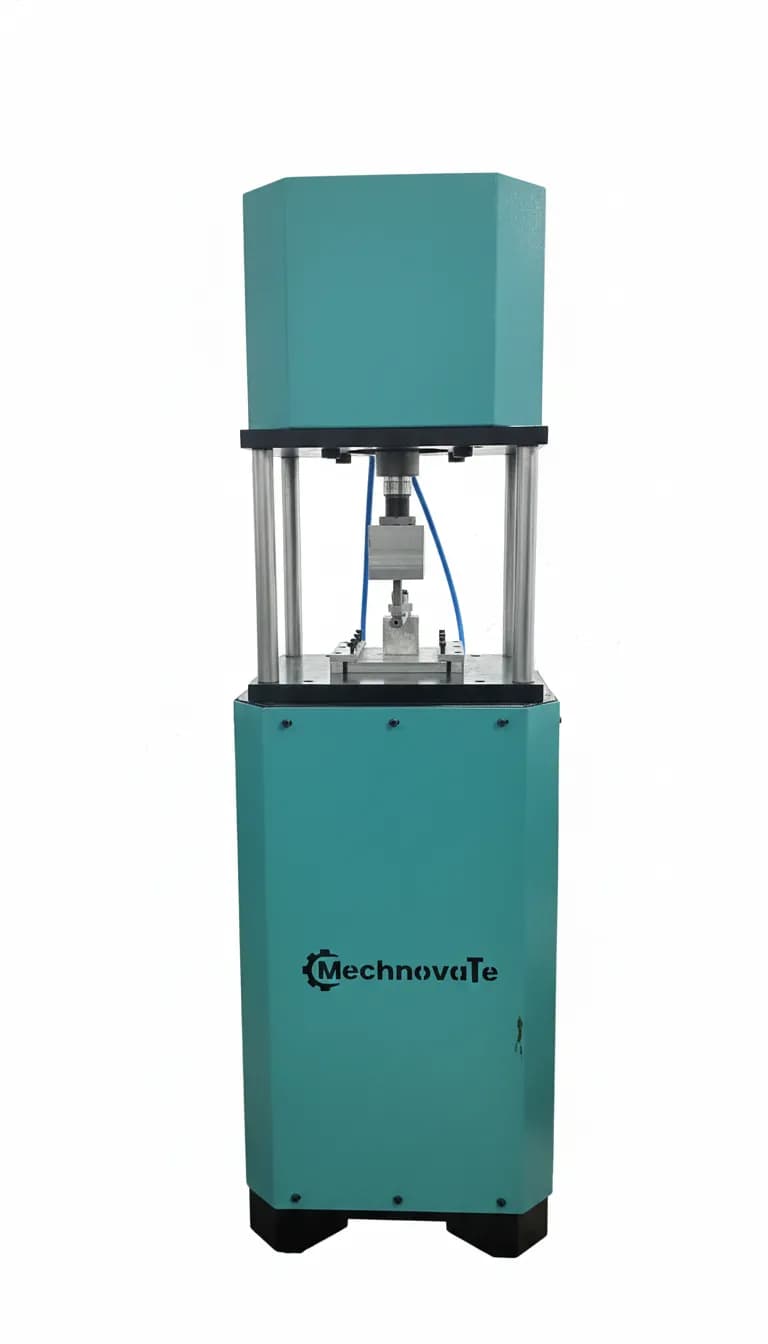
The structural stability of a door under wind load is determined by its corners. A heavy duty aluminium profile corner crimping machine uses hydraulic pressure (up to 100kN) to mechanically lock the profiles. In our experience, using a manual punching machine for large-scale high-rise doors is a recipe for structural failure. The aluminium window corner crimping machine price reflects the quality of its internal synchronizing gear; if the two punching heads don't move in perfect unison, the frame will twist under pressure.
3. Precision Milling and Routing
For hardware mounting, a high speed copy router for aluminium windows or a CNC processing center is essential. When you are installing heavy-duty multi-point locks required for acoustic performance, the hardware pockets must be milled to a tolerance of +/- 0.2mm. Any more, and the locking mechanism will rattle, degrading the STC rating.
Technical Mastery: Engineering for Acoustic Performance
Acoustic performance is the number one complaint in Mumbai’s high-density corridors. Noise leakage usually occurs at the junctions. To solve this, your aluminium fabrication process must prioritize the following:
- End Milling Precision: Using a heavy duty aluminium profile end milling machine ensures that the mullions fit perfectly against the outer frame. Gaps as small as 0.5mm can reduce your STC rating by 5 points.
- Drainage Slot Accuracy: Use an automatic aluminium window production line to mill staggered drainage slots. If the slots are aligned directly, they create a 'sonic bridge' that lets traffic noise right through the frame.
- Gasket Compression: Ensure your aluminium punching machine creates clean, sharp holes for gasket pins. Ragged edges lead to air gaps, which destroy acoustic insulation.
Comparison: Manual vs. Automatic Production Metrics
| Feature | Manual Setup (Basic) | Automatic Production Line (Industrial) |
|---|---|---|
| Daily Output (Frames) | 8 - 12 | 45 - 60 |
| Accuracy Tolerance | +/- 1.5mm | +/- 0.1mm |
| Waste Percentage | 10-15% | < 3% |
| Wind Load Capacity | Up to 1.5 kPa | Up to 4.0 kPa+ |
| Labor Required | 6-8 Skilled Workers | 2-3 Operators |
Avoiding Common Fabrication Pitfalls in the Indian Market
Having consulted for dozens of alu door fabrication machinery setups across India, I see the same mistakes repeatedly. First, many startups focus too much on the aluminium cutter machine price and ignore the rigidity of the machine bed. A light-weight frame will vibrate, causing 'chatter marks' on the profile edge, which prevents a perfect seal.
Second, ignoring the Industrial profile cutting safety standards ISO standards is a liability risk. Ensure your head cutter machine has fully enclosed guards and dual-hand safety triggers. In a high-volume aluminium window machinery manufacturers in Ahmedabad Gujarat or Surat-based facility, safety shortcuts lead to downtime that costs more than any high-end machine.
Lastly, if you are also handling uPVC, do not use the same upvc cutting machine or upvc window manufacturing machine for heavy aluminum. Aluminum requires higher torque and specific lubrication systems. While a upvc welding machine or upvc window welding machine is great for vinyl, aluminum demands mechanical joining via a high-quality aluminium punching machine or crimper.
FAQ: Fabricator Concerns for the Mumbai Market
Q1: Can I use an aluminium cutting machine 12 inch for 70mm high-rise profiles? No. A 12-inch (approx. 300mm) blade does not have the cutting depth to handle the wide-chamber thermal break profiles required for Mumbai high-rises. You will end up doing 'double cuts,' which destroys accuracy. We recommend at least a 450mm or 500mm blade.
Q2: What is the typical cost of setting up uPVC window manufacturing unit vs. Aluminum? The cost of setting up uPVC window manufacturing unit in India is generally lower because welding is cheaper than hydraulic crimping. However, for high-rise specs (30+ floors), aluminum is often the only material that meets the structural wind-load requirements, allowing for higher project margins.
Q3: How do I maintain acoustic ratings in a high-speed production environment? Consistency is key. Use an automatic double head cutting saw for aluminium profiles to ensure every cut is identical. Pair this with a dedicated high speed copy router for aluminium windows to ensure hardware slots don't allow air leakage.
Q4: Are portable uPVC window making machine price list options worth it for Mumbai projects? Only for on-site repairs. For primary fabrication of high-rise doors, portable uPVC window making machine units lack the bed-rigidity needed to maintain the 0.1mm tolerances required for wind-pressure certification.
Get more articles like this
Follow Mechnovate on Google to see our guides in Google Discover & News