Modernizing Bangalore’s Aluminium Workshops: Machine Price & ROI
In the high-stakes world of Bangalore's high-rise construction, an automatic double head cutting saw typically ranges from ₹4,50,000 for entry-level 400mm blade systems to over ₹12,50,000 for high-precision 500mm CNC-controlled units. For a medium-sized workshop in Whitefield or Peenya, the ROI on this investment is typically achieved within 8 to 14 months through a 40% increase in frame output and a 9% reduction in profile scrap. If you are still using a manual 12-inch aluminium cutter machine for skyscraper-grade curtain walls, you are losing money on every single miter joint.
The Engineering Reality: Why High-Rise Projects Demand Precision
High-rise projects in Bangalore, especially those following IS 1285 and BS EN 12020 standards, leave zero margin for error. A 0.5mm deviation at the base of a 30-story curtain wall results in massive structural misalignments at the top. This is where the transition from a single cutting unit to a head cutting machine with synchronized movement becomes mandatory.
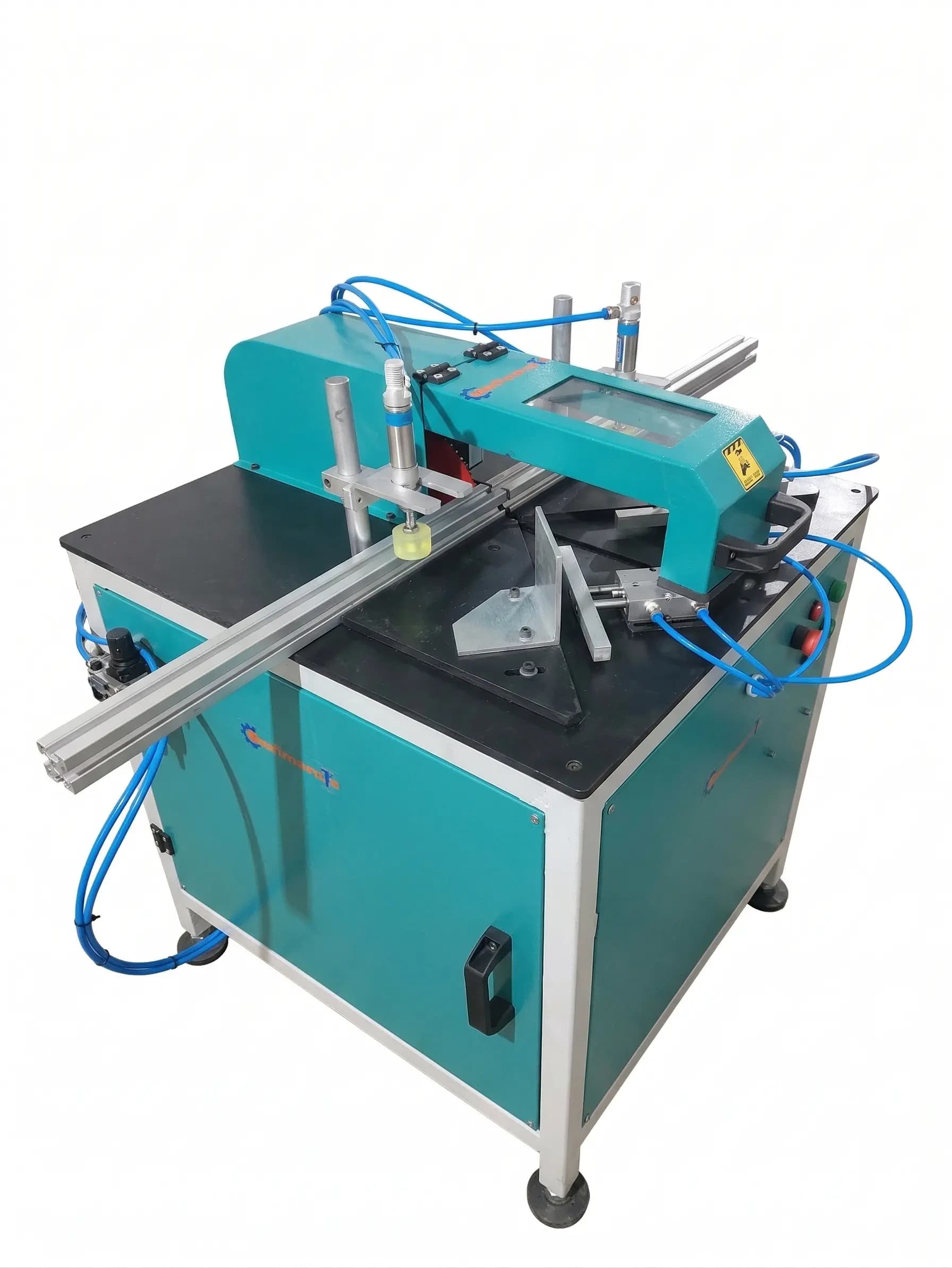
Modern aluminium profile cutting machine systems utilize hydro-pneumatic feed cylinders. This ensures that the saw blade travels at a constant speed, preventing the 'chatter marks' common in manual feeding. When cutting 2.5mm or 3.0mm thick heavy-gauge profiles for wind-load-resistant windows, a constant feed rate is critical for blade longevity and joint tightness. We recommend a 3.0 kW motor minimum for high-density profiles to maintain a peripheral speed that prevents melting of the aluminium alloy.
Bangalore Case Study: Reducing Waste from 12% to 3%
In early 2023, we worked with a fabrication unit near Electronic City that was struggling with a 12% wastage rate on a massive residential project. They were using a standard aluminium cutting machine 12 inch setup. The manual measurement and single-head cutting resulted in 'cumulative error'—where small mistakes in each cut led to frames that didn't square up.
We implemented a 500mm automatic double head cutting machine alongside an aluminium profile punching machine for their hardware slots.
The Metrics (Measured over 6 months):
- Output: Increased from 45 frames per shift to 85 frames per shift.
- Accuracy: Achieved a consistent tolerance of ±0.1mm per 3-meter length.
- Labour: Reduced the cutting team from 4 operators to 2, allowing staff to be redeployed to final assembly.
- Scrap: Reduced from 12% to 3% by utilizing the machine's optimization software.
One mistake the client made initially was neglecting the air compressor quality. A double-head saw requires a consistent 6-8 bar pressure with a refrigerated air dryer. Without dry air, the pneumatic valves in your upvc window manufacturing machine or aluminium cutter will fail within months due to Bangalore’s humidity.
ROI Calculation: The Math Behind the Investment
When calculating the aluminium cutting machine price versus its value, fabricators must look at the 'Cost Per Cut.'
- Manual Setup: High labour cost + High scrap rate + Slow speed = ₹45 per joint.
- Automatic Setup: Low labour cost + Optimized scrap + High speed = ₹12 per joint.
In a typical Bangalore high-rise project requiring 5,000 windows, the savings on scrap alone often covers 30% of the automatic double head cutting machine price India within the first 1,000 units. Furthermore, the ability to offer a 'factory-finished' joint quality allows you to bid for Tier-1 developer contracts that are currently out of reach for workshops using manual punching machine setups.
Technical Specifications to Look For
Not all machines are created equal. When reviewing a upvc machine price list or an aluminium machinery quote, ensure these technical benchmarks are met:
- Blade Diameter: For high-rise curtain walls, a 500mm blade is the industry standard. A 400mm blade lacks the depth for wide thermal-break profiles.
- Positioning Accuracy: Look for a machine with a magnetic scale or high-precision rack and pinion system. CNC-controlled positioning is superior to digital readouts (DRO).
- Safety Features: Ensure the machine complies with Industrial profile cutting safety standards ISO standards. This includes dual-hand safety starts and emergency braking systems.
- Versatility: A machine that can handle both 45° and 90° cuts automatically is essential. For complex facades, look for machines that can tilt to intermediate angles.
For those diversifying, many of these systems also function as a high-end upvc windows making machine, though the blade tooth geometry (TCT) must be adjusted for the different material densities of uPVC vs Aluminium.
Common Mistakes to Avoid in Workshop Modernization
- Ignoring the Foundation: A cutting machine automatic system is only as good as the floor it sits on. Many Bangalore workshops have uneven industrial flooring. We always recommend a reinforced concrete pad (minimum 150mm depth) to prevent machine vibration.
- Underestimating Power Requirements: A double-head saw with two 3kW motors and a dust extractor can pull significant current at startup. Ensure your workshop's transformer can handle the load.
- Skipping the Copy Router: Precision cutting is useless if your hardware slots are messy. Always pair your saw with a high speed copy router to maintain consistency across the entire production line.
- Buying on Price Alone: An aluminium cutter machine price that seems too good to be true usually indicates inferior linear guides or low-grade pneumatic components from non-branded suppliers.
Scaling for the Future: uPVC vs Aluminium
While aluminium dominates the premium high-rise market in Bangalore, the demand for upvc window manufacturing machines is skyrocketing in the suburban villa market. If you are setting up a new unit, consider a versatile layout that can accommodate a upvc welding machine and a v cutting machine upvc windows price-efficient setup alongside your aluminium line.
Modern upvc windows manufacturing machine technology has advanced to include 'seamless' welding, which is becoming a requirement for luxury apartments in areas like Indiranagar and Koramangala. Integrating a CNC uPVC window corner cleaning machine price India into your budget early on will save thousands in manual finishing costs later.
FAQ: What Bangalore Fabricators Ask Us
Q: Can I use the same machine for both Aluminium and uPVC? A: Yes, an automatic double head cutting saw can cut both. However, you must use specific TCT blades for each. Aluminium requires a negative rake angle to prevent 'grabbing,' while uPVC is more forgiving but requires higher RPMs for a clean finish.
Q: What is the lead time for a double head cutting machine in India? A: Typically, for a standard CNC-controlled model, the lead time is 4-6 weeks. Custom configurations for specialized curtain wall profiles may take up to 8-10 weeks.
Q: Is it better to buy a 12-inch or 20-inch (500mm) blade? A: For high-rise projects, the aluminium cutter machine 12 inch is often too small for the heavy mullions used in wind-load zones. A 500mm (20-inch) blade provides the necessary cutting envelope for modern architectural profiles.
Q: How do I maintain the accuracy of the 45-degree cut? A: Accuracy depends on the pivot point bearings. At Mechnovate, we recommend a weekly check of the 'zero-point' and ensuring the profile supports are perfectly level with the machine bed. Even a 0.2-degree error in the degree cutting machine setting will result in a visible gap in the window corner.
Get more articles like this
Follow Mechnovate on Google to see our guides in Google Discover & News