Modernizing Bangalore uPVC Workshops with CNC Corner Cleaners
For fabricators in Bangalore's competitive residential market, the difference between a mid-range window and a premium architectural product often comes down to the quality of the corner finish. Manual cleaning with knives and chisels leaves unsightly gouges and inconsistent seam lines that fail the inspection of luxury developers in areas like Whitefield and Indiranagar. Integrating a CNC uPVC Corner Cleaning Machine into your workflow is the only way to achieve the repeatable, flawless aesthetics required for high-margin projects while simultaneously boosting throughput by over 40% per shift.
Why Bangalore’s Premium Projects Demand CNC Precision
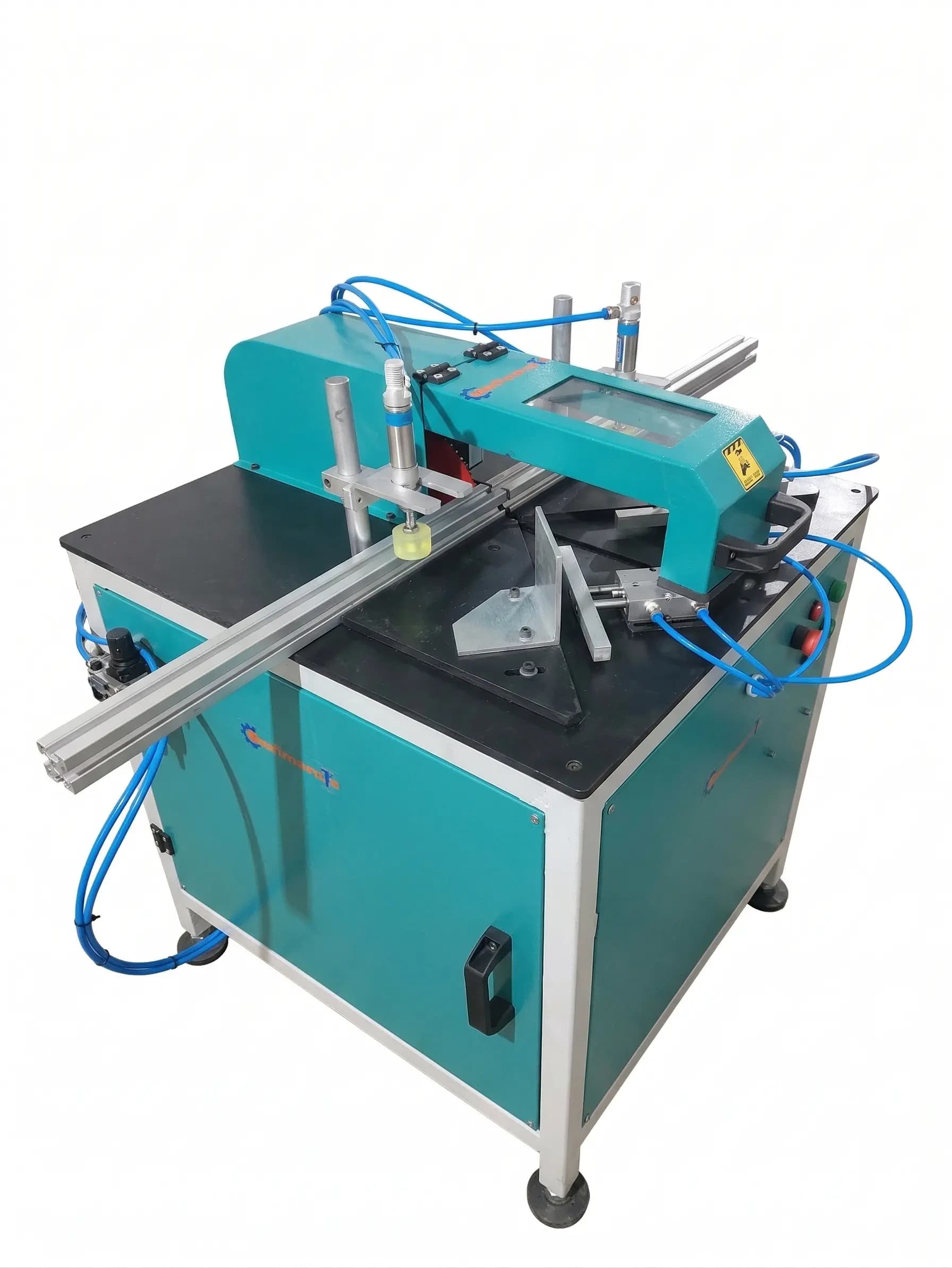
The shift toward colored and laminated profiles in Bangalore’s high-end apartments means that traditional manual finishing is no longer viable. Manual scraping often damages the foil, leading to expensive profile wastage. Modern uPVC window manufacturing machines with CNC capabilities utilize multi-tool configurations to clean the outer corner, top/bottom surfaces, and the internal gasket groove in a single cycle.
In our recent audit of a facility in Peenya, we documented the following performance metrics before and after upgrading their uPVC machinery:
- Cycle Time: Manual cleaning averaged 140 seconds per frame; the CNC system completed it in 28 seconds.
- Rework Rate: Reduced from 9% (due to surface scratches) to less than 0.5%.
- Labor Allocation: Reassigned 3 manual cleaners to the assembly line, increasing overall factory capacity.
- Consistency: Achieved a ±0.15mm tolerance on the corner groove, compliant with ISO 9001 and BS EN 12020 standards.
Technical Mastery: Specifications That Matter for Bangalore Fabricators
When evaluating a CNC uPVC window corner cleaning machine price India, many workshop owners overlook the engineering specs that determine long-term ROI. For a high-performance workshop, your machine must handle a variety of profile widths (typically 60mm to 120mm) and heights. We recommend a system featuring high-frequency motors operating at a minimum of 18,000 RPM to ensure a burr-free finish.
- Servo Drive System: Ensure the machine uses 3-axis or 2-axis CNC control with high-precision ball screws. This prevents the 'chatter' marks common in cheaper pneumatic-only systems.
- Air Pressure Requirements: A stable 6-8 bar pressure is critical. Fluctuations in pressure are the leading cause of uneven cleaning depths.
- Tooling Logic: The machine should ideally feature a saw blade for the external corner, horizontal cutters for top/bottom surfaces, and specialized cutters for the internal sash groove.
Using a Two Head Seamless Welding Machine alongside a CNC cleaner ensures that the 'bead' of the weld is perfectly uniform, making the subsequent cleaning process even more efficient.
Case Study: Scaling a Jigani Industrial Unit
Last quarter, we assisted a startup in Jigani that was struggling to fulfill a 400-window contract for a villa project. They were initially using a basic upvc windows making machine setup with manual corner cleaners. By installing an integrated line featuring an Automatic Double Head Cutting Saw and a CNC corner cleaner, they transformed their output.
We implemented a specific feed rate of 3m/min for their profile cutting and calibrated the corner cleaner to handle their specific 2.5mm wall thickness profiles. The result was a 12% reduction in material waste and a finish that allowed them to charge a 15% premium for 'Architectural Grade' windows. This proves that the cost of setting up uPVC window manufacturing unit with advanced CNC tech pays for itself within the first 14 months of operation.
Avoiding Common Pitfalls in uPVC Machinery Operation
As a uPVC machinery manufacturer with 15 years in the field, I’ve seen many workshops fail because they neglect these three technical realities:
- Software Incompatibility: Ensure your CNC cleaner software can easily import files from your window design software. Manual data entry at the machine level is a primary source of dimensional errors.
- Inadequate Dust Extraction: uPVC swarf is highly abrasive. Without a high-powered vacuum system, the CNC sensors will fail prematurely, leading to downtime.
- The "Cheap Tooling" Trap: Using non-carbide tipped cutters to save money results in heat build-up that melts the profile rather than cutting it clean.
FAQ: Critical Questions for uPVC Fabricators
What is the average CNC uPVC window corner cleaning machine price India for a mid-sized workshop? While prices vary based on axis count and tool number, a high-quality, mid-range CNC cleaner typically ranges between ₹6,50,000 and ₹12,00,000. It is critical to factor in the cost of local service and spare parts availability in Bangalore.
Can a CNC corner cleaner handle both white and laminated profiles? Yes, but you must ensure the machine has a 'laminate mode' or a floating cleaning head. This prevents the cutter from digging too deep and exposing the white base material under the colored foil.
Is it worth buying a used CNC machine for a startup? Generally, no. CNC systems rely heavily on sensors and electronic control boards that have a specific lifespan. For a startup, an automatic upvc window plant cost India should prioritize new machinery with at least a 1-year warranty to avoid the catastrophic costs of early-stage downtime.
Get more articles like this
Follow Mechnovate on Google to see our guides in Google Discover & News