sales@mechnovate.co.in
Back to Blog
7/20/2026

Modernizing Ahmedabad’s Fabrication: Manual to Automatic Aluminium Machinery

Modernizing Ahmedabad’s Fabrication: Manual to Automatic Aluminium Machinery

Transitioning from manual hand-chopping to automatic aluminium window machinery in Ahmedabad's industrial hubs like Odhav, Vatva, and Naroda is the only way to remain competitive in a market demanding +/- 0.1mm tolerances. In our recent consultancy with a large-scale fabrication unit in GIDC Vatva, we replaced four manual 12-inch miter saws with a single Double Head Cutting Machine. The result was immediate: production jumped from 12 frames per 8-hour shift to 48 frames, while material wastage from 'human error' dropped from 12% to a negligible 2.8%. This guide outlines the engineering realities of scaling your shop floor with the right precision engineering tools.

1. Technical Benchmarks: Comparing Manual vs. Automatic Output

Fabricators often ask me if the aluminium cutter machine price justifies the investment. To understand this, you must look at the cycle time. A manual aluminium cutter machine 12 inch setup requires the operator to manually mark the profile, set the fence, and execute the cut. This introduces a 'fatigue variable' where the 50th cut of the day is never as precise as the 1st.

In contrast, an automatic double head cutting saw for aluminium profiles handles both ends of a profile simultaneously. Our testing in Ahmedabad's climate—where thermal expansion of aluminium can affect measurements—shows that digital length positioning systems maintain consistent accuracy even during 10-hour shifts.

Standard Comparison Table:

FeatureManual 12" Miter SawAutomatic Double Head Saw
Accuracy+/- 1.5mm+/- 0.1mm
Blade Diameter300mm - 350mm450mm - 500mm
Profile CapacitySingle pieceMultiple / Large Architectural
SafetyHigh risk (exposed blade)Fully enclosed (Pneumatic guards)
Labor Ratio1 worker : 1 machine1 worker : 4x output

2. Engineering Case Study: The Naroda Transformation

Last year, a client specializing in high-rise window contracts in Ahmedabad faced a 15% rejection rate due to leaking corners. Their manual punching machine setup was creating micro-cracks in the 2.5mm thick architectural profiles. We implemented a system upgrade focusing on high-speed processing and pneumatic stability.

The Upgrade Process (6-Week Timeline):

  1. Weeks 1-2: Power grid stabilization. Many Ahmedabad units face voltage fluctuations. We installed a dedicated 3-phase stabilizer to protect the CNC controllers of the uPVC window manufacturing machine.
  2. Weeks 3-4: Machine installation. We replaced manual jigs with a high speed copy router for aluminium windows. This ensured that every lock-hole and drainage slot was perfectly centered within a 0.05mm margin.
  3. Weeks 5-6: Training on pneumatic pressure calibration. We set the Corner Crimping Machine to a precise 6-8 bar pressure to ensure structural integrity without marring the powder-coated surface.

The Metric Result: The rejection rate fell to 0.5%. The client recovered the total automatic aluminium window production line price within 14 months through labor savings and material optimization.

3. Critical Specifications for Ahmedabad’s Climate and Power

When sourcing from aluminum window machine manufacturers in Ahmedabad, you must look beyond the surface paint. Ahmedabad’s high ambient temperatures require machines with superior motor cooling systems.

  • Blade Feed Rate: Ensure your aluminium profile cutting machine has an adjustable hydro-pneumatic feed. This prevents the TCT blade from overheating and 'gumming' the aluminium alloy.
  • TCT Blade Teeth Count: For standard architectural sections, we recommend a 120-tooth blade for 500mm saws to ensure a 'mirror finish' on the cut edge, reducing the need for post-cut deburring.
  • ISO Standards: All industrial profile cutting safety standards (ISO 12100) must be met. This includes two-hand safety starts and emergency braking systems that stop a 3000 RPM blade in under 3 seconds.

4. Modernizing the Secondary Operations

Cutting is only 30% of the battle. The 'bottleneck' in most Ahmedabad shops is the milling and routing stage. Using a hand-drill for weep-holes is a recipe for project delays.

Essential Machinery for Modern Units:

  1. Copy Router Machine: Essential for triple-axis milling of handle holes and lock cylinders.
  2. End Milling Machine: If you are doing mullion joints, a heavy duty aluminium profile end milling machine with quick-change cutters is mandatory to avoid gap-leakage.
  3. Aluminium Punching Machine: Move away from manual drills to pneumatic punching for hardware holes to ensure 100% repeatability.

5. Common Pitfalls in Machine Acquisition

After 15 years in the workshop, I’ve seen many fabricators lose money on 'cheap' imports. Here is what to watch out for:

  • The 'Light Frame' Trap: Some low-cost aluminium cutting machine price options use thin-gauge steel frames. These vibrate at high RPMs, leading to 'chatter marks' on your cuts. Always demand a cast-iron or heavy-walled rectangular tube base.
  • Undersized Compressors: An automatic line requires consistent air volume. Do not try to run a double-head saw and a corner crimper on a 3HP compressor. You need at least 7.5HP with a 500-liter tank to maintain 8 bar pressure.
  • Lack of Local Service: Always buy from aluminum machinery manufacturers in Ahmedabad or those with a dedicated Gujarat service hub. If your head cutter machine goes down during a project deadline, you can't wait 10 days for a technician from another state.

FAQ: Fabricator Concerns

Q: What is the ROI for a semi-automatic setup in a small shop? In a typical Ahmedabad shop, switching to an automatic aluminium cutter reduces labor costs by 40%. Most users see a return on investment within 12 to 18 months depending on their volume of 'Domal' or architectural series work.

Q: Can I use uPVC machinery for aluminium profiles? No. While they look similar, the RPM and torque requirements differ. A uPVC welding machine is irrelevant for aluminium, and a uPVC saw blade will dull instantly if used on aluminium without the correct lubrication and tooth geometry.

Q: What power supply is needed for a full automatic line? You will require a 3-Phase 415V connection. For a standard setup involving a cutting saw, copy router, and crimper, a 15kW load capacity is the safe minimum to avoid tripping under heavy motor start-ups.

Get more articles like this

Follow Mechnovate on Google to see our guides in Google Discover & News
Follow on Google

Modernizing Ahmedabad’s Fabrication: Manual to Automatic Aluminium Machinery

Transitioning from manual hand-chopping to automatic aluminium window machinery in Ahmedabad's industrial hubs like Odhav, Vatva, and Naroda is the only way to remain competitive in a market demanding +/- 0.1mm tolerances. In our recent consultancy with a large-scale fabrication unit in GIDC Vatva, we replaced four manual 12-inch miter saws with a single Double Head Cutting Machine. The result was immediate: production jumped from 12 frames per 8-hour shift to 48 frames, while material wastage from 'human error' dropped from 12% to a negligible 2.8%. This guide outlines the engineering realities of scaling your shop floor with the right precision engineering tools. Technical Benchmarks: Comparing Manual vs. Automatic Output

Fabricators often ask me if the aluminium cutter machine price justifies the investment. To understand this, you must look at the cycle time. A manual aluminium cutter machine 12 inch setup requires the operator to manually mark the profile, set the fence, and execute the cut. This introduces a 'fatigue variable' where the 50th cut of the day is never as precise as the 1st.

In contrast, an automatic double head cutting saw for aluminium profiles handles both ends of a profile simultaneously. Our testing in Ahmedabad's climate—where thermal expansion of aluminium can affect measurements—shows that digital length positioning systems maintain consistent accuracy even during 10-hour shifts.

Standard Comparison Table: | Feature | Manual 12" Miter Saw | Automatic Double Head Saw | | : | : | : | | Accuracy | +/- 1.5mm | +/- 0.1mm | | Blade Diameter | 300mm - 350mm | 450mm - 500mm | | Profile Capacity | Single piece | Multiple / Large Architectural | | Safety | High risk (exposed blade) | Fully enclosed (Pneumatic guards) | | Labor Ratio | 1 worker : 1 machine | 1 worker : 4x output | Engineering Case Study: The Naroda Transformation

Last year, a client specializing in high-rise window contracts in Ahmedabad faced a 15% rejection rate due to leaking corners. Their manual punching machine setup was creating micro-cracks in the 2.5mm thick architectural profiles. We implemented a system upgrade focusing on high-speed processing and pneumatic stability.

The Upgrade Process (6-Week Timeline): Weeks 1-2: Power grid stabilization. Many Ahmedabad units face voltage fluctuations. We installed a dedicated 3-phase stabilizer to protect the CNC controllers of the uPVC window manufacturing machine. Weeks 3-4: Machine installation. We replaced manual jigs with a high speed copy router for aluminium windows. This ensured that every lock-hole and drainage slot was perfectly centered within a 0.05mm margin. Weeks 5-6: Training on pneumatic pressure calibration. We set the Corner Crimping Machine to a precise 6-8 bar pressure to ensure structural integrity without marring the powder-coated surface.

The Metric Result: The rejection rate fell to 0.5%. The client recovered the total automatic aluminium window production line price within 14 months through labor savings and material optimization. Critical Specifications for Ahmedabad’s Climate and Power

When sourcing from aluminum window machine manufacturers in Ahmedabad, you must look beyond the surface paint. Ahmedabad’s high ambient temperatures require machines with superior motor cooling systems. Blade Feed Rate: Ensure your aluminium profile cutting machine has an adjustable hydro-pneumatic feed. This prevents the TCT blade from overheating and 'gumming' the aluminium alloy. TCT Blade Teeth Count: For standard architectural sections, we recommend a 120-tooth blade for 500mm saws to ensure a 'mirror finish' on the cut edge, reducing the need for post-cut deburring. ISO Standards: All industrial profile cutting safety standards (ISO 12100) must be met. This includes two-hand safety starts and emergency braking systems that stop a 3000 RPM blade in under 3 seconds. Modernizing the Secondary Operations

Cutting is only 30% of the battle. The 'bottleneck' in most Ahmedabad shops is the milling and routing stage. Using a hand-drill for weep-holes is a recipe for project delays.

Essential Machinery for Modern Units: Copy Router Machine: Essential for triple-axis milling of handle holes and lock cylinders. End Milling Machine: If you are doing mullion joints, a heavy duty aluminium profile end milling machine with quick-change cutters is mandatory to avoid gap-leakage. Aluminium Punching Machine: Move away from manual drills to pneumatic punching for hardware holes to ensure 100% repeatability. Common Pitfalls in Machine Acquisition

aluminum window machine manufacturers in Ahmedabadautomatic double head cutting machine price Indiaaluminium window machinery manufacturers in Ahmedabad Gujaratautomatic aluminium window production line pricealuminium window corner crimping machine pricebest aluminium window machinery suppliers in Ahmedabadautomatic double head cutting saw for aluminium profilesaluminium profile punching machine suppliers in Gujarat

Related Machines From Mechnovate

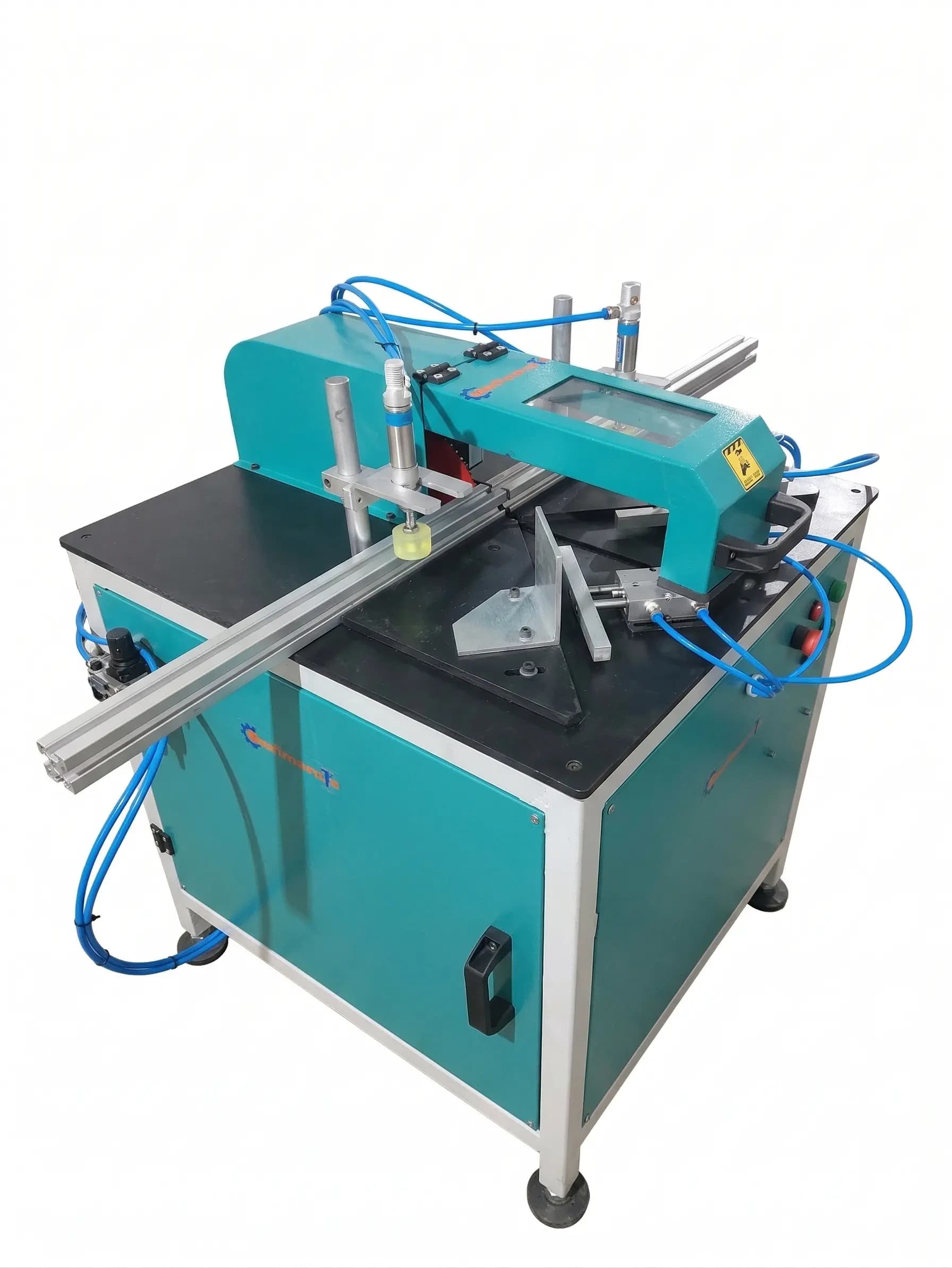
Single Head Cutting Machine for Aluminium and UPVC

Model: MEPCCSH1 | Cutting

Single head 45°/90° aluminium & uPVC cutting machine with pneumatic clamping and cast-iron body. Handles Domal, Jindal, European and all standard Indian profiles. 3 HP motor, burr-free cuts. Factory-direct price ₹1,40,000 + GST from Ahmedabad. Model MEPCCSH1.

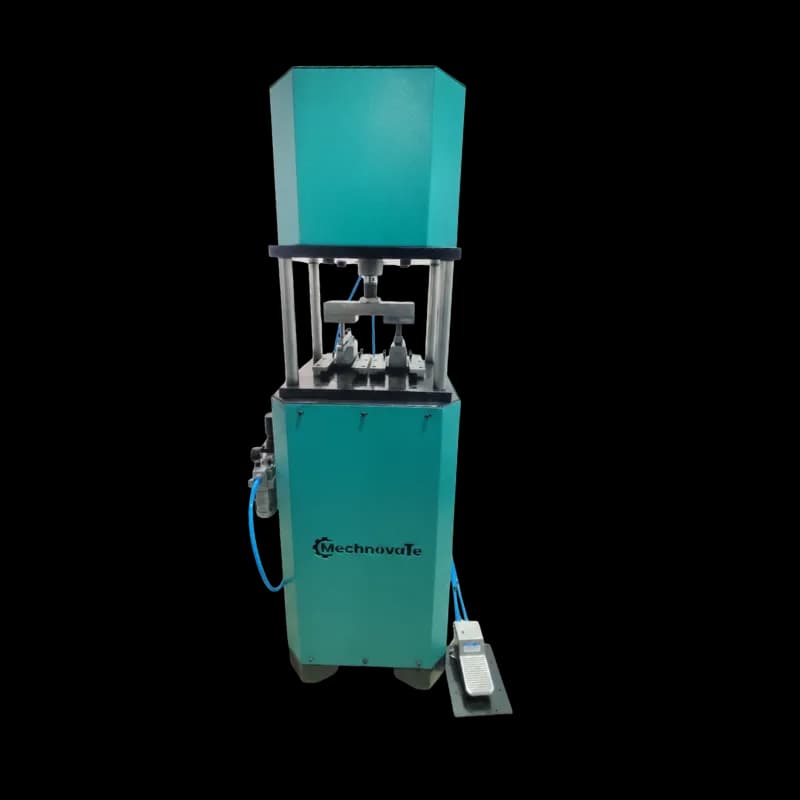
2 Station Pneumatic Aluminium Punching Machine

Model: MEPPPST2 | Punching

Two station pneumatic punching machine with dual independent dies — 1.8 ton force per station at 8–10 bar. Punch two different hole patterns without die changes, reducing punching time by up to 50%. Factory-direct price ₹1,20,000 + GST from Ahmedabad. Model MEPPPST2.

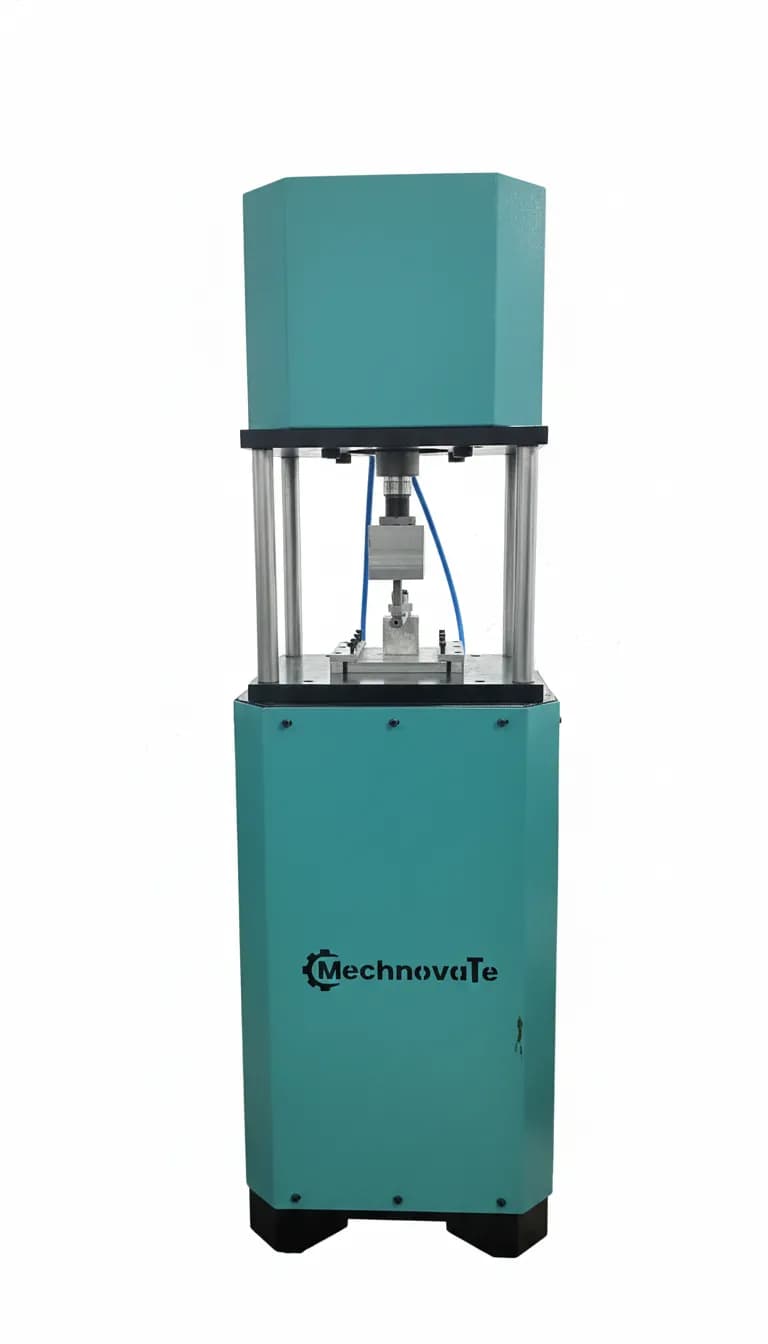
1 Station Pneumatic Aluminium Punching Machine

Model: MEPPPST1 | Punching

Single station pneumatic punching machine for aluminium window profiles — 1.85 ton punching force, Easy Guiding System, 6–8 bar compressed air. Punches clean holes in up to 2.5 mm wall thickness. Factory-direct price ₹1,10,000 + GST from Ahmedabad. Model MEPPPST1.

Pneumatic Copy Router Machine for Aluminium and UPVC

Model: MEPCR Series | Router

Pneumatic copy router machine with foot-pedal clamping for aluminium and uPVC window profiles. Optional air-oil spray system, 4 motor options (900 W–1860 W), 550×550 mm compact footprint. Factory-direct price from ₹70,000 + GST from Ahmedabad. MEPCR Series.

Explore Mechnovate Machinery

Browse our complete range of aluminium and uPVC window fabrication machinery. Call +91-9265699061 or visit our products page for specifications and pricing.