Minimize Aluminium Profile Wastage: Gujarat Fabricator Guide
To minimize profile wastage in high-volume aluminium fabrication, you must integrate linear optimization software with high-precision hardware like a CNC-controlled Double Head Miter Saw. In our Ahmedabad testing facility, we reduced scrap rates from 12% to 3% by transitioning from manual measurement to digital nesting and ensuring blade run-out was kept below 0.1mm. High-volume workshops in Gujarat often lose 15-20% of their margin to 'off-cut' mismanagement, which can be solved through precise 45-degree cutting machine calibration and systematic scrap re-utilization.
The Financial Impact of Profile Wastage in Gujarat Workshops
In a typical high-volume workshop in Ahmedabad producing 50-60 frames per day, even a 5% reduction in aluminium profile wastage can save upwards of ₹2,50,000 annually. Many fabricators view waste as an inevitable part of the process, but as a leading upvc machinery manufacturer and aluminium specialist, we have observed that wastage is a symptom of technical misalignment. When using a standard aluminium cutter, manual errors in marking and blade thickness (kerf) calculations lead to cumulative errors.
During a 6-week audit at a partner facility in Surat, we found that 40% of their waste was generated by 'short-end' leftovers that didn't meet the minimum length for the next job. By implementing a digital inventory system and upgrading to an automatic double head cutting machine price-efficient model, we synchronized their cutting lists with actual stock lengths (typically 6 meters). This allowed for 'nesting'—the process of fitting multiple component lengths into a single bar to minimize the remaining scrap.
Case Study: Achieving 3% Waste in Ahmedabad
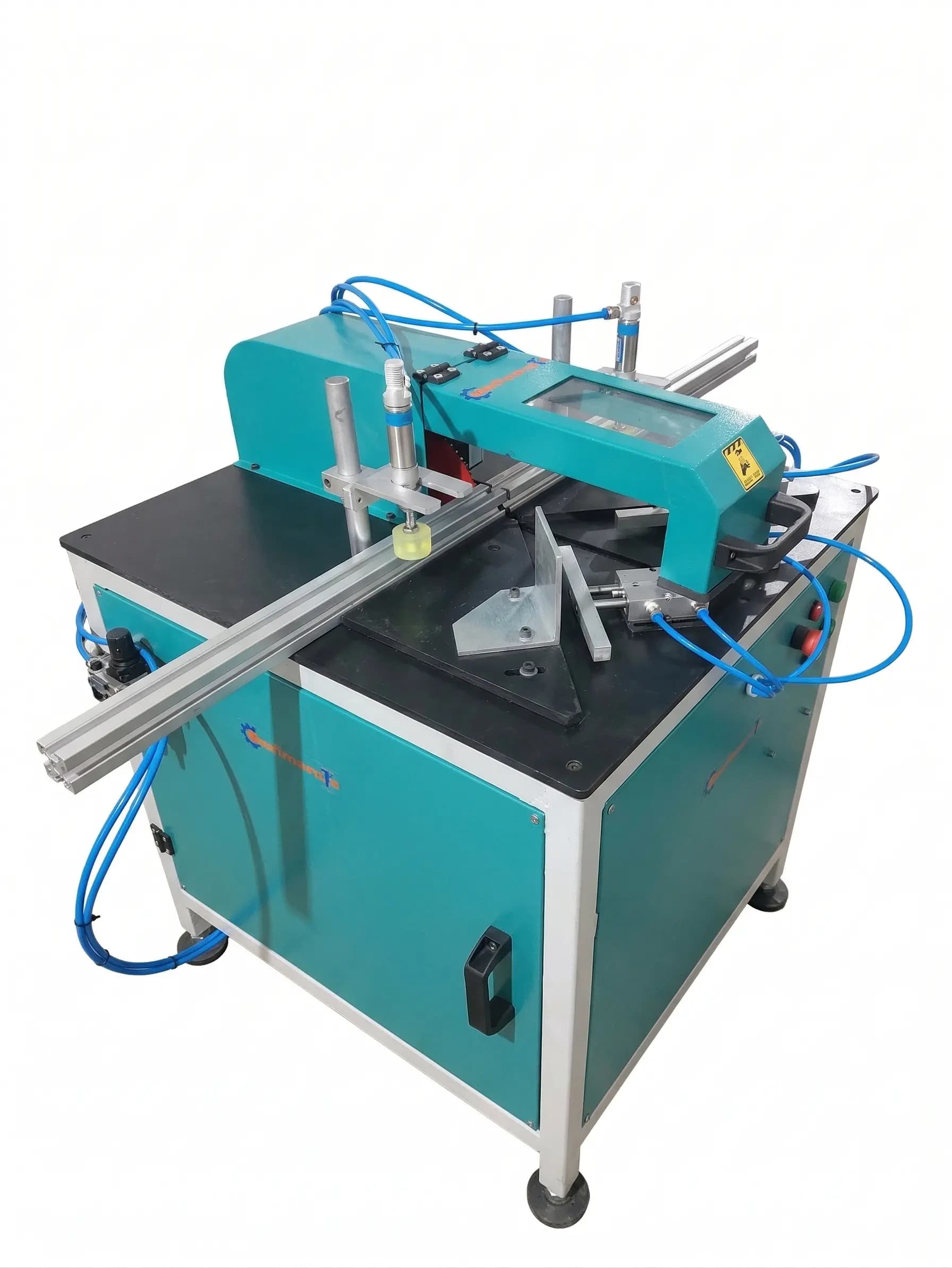
Our engineering team recently overhauled a production line in an Ahmedabad-based factory. The objective was to increase output while slashing material costs. We replaced their aging single cutting manual saws with a CNC Aluminium Profile Cutting Machine featuring automatic angle positioning.
- Baseline Metrics: 12.5% material waste, 35 frames per 8-hour shift, 4.5mm kerf loss per cut.
- The Intervention: We installed a high speed copy router for aluminium windows and a synchronized double-head saw with 500mm TCT blades. We calibrated the air pressure to a consistent 7 bar to ensure the pneumatic clamps didn't deform the profiles.
- Resulting Metrics: Waste dropped to 2.8%, output rose to 52 frames per shift, and the aluminium cutting machine price was recouped within 14 months through material savings alone.
Engineering Precision: Calibrating your Aluminium Cutter Machine
To achieve world-class precision, your aluminium profile cutting machine must be calibrated to ISO 9001 and IS 1285 standards. The difference between a high-quality frame and a rejected one often comes down to the degree cutting machine accuracy. If your 45-degree cut is off by even 0.2 degrees, the corner joint will not close properly, necessitating the use of fillers or, worse, discarding the entire profile.
- Blade Speed & Feed Rates: For architectural aluminium, maintain a blade speed of 2800 to 3400 RPM. A feed rate that is too fast will cause 'burrs' on the edge, while a rate that is too slow generates excessive heat, warping the profile.
- Coolant Systems: Use a micro-mist lubrication system. This extends the life of your aluminium cutter machine 12 inch blades by 40% and ensures a cleaner cut, reducing the need for secondary finishing.
- Pneumatic Stability: Ensure your workshop's compressor can maintain a steady flow. Fluctuations in pressure cause the profile to shift during the cut, leading to 'stepped' edges that ruin aluminium window corner crimping machine results.
Advanced Nesting and Automatic Double Head Cutting Machine Price ROI
Investing in an automatic double head cutting saw for aluminium profiles is the single most effective way to eliminate human error. These machines allow the operator to upload a CSV file of the day’s production requirements. The machine’s onboard computer then calculates the most efficient way to cut the available bars.
For those considering the cost of setting up uPVC window manufacturing unit in India, it is vital to balance the initial machinery cost with long-term operational efficiency. A upvc windows making machine with a built-in optimizer might cost 20% more upfront, but it reduces the 'tail-end' waste on every single 6-meter profile bar. In a high-volume environment, the upvc machine price list should always be viewed through the lens of 'price per meter of finished product.'
Common Mistakes in Profile Processing
- Ignoring Kerf Thickness: Every cut turns 3-5mm of aluminium into dust. If your software isn't calibrated to the exact thickness of your aluminium cutting machine 12 inch blade, your final pieces will be short.
- Incorrect Clamping Pressure: High-volume alu profile cutting and processing machines use powerful pneumatic clamps. If these are not adjusted for the specific wall thickness of the profile, they can cause micro-deformations.
- Poor Scrap Categorization: Not all scrap is waste. Pieces over 500mm should be tagged and stored for smaller window vents or sash components.
- Neglecting the Copy Router: A poorly maintained copy router machine can vibrate, enlarging the lock-hole or handle-hole beyond tolerances, resulting in a rejected profile.
Essential Machinery for Waste-Free Production
To maintain a competitive edge as an aluminum window machine manufacturer in Ahmedabad, your production line should ideally include:
- Double Head Miter Saw: For simultaneous 45/90 degree cuts.
- Heavy Duty Aluminium Profile End Milling Machine: For precise mullion joints.
- Aluminium Punching Machine: For high-speed drainage and hardware holes.
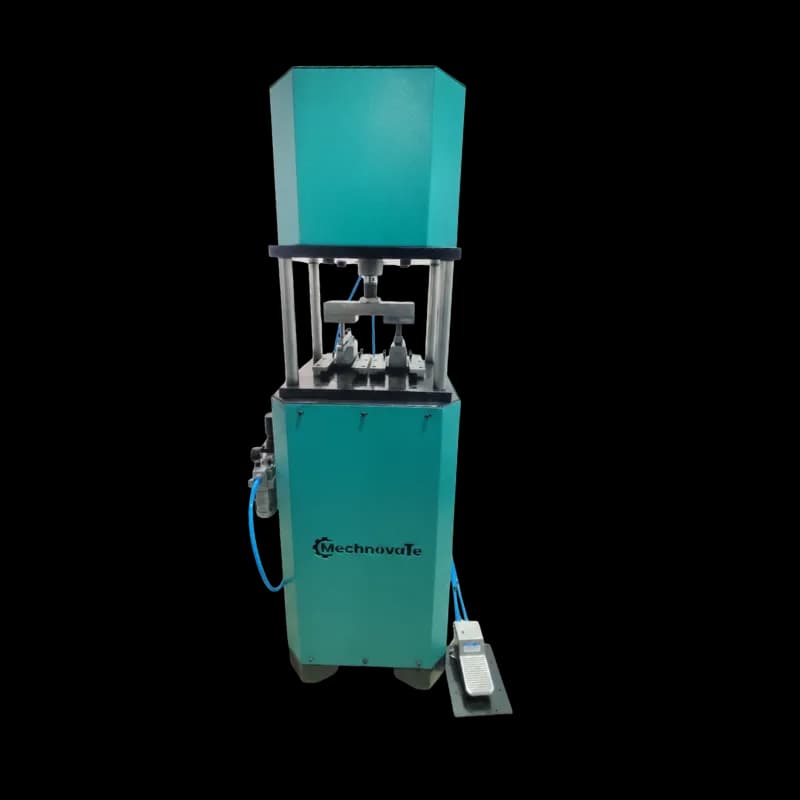
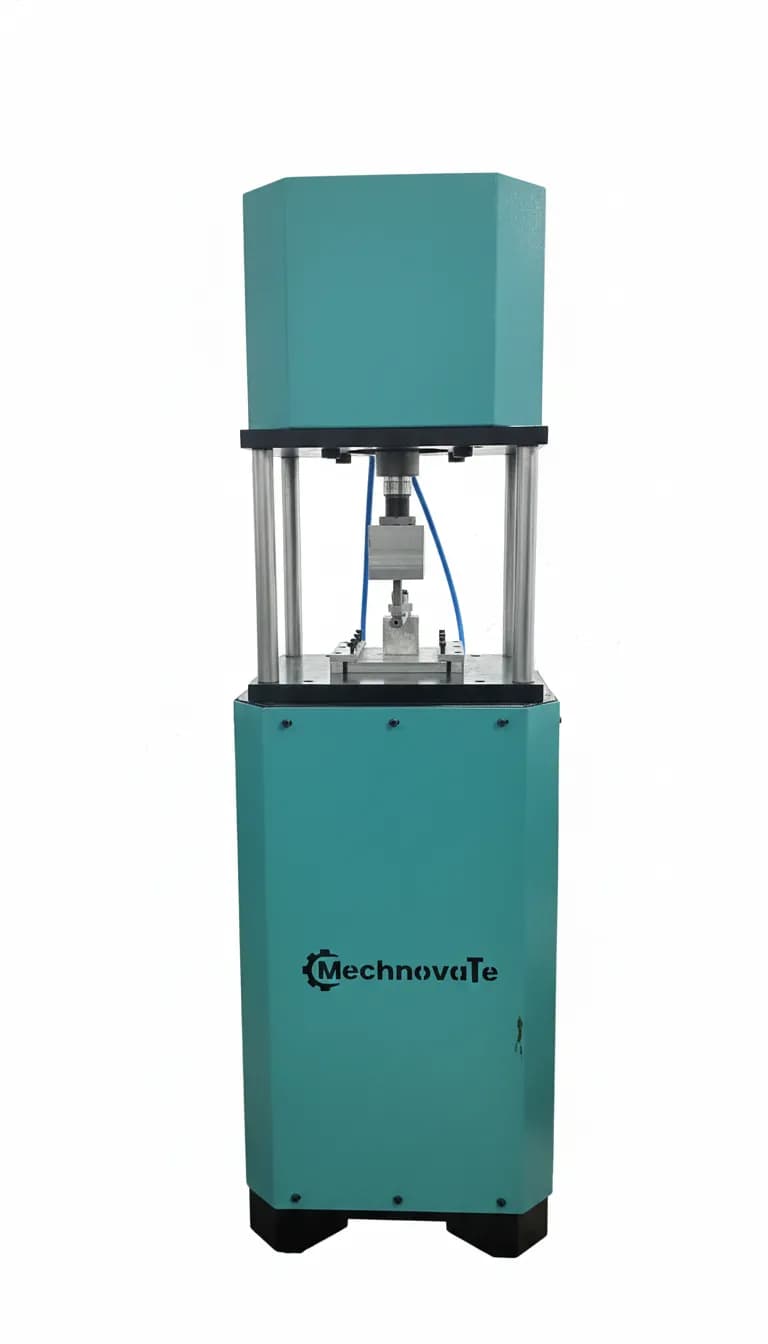
- Automatic Aluminium Corner Crimping Machine: For structural integrity.
Our Aluminium Profile Punching Machine suppliers in Uttar Pradesh and Gujarat emphasize that dedicated punching dies reduce the risk of profile cracking compared to manual drilling, further lowering the waste rate. Whether you are a upvc window manufacturing machine startup or a seasoned aluminum window fabrication machinery veteran, precision is your best tool for profitability.
FAQ: Aluminium and uPVC Fabrication
Q1: What is the ideal blade diameter for high-volume aluminium cutting? For most architectural profiles in India, a 450mm or 500mm TCT (Tungsten Carbide Tipped) blade is standard. An aluminium cutting machine 12 inch (approx 300mm) is suitable for smaller sections but lacks the depth of cut required for heavy-duty sliding series.
Q2: How do I choose between a manual and automatic upvc window manufacturing unit? If you are producing more than 15-20 windows a day, an automatic upvc window manufacturing plant cost India is justified by the reduction in labor and material waste. For startups, a portable upvc window making machine price list offers a lower entry point but requires more skilled manual labor to minimize waste.
Q3: Does Mechnovate provide service support in Gujarat? Yes, as prominent aluminium window machinery manufacturers in Ahmedabad Gujarat and Surat Gujarat, we provide on-site calibration, blade sharpening services, and operator training to ensure your upvc window manufacturing machines run at peak efficiency.
Q4: What are the industrial profile cutting safety standards? All machinery must adhere to ISO standards and CE certifications. This includes two-hand safety starts, emergency stop buttons, and protective shielding to prevent aluminium chips from causing injury. Proper dust extraction is also mandatory for a healthy workshop environment.
Get more articles like this
Follow Mechnovate on Google to see our guides in Google Discover & News