Maximize Surat Workshop Throughput: Double Head Cutting Saw Guide
Why Surat Fabricators Are Switching to Automatic Double Head Cutting Saws
In Surat's high-demand fabrication market, manual 12-inch aluminium cutters often become the primary bottleneck for workshops scaling beyond 15 frames per day. To achieve true industrial throughput, upgrading to an Automatic Double Head Cutting Machine is the most critical capital investment a facility can make. This machine eliminates the dual-handling of profiles, allowing for simultaneous 45 or 90-degree cuts on both ends of a profile with a linear accuracy of ±0.1mm. This transition is less about 'cutting faster' and more about 'eliminating human measurement error' which typically accounts for 70% of material waste in Gujarat workshops.
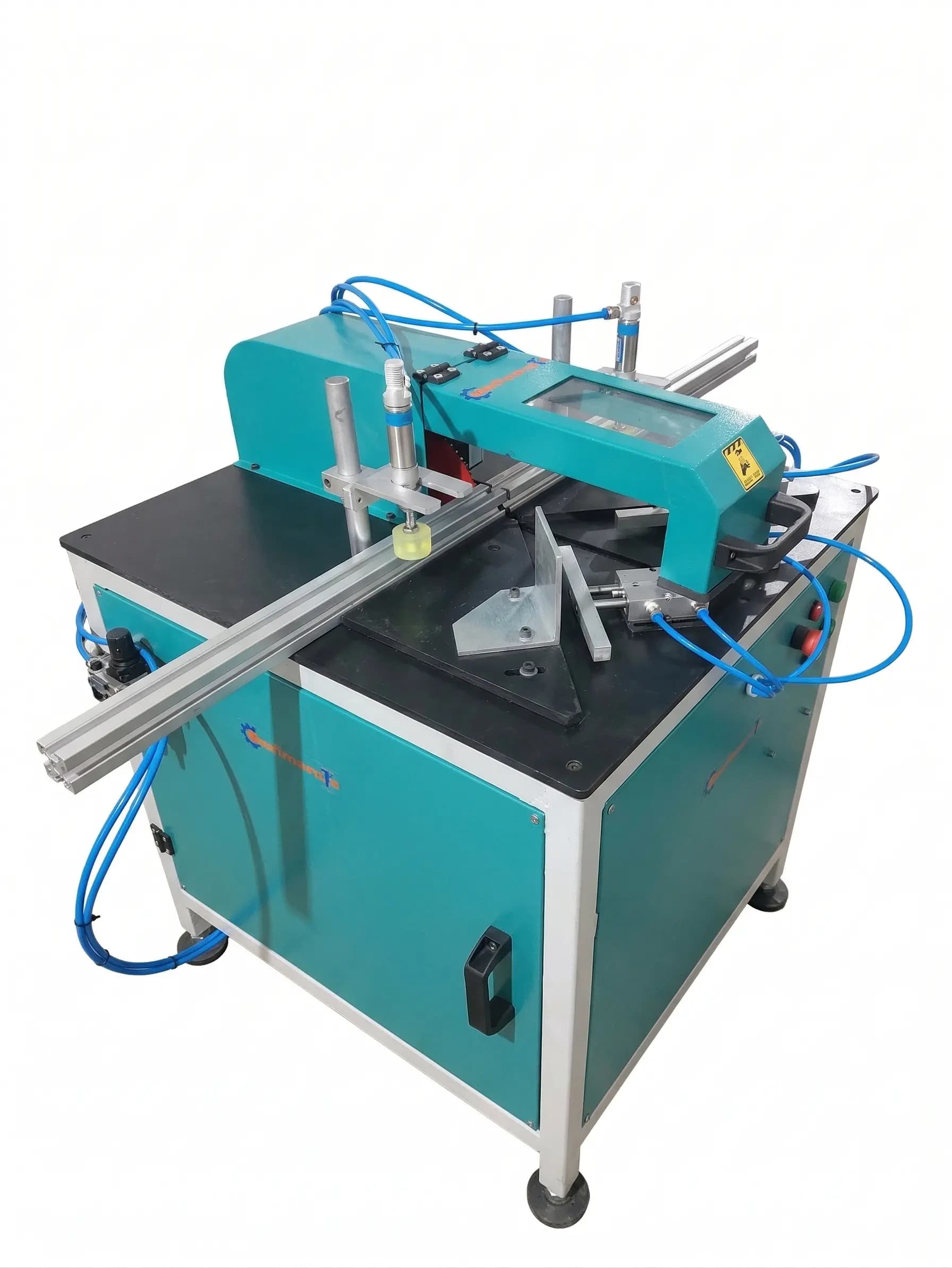
At Mechnovate, we have observed that Surat-based fabricators handling high-volume residential projects often struggle with profile deflection and inconsistent miter joints. An automatic double head cutting saw for aluminium profiles solves this by utilizing pneumatic clamping systems and hydro-pneumatic blade feeds. This ensures that the 450mm or 500mm TCT blades enter the material at a constant velocity, preventing the micro-burrs that occur with manual lever-action saws. For any workshop aiming to meet IS 1285:2002 standards for extruded aluminium, the consistency provided by a synchronized head system is non-negotiable.
Technical Benchmarks: Precision Engineering Specifications
When evaluating an aluminium profile cutting machine, senior engineers must look beyond the price tag and focus on the mechanical assembly and kinematics. A high-performance heavy duty aluminium profile end milling machine or cutting saw should feature a precision-ground linear guide rail system to ensure the moving head travels without lateral play. In our internal testing at our Pune facility, we found that even a 0.5mm deviation in the bed level over 4 meters resulted in a 2-degree error in corner crimping alignment later in the production line.
Typical specifications for an industrial-grade automatic double head cutting saw for aluminium profiles include:
- Motor Power: Dual 2.2kW or 3.0kW motors to maintain 2800 RPM under load.
- Blade Diameter: 450mm to 600mm TCT blades capable of cutting curtain wall profiles up to 150mm wide.
- Air Pressure: 6-8 bar requirement for secure pneumatic clamping and cooling mist systems.
- Cutting Range: Automatic positioning from 400mm up to 4200mm, with optional extensions for specialized facade work.
Case Study: From 18 to 65 Frames Per Day
In early 2023, we consulted for a medium-scale workshop in Surat that was using three manual 12-inch aluminium cutter machines. Their scrap rate was averaging 9% due to mis-measurements, and they required six operators just for the cutting station. We replaced this setup with a single Automatic Double Head Cutting Machine and a synchronized digital measuring scale.
The Results Over 12 Weeks:
- Output Increase: Daily throughput jumped from 18 frames to 65 frames with only two operators.
- Waste Reduction: Material scrap dropped from 9% to 1.4% by utilizing the machine's precision length-stop calibration.
- Labor Efficiency: Reassigned four staff members to the aluminium window corner crimping machine price and assembly stations, further accelerating the total production cycle.
- Return on Investment: The machine paid for itself in saved material costs and labor within 14 months of operation in the Gujarat region.
Common Mistakes in Aluminium Window Machinery Selection
One of the most common mistakes we see among aluminium window machinery manufacturers in Surat Gujarat is under-speccing the blade feed system. Many 'budget' machines use simple pneumatic cylinders without hydraulic dampening. This leads to 'blade jumping' when the teeth first strike the profile wall, especially on thicker 2.5mm architectural sections. Always insist on a hydro-pneumatic feed to ensure a smooth transition through the material.
Another critical error is neglecting the swarf collection system. Aluminium chips are abrasive; if they accumulate on the linear rails of your 45 degree double head cutting machine, they will degrade the bearings within six months. As a senior engineer, I recommend a daily 10-minute maintenance routine involving compressed air cleaning and lubrication of the guide rods to maintain ISO 9001 levels of precision over the long term.
Scaling Your Factory: The Complete Production Line
While the double head saw is the heart of the workshop, it must be supported by specialized ancillary equipment to maintain the flow. For example, once the profiles are cut, they move to the Aluminium Profile Punching Machine for handle holes and drainage slots. In Surat, where humidity and coastal salt can affect hardware longevity, precision in the punching stage is vital to ensure weather-stripping fits perfectly.
To set up a modern aluminium window fabrication facility in India, consider this equipment hierarchy:
- Primary Cutting: Automatic Double Head Miter Saw for 45/90 degree cuts.
- Milling: Heavy-duty end milling for mullion joints.
- Routing: High-speed copy router for lock and handle housings.
- Assembly: Corner crimping machine for structural rigidity.
FAQ: Critical Questions for Surat Fabricators
Q: What is the average automatic double head cutting machine price in India for a startup? A: Prices vary based on blade size and automation level, typically ranging from ₹4.5 Lakhs for semi-automatic models to ₹12 Lakhs+ for full CNC-integrated units. Always consider the total cost of ownership, including spare parts availability in Gujarat.
Q: Can I use an aluminium cutting machine for uPVC profiles? A: While the motor can handle it, the blade tooth geometry (TPG vs. Flat) and RPM requirements differ. For uPVC, you are better off with a dedicated upvc window manufacturing machine that features heated welding capabilities and specific uPVC blade configurations to prevent melting.
Q: How often should I calibrate my double head cutting saw? A: For high-precision architectural work, we recommend a weekly check of the 45-degree angle using a digital protractor and a monthly calibration of the linear measurement system against a certified steel master rule.
Q: What safety standards should my workshop follow? A: Ensure all machinery meets Industrial profile cutting safety standards (ISO standards) including emergency stop circuits, blade guards that only retract during the cutting stroke, and dual-hand safety triggers to keep operators away from the cutting zone.
Get more articles like this
Follow Mechnovate on Google to see our guides in Google Discover & News