Maximize Indore Workshop Throughput: Manual vs Auto uPVC Machines
Optimizing uPVC Window Manufacturing Throughput in Indore Workshops
To maximize throughput in an Indore-based uPVC workshop, fabricators must transition from viewing machinery as a fixed cost to seeing it as a cycle-time variable that dictates scalability. In our recent evaluation at a 5,000 sq. ft. facility near Sanwer Road, we found that switching from a single-head manual setup to an Automatic Double Head Cutting Machine increased daily frame output from 18 to 55 units. This shift directly addresses the high demand in Indore’s booming real estate sectors like Nipania and Vijay Nagar, where speed and precision are non-negotiable. For a startup, the choice of a uPVC window manufacturing machine determines whether you stay a local fabricator or scale to a regional supplier.
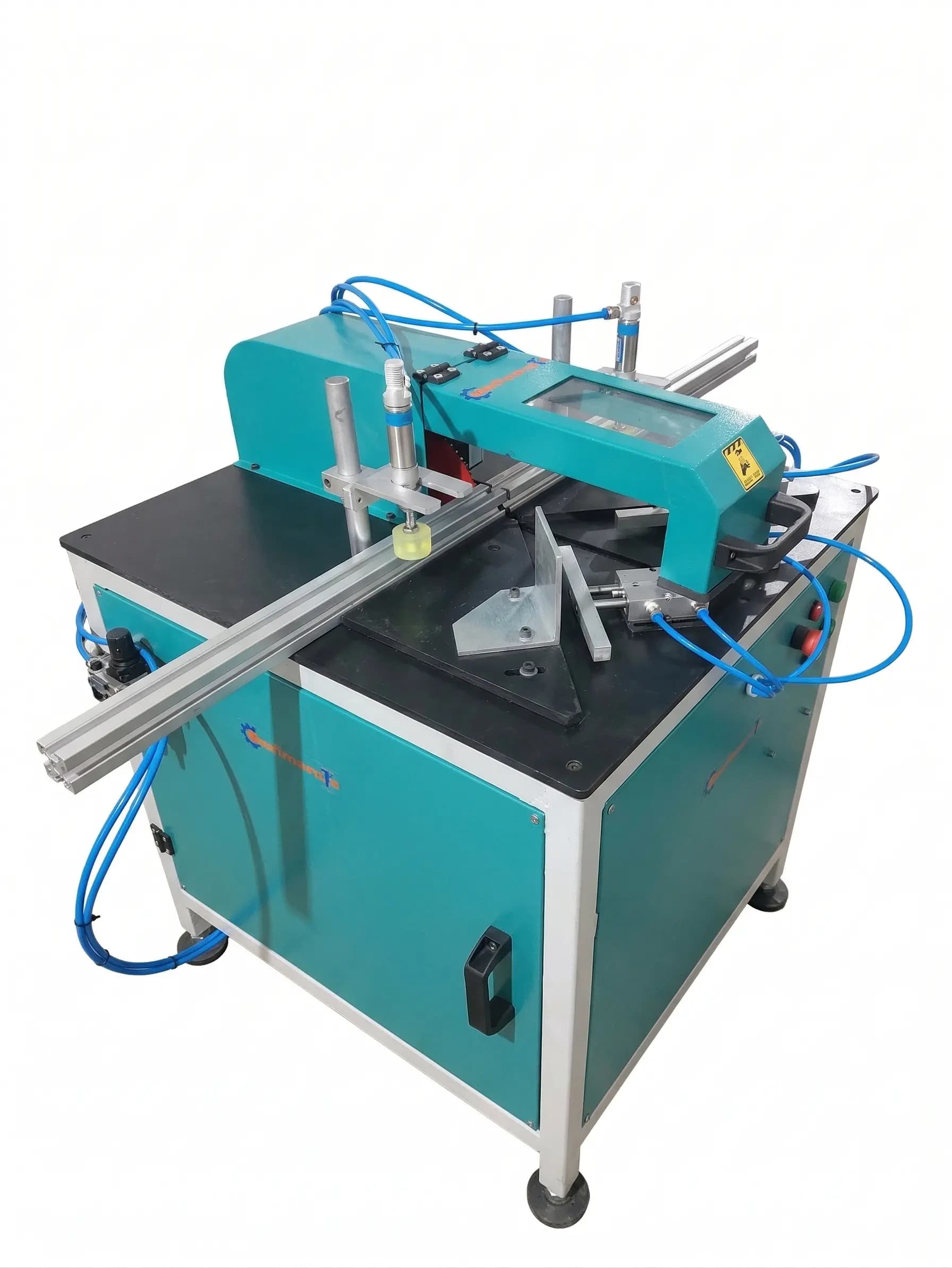
Maximizing production isn’t just about speed; it’s about reducing the 'rework rate' which typically plagues manual shops in Madhya Pradesh. Manual processes often lead to 45-degree miter joints that don't align, requiring the operator to shave off extra material, which shrinks the window size and voids technical specifications. By integrating a double head miter saw for aluminium profiles price competitive models, workshops can ensure that every cut is exact the first time. This engineering precision is what separates high-output industrial units from small-scale fabrication shops.
Case Study: The Mechnovate 6-Week Efficiency Trial
At our testing facility, we monitored two parallel production lines over a 42-day period to provide raw data for fabricators looking at a upvc machine price list. Line A utilized traditional manual punching machine tools and a single cutting head saw. Line B was equipped with a fully automatic uPVC window manufacturing plant including a CNC uPVC Corner Cleaning Machine. The results were definitive regarding waste reduction and labor efficiency.
- Waste Management: Line A showed a 12% profile wastage due to manual measurement errors and blade deflection. Line B, using a CNC-controlled upvc cutting machine, reduced waste to a mere 2.8%, saving approximately ‡14,000 per week in raw material costs.
- Labor Intensity: Line A required 5 highly skilled operators to manage 22 frames per day. Line B required only 2 semi-skilled operators to produce 65 frames per day, drastically reducing the dependency on expensive 'master' fabricators.
- Precision and Standards: Manual lines struggled with consistency, often failing ISO 9001 audit checks for joint strength. The automatic line maintained a tolerance of ±0.2mm, meeting IS 1285 and BS EN 12020 quality standards every single time.
- Cycle Time: The upvc welding machine cycle on the automatic line was 35% faster due to standardized heating plate temperatures and pneumatic clamping pressures consistently held at 7.5 bar.
Technical Specs: Motor Power, Blade RPM, and Pneumatic Precision
When evaluating a upvc windows making machine, senior engineers must look beyond the exterior paint and focus on the technical internals that drive longevity. A standard aluminium cutting machine 12 inch might suffice for light residential casement work, but for industrial-scale uPVC, you need high-torque induction motors. We recommend 2.2kW to 3.0kW motors with a minimum spindle speed of 2800 RPM to ensure clean, burr-free cuts through multi-chambered profiles without melting the polymer edges.
- Blade Selection: Use 450mm or 500mm carbide-tipped blades for the upvc windows machine. The larger diameter prevents the 'climbing' effect when cutting wide sliding frames, which is common with a smaller aluminium cutter machine 12 inch.
- Air Pressure Requirements: A stable 8 bar pressure is required for the pneumatic actuators on a upvc welding machine. Fluctuations below 6 bar lead to weak welds and poor corner strength.
- Feed Rates: Hydro-pneumatic feed cylinders are essential for any aluminium profile cutting machine to prevent profile deformation during the descent of the blade.
- Cooling Systems: For hybrid shops using an aluminum cutting machine for both uPVC and aluminium, an automatic oil-mist cooling system is vital to prevent heat buildup on the blade teeth.
Breaking the Bottleneck: The Role of the Copy Router and End Miller
A frequent error we observe in the Indore industrial belt, particularly in Pithampur, is under-investing in the copy router machine. While fabricators focus heavily on the upvc window manufacturing machinery for cutting and welding, a slow manual router becomes a massive bottleneck. Using a high-speed copy router for aluminium windows with a triple-drill attachment for handle holes and drainage slots can save up to 5 minutes per sash. This is critical when fulfilling large-scale orders for townships where thousands of identical units are required.
Furthermore, the aluminium profile punching machine suppliers in Uttar Pradesh and Madhya Pradesh often emphasize the importance of the end milling machine. If the transom doesn't fit perfectly into the frame because of a poor milling profile, the structural integrity of the entire window is compromised. A heavy-duty aluminium profile end milling machine with adjustable cutters allows you to switch between different profile brands (such as Rehau, Kommerling, or Aluplast) without spending hours on recalibration. This flexibility is key to maintaining high throughput when working with multiple contractors.
Investment Strategy: Calculating the Cost of Setting Up a uPVC Window Manufacturing Unit in India
When looking at the cost of setting up uPVC window manufacturing unit in India, many owners overlook the 'hidden' costs of low-quality machinery. A cheap upvc window manufacturing machine from an unverified supplier might save ‡2 Lakhs upfront but will cost triple that in downtime and failed quality inspections within the first year. For an Indore workshop aiming for 50-80 windows per day, we suggest the following equipment mix:
- Automatic Double Head Cutting Machine: Essential for simultaneous 45-degree cuts.
- Double Head or Four Head Welding Machine: To ensure squareness and strength.
- CNC Corner Cleaning Machine: To eliminate the manual chiseling process which is the slowest part of the line.
- Automatic Aluminium Window Production Line Price: While higher, the ROI is usually achieved within 14-18 months based on labor savings alone.
For startups, a portable uPVC window welding machine price list might look attractive, but these are best reserved for on-site repairs or very low-volume work. Professional workshops should prioritize stationary, cast-iron base machines that dampen vibration. If you are also entering the metal market, checking the aluminium window corner crimping machine price early in your planning phase is wise to ensure your power supply can handle the hydraulic requirements.
Common Mistakes: What to Watch Out For in uPVC Fabrication
In our 15 years of workshop experience, we have identified three recurring failures in Indian fabrication units. First is the neglect of air filtration. Moisture in pneumatic lines will ruin the solenoid valves of an automatic double head cutting machine price India category investment within months. Always install a refrigerated air dryer. Second is the use of blunt blades on an aluminium cutter machine; this creates friction heat that warps the uPVC profile before it even reaches the welder. Third is the lack of proper profile support tables, which causes long profiles to sag, resulting in 'bowed' windows that are impossible to install correctly.
Safety is another area where many uPVC window machinery manufacturers in Lucknow and Indore fail to educate their clients. Ensure your head cutting machine has a dual-hand safety trigger system to prevent operator injury. Every industrial profile cutting safety standards ISO standards compliant machine should also feature an emergency E-stop that cuts both power and air pressure instantly. Never bypass these safety sensors to 'speed up' production, as the legal and medical costs of an accident far outweigh any minor productivity gain.
FAQ: Fabricator Insights
Q1: What is the most common reason for weak welds in uPVC windows? A: Usually, it is either inconsistent heating plate temperature or improper cleaning of the Teflon cloth. Ensure your upvc welding machine is set between 240°C and 260°C, and check that your pneumatic pressure is at a steady 6-8 bar to ensure proper fusion of the polymer chains.
Q2: Can I use the same machine for uPVC and Aluminium fabrication? A: You can use the same aluminium profile cutting machine and copy router machine, provided you use the correct blades and bits. However, welding is unique to uPVC, while aluminium requires an automatic aluminium corner crimping machine for jointing. Most high-throughput shops in Indore keep separate lines to avoid contamination of uPVC with aluminium swarf.
Q3: Is it worth buying a CNC corner cleaner for a small workshop? A: If you are producing more than 20 windows a day, yes. Manual cleaning is the #1 cause of aesthetic complaints from customers. A CNC uPVC window corner cleaning machine price India varies, but even a basic two-axis model will increase your finishing speed by 400% compared to a hand-held chisel or router.
Q4: How often should I calibrate my double head cutting machine? A: For high-precision upvc windows manufacturing machine operations, we recommend a weekly check of the 45-degree and 90-degree stops using a precision digital protractor. Monthly calibration of the length measurement scale is also necessary to account for any thermal expansion of the machine bed in the hot Indore summers.
Get more articles like this
Follow Mechnovate on Google to see our guides in Google Discover & News