Lucknow’s Premium Developers & Seamless uPVC Welding Guide
Why Lucknow’s Premium Developers Demand the Double Head Seamless Welding Machine for uPVC Windows
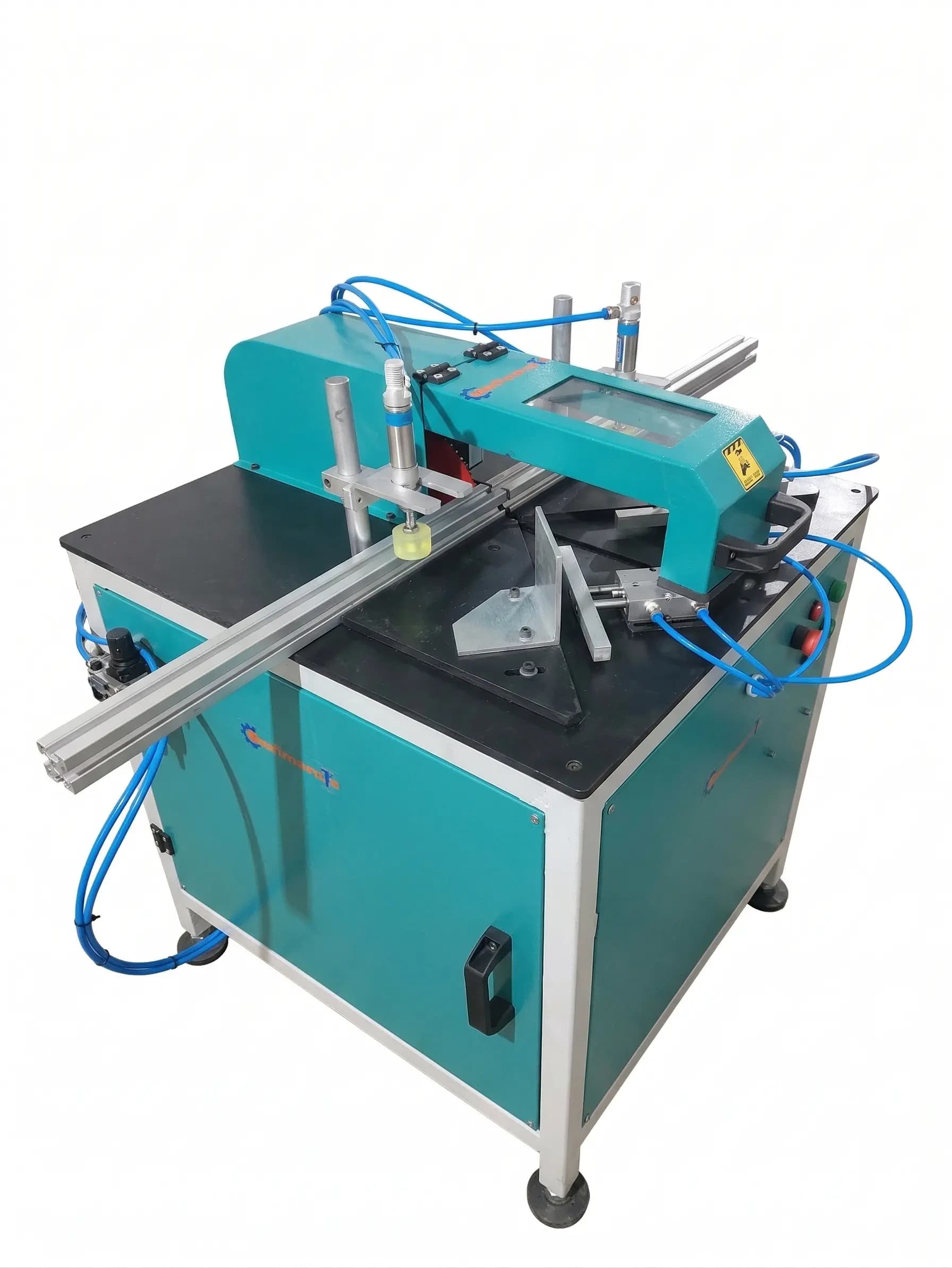
In the high-stakes Lucknow real estate market, specifically across Gomti Nagar Extension and Shaheed Path, the definition of a 'luxury' window has shifted. Standard uPVC windows with 2mm grooves are no longer acceptable for Grade-A residential projects. Developers now demand a flush, 'zero-joint' finish that mimics premium timber or powder-coated aluminium. This demand is why fabricators are pivoting to the Double head seamless welding machine for uPVC windows. This isn't just a cosmetic upgrade; it is a structural necessity for high-rise wind loads and thermal insulation. As a senior engineer with 15 years in the field, I have seen shops fail because they tried to 'sand down' standard welds to look seamless, only to have the joints fail under pressure. This guide explains the technical shift and the ROI of high-end uPVC window manufacturing machinery.
Technical Mastery: Standard vs. Seamless Welding
To understand why the Double Head Seamless Welding Machine is essential, we must look at the physics of the weld. In traditional welding, the profile ends are heated and pressed together, forcing molten uPVC outward to form a 'burr' that must be cleaned later with a CNC Corner Cleaning Machine. This cleaning process often removes too much material, weakening the joint.
Seamless technology uses a proprietary 'shadow' or 'limiter' system. During the heating phase (typically 240°C to 260°C), the machine restricts the flow of molten uPVC. Instead of a thick bead, it creates a precision seam of only 0.2mm.
Key Technical Specifications for Lucknow Fabricators:
- Weld Thickness: 0.2mm (Seamless) vs 2.0mm (Standard).
- Heating Time: 25-40 seconds depending on profile wall thickness (typically 2.2mm to 2.8mm).
- Air Pressure: Requires a stable 6-8 bar feed to ensure consistent joining force.
- Power Consumption: Approximately 3.5kW to 4.5kW for double-head configurations.
Case Study: Optimizing a Lucknow Production Line
Last year, a mid-sized fabricator in Kanpur Road, Lucknow, was struggling with a 12% rejection rate from a premium villa developer. They were using manual cleaning after welding, which led to inconsistent corner aesthetics. We overhauled their floor by introducing an Automatic Double Head Cutting Machine for precise 45-degree miters and a seamless welder.
The Results Over 6 Months:
- Corner Strength: Increased by 18% as measured by BS EN 514 standards.
- Labor Savings: Eliminated two manual cleaning stations, saving ₹45,000/month in labor costs.
- Cycle Time: Reduced total frame processing time from 14 minutes to 9 minutes.
- Scrap Reduction: Precision cutting reduced profile waste from 8% to 2.5%.
This fabricator didn't just save money; they secured a 500-unit contract because they could guarantee 'Seamless' corners that met the developer's aesthetic requirements. In Lucknow's dusty environment, these tight seams also prevent dirt accumulation, a major selling point for end-users.
Common Mistakes in uPVC Window Fabrication
Even with the best upvc windows making machine, many fabricators fail due to poor process control. Here are the three most common mistakes I see in Indian workshops:
- Ignoring Profile Variations: Not all uPVC is created equal. A 60mm casement series from one brand may have a different chemical composition than another. You must calibrate your heating plate temperature and 'soak time' for every new batch. Failure to do this leads to 'cold welds' that look fine but snap during glazing.
- Poor Air Filtration: Many shops in Uttar Pradesh skip air dryers. Humidity in the air lines causes solenoids to stick and heating plates to cycle inconsistently. Always use a refrigerated air dryer before your upvc welding machine.
- Inaccurate Miter Cuts: If your Aluminium Cutting Machine 12 inch or uPVC saw is off by even 0.5 degrees, the seamless welder cannot compensate. The gap will be too wide for the 0.2mm limiter to bridge, resulting in a visible hole at the corner.
The ROI of High-Speed Copy Routers and Punching Machines
While the welder is the heart of the plant, you cannot ignore the peripherals. A high speed copy router for aluminium windows and uPVC profiles is essential for hardware slots. If you are manually drilling handle holes, you are introducing human error that ruins the look of a seamless frame. For those handling hybrid projects, an aluminium profile punching machine suppliers in Uttar Pradesh can provide tools that handle both uPVC reinforcement and aluminium profiles, streamlining the 'Master Machines' workflow.
Frequently Asked Questions (FAQ)
Q1: What is the average double head seamless welding machine price India? Prices vary based on PLC sophistication and brand, but for a reliable industrial-grade unit in 2024, expect to invest between ₹4,50,000 and ₹8,50,000. Beware of 'cheap' machines under ₹3.5 Lakh that lack rigid frames and Omron/Schneider electronics.
Q2: Can I use a seamless welder for colored/laminated profiles? Absolutely. In fact, seamless welding is mandatory for laminated profiles (like Golden Oak or Walnut). Standard welding and cleaning will 'peel' the lamination at the corner, exposing the white or brown base. Seamless welding tucks the laminate inward for a perfect finish.
Q3: Is maintenance difficult for these machines? No, but it is specific. You must clean the Teflon cloth on the heating plates every 4 hours and check the 0.2mm limiters for debris. If the Teflon is burnt or worn, the uPVC will stick, ruining the 'seamless' effect. Weekly lubrication of the linear motion guides is also non-negotiable for precision engineering performance.", "seoKeywords": ["Double head seamless welding machine for uPVC windows", "uPVC window machinery manufacturers in Lucknow", "uPVC windows making machine price India", "automatic upvc window plant cost", "uPVC window manufacturing machinery", "CNC uPVC window fabrication machine", "seamless welding technology uPVC", "industrial uPVC window machines", "best uPVC window making machine for small business", "uPVC machine price list 2024"], "imageAlt": "High precision double head seamless welding machine for uPVC windows in a Lucknow manufacturing facility"}
Get more articles like this
Follow Mechnovate on Google to see our guides in Google Discover & News