Kanpur Window Fabrication: Double Head vs Single Head ROI Guide
ROI Analysis: Automatic Double Head vs. Single Head Manual Saws
If you are operating a workshop in Kanpur, the transition from a single head manual saw to an automatic double head cutting machine represents the single most significant jump in production capacity. Based on our 15 years of precision engineering experience, the ROI on a double head system typically stabilizes within 11 to 14 months for a medium-sized unit. While a manual aluminium cutter might cost less upfront, the hidden costs of labor, rework, and profile wastage (averaging 12% on manual setups) quickly erode margins. An automatic system reduces this waste to less than 3% through digital length positioning and synchronized cutting heads.
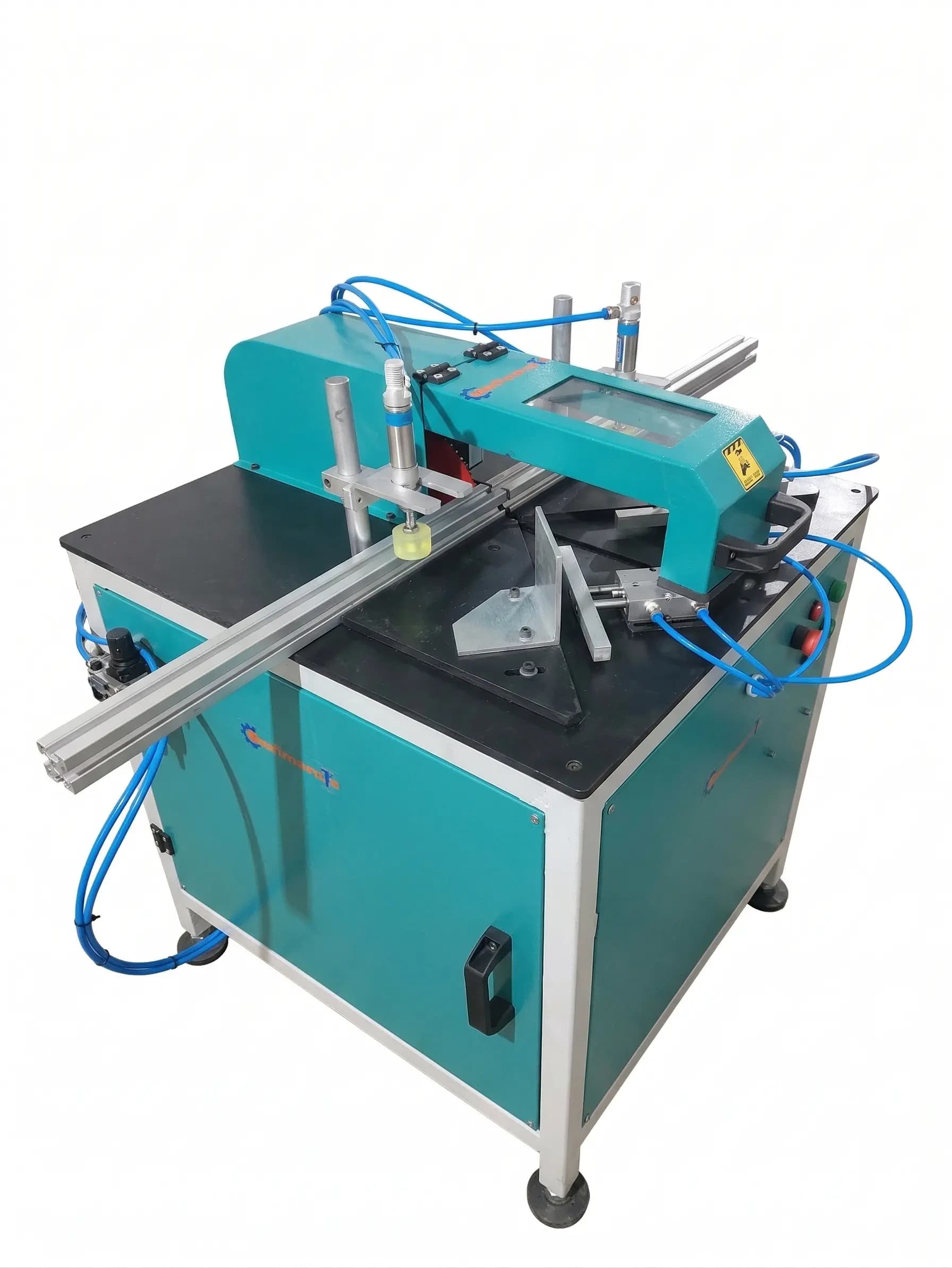
In the competitive Kanpur market, speed is your primary differentiator. A manual aluminium cutting machine 12 inch requires a technician to measure, mark, cut one side, flip the profile, and cut the second side. This process takes approximately 3.5 minutes per profile. In contrast, a 45 degree double head cutting machine performs both cuts simultaneously in under 45 seconds with a tolerance of ±0.2mm. This efficiency allows a startup to scale from 10 frames a day to 40+ frames without increasing headcount.
Technical Mastery: Precision Engineering in Aluminum and uPVC
Achieving high-quality finishes in uPVC machinery requires more than just a sharp blade. It requires structural rigidity. Most generic upvc window manufacturing machine options suffer from vibration-induced chatter, which leads to poor weld strength. At Mechnovate, we adhere to IS 1285 and BS EN 12020 standards to ensure that our aluminium profile cutting machine frames are stress-relieved and CNC-machined for perfect parallelism.
Key technical specifications to look for in a head cutting machine include:
- Motor Power: Dual 2.2kW motors are essential for heavy-duty aluminium profile cutting.
- Blade Diameter: A 450mm or 500mm tungsten carbide tipped (TCT) blade ensures clean cuts through multi-chambered uPVC and thick-walled aluminum.
- Air Pressure: Consistent 6-8 bar pressure is required for the pneumatic clamps to prevent profile slippage during the feed cycle.
- Feed Rate: Hydro-pneumatic cylinders provide the smooth, adjustable feed rate necessary to avoid burrs on the aluminium cutter machine.
Case Study: Performance Metrics from the Workshop Floor
In our Pune facility, we conducted a 6-week controlled test comparing a standard manual punching machine and single-head saw setup against an automatic aluminium window production line. The results were definitive for any uPVC window machinery manufacturer looking to scale.
- Before (Manual): The facility produced 12 windows per 8-hour shift. The rejection rate due to 1-2mm measurement errors was 7%. The aluminium cutting machine price was low, but labor costs were high.
- After (Automatic): By integrating a double head miter saw for aluminium profiles, production jumped to 52 windows per shift. The rejection rate dropped to 0.5% because the machine’s digital readout eliminated manual marking errors.
- Material Savings: We observed a direct reduction in scrap. Because the automatic double head cutting saw for aluminium profiles optimizes the cut sequence, we saved an average of 1.2 meters of profile per 10 windows.
Common Mistakes in Kanpur Fabrication Workshops
As a uPVC machinery manufacturer, I often see fabricators in Uttar Pradesh make these three critical errors when calculating the cost of setting up uPVC window manufacturing unit:
- Underestimating Air Quality: Many shops buy a high-end upvc welding machine but use a cheap, oily compressor. This oil contaminates the pneumatic valves and ruins the weld quality. Always use a refrigerated air dryer.
- Neglecting the Copy Router: A high-speed copy router machine is as vital as the saw. Using a handheld drill for lock holes results in uneven slots that lead to hardware failure after six months.
- Ignoring Blade Geometry: Using an aluminium cutter machine 12 inch with a blade designed for wood is dangerous and produces rough edges. Always specify blades with a negative rake angle for thin-walled aluminum profiles.
Financial Breakdown: The Cost of Setting up a uPVC Window Manufacturing Unit
When reviewing an upvc machine price list, you must look at the total plant cost. A standard setup for a Kanpur startup should include:
- An automatic double head cutting machine for primary processing.
- A uPVC welding machine (preferably a seamless model for high-end finishes).
- A copy router machine for hardware milling.
- An aluminium profile punching machine for drainage and screw holes.
The automatic upvc window plant cost India varies based on automation levels, but a mid-tier line from a reputable uPVC window machinery manufacturer in Lucknow or Ahmedabad will typically range from ₹8 Lakh to ₹15 Lakh. While this is higher than a manual setup, the labor savings alone (reducing from 6 workers to 2) pays for the difference in the first year.
FAQ: Expert Answers for Fabricators
Q: Can I use the same double head saw for both uPVC and Aluminum? Yes, but you must change the blade and the cutting speed. Aluminum requires a higher RPM and cooling lubricant, whereas uPVC requires a slower, dry cut to prevent melting the profile edges.
Q: What is the maintenance schedule for an automatic double head cutting machine? Daily: Clean the swarf and check the oil mist lubricator. Weekly: Grease the linear guide rails. Monthly: Check the belt tension and calibrate the digital scale for accuracy. Following Industrial profile cutting safety standards ISO standards is mandatory for long-term reliability.
Q: Is a CNC corner cleaner necessary for a small business in Kanpur? While a manual cleaning tool works for 5 windows a day, a CNC uPVC window corner cleaning machine is essential once you cross the 15-window threshold. It ensures every corner looks identical, which is the hallmark of a professional uPVC window manufacturing machine output.
Get more articles like this
Follow Mechnovate on Google to see our guides in Google Discover & News