Hyderabad High-Rise Precision: Automatic Double Head Cutting Saws
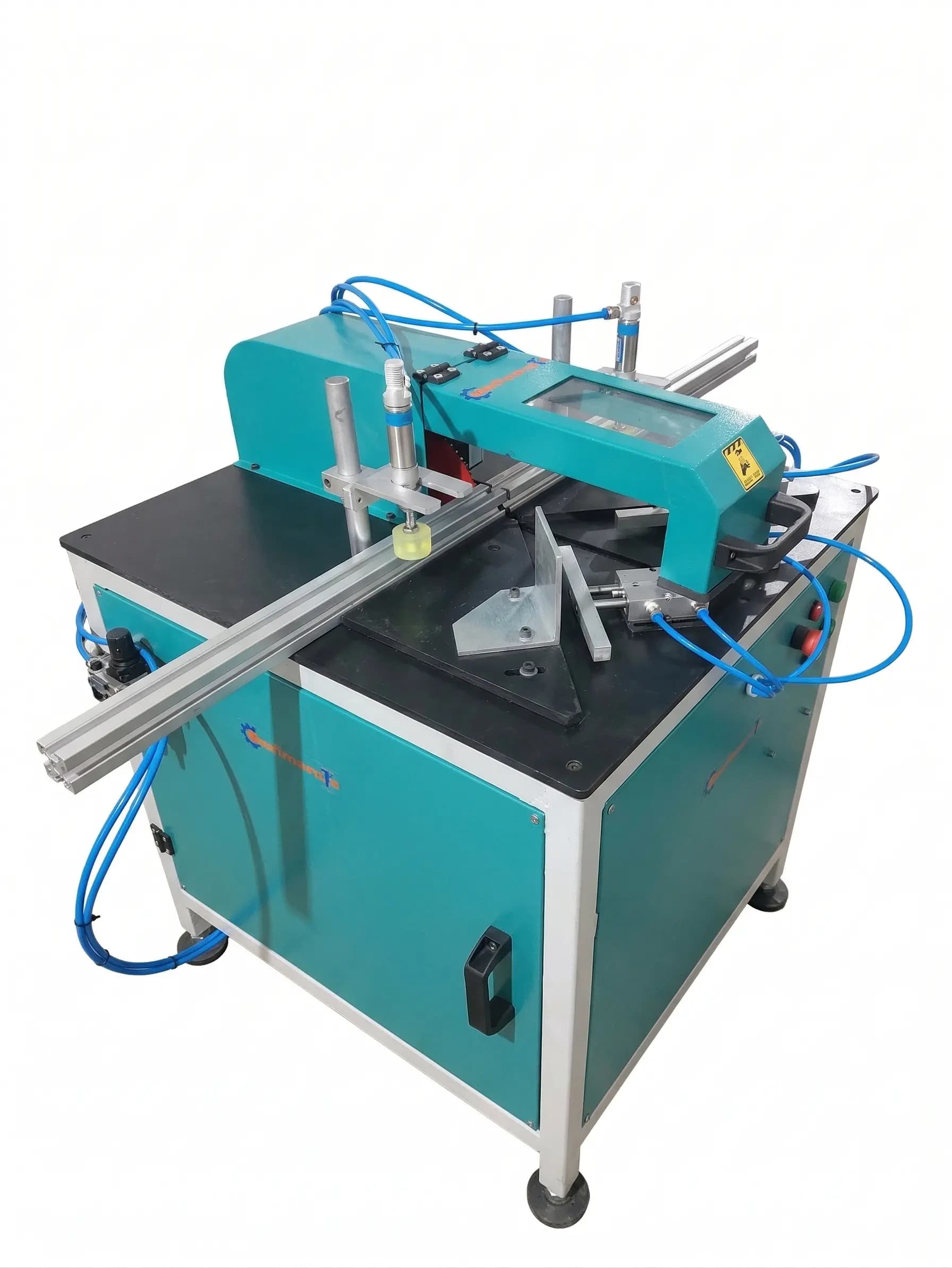
To meet the rigorous structural demands of Hyderabad’s high-rise residential projects in areas like Neopolis and the Financial District, fabricators are shifting away from manual 12-inch saws toward the Automatic Double Head Cutting Machine. High-rise windows must withstand extreme wind pressures at elevations of 100+ meters, meaning a 1mm error in a miter joint isn't just an aesthetic flaw; it is a structural liability. In my 15 years on the shop floor, I have seen that manual cutting simply cannot maintain the +/- 0.2mm tolerance required for the high-performance aluminium and uPVC profiles used in modern facades.
The Engineering Reality: Why Hyderabad’s High-Rises Demand More
In Hyderabad’s current construction boom, the standard 'jugaad' approach to fabrication is failing during quality audits. High-rise specifications often reference BS EN 12020 for profile tolerances and IS 1285 for chemical composition, but the fabrication quality depends entirely on the cutting angle. If your upvc windows making machine cannot deliver a perfect 45-degree miter every single time, the welding process will result in uneven bead lines and weakened corners.
Upgrading to an automatic double head cutting saw for aluminium profiles solves three critical engineering hurdles:
- Compound Angle Accuracy: High-rise glazing often involves complex geometries where 45 and 90-degree cuts must be perfect to ensure the air-tightness of the thermal break.
- Productivity Scaling: A single operator on an automatic machine can process 150-200 frames per shift, compared to 40-50 on a single-head manual setup.
- Material Optimization: Precision digital positioning reduces 'end-bit' waste from the typical 8-10% seen in manual shops to less than 2.5%.
Case Study: From 12% Waste to 3% at a Gachibowli Facility
Last year, we consulted for a medium-sized firm in Gachibowli that had just secured a contract for a 40-story luxury tower. They were using a standard aluminium cutter machine 12 inch and a manual punching machine. Their rejection rate during the mock-up phase was 14% due to water leakage at the joinery.
We implemented a transition plan over 4 weeks, replacing their setup with a heavy duty aluminium profile end milling machine and a Double Head Miter Saw. The results were measurable and immediate:
- Cycle Time: Reduced from 180 seconds per frame to 55 seconds.
- Reject Rate: Dropped from 14% to 0.8%.
- Blade Longevity: By utilizing automatic mist lubrication (with a 5% oil-to-water ratio), blade life increased by 40% compared to dry manual cutting.
Technical Specifications That Actually Matter
When reviewing an automatic double head cutting machine price India, do not just look at the lowest quote. Look at the industrial specs that define longevity. For high-rise aluminium work, your machine must feature:
- Blade Diameter: Minimum 450mm or 500mm TCT (Tungsten Carbide Tipped) blades to handle wide-track sliding profiles.
- Motor Power: At least 2.2kW per head to maintain constant RPM under heavy load, preventing 'burrs' on the profile edge.
- Pneumatic System: Italian or Japanese-grade valves (SMC or Airtac) operating at 6-8 bar pressure for consistent clamping.
- Linear Guides: Hardened chrome rails to ensure the moving head travels without vibration over the 4000mm bed.
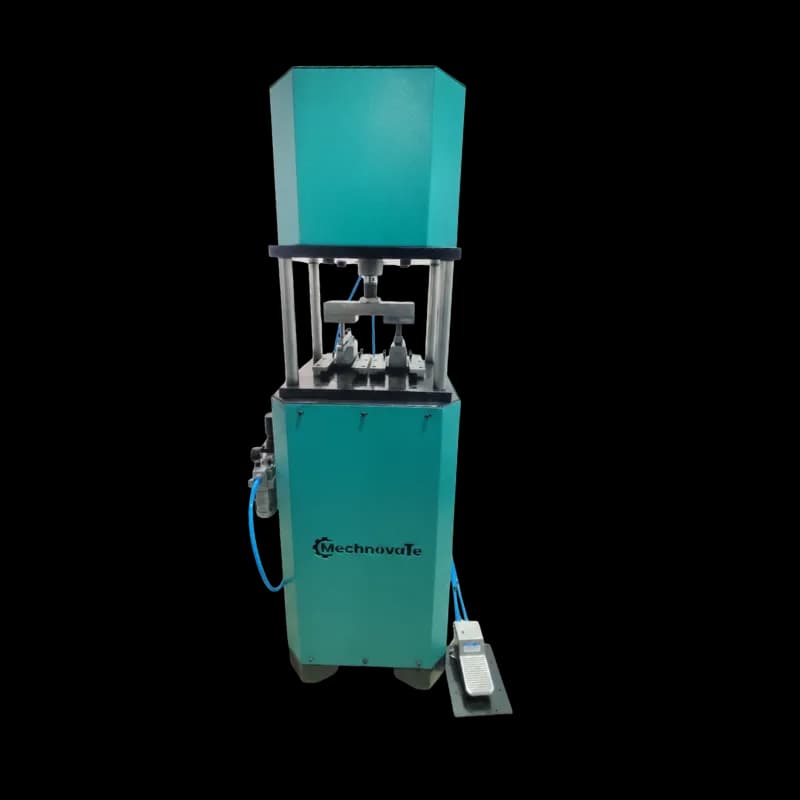
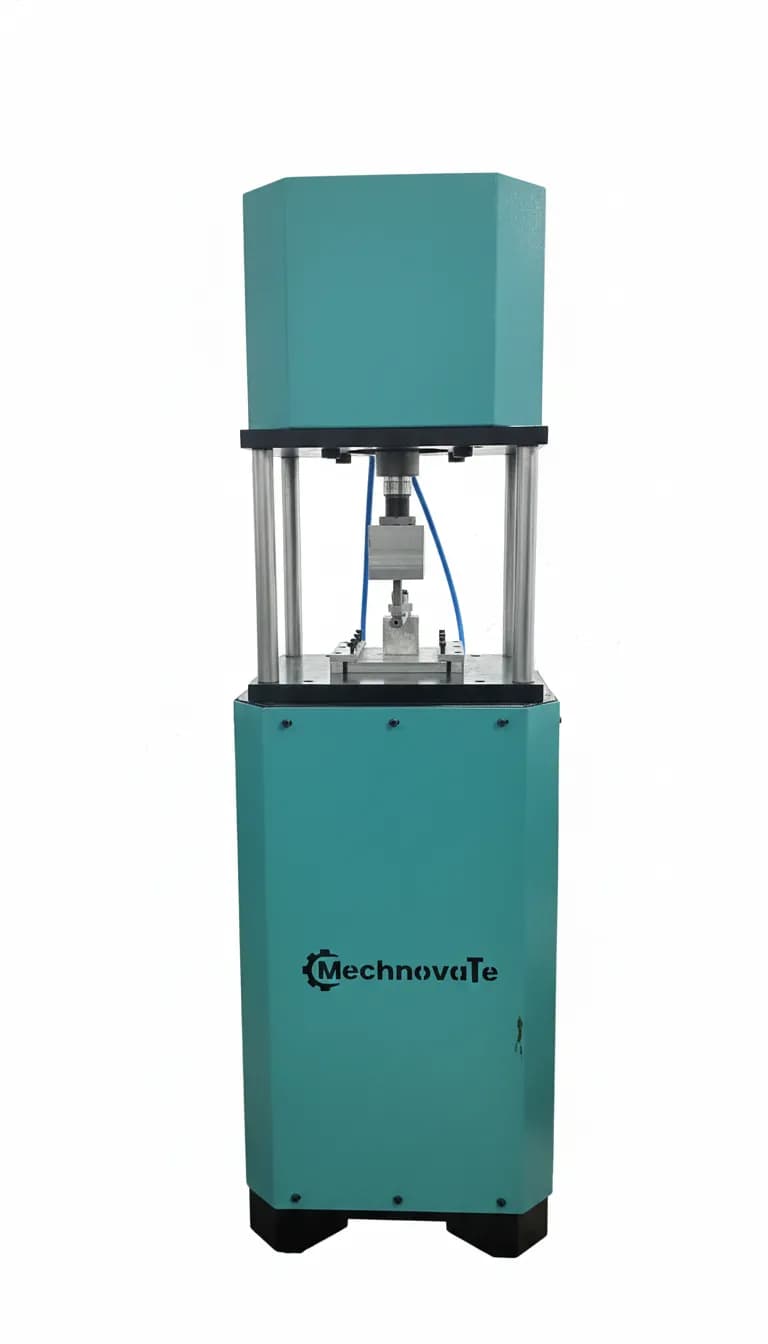
If you are also working with uPVC, a double head seamless welding machine for uPVC windows should be paired with the saw to ensure the precision cut isn't ruined by a sloppy weld. For intricate hardware slots, we recommend integrating a Heavy Duty Copy Router Machine to handle the increased wall thickness of high-rise profiles.
Common Mistakes to Avoid When Upgrading
As a senior engineer, I often see fabricators make the same three mistakes when investing in upvc window manufacturing machinery:
- Ignoring the Bed Level: Fabricators often place a high-precision aluminium cutting machine on an uneven workshop floor. Even a 2mm tilt across a 4-meter bed will distort the miter cut.
- Skipping the Air Dryer: Most upvc windows machine failures are caused by moisture in the pneumatic lines. Always install a refrigerated air dryer before your machine manifold.
- Underestimating Training: An automatic upvc window plant cost India includes the hardware, but the 'software' is your team. A machine is only as accurate as the operator's calibration routine.
FAQ: What Hyderabad Fabricators are Asking
Q1: What is the typical ROI for an automatic double head cutting saw? In a facility producing 50+ windows a day, the ROI usually hits between 12 to 14 months, primarily driven by the 6% reduction in raw material waste and lower labor costs.
Q2: Can I use the same machine for both Aluminium and uPVC? Yes, provided the blade RPM is adjustable or optimized. However, for high-volume shops, we recommend dedicated lines to avoid cross-contamination of chips, which can mar the finish of high-end powder-coated aluminium.
Q3: What is the cost of setting up a uPVC window manufacturing unit in India for high-rise projects? A professional-grade setup including a double-head saw, two-head welder, and a Corner Crimping Machine typically starts around ₹12L to ₹25L depending on the level of automation (CNC vs. Pneumatic).
Get more articles like this
Follow Mechnovate on Google to see our guides in Google Discover & News