High-Speed uPVC Window Manufacturing Guide for Ahmedabad
Production bottlenecks in Ahmedabad uPVC workshops typically stem from three specific areas: inaccurate manual cutting, slow welding cycles, and manual corner cleaning. To hit a target of 60-80 windows per shift, fabricators must transition from standalone manual machines to an integrated production line centered on high-speed automation. At Mechnovate, we have spent 15 years engineering solutions that address the specific humidity and dust challenges of the Gujarat industrial belt, ensuring that your machinery maintains tolerances of +/- 0.2mm even under high-load shifts.
Scaling Throughput with the Right uPVC Cutting Machine
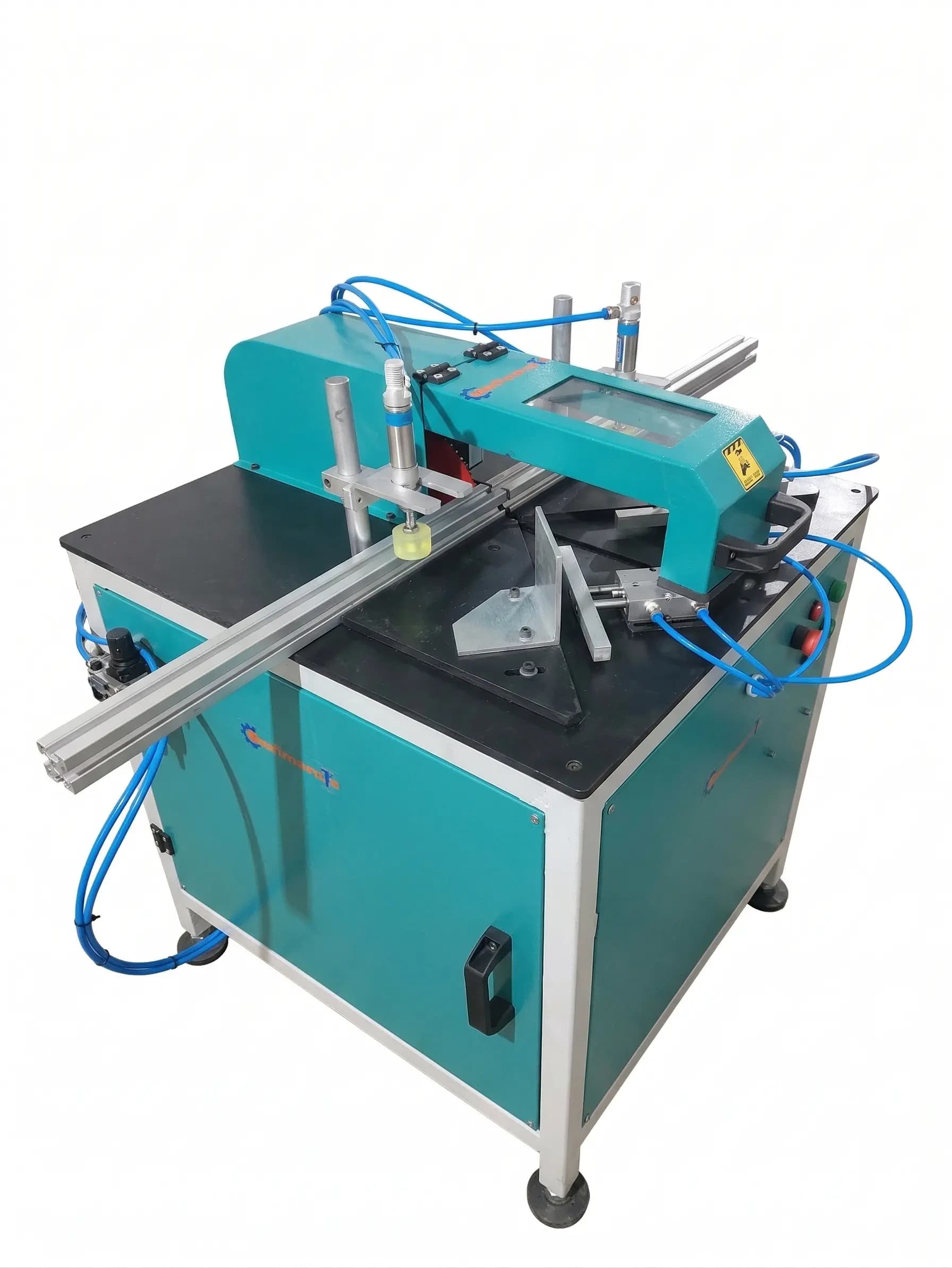
The foundation of any high-speed line is the cutting station. Many workshops in GIDC Odhav and Vatva still rely on a single-head manual saw, which creates a massive logjam. For a scalable operation, an Automatic Double Head Cutting Machine is non-negotiable. This machine allows for simultaneous 45-degree and 90-degree cuts on both ends of the profile, effectively doubling output while ensuring absolute parallelism.
When selecting an upvc windows making machine, pay attention to the blade diameter and motor RPM. For high-speed lines, we recommend a 450mm or 500mm tungsten carbide tipped (TCT) blade running at a minimum of 2800 RPM. This prevents the 'melting' effect on the uPVC profile walls (usually 2.2mm to 2.5mm thick) that occurs with slower, duller blades. In our testing at a facility in Sanand, switching to a servo-controlled linear guide system reduced cutting waste from 8% to less than 2.5%, saving the workshop nearly ₹45,000 per month in raw material costs.
Case Study: Optimizing an Ahmedabad Workshop
Last year, we consulted for a medium-scale fabricator in Ahmedabad who was struggling to meet a 500-unit contract for a residential project in Shela. Their existing setup relied on a manual punching machine and a single-head welder. They were averaging 15 frames a day with a 12% reject rate due to poor corner alignment.
Our transformation plan involved:
- Replacing the manual saw with a 45 degree double head cutting machine.
- Implementing a Double Head Seamless Welding Machine to eliminate the need for manual corner cleaning on the exterior face.
- Adding a high speed copy router for aluminium windows and uPVC profiles to handle lock-hole milling in under 40 seconds.
The Result: Within six weeks, the facility increased its output to 48 frames per day. The upvc welding machine cycle time was reduced from 120 seconds to 85 seconds per joint. Most importantly, the seamless welding technology meant the 'after-weld' cleaning was reduced by 70%, allowing the workshop to reassign two laborers to the glazing and assembly station.
Essential Engineering Specs for Gujarat Fabricators
To maintain Industrial profile cutting safety standards ISO standards, your machinery must be grounded for Ahmedabad’s electrical fluctuations. We recommend a 3-phase 415V setup with a dedicated stabilizer for CNC components. Here are the technical benchmarks we use for a high-performance upvc window manufacturing machine:
- Air Pressure Requirements: A consistent 6-8 bar pressure is required. We suggest a 500L compressor with an integrated refrigerated air dryer to prevent moisture from damaging the pneumatic valves of your head cutter machine.
- Feed Rates: For the aluminium profile cutting machine, the feed rate should be adjustable between 0-3 meters per minute to accommodate different wall thicknesses without causing profile deformation.
- Welding Temperature: Standard uPVC profiles require a heater plate temperature of 240°C to 260°C. Our uPVC Window Welding Machine uses Omron temperature controllers to maintain a tolerance of +/- 2°C, which is critical for structural integrity.
Integrating Aluminium and uPVC Production
Many aluminum window machine manufacturers in Ahmedabad are seeing a shift where clients want both aluminium and uPVC from the same supplier. If you are diversifying, your aluminium cutting machine should ideally be a double head miter saw for aluminium profiles. This allows you to handle both architectural aluminium and uPVC on the same floor space.
A heavy duty aluminium profile end milling machine is essential for mullion joints, while an automatic aluminium corner crimping machine price Gujarat fabricators find most cost-effective is one with a hydraulic system capable of 20kN of force. Using a copy router machine that handles both materials saves significant floor space in cramped Ahmedabad workshops.
Common Mistakes in High-Speed Manufacturing
In our 15 years of experience, we have seen fabricators make the same three mistakes when trying to scale:
- Neglecting Blade Sharpening: A dull blade on an aluminium cutter machine 12 inch causes burrs that ruin the weld quality. Blades should be sharpened every 1,500 cuts.
- Incorrect Air Filtration: Gujarat's dust is abrasive. Without proper filtration, the solenoid valves in your upvc window manufacturing machines will stick, leading to inconsistent clamping pressure.
- Over-reliance on Manual Cleaning: Manual cleaning of welds is the #1 bottleneck. Investing in a CNC uPVC window corner cleaning machine price India pays for itself in labor savings within 14 months for any shop doing more than 20 windows a day.
FAQ: Fabricator Questions
1. What is the total cost of setting up uPVC window manufacturing unit in India? For a basic manual setup, budgets start at ₹5-8 Lakhs. However, a high-speed automated line for an Ahmedabad workshop typically ranges from ₹18 Lakhs to ₹35 Lakhs, depending on the level of CNC integration and whether you include a double head seamless welding machine.
2. How do I maintain my upvc welding machine? Daily cleaning of the heater plate with a non-abrasive cloth is mandatory. Check the Teflon cloth for burns every 4 hours. Ensure the pneumatic oil lubricator is topped up to prevent the cylinders from seizing.
3. Can I use the same machine for aluminium and uPVC? While the cutting machine automatic systems can often handle both with the correct blade, the welding and corner cleaning processes are exclusive to uPVC. Aluminium requires a corner crimping machine rather than a welder.
Get more articles like this
Follow Mechnovate on Google to see our guides in Google Discover & News