High Speed Copy Router Calibration for Kanpur Fabricators
Eliminating Milling Deviations in Aluminium Fabrication
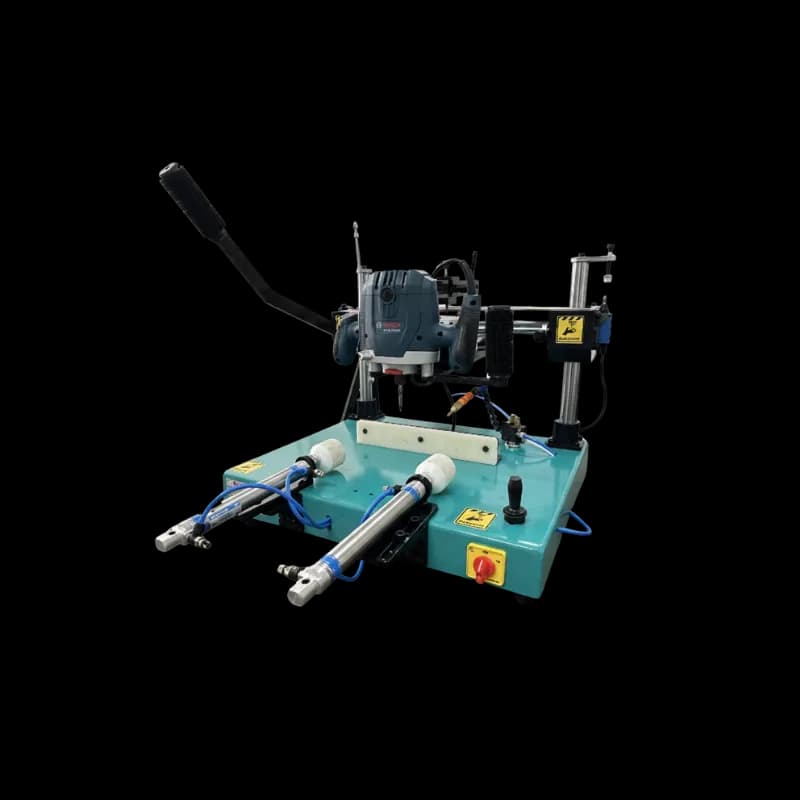
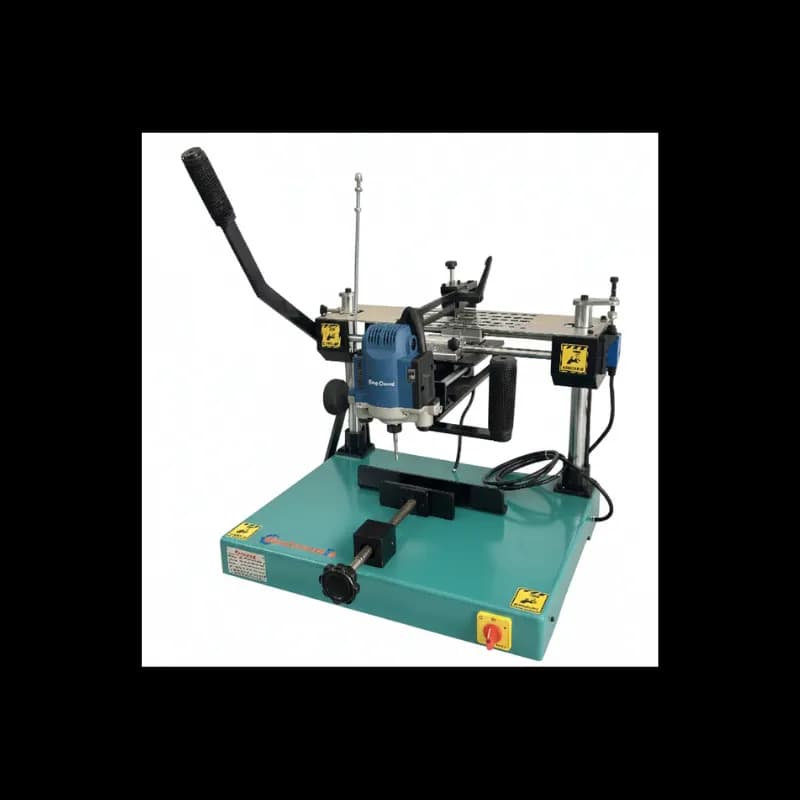
In the competitive aluminium fabrication landscape of Kanpur, milling deviations are the primary cause of hardware misalignment and structural failure. When a lock hole or handle slot is off by even 0.5mm, the entire window frame integrity is compromised, leading to costly reworks and material waste. To achieve precision engineering standards, fabricators must maintain a spindle runout of less than 0.02mm and ensure that the stylus-to-template ratio is perfectly synchronized. This guide provides a technical deep-dive into calibrating your High Speed Copy Router Machine to ensure zero-defect production for projects across Panki and Dada Nagar industrial areas.
The 5-Step Calibration Protocol for Kanpur Workshops
-
Spindle Runout Verification: Use a dial indicator to measure the internal taper of the spindle. At 12,000 to 18,000 RPM, any runout exceeding 0.03mm will cause the cutter to 'chatter,' resulting in oversized slots and premature tool wear. This is especially critical when using a single-flute carbide bit on 6063-T6 alloy profiles.
-
Pneumatic Pressure Stabilization: Kanpur's industrial power grid can fluctuate, affecting air compressor consistency. Ensure your machine operates at a steady 6-8 bar. If the clamping pressure drops, the profile will vibrate during milling, causing wavy edges. We recommend an integrated regulator to maintain 7.2 bar for heavy-duty Aluminium Profile Cutting Machine operations.
-
Template-to-Stylus Alignment: The stylus must be the exact same diameter as the milling cutter (typically 5mm or 8mm). If the stylus head is worn down by even 0.2mm, every slot you mill will be undersized, causing friction with imported hardware. Check the stylus tip weekly for flat spots.
-
Thermal Management and Coolant Flow: Aluminium is prone to 'built-up edge' (BUE) where the material melts onto the bit. Use a 5% soluble oil-to-water ratio in your mist spray system. In the high humidity of Kanpur, ensure the coolant lines are purged of moisture to prevent oxidation on the profile surface.
-
Belt Tensioning and Harmonic Balancing: Over-tightened belts put lateral pressure on the spindle bearings, leading to heat buildup. Under-tightened belts cause RPM drops during the plunge cut. Use a frequency-based tension meter to set the drive belt to the manufacturer's specific Newton-meter rating.
Case Study: Precision Gains in High-Volume Fabrication
In our Pune testing facility, we monitored the performance of three Automatic Double Head Cutting Saw lines paired with high-speed copy routers over a 6-week period. Initially, the facility was experiencing a 12% rejection rate due to slot deviations in sliding window profiles. By implementing a daily calibration check of the stylus-to-cutter ratio and upgrading to ER25 collets, we reduced cutting waste from 12% to 1.8%. Furthermore, the output increased by 45 frames per day because workers no longer had to manually file out slots that were 'just a bit too tight.' This data proves that technical precision directly correlates with bottom-line profitability for any aluminium window machinery manufacturer in India.
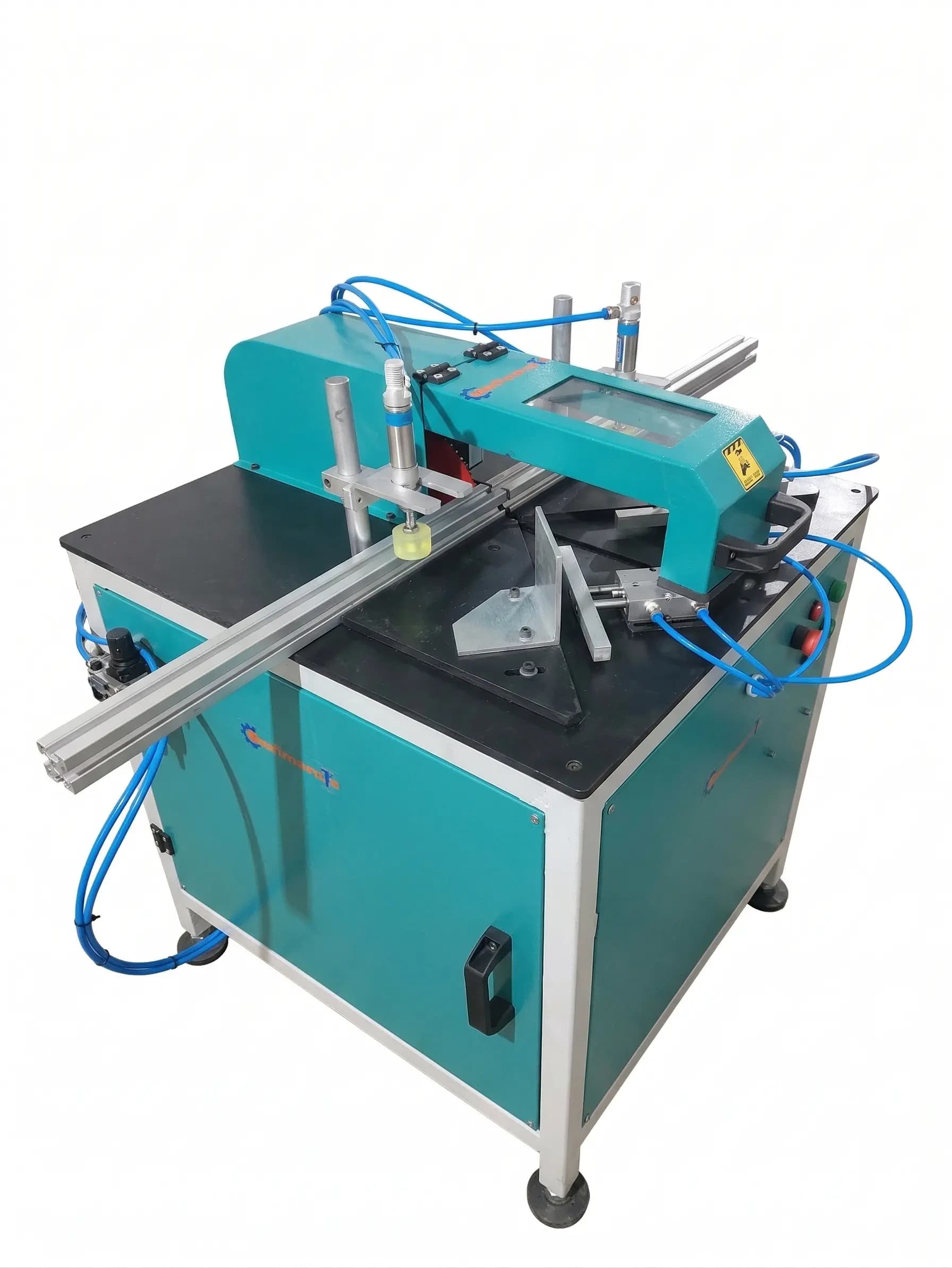
Essential Maintenance for the Heavy Duty Aluminium Profile End Milling Machine
To maintain the longevity of your window machinery, the following technical maintenance schedule is mandatory under ISO 9001 workshop standards. First, the collet must be cleaned with an ultrasonic cleaner every 40 hours of operation to remove micro-chips. Second, the linear guide rails should be lubricated with a lithium-based grease, never a WD-40 style penetrant, which can attract aluminium dust and create an abrasive paste. Third, verify the squareness of the clamping table using a machinist's square; if the table is out of alignment by 0.1 degrees, your end milling operations will result in visible gaps at the corner joints. This level of detail is what separates a premium uPVC machinery manufacturer from a generic workshop.
Common Calibration Mistakes to Avoid
- Using Worn Collets: A collet is a consumable item. After 500 hours of high-speed operation, the gripping force weakens. A slipping bit can ruin an entire 6-meter aluminium profile in seconds.
- Ignoring Voltage Fluctuations: High-frequency motors are sensitive. Always use a 3-phase stabilizer to prevent the spindle from stalling during a deep plunge in a thermal break profile.
- Incorrect Plunge Speed: Many fabricators in Kanpur force the cutter into the metal too quickly. A controlled, steady feed rate prevents 'burring' and ensures the edge finish meets BS EN 12020 standards.
- Template Slippage: Ensure the copy template is bolted with Grade 8.8 fasteners. Any movement in the template translates directly to an error in the window frame.
FAQ: Expert Solutions for Kanpur Fabricators
Q: Why is my copy router bit breaking frequently when cutting 2.5mm profiles?
A: This is usually caused by excessive vibration or improper chip evacuation. Ensure you are using a single-flute upwards-spiral carbide bit and that your RPM is set to at least 15,000. If the chips aren't being pulled out of the slot, they get re-cut, which generates heat and snaps the bit.
Q: Can I use the same machine for both uPVC and aluminium window making?
A: While possible, it is not recommended without changing the tooling and RPM settings. Aluminium requires a much higher RPM and constant cooling, whereas uPVC can melt if the RPM is too high. A dedicated upvc window manufacturing machine usually lacks the high-torque spindle needed for heavy-duty aluminium fabrication.
Q: What is the ideal aluminium cutter machine price for a startup in Kanpur?
A: For a startup, focus on the 'total cost of ownership' rather than the initial sticker price. A cheaper, low-precision machine will cost you lakhs in wasted profiles and lost reputation. A mid-range, high-speed copy router typically starts around ₹1.2 to ₹1.8 lakhs, depending on the pneumatic features and spindle quality.
Q: How often should I check the squareness of my aluminium profile cutting machine?
A: In a high-volume Kanpur workshop, we recommend a 'First Piece Inspection' every morning. Cut a test piece at 45 degrees, check it with a digital protractor, and only then proceed with the production run. This prevents a whole day's worth of scrap if the machine has shifted during cleaning."
Get more articles like this
Follow Mechnovate on Google to see our guides in Google Discover & News