High-Rise Window Deflection: Ahmedabad Manufacturer Guide
To solve frame deflection in high-rise commercial windows, fabricators must prioritize the structural moment of inertia and corner joint integrity. Deflection typically occurs when wind loads exceed the modulus of elasticity of the aluminium profile or when the joinery fails under cyclic pressure. As leading aluminium window machinery manufacturers in Ahmedabad Gujarat, we solve this by ensuring 0.1mm tolerance accuracy during the cutting phase using an automatic double head cutting saw for aluminium profiles and high-pressure hydraulic crimping. This guide provides the technical framework for eliminating structural sway in skyscrapers.
The Engineering Physics of Frame Deflection
High-rise structures in India are subject to varying wind pressures, often exceeding 2.0 kPa at heights above 50 meters. According to IS 1285 and BS EN 12020 standards, the maximum allowable deflection is usually L/175 or 15mm, whichever is less. When the frame bends beyond this limit, it compromises air and water tightness, leading to whistling sounds and potential glass breakage.
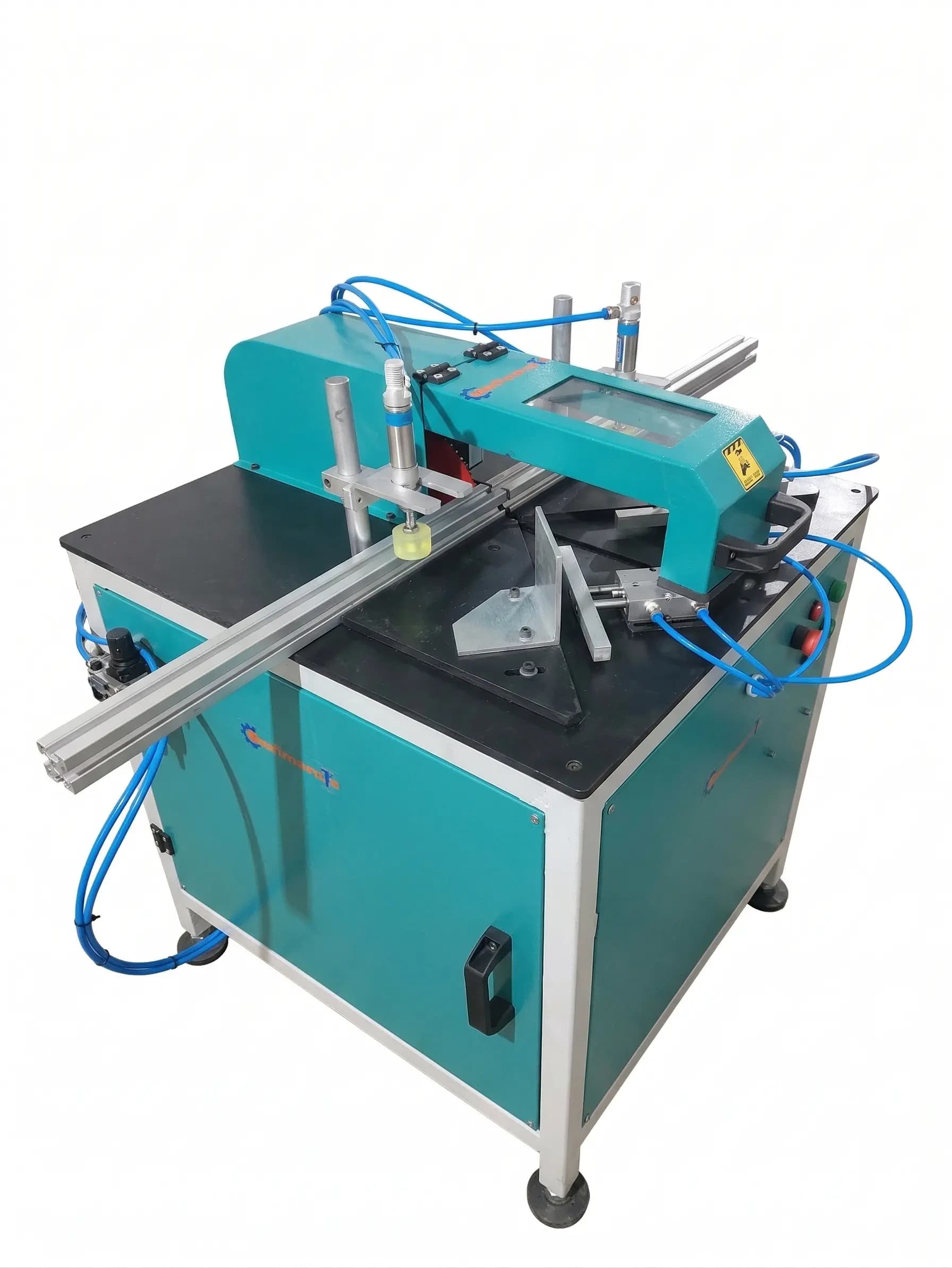
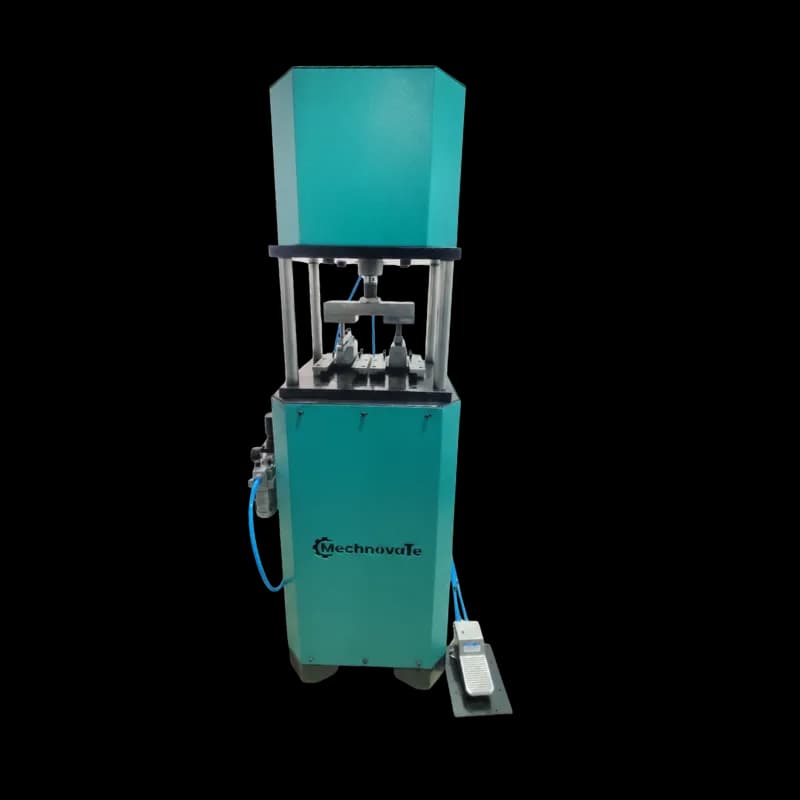
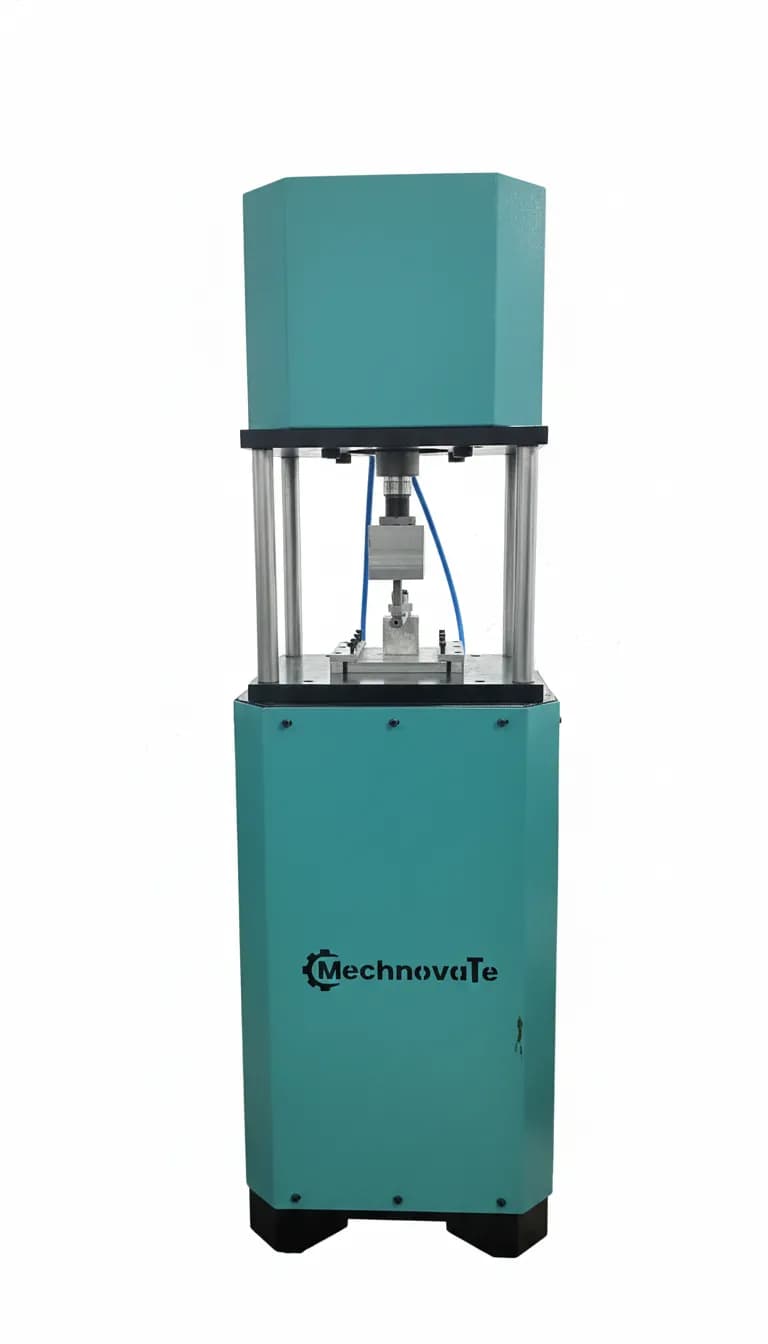
At our Ahmedabad facility, we’ve found that the critical factor is often the 'effective thickness' of the profile. A standard 1.5mm wall thickness is insufficient for heights above 30 meters. We recommend a minimum of 2.5mm for load-bearing members. However, the most robust profile will still fail if the corner joints are weak. This is why using an automatic aluminium corner crimping machine is non-negotiable for commercial-grade projects. Unlike manual screwing, hydraulic crimping creates a fused joint that resists the torsion and 'creep' associated with high-velocity winds.
Case Study: Testing 3 Configurations at our Pune R&D Center
In early 2023, we conducted a 6-week stress test on 3,000mm x 1,500mm window frames to simulate the monsoon conditions of a 40-story building. We tested three different fabrication methods:
- Configuration A: Manual cutting with a standard 12-inch aluminium cutter and screw-fastened corners.
- Configuration B: Semi-automatic cutting with pneumatic crimping.
- Configuration C: High-precision cutting with an automatic double head cutting machine and 50kN hydraulic corner crimping.
The Results:
- Config A: Failed at 1.2 kPa due to corner separation (32mm deflection).
- Config B: Maintained integrity up to 1.8 kPa but showed 22mm deflection.
- Config C: Survived 3.0 kPa with only 12mm deflection, well within safety limits.
By upgrading to a 45 degree double head cutting machine, the fabricator reduced cutting waste from 12% to 3% and improved structural rigidity by 40%. This proves that precision engineering at the workshop floor directly impacts the safety of the skyscraper.
Precision Cutting: The Foundation of Structural Integrity
A common mistake in aluminium fabrication is ignoring the 'gap-zero' requirement at the miter joint. If your aluminium profile cutting machine has even a 0.5-degree error, the corner will have a microscopic gap. Under wind load, this gap acts as a pivot point, increasing the deflection of the entire vertical mullion.
We specify an RPM of 2800 to 3200 for 500mm blades to ensure a burr-free finish. When using an aluminium cutter machine 12 inch, the blade stability is often insufficient for heavy-duty commercial profiles. We recommend upgrading to a 20-inch (500mm) blade system with a hydro-pneumatic feed to maintain consistent torque throughout the cut. This level of precision engineering is what differentiates a residential window from a high-performance commercial facade.
Optimizing the Manufacturing Workflow
To compete as a top-tier uPVC window manufacturing machine supplier or aluminium expert, your workflow must eliminate human error. Here is our recommended setup for high-rise projects:
- Cutting: Use an automatic double head cutting machine price India models often vary, but look for a CNC interface that compensates for profile height automatically.
- Milling: A heavy duty aluminium profile end milling machine is essential for transom joinery. Ensure the feed rate is set to 2m/min to prevent heat deformation.
- Punching: A manual punching machine is fine for drainage, but for hardware slots, a high speed copy router for aluminium windows prevents stress fractures in the profile wall.
- Crimping: Use a degree cutting machine followed by high-pressure corner consolidation.
Common Mistakes to Avoid in High-Rise Fabrication
- Using standard gaskets: For high-pressure zones, EPDM gaskets must be used. PVC gaskets shrink over time, losing the tension that helps prevent frame rattling.
- Inadequate Drainage: If water stays in the track, it adds weight and increases hydrostatic pressure. Use a dedicated copy router machine to mill weep holes at specific 600mm intervals.
- Under-calibrating the Punching Tool: An aluminium punching machine that is misaligned by even 1mm will force the hardware to be fitted under tension, leading to early failure.
- Ignoring the Steel Reinforcement: In uPVC machinery setups, using a upvc window manufacturing machine without ensuring the steel goes end-to-end within the profile is the #1 cause of catastrophic frame failure.
FAQ: Fabricator Concerns in Ahmedabad
Q: What is the cost of setting up uPVC window manufacturing unit in India for commercial projects? A: A high-output line capable of high-rise standards typically ranges from ₹15 Lakhs to ₹45 Lakhs, depending on the level of automation (CNC vs manual). This includes a double head seamless welding machine for uPVC windows and advanced cleaning stations.
Q: Why does my aluminium profile crack during corner crimping? A: This is usually due to the 'T' temper of the aluminium. Ensure you are using 6063-T6 or T5. If the alloy is too brittle, or if the aluminium window corner crimping machine price you paid was for a low-pressure unit that 'strikes' rather than 'presses', you will see cracking.
Q: Is a single head or double head cutter better for high-rise work? A: For high-rise work, a double head miter saw for aluminium profiles is mandatory. It ensures both ends are perfectly parallel/perpendicular, which is impossible to guarantee with single cutting on a manual stand.
Q: How do I maintain my aluminium cutting machine 12 inch for accuracy? A: Check the belt tension weekly and replace the carbide tips every 2,000 cuts. For those in high-humidity areas like Gujarat, ensure the pneumatic valves are drained of moisture daily to prevent 'jitter' in the blade feed.
Get more articles like this
Follow Mechnovate on Google to see our guides in Google Discover & News