sales@mechnovate.co.in
+91-9265699061
Back to Blog
7/9/2026

Future-Proofing Your Kolkata Workshop: Aluminium Automation Guide

Future-Proofing Your Kolkata Workshop: Aluminium Automation Guide

Kolkata’s aluminium fabrication market is no longer satisfied with the ‘jugaad’ of 12-inch manual chop saws; local fabricators are now consulting Aluminium window fabrication machine suppliers West Bengal to transition from manual labor to high-precision automation. The shift is driven by the need for airtight joinery and structural integrity that manual processes simply cannot achieve at scale. If your miter joints show a light-gap of more than 0.3mm or your corner crimping lacks structural rigidity, you are losing money on rework and material waste.

The Kolkata Case Study: Increasing Output by 45% in 8 Weeks

Last year, we assisted a medium-scale workshop in Howrah that was struggling with a 14% scrap rate using standard 12-inch manual aluminium cutters. The primary issue was manual measurement errors and blade vibration at high RPMs, which caused 'burring' on the edges of 2.5mm thick architectural profiles. We replaced their setup with a semi-automatic line centered around a Double head miter saw for aluminium profiles.

Within 60 days, the results were measurable:

  1. Scrap Reduction: Aluminium profile waste dropped from 14% to 2.8% due to precision digital length stops.
  2. Throughput Increase: Output rose from 18 windows per day to 34 windows per day with the same headcount.
  3. Precision: Deviation in 45-degree cuts was reduced to ±0.15mm, ensuring seamless anodized finishes.

Engineering Standards: Precision Beyond the Blade

When selecting an aluminium profile cutting machine, looking at the motor wattage is only the first step. For industrial-grade production in West Bengal’s humid climate, we recommend motors with at least 2.2kW power and a spindle speed of 2800–3200 RPM to handle the tensile strength of IS 1285-grade aluminium. Higher spindle speeds minimize the 'heat-affected zone' (HAZ), which prevents the warping of thin-walled window sections during high-speed feeding.

Critical Technical Specifications for Kolkata Fabricators:

  • Blade Diameter: Minimum 400mm–450mm with TCT (Tungsten Carbide Tipped) teeth for burr-free edges.
  • Working Air Pressure: 6 to 8 bar constant pressure is required for pneumatic clamping and head movement.
  • Feeding Speed: Hydro-pneumatic cylinder-driven feed allows for infinitely variable speeds, essential for different profile thicknesses.
  • Cooling System: Micro-mist lubrication systems are non-negotiable for extending blade life when cutting Grade 6063 alloys.

Why uPVC Window Manufacturing Machinery is Merging with Aluminium Lines

Many Kolkata workshops are now diversifying into uPVC, leading to a surge in demand for upvc window making machine price in Kolkata inquiries. Modern upvc windows machines and aluminium lines often share the same floor space, requiring a strategic layout. While a upvc welding machine is specific to vinyl, the copy router machine and end-milling units are often cross-compatible if they feature variable speed controllers.

  1. Slotting & Routing: A high-speed copy router machine with a 12,000 RPM spindle is vital for hardware slots in both aluminium and uPVC profiles.
  2. Corner Joining: While uPVC uses heat welding, aluminium requires a corner crimping machine that applies up to 15 tons of hydraulic pressure to fuse profiles together.
  3. Punching Precision: A manual punching machine is fine for start-ups, but scaling requires a multi-station aluminium punching machine to handle handle-holes and weep-holes in a single stroke.

Avoiding Common Mistakes in Workshop Automation

Through 15 years of workshop audits, I have seen three recurring mistakes that drain profitability for Kolkata fabricators. First, many owners under-invest in the air compressor; if your aluminium cutter machine doesn't receive 7 bar of steady pressure, the pneumatic clamps may slip, causing 'kickback' and ruined profiles. Second, ignoring blade sharpening schedules—a dull TCT blade creates micro-fractures in the aluminium that lead to corner failures under wind load.

Thirdly, neglecting the upvc window manufacturing machine maintenance guide is a recipe for disaster. In West Bengal's coastal humidity, linear guide rails must be lubricated weekly with high-viscosity oil to prevent oxidation. If you are buying a double head miter saw for aluminium profiles price that seems too low, check the guide rail material; carbon steel will rust, while chrome-plated hardened steel will last a decade.

Comparison: Manual vs. Automated Fabrication

FeatureManual 12-inch CutterAutomatic Double Head Saw
Accuracy±1.5mm (Human error)±0.1mm (Digital precision)
Cutting AngleVariable 45/90Fixed pneumatic locking
SafetyHigh risk (Exposed blade)Low risk (Fully enclosed)
Labor CostHigh (Requires skilled labor)Low (Operator-level skill)
Waste10-15% per profile<3% with optimized nesting

FAQ: Essential Questions for New Fabricators

1. Can I use the same machine for both Aluminium and uPVC profiles? You can use the same aluminium profile cutting machine and copy router machine for both materials, provided you change the blade/bit and adjust the RPM. However, uPVC requires specialized upvc welding machine technology which is not used for aluminium.

2. What is the minimum power requirement for a small Kolkata workshop? A basic setup with a single cutting machine, a punch, and a compressor requires at least a 5kW-7kW load. For automated lines with a double head miter saw, we recommend a 3-phase 15kW connection to handle simultaneous motor starts.

3. Is a corner crimping machine necessary for all aluminium windows? If you are manufacturing high-end thermal break windows or heavy-duty sliding doors, a hydraulic corner crimping machine is mandatory for structural strength. For basic slim-section windows, mechanical cleats might suffice, but they will never match the ISO 9001 quality of a crimped corner.

4. What is the average ROI for an automated aluminium cutting line? Based on Kolkata labor rates and current aluminium scrap value, most fabricators see a full return on investment (ROI) within 14 to 18 months through labor savings and material optimization alone.

Future-Proofing Your Kolkata Workshop: Aluminium Automation Guide

Kolkata’s aluminium fabrication market is no longer satisfied with the ‘jugaad’ of 12-inch manual chop saws; local fabricators are now consulting Aluminium window fabrication machine suppliers West Bengal to transition from manual labor to high-precision automation. The shift is driven by the need for airtight joinery and structural integrity that manual processes simply cannot achieve at scale. If your miter joints show a light-gap of more than 0.3mm or your corner crimping lacks structural rigidity, you are losing money on rework and material waste.

The Kolkata Case Study: Increasing Output by 45% in 8 Weeks Last year, we assisted a medium-scale workshop in Howrah that was struggling with a 14% scrap rate using standard 12-inch manual aluminium cutters. The primary issue was manual measurement errors and blade vibration at high RPMs, which caused 'burring' on the edges of 2.5mm thick architectural profiles. We replaced their setup with a semi-automatic line centered around a Double head miter saw for aluminium profiles.

Within 60 days, the results were measurable: Scrap Reduction: Aluminium profile waste dropped from 14% to 2.8% due to precision digital length stops. Throughput Increase: Output rose from 18 windows per day to 34 windows per day with the same headcount. Precision: Deviation in 45-degree cuts was reduced to ±0.15mm, ensuring seamless anodized finishes.

Engineering Standards: Precision Beyond the Blade When selecting an aluminium profile cutting machine, looking at the motor wattage is only the first step. For industrial-grade production in West Bengal’s humid climate, we recommend motors with at least 2.2kW power and a spindle speed of 2800–3200 RPM to handle the tensile strength of IS 1285-grade aluminium. Higher spindle speeds minimize the 'heat-affected zone' (HAZ), which prevents the warping of thin-walled window sections during high-speed feeding.

Critical Technical Specifications for Kolkata Fabricators: Blade Diameter: Minimum 400mm–450mm with TCT (Tungsten Carbide Tipped) teeth for burr-free edges. Working Air Pressure: 6 to 8 bar constant pressure is required for pneumatic clamping and head movement. Feeding Speed: Hydro-pneumatic cylinder-driven feed allows for infinitely variable speeds, essential for different profile thicknesses. Cooling System: Micro-mist lubrication systems are non-negotiable for extending blade life when cutting Grade 6063 alloys.

Why uPVC Window Manufacturing Machinery is Merging with Aluminium Lines Many Kolkata workshops are now diversifying into uPVC, leading to a surge in demand for upvc window making machine price in Kolkata inquiries. Modern upvc windows machines and aluminium lines often share the same floor space, requiring a strategic layout. While a upvc welding machine is specific to vinyl, the copy router machine and end-milling units are often cross-compatible if they feature variable speed controllers. Slotting & Routing: A high-speed copy router machine with a 12,000 RPM spindle is vital for hardware slots in both aluminium and uPVC profiles. Corner Joining: While uPVC uses heat welding, aluminium requires a corner crimping machine that applies up to 15 tons of hydraulic pressure to fuse profiles together. Punching Precision: A manual punching machine is fine for start-ups, but scaling requires a multi-station aluminium punching machine to handle handle-holes and weep-holes in a single stroke.

Avoiding Common Mistakes in Workshop Automation Through 15 years of workshop audits, I have seen three recurring mistakes that drain profitability for Kolkata fabricators. First, many owners under-invest in the air compressor; if your aluminium cutter machine doesn't receive 7 bar of steady pressure, the pneumatic clamps may slip, causing 'kickback' and ruined profiles. Second, ignoring blade sharpening schedules—a dull TCT blade creates micro-fractures in the aluminium that lead to corner failures under wind load.

Thirdly, neglecting the upvc window manufacturing machine maintenance guide is a recipe for disaster. In West Bengal's coastal humidity, linear guide rails must be lubricated weekly with high-viscosity oil to prevent oxidation. If you are buying a double head miter saw for aluminium profiles price that seems too low, check the guide rail material; carbon steel will rust, while chrome-plated hardened steel will last a decade.

Comparison: Manual vs. Automated Fabrication | Feature | Manual 12-inch Cutter | Automatic Double Head Saw | | : | : | : | | Accuracy | ±1.5mm (Human error) | ±0.1mm (Digital precision) | | Cutting Angle | Variable 45/90 | Fixed pneumatic locking | | Safety | High risk (Exposed blade) | Low risk (Fully enclosed) | | Labor Cost | High (Requires skilled labor) | Low (Operator-level skill) | | Waste | 10-15% per profile | <3% with optimized nesting |

FAQ: Essential Questions for New Fabricators Can I use the same machine for both Aluminium and uPVC profiles? You can use the same aluminium profile cutting machine and copy router machine for both materials, provided you change the blade/bit and adjust the RPM. However, uPVC requires specialized upvc welding machine technology which is not used for aluminium. What is the minimum power requirement for a small Kolkata workshop? A basic setup with a single cutting machine, a punch, and a compressor requires at least a 5kW-7kW load. For automated lines with a double head miter saw, we recommend a 3-phase 15kW connection to handle simultaneous motor starts. Is a corner crimping machine necessary for all aluminium windows? If you are manufacturing high-end thermal break windows or heavy-duty sliding doors, a hydraulic corner crimping machine is mandatory for structural strength. For basic slim-section windows, mechanical cleats might suffice, but they will never match the ISO 9001 quality of a crimped corner. What is the average ROI for an automated aluminium cutting line? Based on Kolkata labor rates and current aluminium scrap value, most fabricators see a full return on investment (ROI) within 14 to 18 months through labor savings and material optimization alone.

Related Machines From Mechnovate

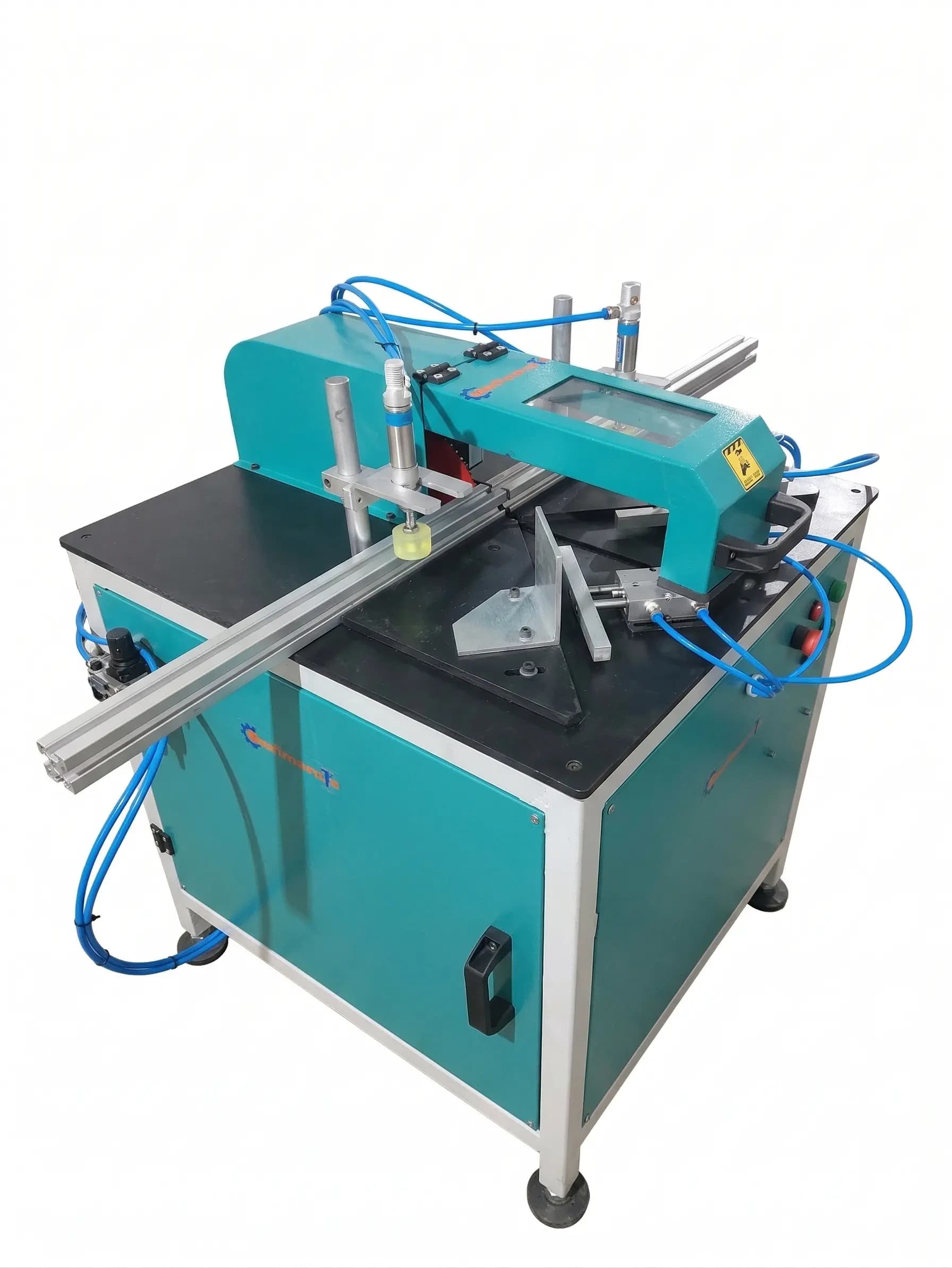
Single Head Cutting Machine for Aluminium and UPVC

Model: MEPCCSH1 | Cutting

Dual-angle versatility with rapid adjustment for Aluminium/uPVC.

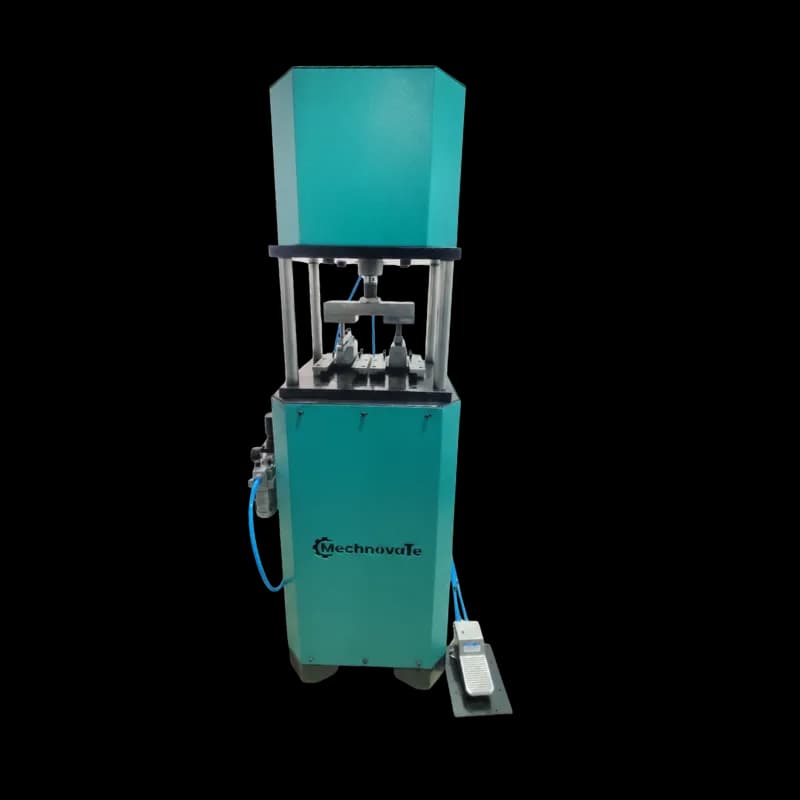
2 Station Pneumatic Aluminium Punching Machine

Model: MEPPPST2 | Punching

Multi-tool setup with adjustable cutting depth.

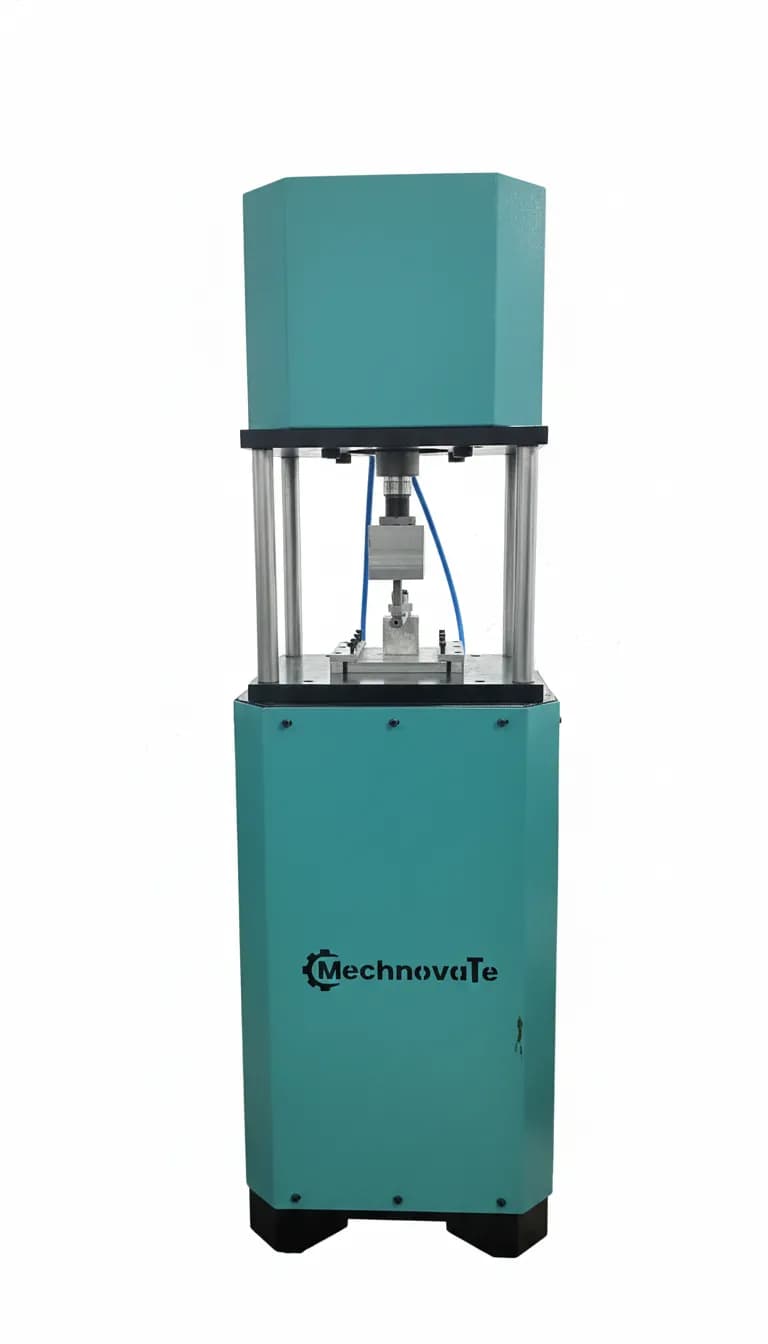
1 Station Pneumatic Aluminium Punching Machine

Model: MEPPPST1 | Punching

Precision alignment with Easy Guiding System for Aluminium.

Pneumatic Copy Router Machine for Aluminium and UPVC

Model: MEPCR Series | Router

High-speed routing with secure pneumatic clamping.

Explore Mechnovate Machinery

Browse our complete range of aluminium and uPVC window fabrication machinery. Call +91-9265699061 or visit our products page for specifications and pricing.