Fixing 45-Degree Miter Gaps: Guide for Pune Fabricators
Eliminating the Light Gap: Professional Miter Troubleshooting
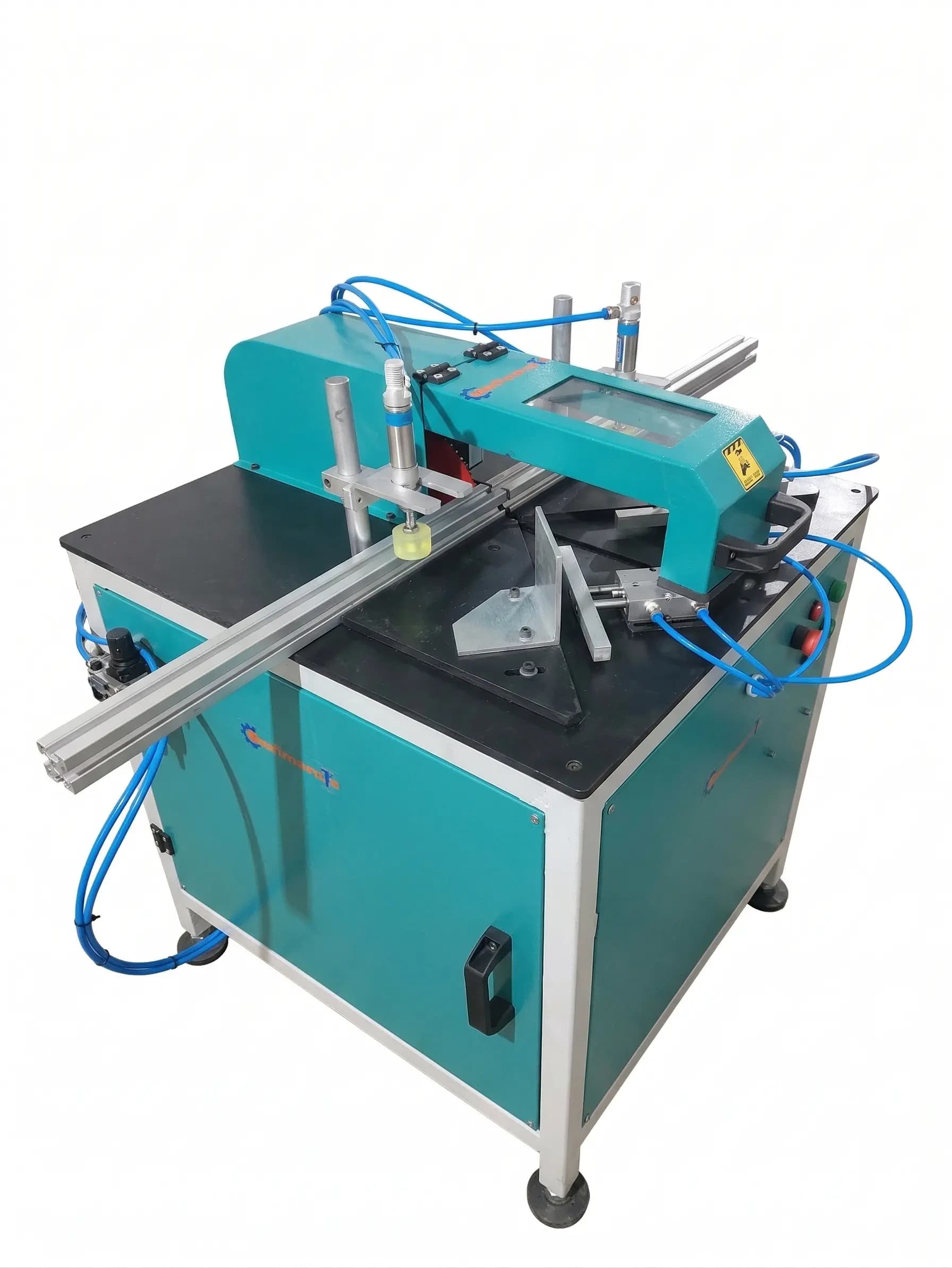
If you are seeing 'light gaps' in your 45-degree miter joints, the issue is rarely just a 'bad cut.' In my 15 years of managing fabrication floors, I have found that miter gaps are typically a cumulative result of blade deflection, improper profile clamping, and fence misalignment. For workshops working with high-end architectural profiles, even a 0.2-degree error across a 100mm profile width results in a visible gap that no amount of sealant can professionally hide. When you consult aluminium window fabrication machine suppliers in Pune, the first thing we look at is the structural rigidity of your cutting bed.
To solve this, you must first determine if the gap is 'internal' (touching at the tip, open at the heel) or 'external' (touching at the heel, open at the tip). An internal gap usually points to an over-travel in your 45 degree double head cutting machine, whereas an external gap often suggests material movement during the stroke. Before adjusting your stops, ensure your material is seated perfectly flat against the back fence; even a single shard of aluminium swarf can throw a cut off by half a millimeter.
The Pune Field Test: How We Reduced Waste from 12% to 3%
In our Pune facility last year, we conducted a 6-week optimization study involving three different aluminium profile cutting machine configurations. We were processing 6063 T5 grade aluminium with a 1.5mm wall thickness. Initially, the workshop was seeing a 12% rejection rate due to corner misalignment during the assembly of thermal break windows. We found that the primary culprit wasn't the machine's age, but the lack of synchronized pneumatic clamping.
By recalibrating the head cutting machine and implementing a vertical-and-horizontal clamping sequence, we reduced cutting waste to just 3%. We also increased the output by 40 frames per day simply by reducing the time spent 'forcing' joints together during the crimping stage. The lesson learned was clear: precision at the cutting stage is the only way to maintain high-speed throughput in a competitive market like Pune.
Mechanical Calibration: Why Your Degree Cutting Machine Fails
Precision engineering requires adherence to strict tolerances. For an aluminum cutting machine to deliver a true 45-degree cut, the blade must travel on a perfectly linear path. We recommend checking the following technical specifications monthly:
- Blade Run-out: Ensure the radial run-out is less than 0.05mm. Anything higher causes 'wobble,' which widens the kerf and creates an uneven surface.
- Table Leveling: Use a precision machinist’s level to ensure the machine bed is within 0.02mm/m. In many Pune workshops, floor vibration can shift machines over time.
- Feed Rate Control: For aluminium, a hydro-pneumatic feed is essential. We found that a feed rate of 0.5m/s to 1.2m/s provides the cleanest finish on 2.0mm profiles without overheating the blade.
- Bar Pressure: Your pneumatic system must maintain a steady 6-8 bar. If the pressure drops when the blade engages, the profile will shift, ruining the miter.
If you are using a manual punching machine or a copy router machine, ensure the templates are not worn out. A worn template on a copy router can lead to slight variances in handle holes, which indirectly puts tension on the mitered corners during final assembly.
The Role of Blade Stability in Precision Engineering
Selecting the right aluminium cutter machine 12 inch or 20-inch blade is critical. In our testing, we found that using a high-tooth-count (100-120T) carbide-tipped blade specifically ground for non-ferrous metals is non-negotiable. If you are a uPVC window manufacturing machine operator, do not use your uPVC blades for aluminium; the hook angle is entirely different and will cause 'grabbing,' which destroys the 45-degree precision.
We recommend blades that meet ISO standards for vibration dampening. A high-quality aluminium cutter should have laser-cut expansion slots filled with resin to absorb harmonics. This prevents the 'ringing' sound that often precedes a rough, jagged miter cut. When checking the aluminium cutting machine price, always factor in the cost of high-grade blades; a cheap blade on an expensive machine will still produce poor results.
Common Mistakes: What to Watch Out For
- Ignoring the Back Fence: Over time, the fence of your upvc windows manufacturing machine or aluminium saw can become bowed. Always check it with a straight edge.
- Over-tightening Clamps: Excessive pressure on thin-walled profiles can deform the shape. When the clamp releases, the metal 'springs back,' and your 45-degree cut is suddenly 44.8 degrees.
- Skipping Lubrication: In the Pune heat, dry cutting leads to chip welding. Use a micro-mist coolant system to ensure the blade exits the cut without pulling a burr.
- Inconsistent Profile Temperature: Storing aluminium profiles in direct sunlight before cutting them on a single cutting machine can lead to thermal expansion errors.
For those looking at upvc window manufacturing machinery or automatic double head cutting machine price India, remember that the sturdiness of the cast-iron base is more important than the digital display. A heavy base absorbs the vibrations that cause miter gaps.
Advanced Troubleshooting: Corner Crimping and Assembly
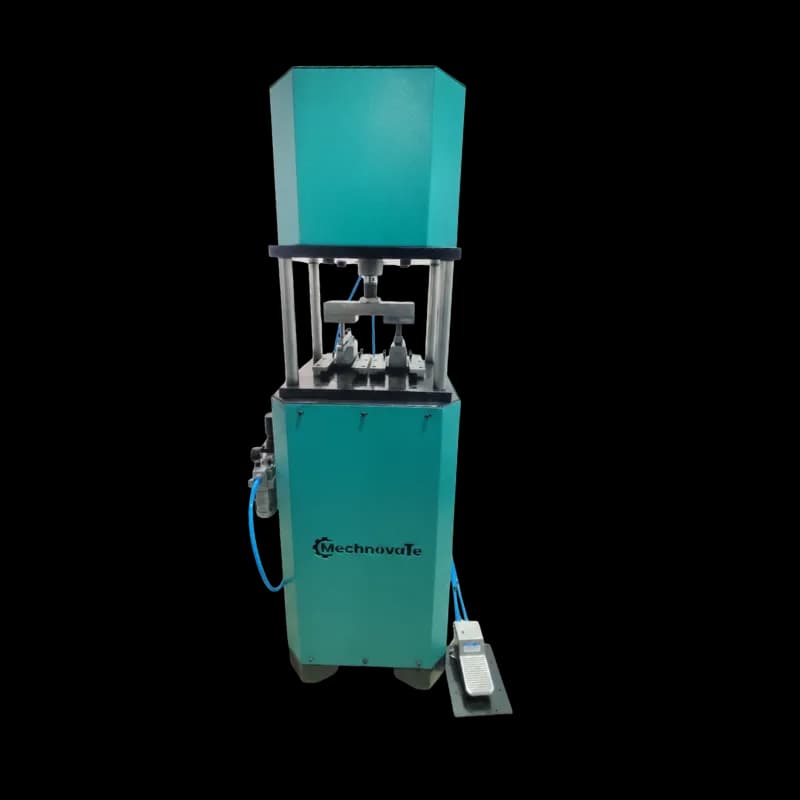
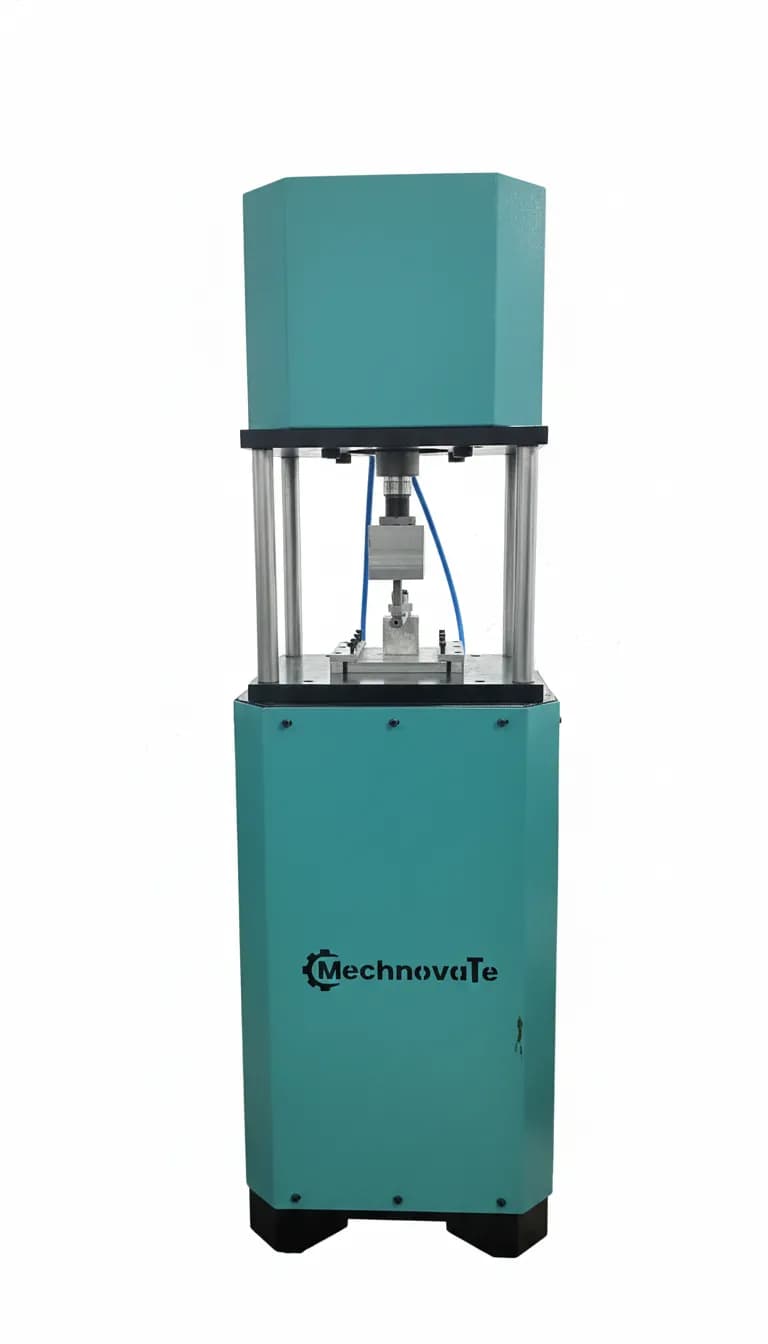
Sometimes the cut is perfect, but the corner still fails. This usually happens at the automatic corner crimping machine. If the knives are not aligned to the exact center of the profile's 'Euro-groove,' they will twist the miter as they drive the cleat home. We suggest using a heavy duty aluminium profile end milling machine to ensure all mating surfaces are perfectly clean before joining.
If you are an aluminium window machinery manufacturers in Ahmedabad Gujarat or Pune, you know that the final join is only as good as the internal corner cleat. Ensure your aluminium punching machine is creating holes that align perfectly with the cleat's spring pins to avoid 'stretching' the miter during assembly.
FAQ: Real Questions from the Workshop Floor
Q: Why does my double head miter saw cut perfectly on short pieces but gaps on long ones? A: This is almost always due to improper material support. If the profile is sagging on the support rollers, it enters the blade at a slight vertical angle, which translates to a horizontal gap when the piece is laid flat.
Q: Can I fix a gap by adjusting the blade angle to 45.1 degrees? A: This is a 'band-aid' fix. While it may close the outer gap, it creates internal tension that can cause the glass to crack or the hardware to bind later. Fix the machine's squareness instead.
Q: How often should I sharpen the blades on my aluminium cutting machine 12 inch? A: For a standard 8-hour shift in a Pune workshop, we recommend sharpening every 3,000 to 4,000 cuts, or as soon as you see 'fuzz' on the bottom edge of the profile.
Get more articles like this
Follow Mechnovate on Google to see our guides in Google Discover & News