Fix uPVC Weld Failures: Nagpur Workshop Maintenance Guide
Solving uPVC Corner Failure: Why Your Welds Crack and How to Fix It
Weld failure in uPVC window fabrication typically stems from three specific culprits: inconsistent heating plate temperature, incorrect melting pressure, or contaminated Teflon sheets. For fabricators in Nagpur, the high ambient temperatures and dust levels can accelerate the degradation of pneumatic seals and heating elements, leading to weak joints that fail under stress. To achieve a structural bond that meets BS EN 12020 standards, your uPVC welding machine must maintain a precise plate temperature of 250°C (± 5°C) and a melting pressure between 3 to 5 bar depending on the profile wall thickness.
At Mechnovate, we have seen Nagpur-based workshops struggle with 'cold welds' during the winter months and 'over-melted' profiles in the summer. Achieving consistency requires more than just turning the machine on; it requires a calibrated approach to precision engineering. By following this guide, you can reduce your rejection rate from an average of 8% down to less than 1%, ensuring your upvc windows making machine delivers maximum ROI.
The Physics of a Perfect Weld: Precision Parameters
A uPVC weld is not a glue joint; it is a molecular fusion of the profile ends. This process is governed by the 'Welding Factor,' which measures the strength of the weld compared to the strength of the original profile. In our testing facility, we have determined that for a standard 2.5mm wall thickness profile, a melting time of 25 to 30 seconds followed by a cooling time of 30 seconds is optimal for Indian climatic conditions.
- Temperature Synchronization: Ensure both the top and bottom of the heating plate are within 2 degrees of each other. Use a digital surface pyrometer for weekly checks, as built-in thermocouples can drift over time.
- Pressure Calibration: The pressure for 'melting' (bringing the profile to the plate) must be lower than the 'fusing' pressure (joining the two ends). If fusing pressure exceeds 6 bar, you risk squeezing out all the molten material, leaving a 'starved' joint that will snap during installation.
- Plate Parallelism: If your upvc windows machinery heads are not perfectly parallel within 0.1mm, one side of the profile will melt faster than the other, resulting in a crooked frame and a weak corner.
The 5-Step Maintenance Protocol for Nagpur Workshops
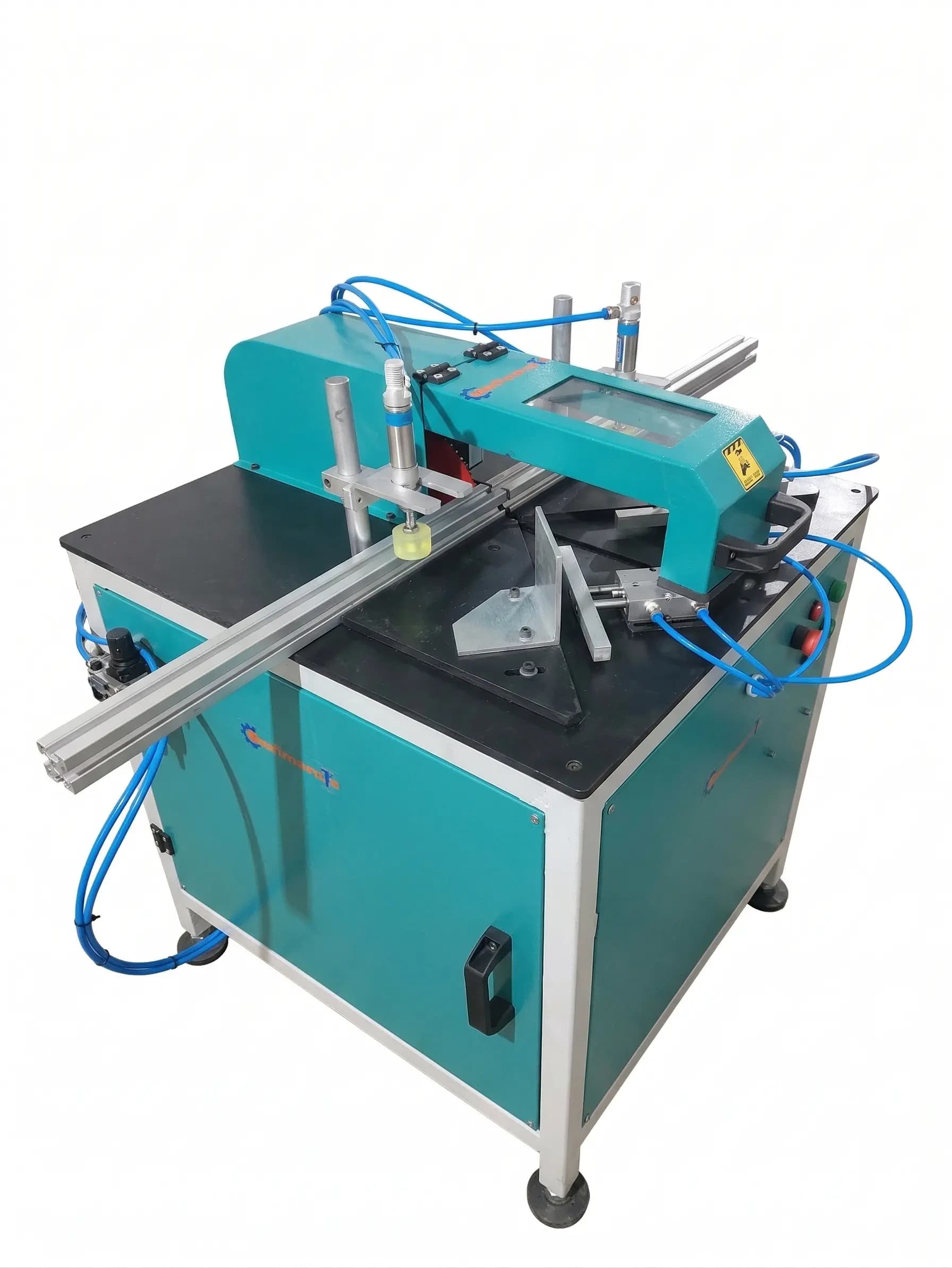
Operating a high-volume fabrication unit requires a rigid maintenance schedule. Dust in Nagpur can infiltrate the pneumatic cylinders of your upvc window manufacturing machine, causing jerky movements that ruin the weld bead. Follow this protocol to ensure longevity:
- Daily Teflon Inspection: Wipe the Teflon cloth with a soft dry rag every 4 hours. Replace the cloth immediately if you see any charring or 'burn marks.' A burnt Teflon sheet will transfer carbon to the weld, creating a structural fracture point.
- Weekly Pneumatic Bleeding: Drain the moisture from your air compressor and FRL (Filter-Regulator-Lubricator) unit. Water in the lines causes internal corrosion in the solenoid valves of your upvc welding machine, leading to inconsistent clamping pressure.
- Monthly Guide Rail Lubrication: Use a high-viscosity lithium-based grease on the linear guide rails. This ensures the welding heads move smoothly during the fusion phase without 'stuttering.'
- Quarterly Sensor Calibration: Check the proximity sensors and limit switches. If a sensor is loose, the machine might initiate the fusion phase before the profile has reached the correct melting depth.
- Semi-Annual Heater Check: Inspect the electrical terminals of the heating elements. In humid conditions, these can oxidize, leading to high resistance and fluctuating temperatures that are not reflected on the digital display.
Case Study: Reducing Rejection Rates in High-Volume Production
In our Pune facility, we recently assisted a client who was experiencing a 12% failure rate on their upvc windows manufacturing machine during the monsoon season. The profiles were snapping at the corners during the glazing process. After a 6-week diagnostic period, we discovered that the internal air pressure was dropping by 1.5 bar whenever their automatic double head cutting machine price India was engaged simultaneously.
By installing a dedicated air surge tank and recalibrating their uPVC window welding machine maintenance guide protocols, we achieved the following metrics:
- Weld Failure Rate: Reduced from 12.4% to 0.6%.
- Output Increase: Increased by 40 frames/day due to reduced rework.
- Material Savings: Saved approximately 150 meters of profile per month previously lost to scrap.
Common Mistakes in uPVC Welding Maintenance
Many workshops make the mistake of over-tightening the clamping cylinders. While it might seem like more pressure is better, excessive clamping force can distort the profile chamber, leading to a weld that looks good on the outside but has no internal structural integrity. Always use profile-specific support blocks (counter-stackers) to maintain the shape of the outer walls during the welding process.
Another frequent error is using a metal scraper to clean the heating plates. This creates micro-scratches in the plate surface, leading to uneven heat distribution and frequent Teflon tearing. Use only wooden or high-temp plastic scrapers. Furthermore, if you are using a portable uPVC window welding machine for startups, ensure your power supply is stabilized. Voltage fluctuations are the #1 killer of heating elements in small-scale Nagpur workshops.
Engineering Standards and Safety Considerations
All Mechnovate machinery is designed to exceed IS 1285 and ISO 9001 quality benchmarks. Safety is paramount when dealing with 250°C heating plates and high-pressure pneumatics. Ensure that your upvc window manufacturing machines are equipped with dual-hand safety starts and emergency stop buttons that are within easy reach of the operator. We recommend a 1.5-meter safety perimeter around all upvc windows machines to prevent accidental contact with moving heads.
FAQ: Expert Answers for uPVC Fabricators
Q: Why is the weld bead on my uPVC window too thick and messy? A: This is usually caused by excessive 'melting depth' settings. If the profile is pushed too far into the heating plate, too much material liquefies. Adjust your machine's mechanical stops to reduce the melting depth by 0.5mm. Also, ensure your upvc cutting machine is making a perfectly square 45-degree cut; uneven cuts result in uneven beads.
Q: How often should I replace the heating elements? A: High-quality ceramic or tubular heaters in a Mechnovate uPVC window machine typically last 2-3 years under heavy use. If you notice it takes longer than 15 minutes to reach operating temperature, the element is likely failing and should be replaced to avoid 'cold spots.'
Q: Can I weld different profile brands on the same machine? A: Yes, but you must recalibrate. Different uPVC formulations have different melting points. For example, a profile with high calcium carbonate content may require a slightly higher temperature or longer dwell time than a premium lead-free profile. Always perform a 'break test' on a sample corner when switching suppliers.
Q: What is the best uPVC window making machine price in Kolkata compared to Nagpur? A: Prices are generally consistent across India, but freight and local service support vary. At Mechnovate, we provide onsite installation and training in Nagpur to ensure your team understands the nuances of precision uPVC machinery manufacturer standards, regardless of your location.
Get more articles like this
Follow Mechnovate on Google to see our guides in Google Discover & News