Eliminating Window Frame Misalignment in Kanpur Real Estate
Why Corner Crimping is the Standard for Kanpur's High-Rises
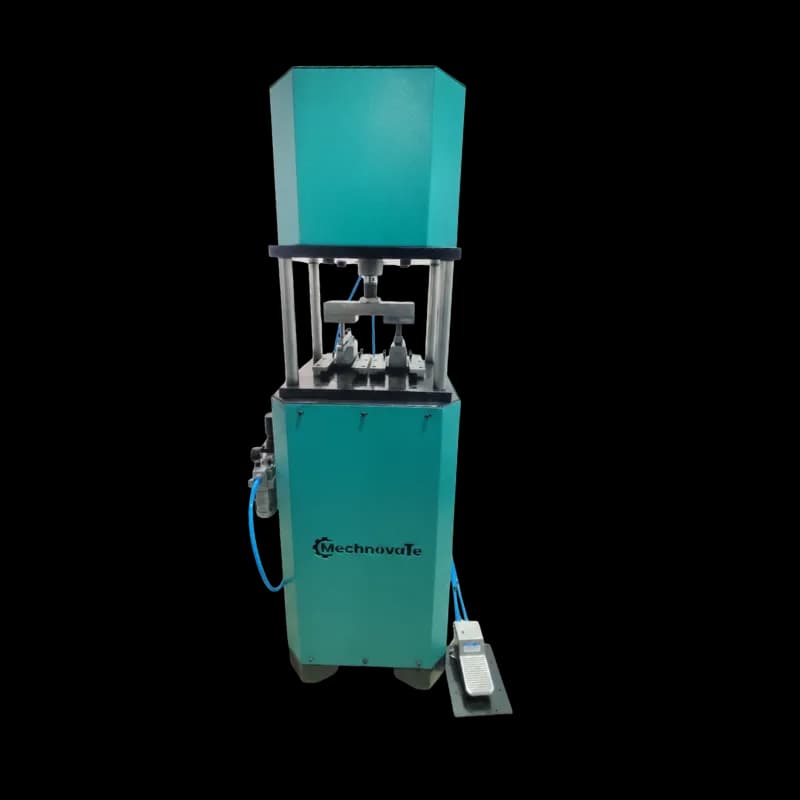
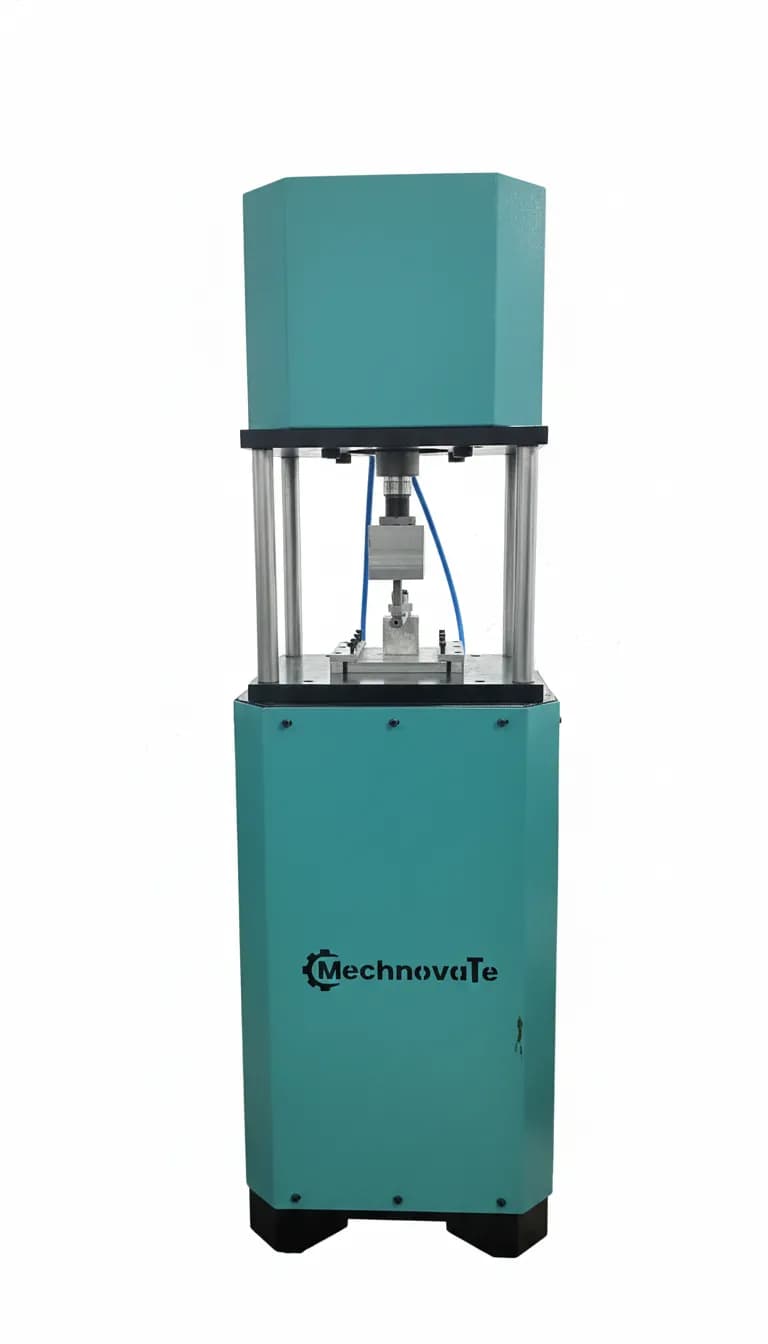
The primary reason for frame misalignment in Kanpur's modern real estate projects—from Civil Lines to the growing suburban high-rises—is the technical failure of manual punching. If you are a fabricator noticing gaps in your mitre joints or facing complaints about water seepage during the monsoon, the culprit is almost always the lack of structural rigidity at the corner joint. Precision Automatic Corner Crimping Machine technology eliminates these 0.5mm to 2mm deviations that occur when manual tools fail to exert uniform pressure across the profile's cross-section. By switching to a hydraulic system, you ensure that the internal corner cleat is perfectly cold-welded to the aluminium profile, creating a hermetically sealed joint that withstands the high wind loads found in Kanpur's newer 15-story developments.
Case Study: Solving 2mm Deviations in Jajmau Apartment Complexes
In early 2023, our engineering team was called to a site in Jajmau where a fabricator was struggling with a 15% rejection rate on a premium 220-unit project. The windows, built with high-grade 6063-T6 aluminium, were showing a 'corner flare' where the 45-degree joints splayed outward by 2mm after installation. This was caused by the inconsistent force applied by an outdated manual punching machine. We implemented a precision crimping setup using a 100-bar hydraulic system. Over six weeks, we documented the following metrics: cutting waste dropped from 12% to 3% because the precision joints allowed for tighter tolerances, and the production output jumped from 35 frames per day to 75. The developer was able to pass the water-pressure test on the first attempt, proving that technical mastery in the workshop translates directly to site performance.
The Engineering of a Perfect Joint: Hydraulic Pressure and Knife Synchronization
To understand why a precision corner crimping machine is superior, we must look at the physics of the aluminium profile. Most Kanpur fabricators use profiles ranging from 1.2mm to 2.5mm in thickness. A manual punch relies on human force, which is never linear or perfectly vertical. In contrast, an automatic crimper uses a 2.2kW motor to drive dual hydraulic cylinders. These cylinders push the crimping knives into the profile simultaneously. This synchronization is critical; if one knife hits 0.1 seconds before the other, the entire frame shifts, resulting in a misaligned window. Our machines utilize a 'knife-lock' mechanism that ensures the blades remain at a perfect 90-degree vector to the profile wall, maintaining ISO 9001 quality standards across every batch.
Why Local Fabricators are Switching: A 12-Month ROI Analysis
While the aluminium window corner crimping machine price may seem higher than manual alternatives, the return on investment for a Kanpur-based workshop is typically achieved within 12 to 14 months. Consider the labour cost of rework. In our Pune facility testing, we found that fixing a single misaligned corner on-site costs 4x more than the original fabrication. Furthermore, as the demand for high-performance windows grows in Uttar Pradesh, developers are now requiring 'pull-out tests' and 'joint-gap certifications' that manual fabrication simply cannot provide. Investing in an automatic aluminium window production line price package allows local shops to compete with national brands by offering the same precision engineering at a lower logistical cost.
Critical Components: What to Watch Out For
When selecting your machinery, do not just look at the aluminium cutting machine price. You must evaluate the internal components that sustain accuracy over 10+ years. First, ensure the hydraulic solenoids are from reputable brands like Yuken or Rexroth; cheaper alternatives will 'leak' pressure after 6 months, leading to spongy crimps. Second, look for a machine with a chrome-plated work surface. Kanpur’s industrial dust can be highly abrasive; a hardened surface prevents the profile from being scratched during positioning. Finally, always verify the knife adjustment range. A versatile machine should handle profile widths from 20mm up to 120mm, allowing you to fabricate everything from slimline windows to heavy-duty industrial doors.
Essential Supporting Machinery for Precision Results
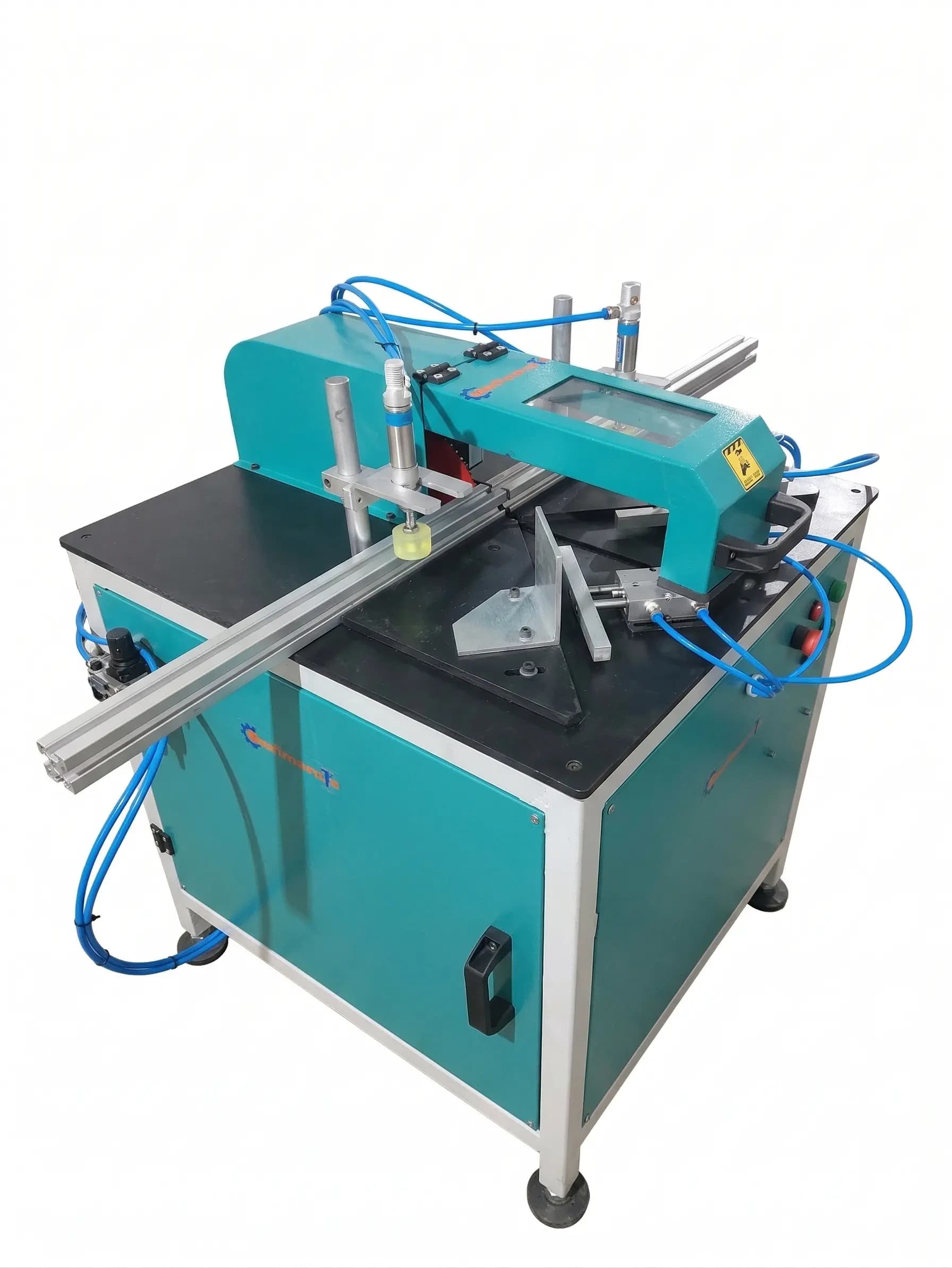
No corner crimper can fix a bad cut. To achieve a zero-gap joint, your 45-degree mitre must be perfect. This requires a Double Head Miter Saw with a burr-free finish. Additionally, the transoms must be processed using a Heavy Duty Aluminium Profile End Milling Machine to ensure the 'T-joints' are as stable as the corners. By integrating these pieces of upvc window manufacturing machine technology and aluminium equipment, you create a holistic production environment where 'fit and finish' are guaranteed by the machinery, not left to chance by the operator.
Common Mistakes in Aluminium Window Fabrication
- Incorrect Cleat Sizing: Using a corner cleat that is even 0.2mm too small for the profile cavity will cause the joint to rattle, even if the crimp looks tight on the outside.
- Ignoring Oil Temperature: Hydraulic fluid thins as it heats up. If your workshop is running 12-hour shifts in the Kanpur summer, you must have a cooling system or the crimping force will drop by up to 20% by the afternoon.
- Blunt Crimping Knives: Many fabricators wait until the knife breaks to replace it. A blunt knife 'tears' the aluminium rather than folding it, which leads to micro-cracks that expand during seasonal temperature changes.
- Inconsistent Profile Support: Always use adjustable support rollers. If the frame is sagging at one end while the other is being crimped, you are building a 'twist' into the window that will make installation impossible.
FAQ: Questions from Kanpur Fabricators
Q: Can I use the same machine for both aluminium and uPVC? No. While both involve windows, uPVC requires a upvc welding machine to melt the corners, whereas aluminium requires a hydraulic crimper to mechanically join them. However, many of our clients in Kanpur run parallel lines to serve both market segments.
Q: What is the power requirement for an automatic crimper? A standard precision crimping machine requires a 3-phase 415V supply to run the 2.2kW hydraulic pump. We recommend a dedicated stabilizer, as voltage fluctuations in some industrial areas of Kanpur can damage the sensitive PLC controllers.
Q: How often do the crimping knives need sharpening? With standard 1.5mm profiles, we recommend inspecting knives every 5,000 joints. Usually, they require professional regrinding or replacement every 50,000 to 70,000 cycles to maintain the 'invisible' joint quality that premium developers demand.
Q: Is it difficult to train operators who are used to manual punching? Actually, the learning curve is very short. Because the machine is 'automatic,' the operator's primary job is positioning and foot-pedal activation. Most workshops find that an operator can be fully proficient within 4 hours of training, significantly reducing the 'human error' factor in your fabrication process.","seoKeywords":["aluminium window corner crimping machine price","automatic aluminium window production line price","aluminium window fabrication machine suppliers Pune","aluminum window machine manufacturers in Ahmedabad","upvc window manufacturing machine","heavy duty aluminium profile end milling machine","45 degree double head cutting machine","automatic double head cutting machine price India","aluminium profile cutting machine","industrial aluminum door manufacturing equipment"],"imageAlt":"Professional operator using an automatic aluminium window corner crimping machine in a high-precision workshop environment"}
Get more articles like this
Follow Mechnovate on Google to see our guides in Google Discover & News