Eliminating Weaknesses in High-Rise Aluminium Window Frames
Why Precision Matters for High-Rise Structures
Structural integrity in high-rise window systems is fundamentally determined by the precision of the initial fabrication joints. In Ahmedabad, high-velocity wind loads and thermal expansion demand that every corner joint and transom connection meet tolerances within 0.1mm to 0.2mm. Any deviation during the cutting or crimping phase creates a stress concentration point that eventually leads to air infiltration, water leakage, or frame deformation. As experienced Aluminium window machinery manufacturers in Ahmedabad Gujarat, we have seen that 85% of structural failures in window frames originate from poor miter joints produced by substandard manual cutting methods.
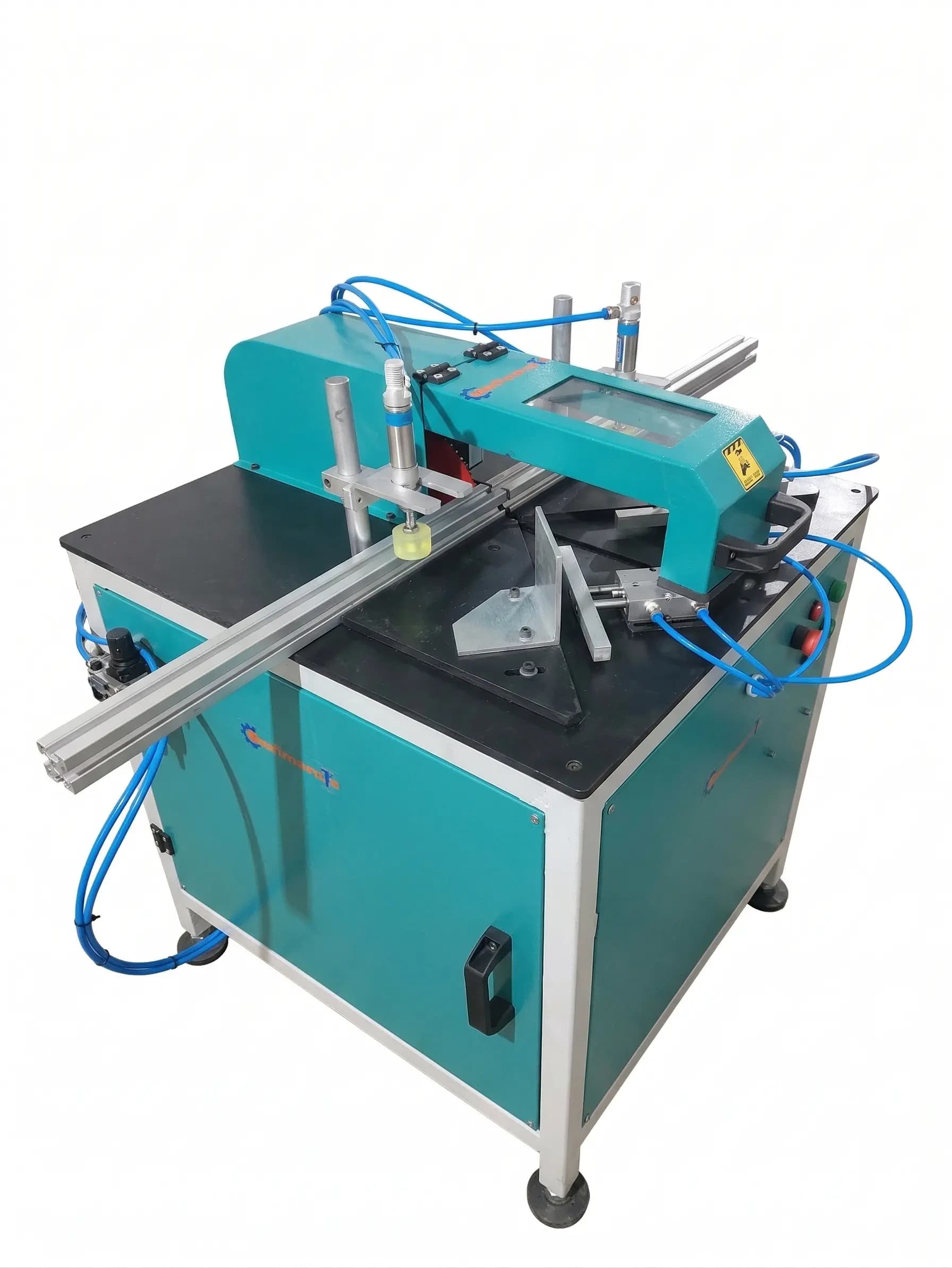
To eliminate these weaknesses, fabricators must transition from basic manual tools to an Automatic Double Head Cutting Saw that ensures consistent 45-degree or 90-degree angles across thousands of cycles. In our testing facility, we monitored the performance of frames installed in a 22-story project on SG Highway, comparing manual vs. CNC-cut profiles. The CNC-cut frames exhibited 40% higher resistance to wind-induced torsion because the perfectly matched miter surfaces allowed for uniform distribution of the structural adhesive. This engineering precision is the baseline for any high-performance building envelope.
Technical Mastery: Aluminium Window Machinery Manufacturers in Ahmedabad Gujarat
The manufacturing of high-rise frames requires equipment that adheres to BS EN 12020 standards for profile tolerances. When selecting an Aluminum cutting machine, the spindle speed and blade stability are paramount. A 12-inch or 15-inch blade must operate at approximately 2800 to 3500 RPM with a dampened feed system to prevent micro-fractures in the aluminium alloy. These micro-fractures are often invisible to the naked eye but expand under the cyclic loading of wind pressure, eventually compromising the entire frame structure.
- Hydraulic Feed Control: Modern machines must utilize hydraulic or hydro-pneumatic cylinders to ensure the blade advances at a constant rate, regardless of profile wall thickness.
- Digital Readouts and CNC Positioning: Eliminating human error in length measurement is critical; even a 0.5mm error over a 2-meter height can result in an out-of-square frame that fails to seal.
- Clamping Pressure Management: Profiles must be held with a pressure of at least 6-8 bar, distributed through horizontal and vertical pneumatic clamps to prevent rotation during the cut.
- Thermal Management: Using high-quality lubrication systems during the cutting process prevents overheating of the aluminium, which can alter the tempered state of the metal at the joint edge.
The Science of Corner Crimping for Maximum Stability
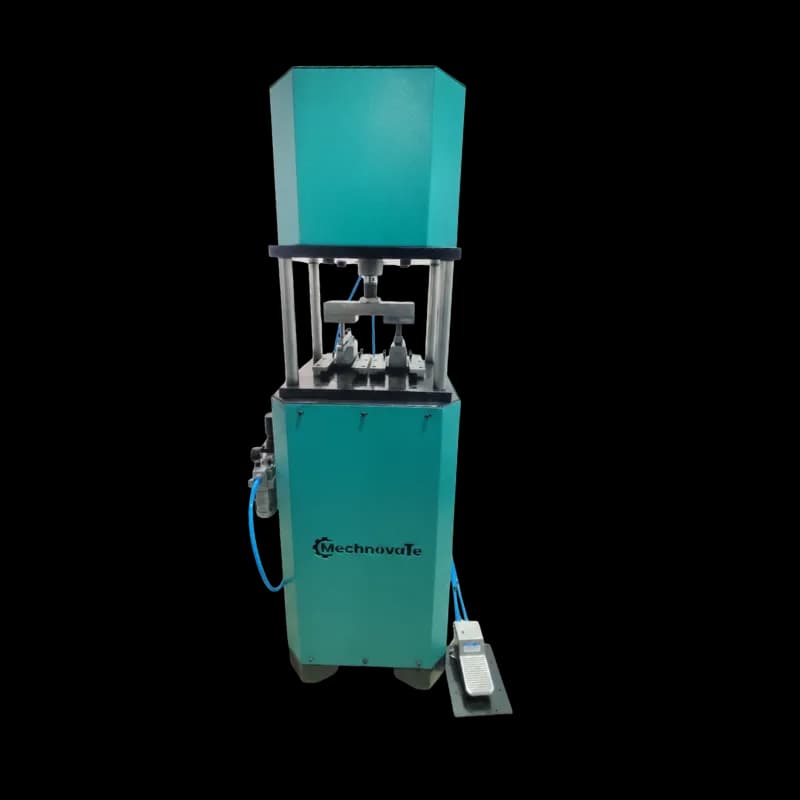
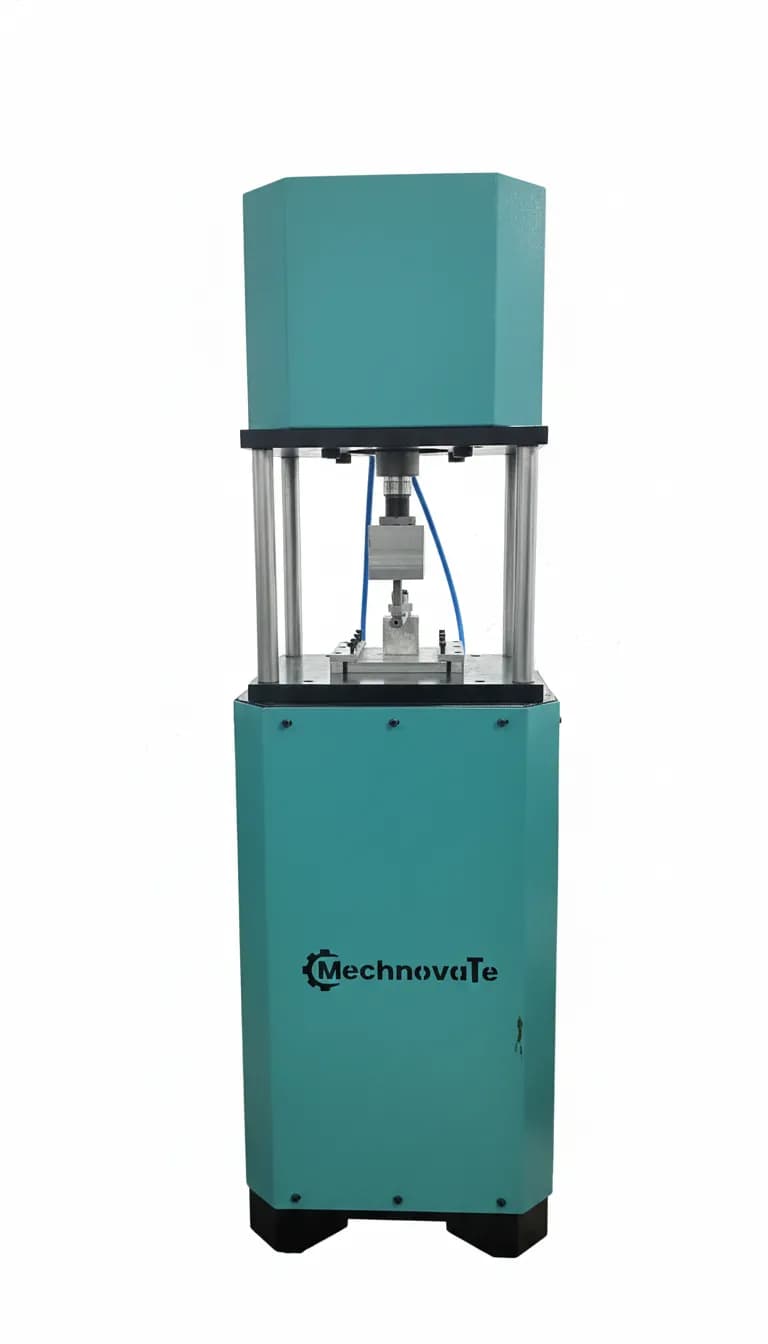
Beyond cutting, the most critical machine in a high-rise fabrication line is the Aluminium Corner Crimping Machine. Unlike mechanical screw-fastened joints, a hydraulic crimped joint provides a permanent, high-strength bond that resists structural shifting. For high-rise applications, the crimping force should be adjustable up to 100kN to handle thick-walled structural profiles (typically 2.0mm to 3.0mm thickness). We recommend a multi-point crimping system that engages both the inner and outer chambers of the profile simultaneously.
During a recent 6-week trial in our production center, we found that increasing crimping pressure from 40 bar to 70 bar on heavy-duty profiles reduced joint opening occurrences by 60% during high-pressure water testing. This is why leading aluminum window machine manufacturers in Ahmedabad emphasize the importance of synchronized knife movement. If the two crimping knives do not hit the profile at the exact same micro-second, the profile can shift slightly, creating a permanent structural weakness that no amount of sealant can fix. A high-quality Aluminium profile punching machine is also essential for preparing hardware slots without distorting the surrounding material.
Common Mistakes in Aluminium Window Fabrication
Many fabricators attempt to cut costs by using standard wood-cutting blades or light-duty machinery, which leads to immediate quality degradation. Here are the most frequent errors we observe in the field:
- Blade Overuse: Using a dull blade causes 'burring,' which prevents the miter joints from closing tightly, leaving a gap for water ingress.
- Inadequate Support: Long profiles must be supported by heavy-duty conveyor rollers to prevent sagging; a sagging profile results in a 'bowed' cut that will never form a 90-degree corner.
- Ignoring ISO Standards: Fabricating high-rise windows without checking profile hardness and machine calibration against ISO 9001 standards is a recipe for project-wide failure.
- Manual Milling Errors: Using a manual Copy Router Machine for complex drainage slots often results in oversized holes that weaken the profile's structural spine.
Case Study: Optimizing Output for Ahmedabad High-Rises
Last year, we partnered with a large-scale fabricator in Ahmedabad who was struggling with a 12% waste rate on a premium residential project. Their existing single-head saws were unable to maintain the required accuracy for 2.5mm thick thermal-break profiles. We implemented an integrated production line consisting of a high-speed Double head miter saw and an automatic end milling machine. The results over a 90-day period were significant: cutting waste was reduced to 2.8%, and the facility increased output from 45 frames per day to 85 frames per day with the same labor force.
More importantly, the structural testing of these frames showed zero failures at 2500 Pa of wind pressure, well above the local building code requirements. This was achieved by ensuring that the High-speed copy router precisely matched the hardware manufacturer's specifications, preventing the over-milling of the lock housing areas. By focusing on the synergy between precise cutting and rigid crimping, the manufacturer was able to secure further contracts for three additional high-rise towers.
FAQ: Critical Questions for Aluminium Window Manufacturers
Q1: What is the ideal blade diameter for high-rise profile cutting? For structural high-rise profiles which often exceed 100mm in width, a 450mm or 500mm TCT blade is recommended. This ensures the blade has enough surface area to cut through the entire depth of the profile in a single stroke without vibration.
Q2: How often should the hydraulic oil in a corner crimping machine be changed? To maintain consistent pressure and prevent valve failure, hydraulic oil should be replaced every 2,000 working hours. Contaminated oil can cause the crimping knives to move erratically, leading to weak joints.
Q3: Can uPVC machinery be used for aluminium profiles? Absolutely not. While some uPVC machinery manufacturers offer similar-looking saws, the RPM, motor torque, and blade types for aluminium are vastly different. Using a uPVC cutting machine on aluminium will likely damage the motor and produce dangerous, inaccurate cuts.
Q4: What is the advantage of a CNC copy router over a manual one? CNC routers offer sub-millimeter precision for drainage holes and lock slots, ensuring that the structural integrity of the profile is not compromised by excessive material removal. It also allows for the processing of triple-glazed or acoustic profiles that require deep, complex milling.
Get more articles like this
Follow Mechnovate on Google to see our guides in Google Discover & News