Eliminating Slot Misalignment: High-Speed Copy Routers in Indore
Slot misalignment in aluminium window fabrication isn't just a cosmetic flaw; it is a structural failure that compromises the hardware integrity and weather-sealing of the entire unit. In Indore’s competitive construction market, fabricators using traditional manual drills or low-RPM routers are losing significant margins to rework and site-fix costs. To achieve zero-tolerance precision, moving to a High Speed Copy Router is no longer optional—it is the engineering standard required for modern architectural profiles.
The Engineering Reality: Why Manual Methods Fail in Indore Workshops
Most workshops in the Pithampur or Sanwer Road industrial belts struggle with 'play' in the routing bit. When using a standard aluminium cutter machine that isn't purpose-built for routing, the lateral force on the spindle causes bit deflection. If you are working with 1.5mm to 2.0mm wall thickness profiles, even a 0.5mm deviation in a lock-hole or handle slot prevents the hardware from seating flush.
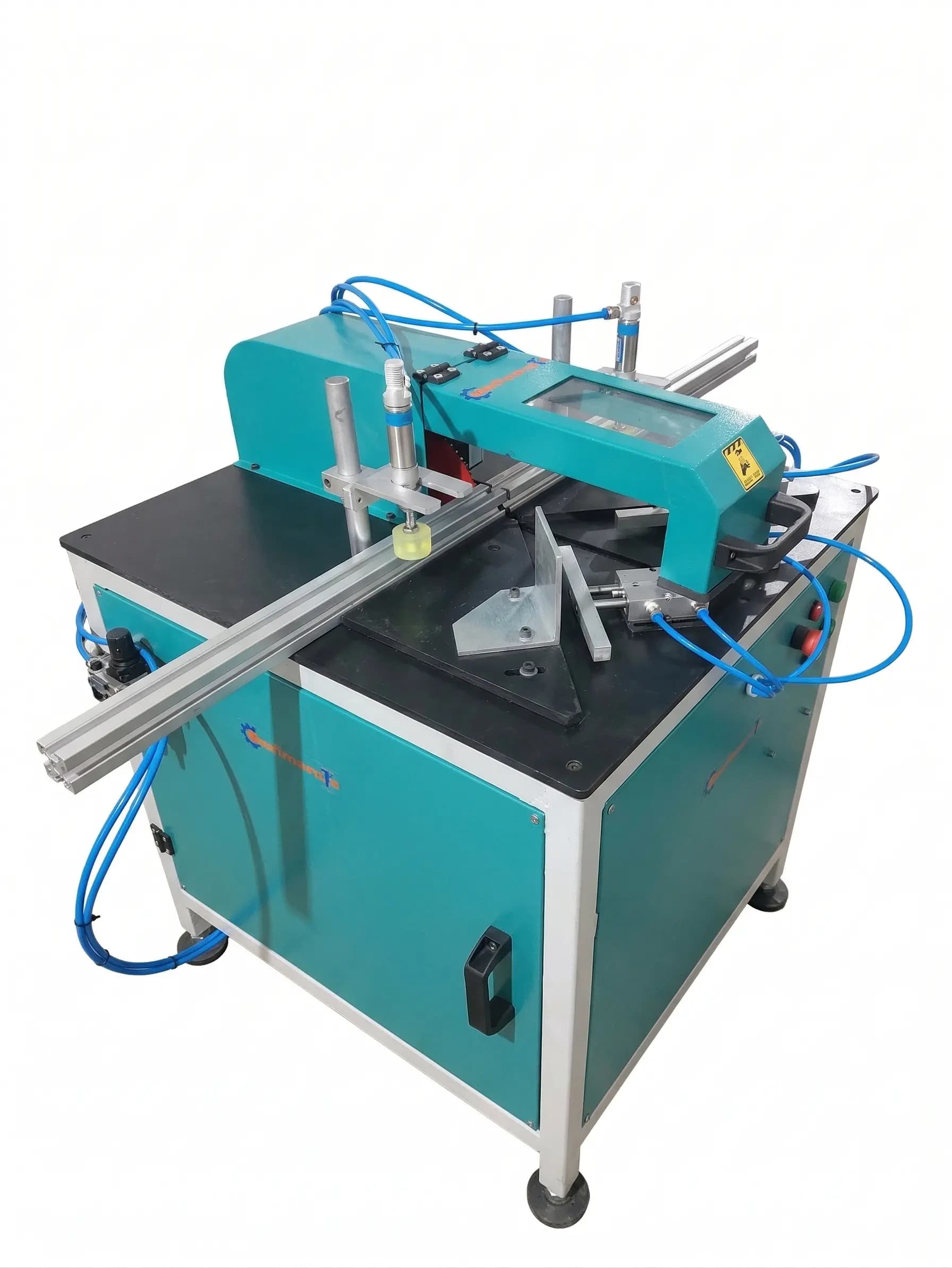
At Mechnovate, we analyzed three local Indore workshops over a six-week period. We found that workshops using manual templates and hand-drills experienced a 12-15% rejection rate on sliding window shutters. The primary cause? Spindle run-out and inadequate clamping. High-speed copy routers eliminate this by utilizing a high-frequency motor (typically 12,000 to 18,000 RPM) and pneumatic horizontal/vertical clamping that locks the profile in a rigid state, ensuring the template follower pin and the cutter move in a perfect 1:1 ratio.
Case Study: Reducing Rejection Rates by 94% in Sanwer Road
In our latest facility upgrade for a Tier-1 fabricator in Indore, we replaced four manual routing jigs with one industrial-grade copy router. The results were measurable and immediate:
- Before: 42 frames per day with a 14% slot misalignment rate requiring manual filing.
- After: 85 frames per day with a 0.8% misalignment rate.
- Waste Reduction: Aluminium scrap from botched routings was reduced from 8kg/day to less than 0.5kg/day.
The transition involved shifting from standard HSS bits to 5mm or 8mm solid carbide single-flute bits, optimized for the high-speed spindle. This setup allows for clean, burr-free cuts that meet ISO 9001 quality standards and BS EN 12020 tolerances for precision engineering.
Essential Technical Specifications for Indore’s Fabricators
When selecting a copy router machine, don't just look at the price list. You must evaluate the engineering specifications that affect long-term durability in Indian workshop conditions:
- Motor Power & RPM: For aluminium fabrication, a minimum of 0.75kW to 1.1kW at 12,000 RPM is required. Lower speeds lead to 'melting' the aluminium rather than cutting it, which clogs the bit.
- Clamping Pressure: Pneumatic clamps should operate at 6-8 bar. Insufficient pressure allows the profile to vibrate, causing 'chatter marks' inside the slot.
- Template Flexibility: Ensure the machine uses a quick-change template system. In Indore, where residential projects often switch between Euro-groove and local series profiles, a multi-sided template is essential.
- Cooling System: A spray mist lubrication system (using a water-oil emulsion) is non-negotiable. Without it, the heat buildup ruins the bit temper within 50 cycles.
If you are also processing uPVC windows making machine workflows, some copy routers can handle both materials, provided you have variable speed control to prevent melting the uPVC during the routing process.
Step-by-Step Setup for Zero-Error Slotting
To ensure your aluminium profile cutting machine and copy router work in harmony, follow this precision workflow used by Mechnovate senior engineers:
- Profile Referencing: Always reference the profile from the 'outside' face to ensure the handle height is consistent across all windows in a project.
- Depth Stop Calibration: Set the depth stops using a feeler gauge. For a standard lock-hole, the bit should clear the inner wall by exactly 2mm to avoid hitting the opposite face.
- Template Alignment: Check the alignment between the follower pin and the cutter bit every morning. A 1mm shift in the pin results in a 1mm error in the slot.
- Lubrication Check: Ensure the nozzle is aimed exactly at the contact point. If the bit starts 'singing' (high-pitched whistle), your lubrication flow is insufficient.
For workshops scaling up, integrating this with an automatic double head cutting machine price India ensures that the initial cut length is perfect, making the routing stage significantly faster.
Common Mistakes to Avoid in Aluminium Routing
- Using Worn Collets: A worn collet is the silent killer of precision. If the collet has even 0.1mm of wear, the bit will vibrate, leading to oversized slots and snapped bits.
- Incorrect Bit Direction: Always move the router against the rotation of the bit (climb milling vs. conventional milling). Moving in the wrong direction causes the machine to 'grab' the profile.
- Ignoring Air Filtration: In dusty environments like Indore's industrial zones, pneumatic valves often fail because of moisture in the air lines. Use a high-quality FRL (Filter-Regulator-Lubricator) unit.
For those looking at the upvc window manufacturing machine side of the business, these same principles of rigidity and cooling apply, though the bit geometries differ slightly.
FAQ: Critical Questions for Indore Workshop Owners
Q1: Can I use one machine for both aluminium and uPVC? Yes, but you must ensure the motor has sufficient torque at various speeds. High-speed copy routers are excellent for uPVC window manufacturing machinery tasks like water-drainage slots and lock-holes, provided the RPM is adjusted to avoid burning the plastic.
Q2: What is the expected lifespan of a routing bit? With proper mist lubrication and a high-speed spindle, a solid carbide bit should last for approximately 1,500 to 2,000 routings in 2mm aluminium. Without lubrication, this drops to under 200.
Q3: Is a manual punching machine better than a copy router? A manual punching machine is faster for standard 2-track or 3-track holes but lacks flexibility. A copy router is essential for custom hardware, lock-holes, and any high-end architectural profiles where a punch die isn't available.
Get more articles like this
Follow Mechnovate on Google to see our guides in Google Discover & News